How to Plan Your Time in Lima
Figuring out how many days to spend in Lima can be surprisingly difficult when you’re planning a trip to Peru.
There’s no shortage of things competing for your time. You may be flying through Lima on your way to Cusco and Machu Picchu, heading south toward Arequipa, or trying to fit several completely different parts of Peru into the same trip. And somewhere along the way, you’ll probably come across plenty of advice telling you that Lima isn’t worth much of a stop—spend a day seeing the highlights, then keep moving.
I understand where that advice comes from. For years, I was giving a version of it myself.
But after several visits, I think the answer is a little more complicated. You don’t need to give Lima a huge portion of your Peru itinerary, but there’s a big difference between seeing the classic highlights and actually getting to know the city.
I’ve rushed through Lima, and I’ve stayed long enough to start wondering what else there was to do. What I’ve learned is that how much you enjoy Lima has a lot to do with how you use your time here.
For most first-time visitors, I think two to three full days is the sweet spot—and those days don’t even have to be consecutive.
In this guide, I’ll break down what you can realistically see with one, two, three, or more days in Lima, which parts of the city make sense to group together, and what can affect how much you fit into a day.
Because the goal isn’t to see everything in Lima. It’s to make the time you do have here actually work.
Planning Your Lima Stay at a Glance
My recommendation: Two to three full days for a first visit, with time for the highlights and your own interests.
With one day: Focus on the Historic Center and the Miraflores coast. Add Barranco only if your pace allows.
With two days: Give the Historic Center and Barrio Chino one day, then Miraflores and Barranco another.
With three or more: Add Museo Larco, Huaca Pucllana, or more neighborhood exploring. Pachacámac deserves a dedicated half day.
You can split the stay: A day on arrival and another one or two before flying home can combine sightseeing with a buffer after domestic travel.
What makes the plan work: Group nearby stops, allow for traffic, and check guided visits and reservations before filling every hour.
So, How Many Days Do You Need in Lima?
After several visits to Lima, I think two to three full days is the sweet spot for most first-time visitors. That’s enough time to see the city’s classic highlights while also getting beyond the small piece of Lima that most visitors experience on a quick stopover.
That doesn’t mean one day isn’t worthwhile, and it definitely doesn’t mean you’ll run out of things to do after three. The better question is what kind of Lima experience you can realistically have with the time available.
One Day in Lima: Historic Highlights and Pacific Views
You can see a surprising amount of Lima in one full day, especially if you focus on the Historic Center and the coast rather than trying to squeeze in museums or attractions scattered farther across the city.
I’d start in the Historic Center around Plaza Mayor, then make my way back toward Miraflores for the Malecón and Pacific views. Depending on your pace, you could continue into Barranco later in the day.
I’ve put together a complete one-day Lima itinerary following this approach, and I think it’s a great option if Lima is your arrival point before continuing elsewhere in Peru.
One day gives you a good introduction to the city. You’ll see some of its colonial history, experience the enormous contrast between central Lima and the coast, and understand why Miraflores has become the default base for so many visitors.
But that’s what I’d consider it: an introduction rather than a complete picture of Lima.
Two Days in Lima: Give the Historic Center and Coast Their Own Time
Two days is where Lima starts to open up. Instead of trying to cover the Historic Center, Miraflores, and Barranco in one long sightseeing day, you finally have enough time to see more of what each part of the city offers.
Give the Historic Center enough time to walk beyond Plaza Mayor. Visit San Francisco and the Catacombs if they interest you, continue toward Barrio Chino and Mercado Central, and explore some of the streets and smaller stops you’d probably skip on a one-day itinerary.
Then use your other day for the coast. Miraflores and Barranco are close enough to work well together, but now you can actually explore them rather than treating them as the final stops on an already packed sightseeing day. Walk more of the Malecón, spend time in Barranco, or add Huaca Pucllana if it’s a priority.
The Magic Water Circuit can also fit into one of your evenings without taking away most of a sightseeing day.
If I were planning my first trip to Lima today, two full days is the minimum I’d personally aim for.
Three Days in Lima: Let Your Interests Shape the Extra Day
Three days is probably my favorite amount of time for a first visit because you’ve now got room for the classic Lima experiences and something that doesn’t have to be on every first-time visitor’s checklist.
That could mean visiting Museo Larco and having a slower afternoon elsewhere, touring Huaca Pucllana without squeezing it between other stops, or giving Barranco half a day instead of passing through for the Bridge of Sighs and dinner.
This is also where your own interests can start driving the itinerary. If you’re fascinated by pre-Columbian history, prioritize Museo Larco or Huaca Pucllana. If museums aren’t really your thing, don’t add one simply because you have another day. Spend that time eating, walking, exploring another neighborhood, or doing whatever made you curious about Lima in the first place.
That’s the biggest difference between two and three days for me. The third day gives you choices. You’re no longer deciding how many major highlights you can fit in. You can start deciding which parts of Lima you actually want to experience more of.
Four or Five Days in Lima: Explore Beyond the Classic Stops
Four or five days might sound like a lot if Lima is only one stop on a bigger Peru itinerary, but this is where you can start looking beyond the classic first-visit itinerary.
Pachacámac becomes much easier to fit in as a half-day excursion, you can explore San Isidro without wondering whether you should be somewhere “more important,” or you can visit another museum, return to a neighborhood you enjoyed, or simply stop building every day around major attractions.
Lima is also a city where food deserves time of its own. With four or five days, you don’t have to plan every lunch around where you need to be next or treat dinner as something that happens after the sightseeing is finished.
I wouldn’t tell every first-time visitor that they need four or five days in Lima, though. Peru is far too big and varied for that advice to make sense for everyone. If another day in Lima means giving up time somewhere else you’re genuinely excited to visit, I wouldn’t do it simply for the sake of seeing more of the capital.
But if you have the time, there’s no reason to assume you’ll run out of things to do.
My First-Trip Recommendation: Split Your Lima Stay if It Helps
If you’re building your first Peru itinerary, I’d plan two to three full days in Lima—but they don’t necessarily need to be consecutive.
If you’re flying into Lima before continuing to Cusco, Arequipa, or another part of Peru, splitting that time can work really well. Spend a day in Lima when you first arrive, continue with the rest of your trip, and then give yourself another day or two before flying home.
That second stay isn’t just an opportunity to see more of the city. It also gives you some valuable buffer before an international flight.
Take it from me: within the span of about a year, I’ve managed to collect two completely different stories involving travel disruptions in Lima. One came during the transition to Lima’s new airport, and the other involved weather delaying our flight until the following day. Neither is something you can plan for, but both have made me much less interested in building a Peru itinerary that depends on everything going perfectly on the final day.
So if the rest of Peru is competing for your vacation days, I wouldn’t automatically take three consecutive days away from somewhere else just to stay in Lima. One day at the beginning and another one or two at the end gives you the same amount of time in the capital while building some breathing room into your trip home.
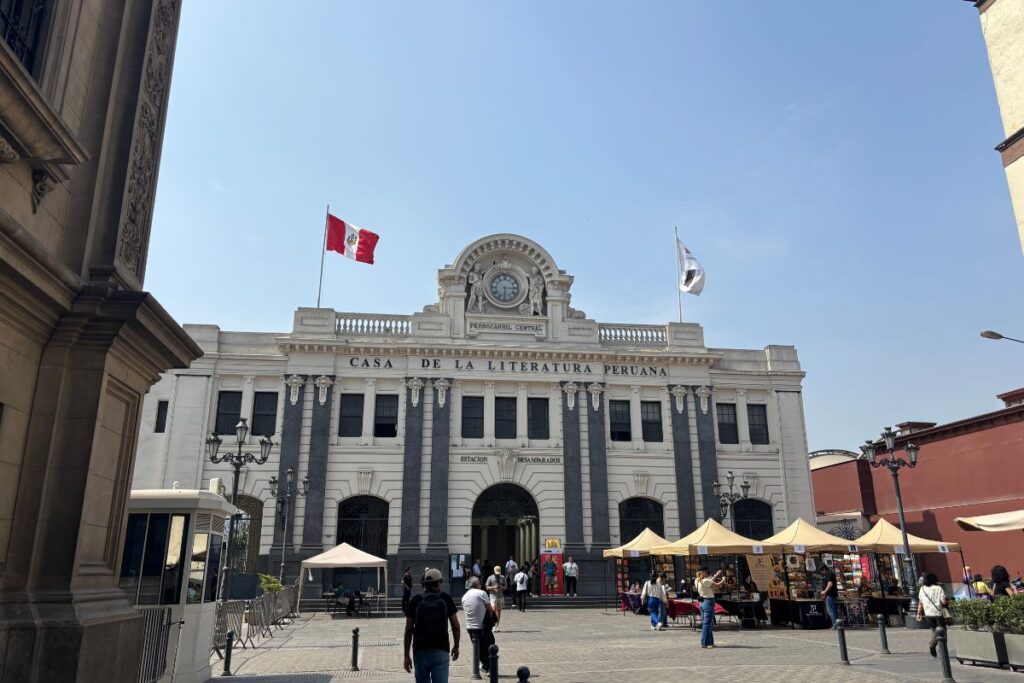
Casa de la Literatura Peruana is one of the many stops that naturally fits into a day exploring Lima’s Historic Center.
What Naturally Fits Together in Lima
Once you start looking at Lima by area rather than attraction, planning your time becomes much easier.
Some places naturally belong in the same day. Others are far enough from where most visitors stay that I’d give them their own block of time rather than trying to squeeze them between unrelated stops.
You don’t have to follow these combinations exactly, but they’re a good starting point for seeing more of Lima without spending half your day crossing the city.
Historic Center and Barrio Chino: Build a Day Around Walking and Lunch
If you’re heading into Lima’s Historic Center, I’d make the most of being there.
Plaza San Martín, Jirón de la Unión, Plaza Mayor, the San Francisco Monastery and Catacombs, Parque de la Muralla, Barrio Chino, and Mercado Central can all become part of the same walking route.
How much you do depends on your pace. You could see Plaza Mayor and a few of the major landmarks in a couple of hours, or spend most of the day here if you want to go inside San Francisco, stop at one of the smaller museums, eat in Barrio Chino, and actually wander rather than rushing through.
After several visits, I much prefer the second approach. There’s enough concentrated in this part of Lima that I’d rather stay here longer than leave halfway through the day just to check off an attraction somewhere else.
I’ve put together a separate self-guided walking route through Lima’s Historic Center showing exactly how I’d connect these stops.
Miraflores and Barranco: Easy to Combine, Worth Lingering In
Miraflores and Barranco are probably the easiest parts of Lima to combine.
They sit next to each other along the coast, so you can spend part of the day walking the Miraflores Malecón, stop around Larcomar, and then continue into Barranco without losing a huge chunk of your day getting from one part of the city to another.
That’s especially useful if you only have a day or two in Lima.
But I wouldn’t automatically combine them just because you can.
With more time, I’d happily give each its own afternoon. Miraflores has the Malecón, its parks, Huaca Pucllana, restaurants, and the everyday convenience that makes it such an easy base. Barranco is smaller, but I enjoy it much more when I’m not treating the Bridge of Sighs as a quick photo stop before moving on.
Think of them as easy to combine when time is limited, but worth separating when it isn’t.
Museo Larco: Make Room for Peru Before the Incas
Museo Larco is one of the places I’d deliberately make room for once you have more than a quick stop in Lima.
The museum is in Pueblo Libre, a district inland from Miraflores and the coast, and its collection walks you through thousands of years of pre-Columbian Peruvian history. It’s also housed in a beautiful colonial-era building surrounded by gardens, and I really enjoyed visiting on a previous trip.
Rather than trying to squeeze it between attractions in completely different parts of Lima, I’d give yourself a few hours to visit the museum and account for the travel time there and back.
And if most of your trip to Peru is going to focus on the Inca history around Cusco and the Sacred Valley, Museo Larco is a particularly good reminder of just how much Peruvian history came before—and existed beyond—the Inca Empire.
San Isidro: El Olivar and a Quieter Side of Lima
San Isidro isn’t somewhere I’d tell every first-time visitor they need to dedicate half a day to.
But if you have more time in Lima, it’s an easy way to see a different side of the city.
One of the best-known places here is Bosque El Olivar, a historic olive grove and public park filled with hundreds of olive trees. Instead of coming for a major attraction, you can walk through the park, stop for lunch or dinner nearby, and experience a much quieter, greener part of Lima.
San Isidro is also home to much of Lima’s modern financial district, which makes the area feel completely different from both the Historic Center and the neighborhoods along the coast.
I’d work San Isidro into a longer stay rather than build a sightseeing day around it. Come for El Olivar, pair it with a meal, and let seeing a different side of Lima be the point.
Pachacámac: Give the Archaeological Sanctuary Its Own Half Day
Pachacámac is different because I’d treat it as an excursion rather than another stop within Lima.
The archaeological sanctuary sits well south of the neighborhoods where most visitors stay and was an important religious and pilgrimage center for centuries, long before the Spanish arrived.
We didn’t make it there on this trip, but it’s still somewhere I’d like to visit.
And when I do, this is one of those times I’d seriously consider letting someone else handle the transportation. You’ll see travel agencies and tour operators around Miraflores and the Historic Center, and I’d ask about their Pachacámac excursions rather than automatically trying to arrange everything independently.
Either way, I’d give Pachacámac a dedicated half day rather than trying to squeeze it between other Lima neighborhoods.
Magic Water Circuit: Save an Evening for the Fountains
The Magic Water Circuit is much easier to work into a Lima itinerary for one simple reason: it’s an evening activity.
Located inside Parque de la Reserva, it’s a large collection of illuminated fountains, including interactive fountains you can walk through. The centerpiece is the nighttime multimedia show, which combines music, lights, lasers, and images projected onto a curtain of water to highlight different parts of Peru’s history and culture.
There’s more here than just the fountains, too. You’ll also find a handful of small amusement park-style rides and activities, which makes this an especially fun stop if you’re visiting Lima with kids.
I’ve been more than once, including with my family, and I think it’s one of those Lima experiences that’s particularly easy to add without sacrificing another part of your day.
Explore a neighborhood or museum during daylight hours, have dinner, and then head over once the fountains are lit.
You still need to account for Lima traffic when deciding what you’re doing beforehand, but unlike another museum or archaeological site, the Magic Water Circuit can extend your sightseeing day rather than compete with it.
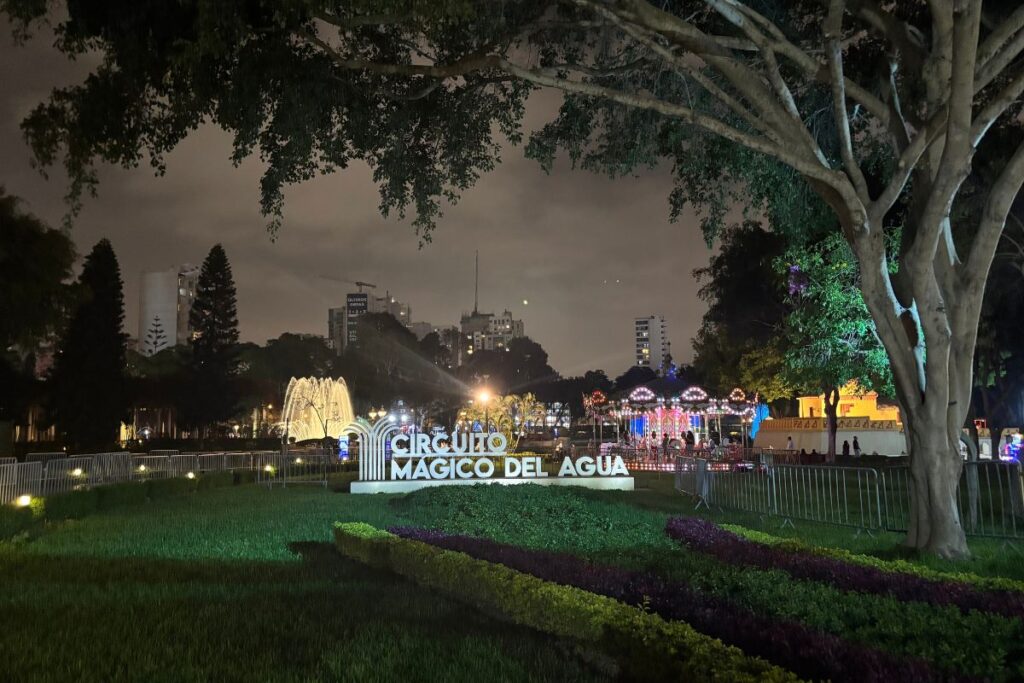
The Magic Water Circuit is an easy evening addition to a day of sightseeing in Lima.
A Few Things That Can Change Your Plans in Lima
Even once you’ve grouped your days geographically, I’d avoid planning Lima down to the hour.
Some of that comes down to traffic, but that’s not the only thing that can throw off your timing. A meal takes longer than expected, you arrive somewhere between tours, or you stumble across a place you hadn’t planned to visit and suddenly want an hour to explore it.
None of those things need to derail your day. They’re just reasons to leave yourself a little room.
The Same Journey Can Take Much Longer Later
You’ve probably already heard that Lima has traffic, and after mentioning it throughout this series, I’m not going to pretend that’s breaking news.
What can be surprising is how inconsistent it feels.
You might leave Miraflores for the Historic Center in the morning and have a relatively easy ride. If that’s your first experience crossing the city, you may even start wondering whether all the warnings about Lima traffic were a little exaggerated.
Then you make the return trip later in the day and it takes nearly twice as long.
That’s why I wouldn’t use one good ride as your benchmark for getting around Lima. Traffic changes throughout the day, and the same journey can feel completely different a few hours later.
You don’t need to pad every ride with an enormous amount of extra time. But if you have a tour, reservation, flight, or anything else with a fixed start time, I’d give yourself more breathing room than the distance on the map might suggest.
Leave Time for Lunch, Including the Wait
It’s easy to look at an itinerary and mentally give yourself an hour for lunch. In Lima, I’d leave a little more room.
Peruvians might not have the same drawn-out dining culture you associate with parts of Europe, but I’ve also never felt like restaurants were trying to rush us through a meal. Add in the possibility of waiting for a table, and lunch can take longer than you expect.
We learned that firsthand in Barrio Chino. On a weekday, we waited about an hour for a table at Master Kong Paruro. When we returned for lunch on a Saturday, it wasn’t just one popular restaurant with a wait—there seemed to be a line out the door everywhere we looked.
That doesn’t mean you need to block off half your afternoon every time you sit down to eat. But I wouldn’t schedule a meal with the assumption that you’ll be walking back out the door exactly an hour later, especially if there’s somewhere you absolutely need to be next.
And in Lima, I don’t really want to rush the food anyway.
Check Tour Times Before Building Your Day Around an Attraction
There are plenty of places in Lima you can explore whenever you happen to reach them. Walk the Malecón, wander through Barranco, or spend some time around Plaza Mayor and you have a lot of flexibility.
Other attractions require a little more planning.
Huaca Pucllana is a good example. You can’t simply arrive and wander through the archaeological site independently. Visits are guided, so depending on when you get there, you may have to wait for the next available tour.
If there’s an attraction you absolutely don’t want to miss, check how the visit works before deciding where it fits into your day. Opening hours, guided visits, reservations, and last-entry times can matter just as much as how long it takes you to get there.
Leave Room for the Stops You Haven’t Discovered Yet
Not everything that changes your plans in Lima will be an inconvenience.
Sometimes you’ll be walking through Miraflores and stumble into Inka Market, only to realize you’ve found a great place to browse souvenirs. Or you’ll come across Centro Artesanal Santo Domingo while exploring the Historic Center and suddenly discover what feels like the souvenir jackpot.
Those aren’t necessarily places you would have built an itinerary around before arriving, but they’re exactly the kinds of stops that become part of your day when you have enough time to actually go inside. The same can happen with a small museum, something happening in a plaza, or simply a street that makes you want to see what’s around the corner.
You don’t need to leave entire afternoons empty just in case something interesting appears. But if every attraction, meal, and ride is scheduled back-to-back, there’s nowhere for those discoveries to fit.
The balance I’ve found in Lima is having enough of a plan that I know which part of the city I’m exploring that day, without needing to know exactly what I’m doing every hour once I get there.
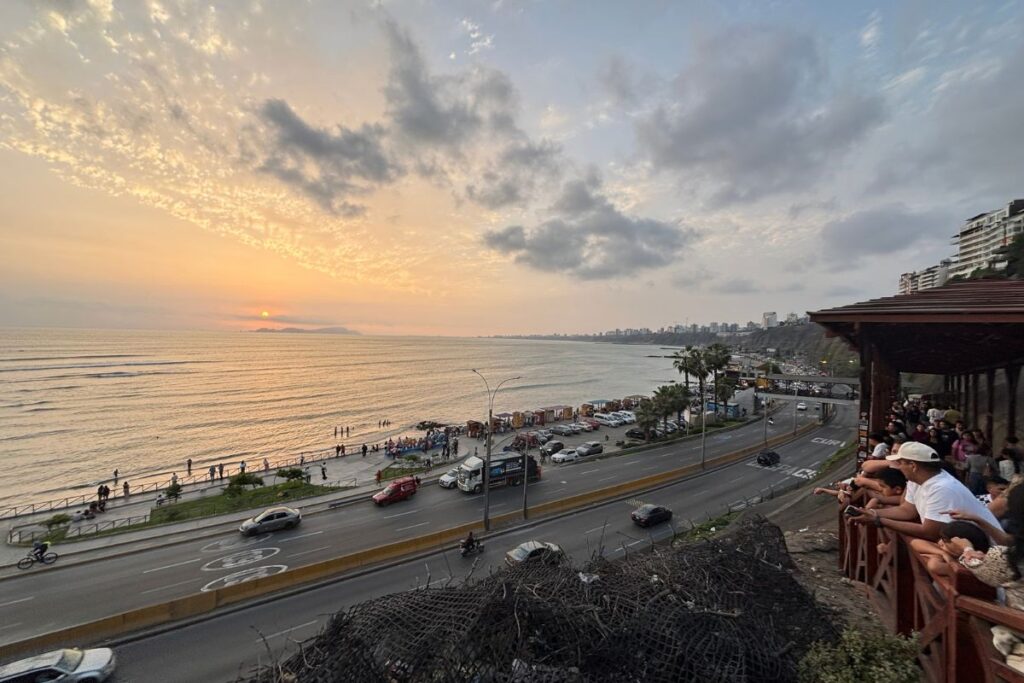
Lima is worth leaving a little room for—sometimes the best part of the day is simply slowing down along the coast.
Final Thoughts: How Much Time Should You Spend in Lima?
I don’t think there’s one perfect number of days for Lima. Peru has too much to offer for me to tell everyone they need to spend four or five days in the capital, especially if that means giving up somewhere else they’re genuinely excited to visit.
But I also wouldn’t automatically follow the advice to give Lima one day and move on.
For most first-time visitors, I’d aim for two to three full days, whether you spend them all at once or split them between the beginning and end of your trip. That’s enough time to see the classic highlights while still having room to explore based on what actually interests you.
The biggest thing I’ve learned after several visits is that Lima works better when I stop trying to check off attractions across the city and instead give myself time to explore the part of Lima I’m already in.
Plan enough to use your time well. Then leave yourself enough room to enjoy it.
Continue Exploring Peru
- Lima’s Classic Highlights for First-Time Visitors — Choose the sights and experiences to build your days around.
- How Many Days Do You Need in Paracas, Ica, and Huacachina? — Decide how much time to allow for the coast and desert.
- How Many Days in Arequipa? — Balance your Lima stay with another city and its surrounding excursions.
- Why I Used a Local Agency for Machu Picchu—Twice — Read why I chose local help for another major part of my Peru travels.