The Day Cusco Gave Us Back Time (Even When Our Flight Didn’t Go to Plan)
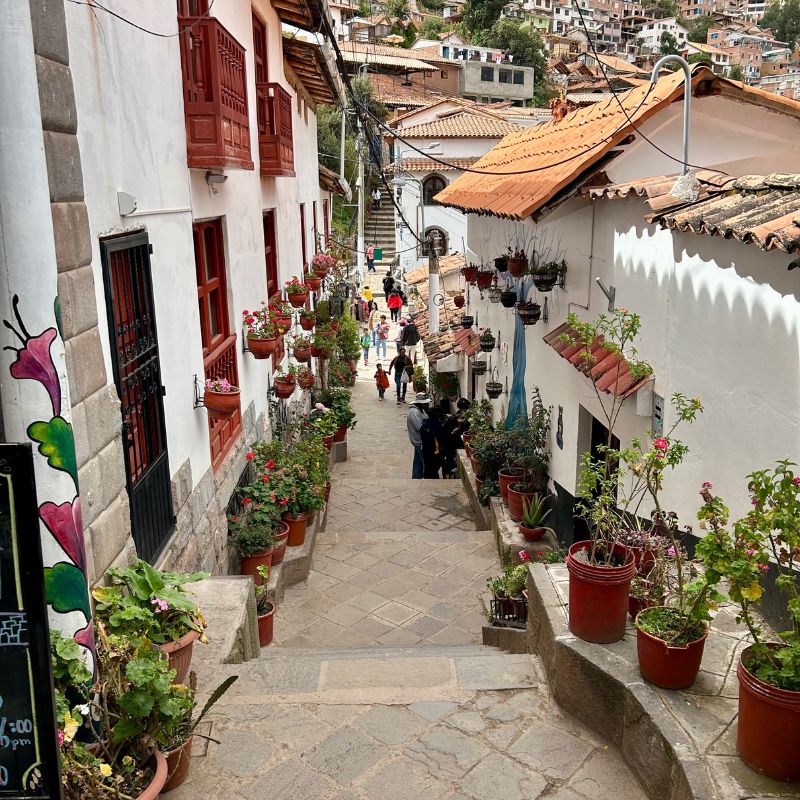
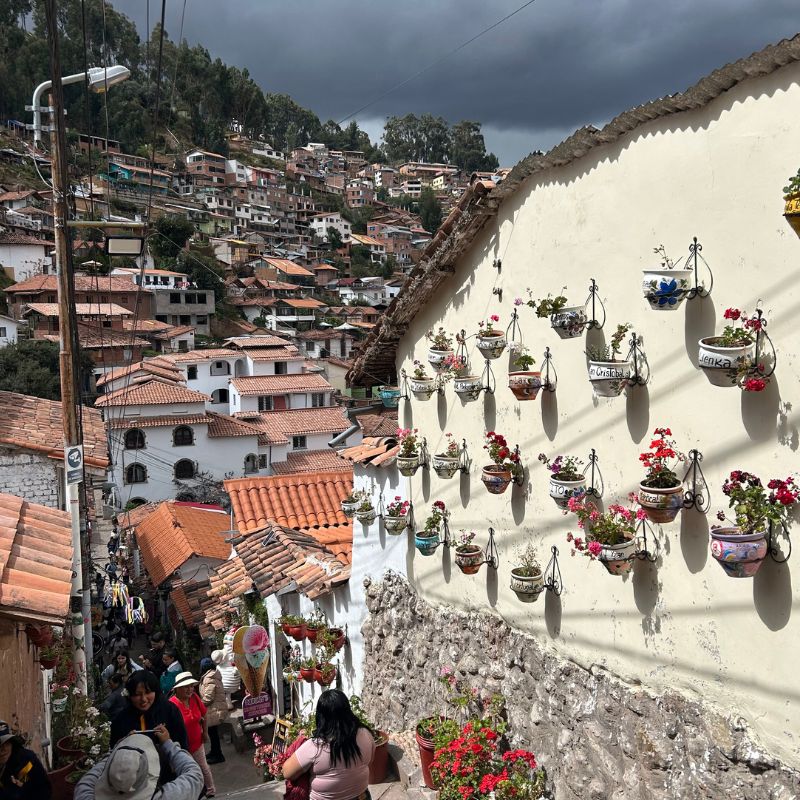
Cusco’s flower-lined streets were some of my favorite places to wander, especially once we finally had time to explore them slowly.
If you’re just joining my Cusco series, I recommend starting with I’m So Glad We Let a Local Agency Handle Machu Picchu, where I explain why we decided to let a local operator handle the logistics. This article picks up from there with an unexpected flight delay that ended up changing our time in Cusco for the better.
Our last day in Cusco was supposed to be simple.
An early flight to Lima, a few hours with family, and then a midnight departure home.
But travel rarely follows the plan exactly as you imagine it.
And in a strange twist, our return coincided with the opening of the new Lima International Airport. Early on, we had received emails saying our international flight to the U.S. would not be impacted and would depart as scheduled.
Our Cusco to Lima flight was another story. Its scheduled arrival fell right in the middle of the airport closure window. We only found out through our own digging rather than direct communication from the airline, but we took it in stride.
It just meant our plans would shift.
We no longer had the time we thought we would in Lima.
Instead, we suddenly had an unexpected extra afternoon in Cusco, and we were actually delighted.
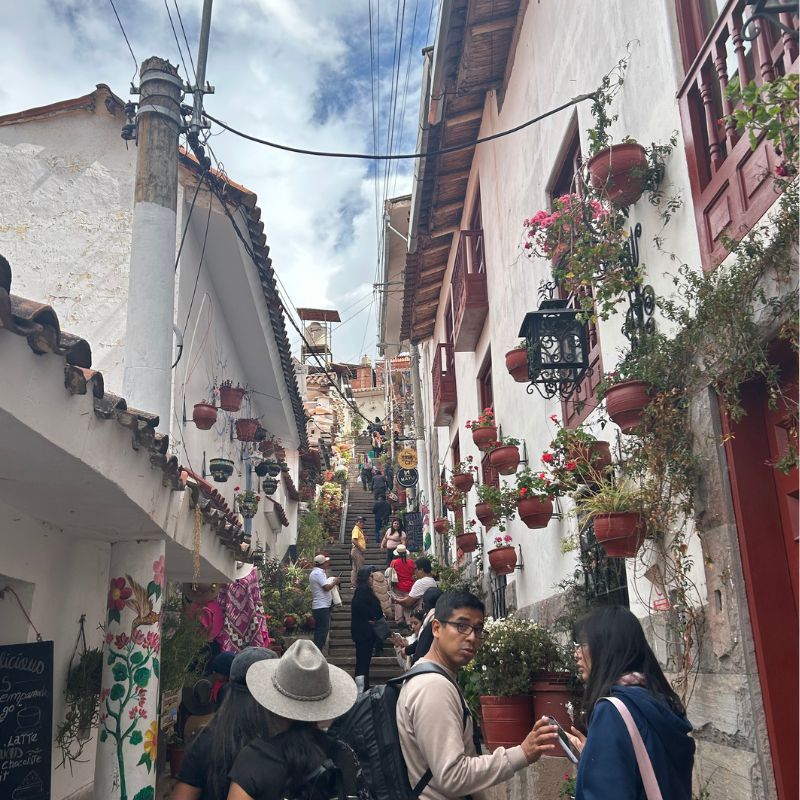
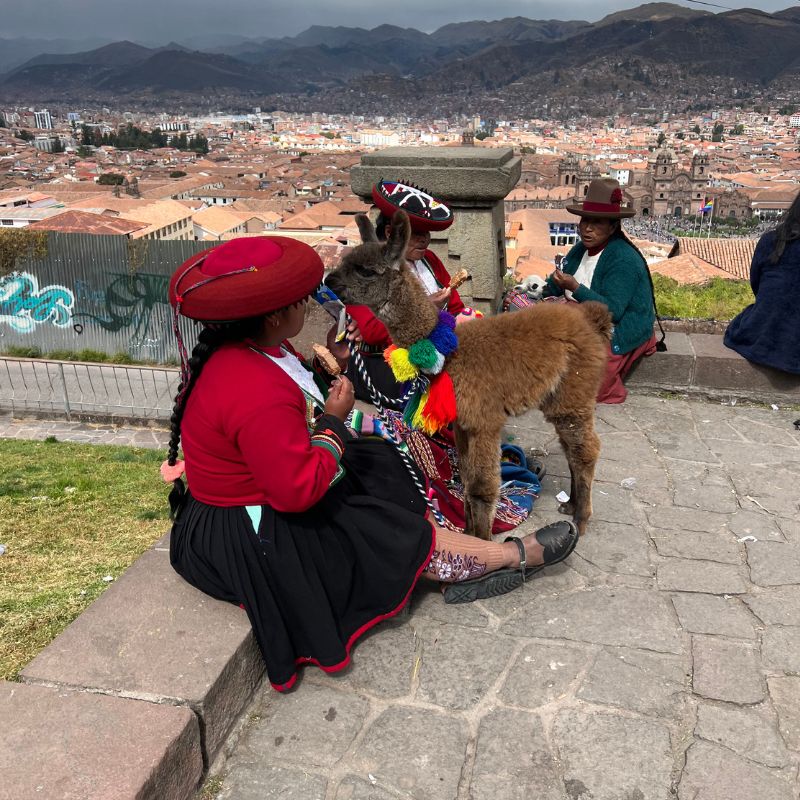
Our unexpected extra afternoon took us uphill through San Blas, where flower-lined streets, viewpoints over Cusco, and plenty of other visitors filled the neighborhood.
What We Did With the Extra Day
Once we realized we weren’t leaving Cusco that morning, we suddenly had an extra afternoon to fill. We’d already done the major excursions we’d planned for the trip, so rather than trying to create another big itinerary, we decided to spend the day exploring more of the city.
Sapantiana Aqueduct
We started by slowly making our way uphill from the historic center toward the Sapantiana Aqueduct, a colonial-era hydraulic structure tucked into the Saphi River area near San Blas. Its stone arches make it a distinctive little stop, but it’s not somewhere I’d necessarily build an entire outing around. It makes much more sense as part of a walk through this side of Cusco.
It was one of the places we’d heard about but hadn’t managed to visit earlier in the trip, so our unexpected extra day finally gave us the chance.
San Blas
From there, we continued uphill into San Blas, the historic neighborhood perched above Cusco’s city center. It’s long been associated with local artisans and workshops, and today its steep cobblestone streets are filled with small shops, cafés, galleries, and viewpoints overlooking the city.
San Blas is exactly as beautiful as people say. We drifted in and out of artisan shops, followed narrow stone streets, and kept climbing toward the viewpoints.
And if you’ve seen those gorgeous photos of San Blas all over Instagram, be prepared to wait for yours. Apparently every other tourist in Cusco had the same idea that afternoon. Some of the prettiest streets and viewpoints were packed with people patiently waiting for their turn to capture the perfect San Blas photo.
Eventually, we got ours too.
Lunch Overlooking Cusco
Further uphill, we followed a restaurant recommendation we’d heard earlier in the trip. As we climbed, the crowds gradually thinned until it felt noticeably quieter than the busiest streets below.
The food was solid, but the real highlight was the view. High-top seats lined the windows, with Cusco stretching across the valley and into the surrounding mountains.
After days of seeing the region from buses, trains, hiking trails, and archaeological sites, it was nice to sit down and see Cusco itself spread out below us.
San Pedro Market…Almost
Later, we headed back downhill toward San Pedro Market, Cusco’s large traditional market near the historic center. It’s the kind of place where you’ll find everything from produce, juices, breads, and prepared foods to textiles, souvenirs, and everyday goods. We’d been trying to get there throughout the trip.
Our excursion schedule hadn’t exactly helped. Early departures and late returns meant the market was usually closed by the time we were back in the city.
So naturally, on the day we finally had an afternoon to visit, it was closed.
We never figured out exactly why. There appeared to be some kind of local event or parade happening that day, and while the main market wasn’t open, the surrounding streets were still filled with vendors.
So we wandered through those instead, picked up a few last-minute souvenirs, and continued through the city.
Somehow, even the one thing we finally had time to do—and still couldn’t do—worked out just fine.
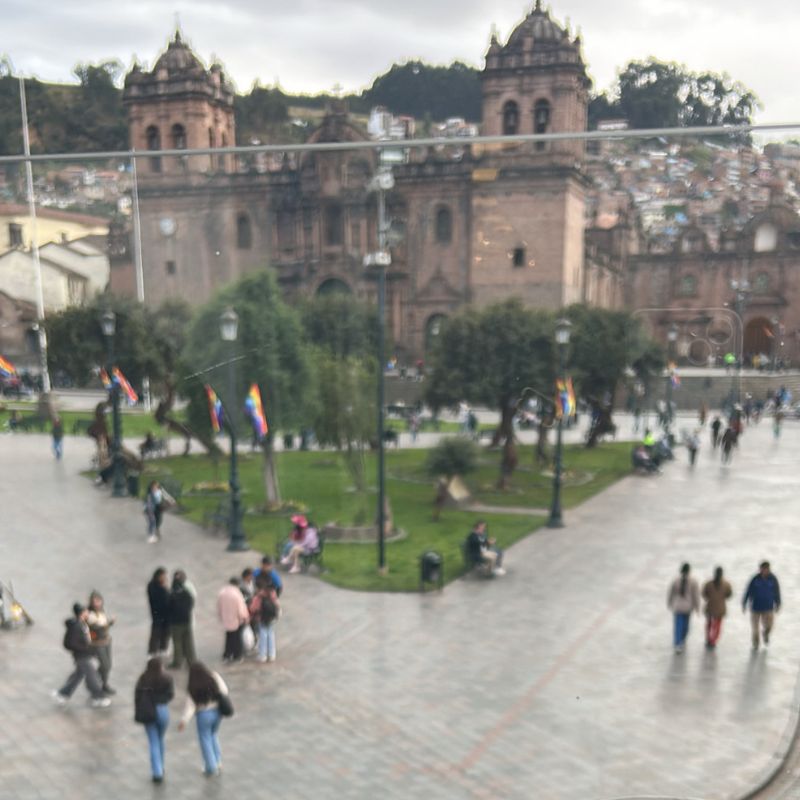
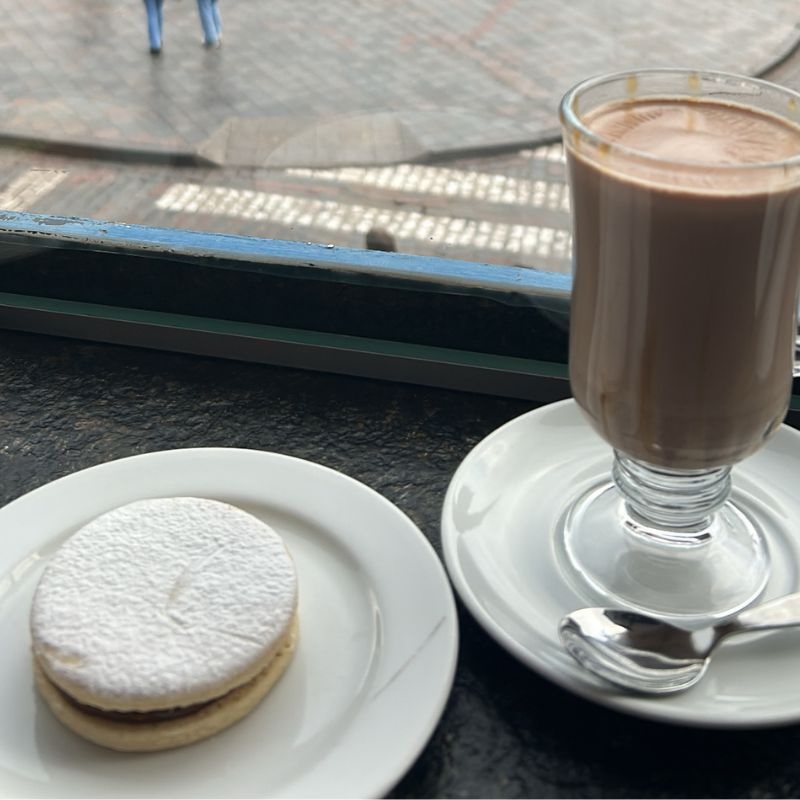
A rainy Plaza de Armas, a warm drink, and an alfajor, this became one of our favorite ways to slow down in Cusco.
The Places We Kept Coming Back To
One of the funny things about having extra time in Cusco was realizing how quickly we’d developed our own little routines there.
On our arrival day, we’d ended up at a small café overlooking Plaza de Armas before meeting our city tour. Plaza-side restaurants are often dismissed as tourist traps, and while you can absolutely find better value a few streets away, that second-floor balcony had given us exactly what we needed: sandwiches, coffee, and a place to sit and take in the city we’d just arrived in.
So when we found ourselves with unexpected time again at the end of the trip, returning to the plaza felt completely natural.
This time there was nowhere we needed to rush off to. We ordered alfajores, settled in for a slow afternoon, and watched Cusco through the windows while occasionally returning to our growing list of what if our flight gets delayed again? scenarios.
We had backup plans for our backup plans at that point.
And still, it didn’t feel stressful. Somehow, sitting there watching the rain over Plaza de Armas, it all felt oddly calm.
Final Thoughts
Eventually, we did make it to Lima, roughly 10 hours later than originally scheduled, with just enough time to sprint through the brand-new airport and catch our international flight home. We were incredibly lucky we didn’t miss it.
It was not remotely how we’d expected our last day in Peru to go.
But strangely, when I think about that day now, the airport chaos isn’t really the part I remember.
I remember walking through San Blas. I remember finally making our way toward San Pedro Market only to find it closed and wandering through the surrounding vendors instead. I remember sitting over Plaza de Armas with alfajores, watching the rain and discussing increasingly elaborate backup plans for getting ourselves home.
We thought the flight disruption had taken time away from us. Instead, it gave us time back in Cusco.
And maybe that’s why the whole thing felt so easy to accept. We’d spent most of the trip waking up early, heading out on excursions, and trying to fit everything in. Suddenly, on the day we were supposed to leave, there was nothing left on the itinerary.
So we just wandered.
That unexpected afternoon didn’t need to teach me some grand lesson about embracing travel chaos. I would still very much prefer my flights to operate as scheduled. But it gave me one final version of Cusco that I hadn’t gotten enough of during the rest of the trip: Cusco with nowhere else to be.
And for a city I already wasn’t ready to leave, that felt like a pretty good consolation prize.
Apparently, Lima airport wasn’t quite finished giving me stories, either. Almost exactly one year later, I’d add another airport fiasco to the collection—this time while trying to get to Arequipa. Keep an eye out for that story, because apparently getting from Lima to the rest of Peru deserves its own chapter.
Continue Exploring Cusco
If you’re planning your own trip to Cusco or Machu Picchu, these posts dig deeper into two very different parts of my experience:
- I’m So Glad We Let a Local Agency Handle Machu Picchu — what I learned from planning Machu Picchu twice, why I still chose a local Cusco agency the second time, and what actually goes into coordinating the trip.
- Cusco Is Not Just a Base for Machu Picchu — what two trips taught me about making room for Cusco itself, from acclimating and planning excursion days to protecting actual time in the city.
- How to Plan Your Time in Lima — If Lima is part of your route to or from Cusco, see how much time to give the capital and how to fit it into a larger Peru itinerary.