How I Built a Five-Week South America Trip Using Points, Credits, and Cash
This post is part of my South America series, following my five-week solo trip through Argentina, Uruguay, Chile, Ecuador, and Colombia. I share what I experienced, the day trips and regions I considered, and what I’d plan differently next time. You’ll find related guides in the Explore South America section at the end.
Five weeks, five countries, one carry-on suitcase and an overstuffed backpack. My first solo trip was hardly a cautious introduction to traveling on my own.
I started in Buenos Aires, flew south to Patagonia, crossed the Río de la Plata into Uruguay, and continued through Chile, Ecuador, and Colombia before returning to Philadelphia. It was the longest trip I’d ever planned, and figuring out how to pay for it mattered as much as choosing where to go.
The answer was a mix of airline miles, hotel points, an existing travel credit, and cash. I adjusted some dates around award availability, redeemed hotel points when cash rates were high, and paid for affordable stays without trying to turn every booking into a redemption.
Here, I’ll walk through those decisions country by country, including what I spent on transportation, accommodation, and recorded activities. It isn’t a complete budget for every expense abroad, but it shows how the bookings came together and where rewards helped make five weeks away manageable.
Five Countries, Five Booking Decisions
Argentina: Miles for expensive flights to Patagonia; cash for affordable hotels.
Uruguay: A ferry from Buenos Aires and hotel points to avoid high cash rates.
Chile: Points covered flights and hotels, leaving cash for exploring beyond Santiago.
Ecuador: Quito offered the best opportunity to stretch my existing hotel credit.
Colombia: Affordable cash stays left room for a mountain retreat and memorable excursions.
Argentina: Buenos Aires, Patagonia, and Knowing Where Points Helped
Argentina was my first stop, with city exploring in Buenos Aires and a flight south to see Patagonia. Miles did most of the work on airfare; cash made more sense for the hotels. That combination let me include both without needing every booking to be a redemption.
Award Seats Shaped My Patagonia Detour
Flying Blue had availability to El Calafate on particular dates, so I split my Buenos Aires stay around those flights. Adjusting the order was worthwhile to me: the alternative was paying roughly $400 roundtrip for the Patagonia flights.
| Flight | Miles redeemed | Cash paid |
|---|---|---|
| Philadelphia → Buenos Aires | 32,500 American Airlines miles | $5.60 |
| Buenos Aires → El Calafate | 13,000 Flying Blue miles | $9.60 |
| El Calafate → Buenos Aires | 13,000 Flying Blue miles | $11.20 |
| Flight total | 58,500 miles | $26.40 |
The flights brought together two very different parts of the trip: wandering Buenos Aires’s neighborhoods and standing in front of Perito Moreno Glacier. In the city, I filled my days with walking tours, parks, markets, and architecture. In El Calafate, the boardwalks and boat ride gave me different perspectives on the glacier.
Affordable Hotels Made Cash the Easier Choice
My seven hotel nights averaged approximately $114, so I kept my hotel points available for later stops.
| Stay | Nights | Cash paid |
|---|---|---|
| Dazzler Buenos Aires Maipú, first stay | 2 | $222 |
| Hostería Hainen, El Calafate | 2 | $117 |
| Park Tower, Buenos Aires | 1 | $218 |
| Dazzler Buenos Aires Maipú, return stay | 2 | $238 |
| Hotel total | 7 | $795 |
The Park Tower took more persistence. Hotels were unusually full for that night, and many remaining rooms cost several times what I’d paid elsewhere. After checking repeatedly, I found a room for $218 and booked it. It was more than my other stays, but a welcome option given what was available.
Places I explored without an admission charge: Plaza de Mayo, Casa Rosada and the Cabildo area, Metropolitan Cathedral, Avenida de Mayo, the Obelisk, Puerto Madero, Caminito, La Boca, San Telmo Market, Palermo, Bosques de Palermo, and Rosedal Park. I also explored around Palacio Barolo and Galería Güemes.
What I spent on exploring: Two Buenos Aires walking tours cost $20 each. In El Calafate, I paid $30 for national park admission, $30 for the glacier boat ride, $31 for transportation to Perito Moreno, $18 for the Glaciarium, and $15 for the airport shuttle. Total: $164.
Argentina in Numbers
7 nights · 58,500 miles redeemed · $985.40 cash
Cash includes the flights, hotels, and activities listed above. Meals and other everyday expenses are additional.
Looking back, flexibility with the Patagonia dates made the biggest difference. I didn’t need a complicated hotel strategy alongside it. Reasonably priced cash stays and useful flight awards were enough to make this part of the trip work.
Uruguay: A Ferry Crossing and a Different Use for My Points
After Argentina, I crossed the Río de la Plata to Montevideo for two nights. This time, hotel points did the work. Cash accommodation prices were higher than I wanted to pay, while the ferry offered a straightforward way to continue from Buenos Aires without another flight.
Taking the Ferry Instead of Flying
I booked a Buquebus business-class seat for $116, partly because I’d read about long boarding lines and hoped the upgrade would make things easier. When I arrived, the regular lines looked manageable. In hindsight, this was probably an upgrade I could have skipped.
The crossing still made sense for my route. It let me move between the two capitals without returning to an airport, and became a different kind of travel day between the flights elsewhere on my itinerary.
Hotel Points Made Montevideo More Affordable
With only two nights in the city, I used two different rewards currencies rather than pay the cash rates I found.
| Stay | Nights | Points redeemed |
|---|---|---|
| Aloft Montevideo Hotel | 1 | 22,500 Marriott Bonvoy points |
| NH Montevideo | 1 | 7,000 Rove points |
| Hotel total | 2 | 29,500 points |
That meant changing hotels during a short stay, a tradeoff I’d weigh against the savings when planning another visit. For this trip, the redemptions kept accommodation costs down while letting me continue exploring somewhere new.
Montevideo also offered plenty to see without filling every hour with paid activities. I explored Ciudad Vieja, Plaza Independencia, the Rambla, Mercado del Puerto, and Puerta de la Ciudadela, along with the areas around Palacio Salvo and Teatro Solís.
What I spent on exploring: A walking tour cost $20, Castillo Pittamiglio was $15, and Museo Andes 1972 was $10. Total: $45.
Uruguay in Numbers
2 nights · 29,500 points redeemed · $161 cash
Cash includes the ferry and activities listed above. Meals and everyday local transportation are additional.
Uruguay reversed the approach I’d used in Argentina: I paid for transportation and redeemed points for the hotels. Comparing the actual prices at each stop helped me keep the trip affordable without expecting the same strategy to work everywhere.
Chile: Points Covered the Stay, Cash Went Toward Exploring
Chile was one of the stops where I used points most extensively. Miles covered my flight from Montevideo, and hotel points covered all five nights in Santiago. That left more of my cash budget available for exploring beyond the capital.
Flying From Montevideo to Santiago
I redeemed 12,700 Delta SkyMiles plus $70 for the flight from Montevideo to Santiago. It connected the next country on my route without requiring a large cash airfare.
Five Hotel Nights Across Two Programs
I spent four nights at Hyatt Place Santiago/Vitacura, followed by one at the Santiago Marriott Hotel.
| Stay | Nights | Points redeemed |
|---|---|---|
| Hyatt Place Santiago/Vitacura | 4 | 21,500 World of Hyatt points |
| Santiago Marriott Hotel | 1 | 23,000 Marriott Bonvoy points |
| Hotel total | 5 | 44,500 points |
The Hyatt stay averaged just over 5,000 points per night, making it one of the hotel redemptions I felt best about on this trip. The Marriott night required more points on its own than the four Hyatt nights combined, although the two currencies aren’t directly interchangeable.
Santiago gave me a base for city exploring and guided excursions. I visited Plaza de Armas, the Metropolitan Cathedral, Cerro San Cristóbal, and Cerro Santa Lucía, explored markets including La Vega Central, Mercado Central, and Mercado Urbano Tobalaba, and spent time around La Moneda Palace. The Museo Nacional de Bellas Artes and Museo de la Memoria y los Derechos Humanos added museum visits to the mix.
What I spent on exploring: A walking tour cost $20, a guided trip to Valparaíso and Viña del Mar was $41, and an excursion to Cajón del Maipo and Embalse El Yeso was $54. Total: $115.
Chile in Numbers
5 nights · 57,200 points and miles redeemed · $185 cash
Cash includes flight taxes and fees and the activities listed above. Meals and everyday local transportation are additional.
The outings beyond Santiago became some of my favorite experiences in Chile. Covering the flight and hotels with rewards gave me more room to book those excursions, which mattered more to me than reducing every remaining expense.
Ecuador: Finding Where My Hotel Credit Went Furthest
Ecuador called for another combination: airline miles for the flight and an existing hotel credit for the stay. Instead of automatically redeeming hotel points, I compared where the credit would help most across my route. Quito stood out.
Reaching Quito After a Family Stop in Lima
Before continuing to Ecuador, I made a short detour to Lima to visit family. That’s why this stretch begins there rather than with a flight directly from Santiago.
I redeemed 12,700 Delta SkyMiles plus $31 for the flight from Lima to Quito, then spent four nights exploring Ecuador’s capital and its surroundings.
Comparing the Hotel Credit Across My Route
Although I generally booked hotels about a week before arriving, I’d researched likely options before leaving for South America. I knew I had an unused $300 American Express hotel credit, so I compared eligible properties across the cities I planned to visit.
Quito offered the most appealing opportunity. I booked four nights at NH Collection Quito Royal, with my records showing $104 out of pocket after the credit, approximately $26 per night.
| Stay | Nights | Hotel credit used | Cash paid |
|---|---|---|---|
| NH Collection Quito Royal | 4 | $300 | $104 |
At that cash cost, I preferred to keep my hotel points available for another trip. I’m not allocating the card’s annual fee to this booking; this breakdown shows how I used a benefit already available to me.
In Quito, I explored Plaza Grande, the historic center, Calle La Ronda, and the area around San Francisco Church and Plaza. El Panecillo, the TelefériQo, and a guided excursion to Cotopaxi added different views of the city and surrounding landscape.
What I spent on exploring: A walking tour cost $20, the Quito Tour Bus was $25, the TelefériQo was $9, La Compañía de Jesús admission was $6, and the Cotopaxi excursion was $60. Total: $120.
Ecuador in Numbers
4 nights · 12,700 miles redeemed · $255 cash · $300 hotel credit used
Cash includes flight taxes and fees, the remaining hotel charge, and the activities listed above. Meals, everyday local transportation, and card annual fees are additional.
Comparing the credit across several destinations made the difference here. Rather than use it at the first eligible hotel, I found somewhere it could cover most of a four-night stay.
Colombia: Affordable Hotels and a Few Stays Worth Spending More On
Colombia was the final country on my route, and by then I was comfortable combining award flights, cash bookings, and a few deliberate splurges. Affordable hotels in Medellín and Cartagena left room for experiences I was excited about, including a mountain retreat at Cannúa and exploring Guatapé.
Mixing Cash and Miles Between Stops
I paid cash to reach Medellín from Quito, then used two different loyalty programs for the remaining flights.
| Flight | Booking method | Cash paid |
|---|---|---|
| Quito → Medellín | Cash | $185 |
| Medellín → Cartagena | 5,850 Avianca LifeMiles | $14 |
| Cartagena → Philadelphia | 12,000 Atmos points | $109.53 |
| Flight total | 17,850 points and miles | $308.53 |
There wasn’t one program carrying the entire journey. Each booking reflected the options I found for that particular flight, including getting home to Philadelphia.
Paying Cash for City Hotels and a Mountain Retreat
I paid cash for all nine hotel nights. The rates I found made that appealing, especially for smaller properties where I wanted to stay.
| Stay | Nights | Cash paid |
|---|---|---|
| Somos Beats Hotel, Medellín | 3 | $297 |
| Cannúa Lodge, near Marinilla | 2 | $276 |
| Mood Matuna Hotel, Cartagena | 3 | $267 |
| Émita Cartagena, Tribute Portfolio | 1 | $166 |
| Hotel total | 9 | $1,006 |
Cannúa was a choice about the experience itself. After city stays, I wanted time surrounded by mountains and greenery. Its more remote location required separate transportation for sightseeing, but the retreat became one of the highlights of my trip.
In Medellín, I explored Plaza Botero, Calle Carabobo, Museo Casa de la Memoria, Manila, and Provenza. Cartagena brought walks through the Walled City and Getsemaní, including the Clock Tower, Plaza de la Aduana, the cathedral area, Santo Domingo Square, the city walls, Plaza de la Trinidad, and Parque Centenario. I also visited Bocagrande.
What I spent on exploring: Walking tours in historic Medellín, Comuna 13, and Cartagena cost $20 each. The Parque Arví Metrocable was $8. For Guatapé, I paid $100 for a private driver, $8 to climb El Peñol, and $100 for a helicopter ride. In Cartagena, a sunset boat tour cost $35 and a chiva party bus was $15. Total: $326.
Colombia in Numbers
9 nights · 17,850 points and miles redeemed · $1,640.53 cash
Cash includes the flights, hotels, and activities listed above. Meals and everyday local transportation are additional.
Keeping many of the routine bookings affordable gave me room to choose a few memorable extras. Cannúa and the helicopter ride over Guatapé were expenses I was happy to prioritize, and neither required the rest of Colombia to become an expensive trip.
What Five Weeks in South America Cost Me
Adding everything together, I’d used several rewards programs, paid cash where prices made sense, and put an existing hotel credit toward Quito. No single redemption made the trip work. The combination did.
My Trip Total: Cash, Points, and Credits
Cash spent: $3,226.93
Points and miles redeemed: 175,750
Hotel credit used: $300
These figures cover the flights, ferry, hotels, and activities recorded across the five country sections. They exclude meals, everyday local transportation, and credit-card annual fees.
Flights and the ferry accounted for $551.93 and 101,750 points and miles. Rewards covered most flights, while cash paid for the crossing to Uruguay, the flight into Colombia, and award taxes and fees. Adjusting the route around useful flights helped me keep moving without unnecessary backtracking.
Accommodation came to $1,905 and 74,000 hotel points, after applying the hotel credit in Quito. I redeemed points in Montevideo and Santiago, paid cash elsewhere, and included a few properties I wanted for the stay itself.
The activities I recorded added another $770. That covered everything from walking tours and museum visits to Cotopaxi, the Perito Moreno boat ride, and a helicopter flight over Guatapé. Keeping flights and hotels manageable gave me more room for those experiences.
This wasn’t a complete accounting of every dollar I spent abroad, and it wasn’t a free trip. It was a way to make five weeks of travel financially manageable while still choosing experiences I was excited about.
The Trip Changed More Than My Points Balances
Before South America, I’d traveled internationally with family, friends, and tour groups. This was my first true solo journey, and instead of easing in with a week abroad, I spent five weeks exploring five countries at my own pace.
Points and miles helped make that ambition feel achievable. Combined with cash and an existing hotel credit, they gave me room to stay longer, choose comfortable places to recharge, and say yes to experiences I cared about.
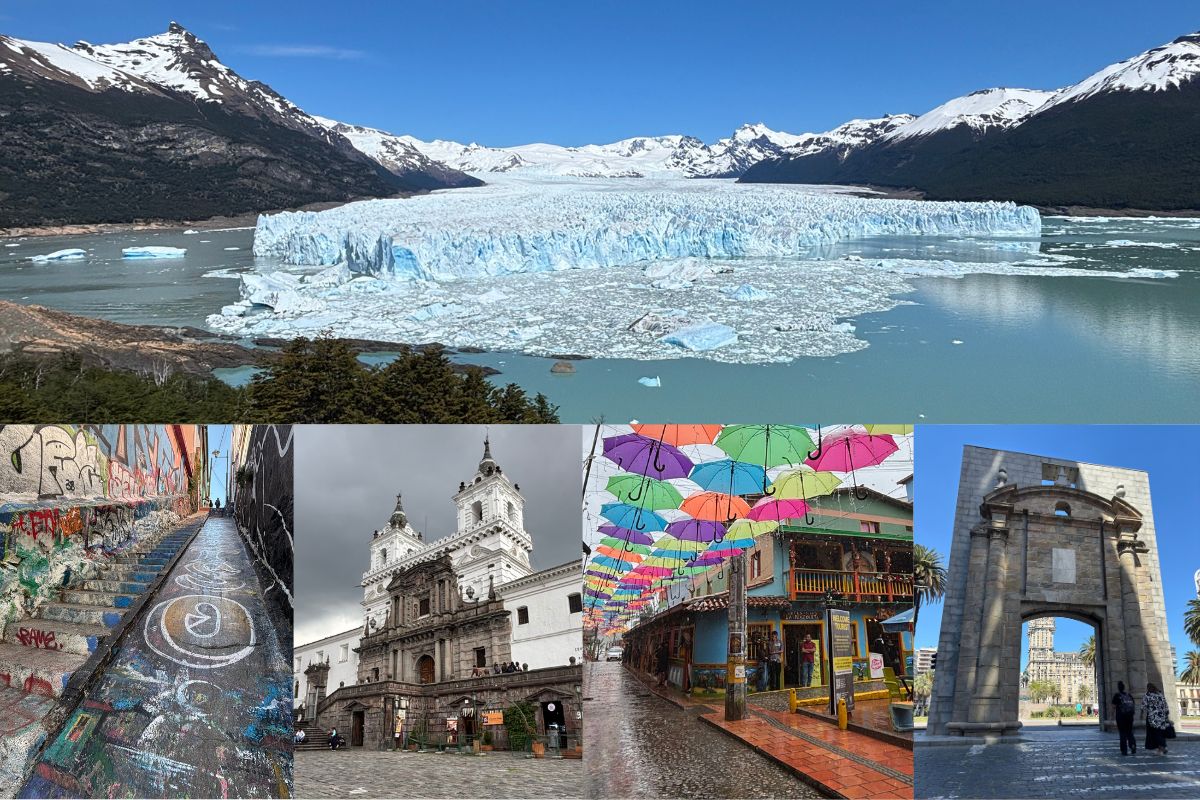
Looking back, I remember ice breaking off Perito Moreno Glacier, wandering Valparaíso’s colorful streets, standing beneath Cotopaxi, and watching the sunset over Cartagena. Somewhere along the way, I also discovered how much I enjoyed traveling on my own.
The booking details explain how I put the trip together, but the confidence I brought home is what makes it especially meaningful. I left knowing I could plan a journey this ambitious, adapt along the way, and enjoy my own company for five weeks. That’s an outcome I’m happy to have spent my points on.
Explore South America
- Looking Back on Five Weeks in South America: What the trip felt like beyond the bookings and budget.
- What to Do in Buenos Aires: A Realistic First Visit: See how the beginning of the route translated into time on the ground.
- How I Spent 4 Days in Quito, Ecuador: A closer look at one stop within the larger itinerary.
- Cartagena Felt Like the Perfect Ending to South America: How I spent the final days of the trip I’d spent months planning.