Is Paracas Worth Visiting? My Thoughts After Visiting Peru’s Coast
When most people start planning a trip to Peru, they focus on the same destinations: Lima, Cusco, Machu Picchu, and maybe Arequipa if they have extra time. Paracas rarely makes the first draft, and I understand why. If you only have a week in Peru, I would give every extra day I could to Cusco.
But one of the things I love most about Peru is that you could visit five times and have a completely different vacation each time. Paracas is a perfect example. Just a few hours south of Lima, you can trade the massive city for desert, ocean, cliffs, wildlife, and some of the most unusual coastal scenery in Peru.
After visiting, my answer is simple: yes, Paracas is worth visiting. But I came away with a slightly different idea of how I would visit than I had before the trip.
You don’t necessarily need several days here or even need to stay overnight. And if you’re imagining Paracas as a traditional beach vacation, I would adjust those expectations.
Paracas at a Glance
Worth visiting? Yes, if your Peru itinerary has room for coastal scenery and wildlife beyond the main highlights.
Main experiences: A morning Ballestas Islands boat tour and a drive through Paracas National Reserve.
My surprise favorite: The Reserve’s desert cliffs, beaches and waterfront lunch at Lagunillas.
Where to stay: El Chaco for walkability, El Golf for apartments, or a waterfront resort if you’ll use its amenities.
My takeaway: An overnight stay makes the pace easier, but isn’t essential. Come for the landscape and wildlife rather than expecting a tropical beach vacation.
Getting From Lima to Paracas Is Surprisingly Easy
I actually researched visiting Paracas on my previous trip to Peru. Like many travelers, I found the classic day tours combining Paracas and Huacachina from Lima and seriously considered booking one.
Ultimately, we decided against it. We only had a few days in Lima before continuing to Cusco, and sacrificing one of them to an extremely early departure and late-night return felt too rushed. After finally making the journey myself, I’m glad we made that decision but I also understand why the day trip is so popular.
Paracas is one of the easier destinations to add to a Lima itinerary, particularly because there are frequent bus connections along Peru’s southern coast.
We traveled with Cruz del Sur. Tickets can be purchased online, you can select your seats, and you can even see how full the bus is before booking.
Our double-decker bus was considerably nicer than the typical coach buses I’m accustomed to in the United States. The seats reclined generously and even had curtain partitions between them, making the roughly four-hour journey remarkably comfortable.
Where you catch the bus will depend on where you’re staying in Lima. We were staying with family farther north, so Plaza Norte made much more sense for us. If you’re staying around Miraflores, you’ll likely find another departure point more convenient.
Either way, give yourself plenty of time to get there. Lima traffic remains Lima traffic.
Do You Need to Plan Everything Before Arriving?
One of my favorite discoveries about traveling through this part of Peru was just how easy it was to arrange things as we went.
We visited in August, during Peru’s winter and the quieter season in Paracas, and there were still tour agencies everywhere in El Chaco selling the same handful of excursions: Ballestas Islands, Paracas National Reserve, transportation to Ica, Huacachina tours, and dune buggy and sandboarding packages.
Prices between agencies were generally within S/5–10 of each other. You can bargain a little, particularly if you’re booking multiple services with the same agency, but I wouldn’t expect to negotiate your way to some incredible secret price. The prices are already remarkably reasonable.
If you’re accustomed to destinations where transportation and excursions need to be formally reserved well in advance, this may require a small adjustment. In Peru, arranging a car or van through a local tour agency to take you to another city is completely normal.
When we were figuring out how to get from Paracas to Ica, for example, we could take the bus for around S/25–30 per person—or arrange a private car for around the same basic transfer price.
It’s one of the things I love about exploring Peru. Private drivers, private tours, and door-to-door transfers can cost a fraction of what I’d expect to pay for that level of convenience elsewhere.
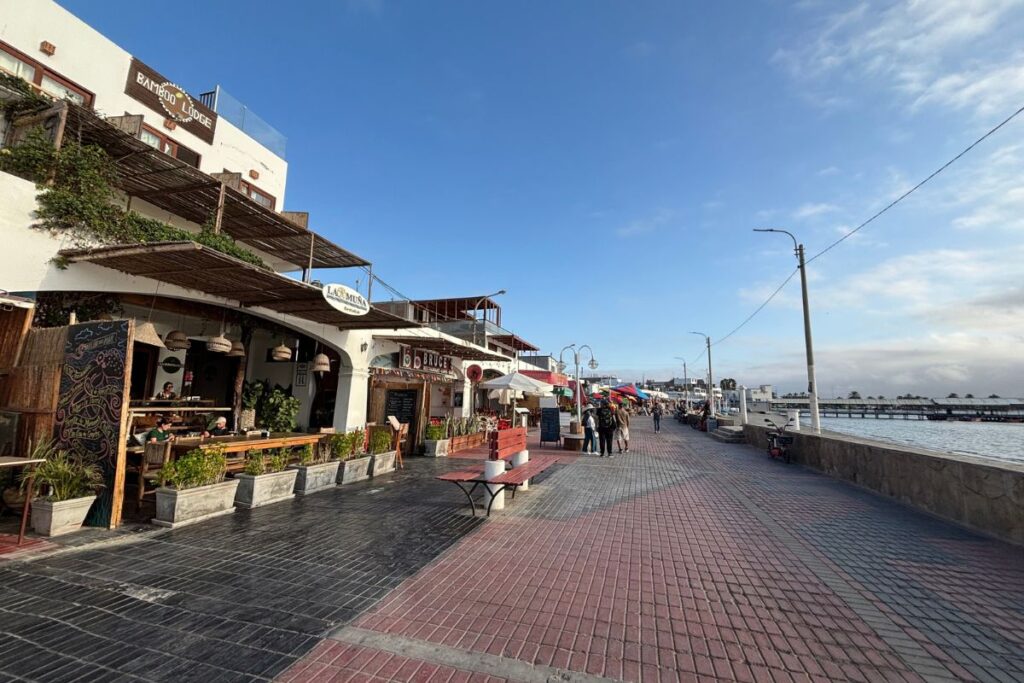
El Chaco is compact and easy to explore on foot, with restaurants, tour agencies, and the waterfront all concentrated in a small area.
Can You Really Visit Paracas and Huacachina From Lima in One Day?
This is one opinion that changed after actually taking the trip.
Before visiting, I thought the classic Lima → Paracas → Huacachina → Lima day trip sounded borderline ridiculous. Now that I’ve done everything individually, I understand how it works.
Ballestas Islands tours are concentrated in the morning, with operators offering early departures and the protected Ballestas sector open to visitors from 6:00 AM until 1:00 PM. Always confirm the available departure times for your dates. During our August trip, tours were only going out until around 10:00 AM. The excursion itself takes about two hours, and departures can be affected by marine conditions.
That early schedule is one of the reasons day tours from Lima start at such an ungodly hour. Once you’re back on land, the drive from Paracas toward Ica and Huacachina is only about an hour, and the classic dune buggy and sandboarding experience isn’t an all-day excursion either.
So logistically, it works. But I won’t sugarcoat it: it will be a very long day.
If you have limited time and don’t want to coordinate buses, tours, transfers, and tickets yourself, I completely understand booking the day trip. You’ll have a full day and see two landscapes completely different from Lima.
If you have more time, however, I’d slow it down. About three days in the broader Paracas-Ica-Huacachina region feels ideal to me.
Book a Paracas and Huacachina day tour from Lima →
What Is Paracas Actually Like?
The main tourist area is El Chaco, a small waterfront district where you’ll find restaurants, souvenir shops, hotels, and seemingly endless tour agencies.
It’s pleasant and convenient, but it’s also small. I wouldn’t romanticize the waterfront into some gorgeous seaside promenade where you’re going to spend hours wandering. El Chaco serves its purpose extremely well: it’s the tourism hub for everything you came to Paracas to experience.
We visited in August, which is winter in Peru. For us, that meant comfortable sightseeing weather during the day and a sweater or light jacket in the evenings, especially out on the water. It wasn’t the weather I’d choose for lounging by a pool, but it suited our excursions well.
The timing also helped explain how quiet El Chaco felt. We arrived after the Fiestas Patrias celebrations, and schools had just resumed classes that week. Between the cooler weather and the end of the holiday break, the waterfront had a distinctly sleepy atmosphere.
One evening, souvenir vendors told us they were packing up early after a particularly long previous day serving visitors from a large cruise ship. I hadn’t even realized Paracas was a cruise stop. It was a reminder that the town could get busy, even though we were experiencing a quieter stretch.
I actually enjoyed that slower pace. We had early dinners, wandered around without crowds, and found ourselves back at our Airbnb earlier than usual because there wasn’t much tempting us to stay out.
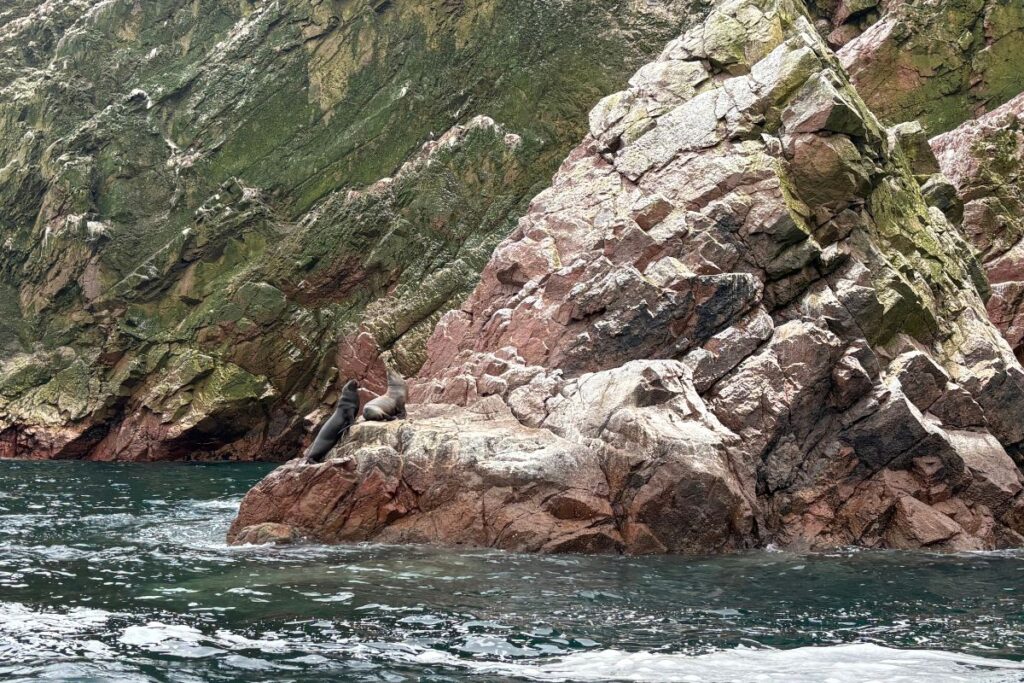
Sea lions are one of the highlights of a Ballestas Islands tour and one of the reasons I’d prioritize this excursion in Paracas.
Ballestas Islands: The Experience Everyone Comes For
If you only have time for one Paracas excursion, I’d choose the Ballestas Islands. Not necessarily because it was my personal favorite part of Paracas, but because this is the experience Paracas is famous for.
Our tour left around 8:00 AM and lasted approximately two hours. We chose a covered boat and paid S/160 total for four people, or S/40 per person, before the separate conservation fees.
Definitely bring a sweater or jacket. The boats move quickly, and even with the cover it got chilly. The ride was completely smooth, and I’d describe the boat more as a speedboat than a leisurely sightseeing vessel.
The first major stop is the Candelabra, the enormous geoglyph etched into the hillside overlooking the bay. From there, it takes roughly another 20 minutes to reach the wildlife around the islands.
We saw Humboldt penguins perched high on the rocks, plenty of birds, and sea lions lounging along the shoreline. My favorite moment was watching one sea lion jump from the rocks into the water and somehow managing to capture it on a Live Photo.
Those are the little moments you remember.
Set Your Wildlife Expectations
One thing I would caution against is going into the Ballestas Islands expecting nonstop wildlife encounters. This is wildlife in its natural habitat, not an attraction where a particular number of animals is guaranteed to appear on schedule.
We saw Humboldt penguins, sea lions, and plenty of birds and genuinely enjoyed seeing them, but we weren’t surrounded by enormous groups of animals at every turn.
I actually think someone who simply enjoys being out on the water may appreciate the excursion more than someone arriving with a wildlife checklist. You’re getting a scenic boat ride, dramatic rock formations, a guide explaining what you’re seeing, and opportunities to spot marine wildlife along the way.
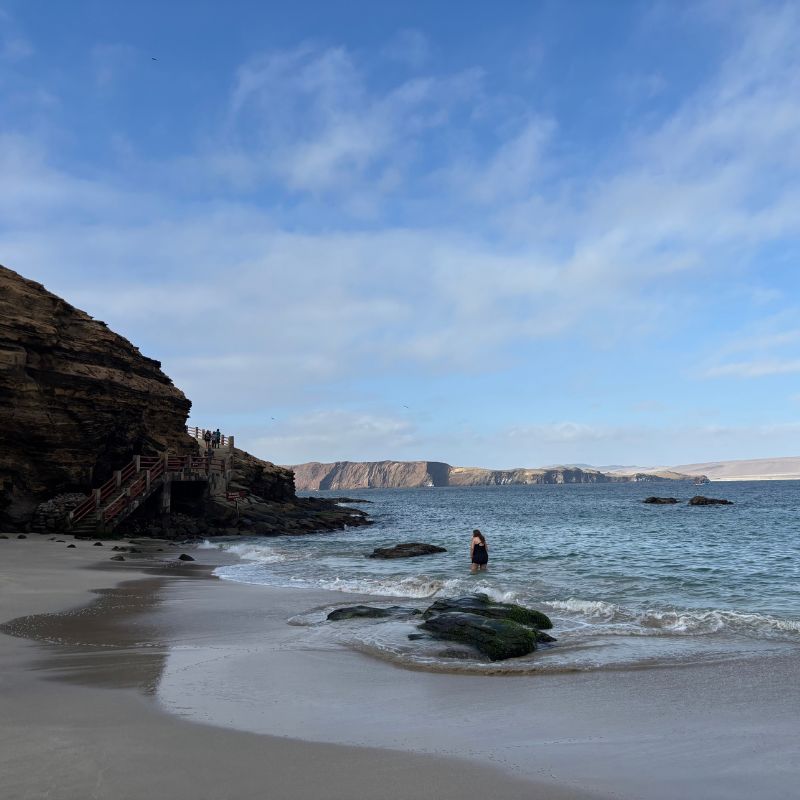
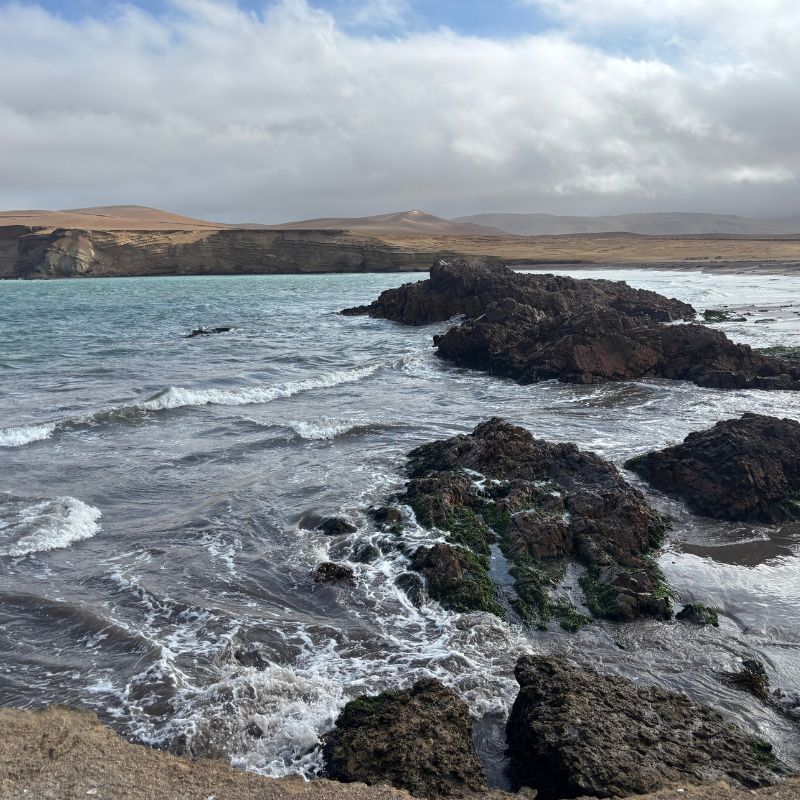
The landscape changes quickly inside Paracas National Reserve, from quiet beaches and sheltered coves to rugged stretches of Pacific coastline.
Paracas National Reserve Was My Surprise Favorite
The Ballestas Islands may be Paracas’s most famous attraction, but I personally enjoyed the Paracas National Reserve even more.
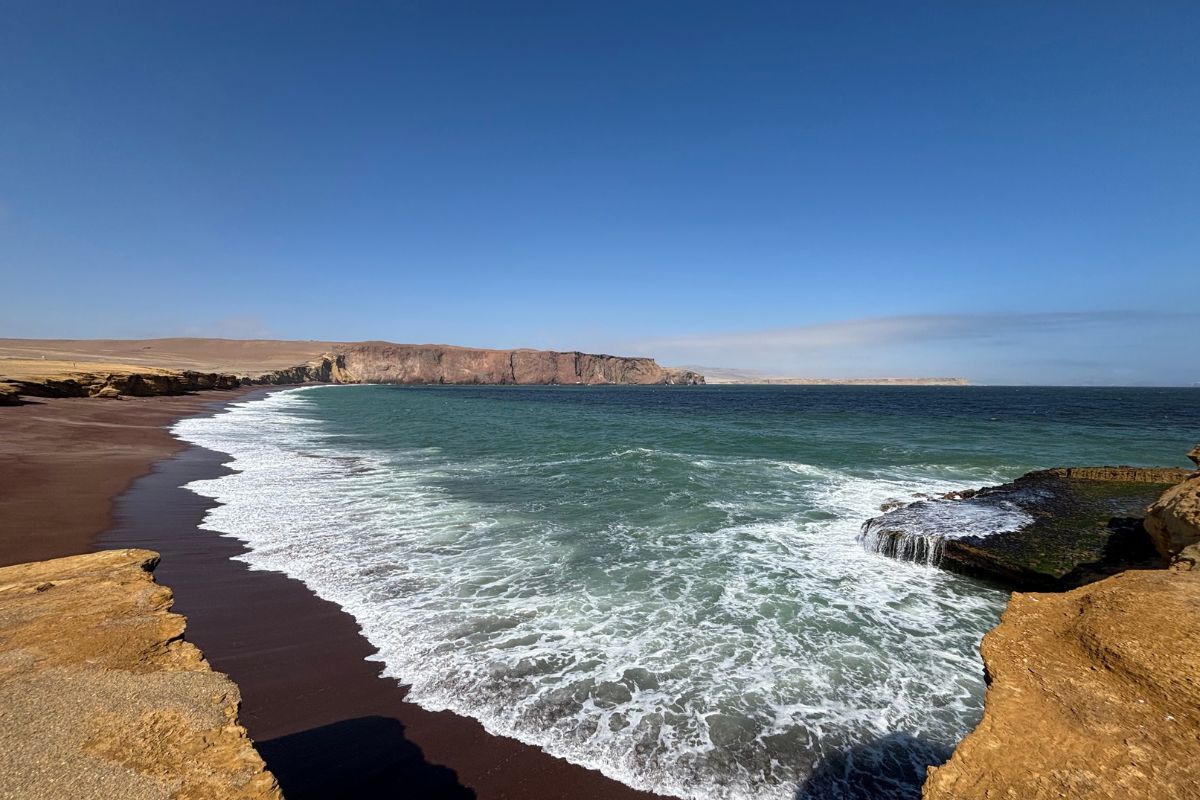
This is where the landscape really starts showing off. Desert stretches toward the Pacific, cliffs drop toward the water, and beaches appear below you. It’s a completely different side of Peru from the mountains and cities most international visitors come here to see.
Our private Reserve tour cost S/120 total for four people, or just S/30 per person. At that price, choosing a private driver who also acted as our guide felt like a no-brainer. We could move at our own pace, stop for photos when we wanted, and actually understand what we were looking at along the way.
The major stops are surprisingly close together. Some are different vantage points over the same stretch of coastline, so you aren’t spending hours in the car. Without our leisurely lunch stop, about two hours felt like plenty of time.
Playa Roja, Playa La Mina, and Those Cliffs
Playa Roja was one of my favorite stops. You see the coastline from above at other points along the drive, but getting closer to the red shoreline really shows how unusual it is.
I also loved Playa La Mina, where the cliffs give way to a small beach and, unlike at many of the Reserve’s viewpoints, you can actually get down to the water. People were swimming, although this part of Peru is influenced by the cold Humboldt Current, so don’t expect warm tropical water.
Between that and the fact that I hadn’t exactly arrived prepared for a beach day, I was perfectly happy keeping my feet dry and sand-free. Give me dramatic cliffs overlooking the water and I’m generally happy anyway.
Lunch at Lagunillas—and the Giant Pelicans
Our last stop was Lagunillas, where a small collection of restaurants sits right along the water.
I’ll admit that being driven to one of the only places to eat inside a protected reserve sounded like the perfect setup for overpriced tourist food. Instead, our lunch at Sol de Oro was genuinely good. Prices were slightly higher than elsewhere, but it didn’t feel like a tourist wallet grab, especially compared with what we’d pay for a waterfront lunch back home.
The bigger surprise was the pelicans.
They were enormous.
We sat outside overlooking the water while these gigantic birds hung around nearby, and I was completely fascinated. It ended up being one of those random moments I enjoyed far more than expected.
One practical note: if you’re eating later in the afternoon, some restaurants may start running out of dishes. Several large tour groups had already come through before us, so quite a bit of the menu was unavailable by the time we arrived. Even so, I’d absolutely include lunch at Lagunillas rather than rushing back to El Chaco.
Where Should You Stay in Paracas?
Where you stay in Paracas depends on the experience you’re looking for. I’d divide the main options into three areas: El Chaco if you want to walk everywhere, El Golf if you want more space, and the resort area farther south if the hotel itself is part of the vacation.
El Chaco: Best for Walkability
El Chaco is the most convenient choice if you want restaurants, souvenir shops, tour agencies, and the waterfront right outside your door. This is also where you’ll depart for the Ballestas Islands, making an early morning boat tour particularly easy.
If I were traveling solo or as a couple and only spending one night in Paracas, this is probably where I’d start my search. You’re paying for convenience more than for a bustling beach-town atmosphere.
El Golf: Best for Apartments and More Space
We were traveling as a family, so rather than booking individual hotel rooms, we chose an Airbnb with bedrooms, shared living space, and a kitchen.
Our Airbnb was in El Golf, roughly a 15–20 minute walk from El Chaco. The walk was easy and straightforward, although I wouldn’t call it particularly scenic.
For us, having somewhere to relax together mattered more than being directly on the waterfront. We could make breakfast, keep snacks and drinks in the kitchen, and sit together in a living room rather than spending our downtime in separate hotel rooms.
The trade-off is location. We usually walked into El Chaco and then grabbed a moto-taxi back to our Airbnb in the evening. They’re plentiful, inexpensive, and easy to flag down, so we never felt inconvenienced by staying a little farther out.
Santo Domingo and the Resort Area: Best for a Resort Getaway
Farther south along the bay, toward Santo Domingo and the Paracas National Reserve, you’ll find some of Paracas’s larger upscale waterfront resorts.
This is a very different proposition from staying in El Chaco. I wouldn’t choose this area if your priority is walking into town several times a day, but if you’re paying for one of these properties, that’s probably not the point.
The larger resorts are designed to be destinations themselves. Hotel Paracas and La Hacienda Bahía Paracas both offer restaurants, bars, pools, and other amenities that make it easy to spend more time at the hotel.
This is also where seasonality becomes particularly important. During our August visit, the weather was comfortable for sightseeing but didn’t exactly make me want to spend an afternoon lounging beside a pool. Given the premium these properties can command, I personally would have struggled to justify the expense on this particular trip.
During Peru’s warmer months, I understand the appeal much more. You could do the Ballestas Islands in the morning, return to your resort for lunch and the pool, explore the Reserve the next day, and actually make the hotel part of the vacation.
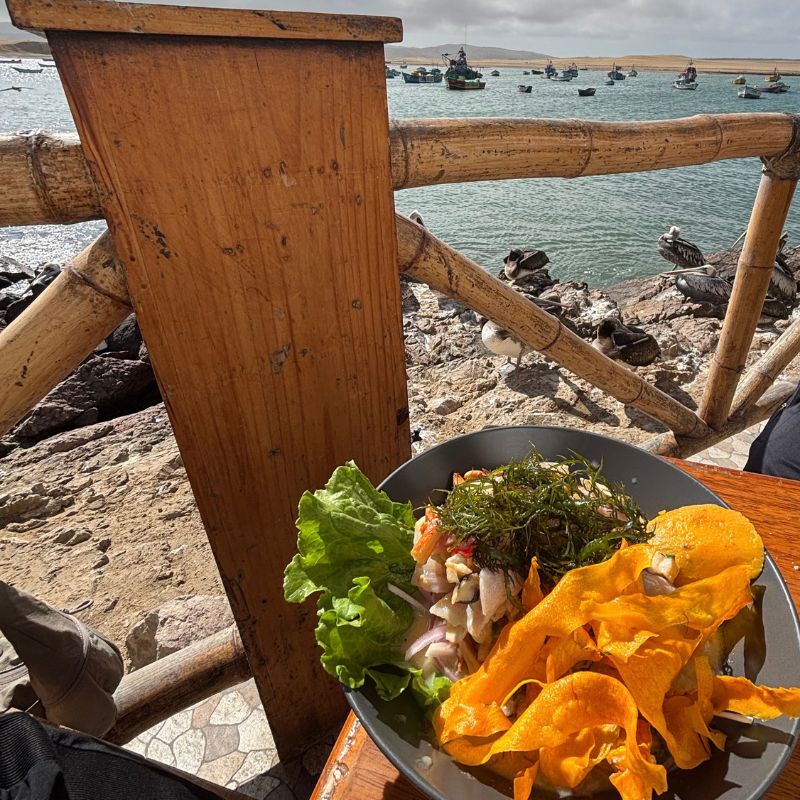
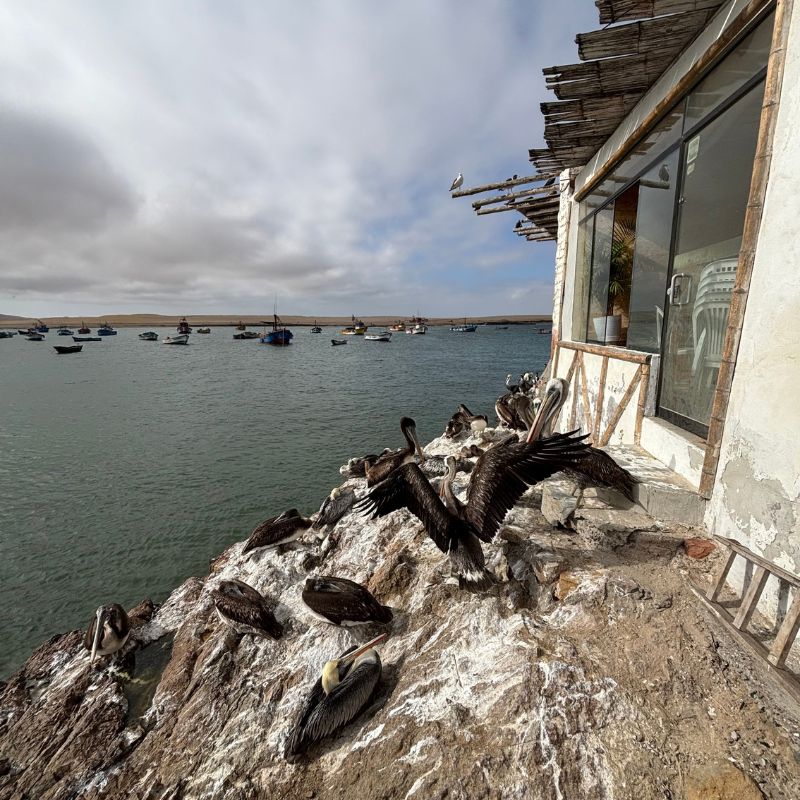
Lunch with a view and some very persistent neighbors. Pelicans are a regular part of the waterfront scenery around Paracas.
Is It Worth Staying Overnight in Paracas?
This is where my answer gets complicated, because I’m genuinely glad we stayed.
We arrived Tuesday afternoon with absolutely nothing major planned. We walked into El Chaco, looked at tour prices, had dinner, bought some snacks, and went back to our Airbnb. The next morning was similarly relaxed before we headed out for the Reserve.
We weren’t racing through anything, and we certainly weren’t waking up at 3:00 AM in Lima. I genuinely appreciated that pace.
But knowing what I know now, I don’t think staying in Paracas is necessary, particularly outside the warmer season.
Our Airbnb in Paracas cost roughly $301 for two nights. A few days later in Ica, we paid about $91 for two nights for an Airbnb that was substantially nicer.
That difference changed how I would plan this entire region on a future trip. I now think there’s a strong argument for staying in Ica and treating Paracas as a day trip.
For this trip, though, staying in Paracas gave us something that has value too: time. We got to experience it without watching the clock.
Is Paracas Actually a Beach Destination?
I think this is one of the most important expectation-setting questions, particularly if you’re considering one of those beautiful waterfront resorts.
Paracas is on the Pacific and absolutely has beaches, but I wouldn’t come here expecting the kind of beach vacation you might associate with Florida, the Caribbean, or parts of the Mediterranean.
I’d describe it as a coastal resort destination rather than a classic international beach destination.
The appeal is the combination of desert coastline, Pacific views, boating, wildlife, resort pools, and access to the National Reserve.
If what you really want is a long stretch of beautiful sand and spectacular swimming water, I wouldn’t choose Paracas solely for that experience.
If you want to see sea lions in the morning, spend the afternoon by a beautiful resort pool, have dinner overlooking the bay, and explore a desert coastline the following day, that’s a much stronger argument.
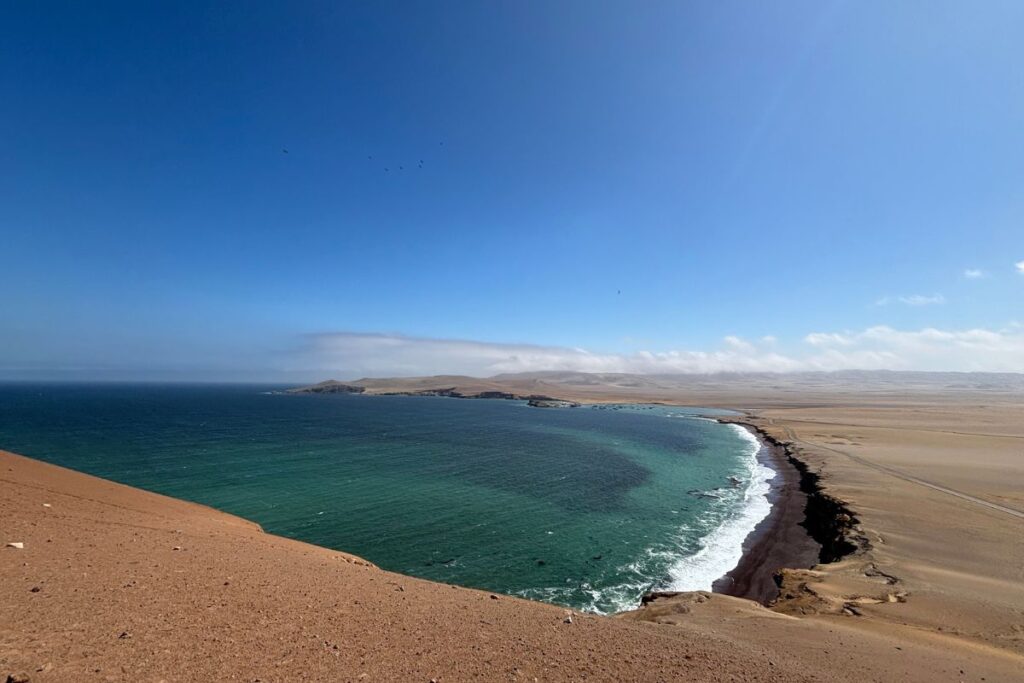
This was the side of Paracas I didn’t expect, the desert seems to run straight into the Pacific inside Paracas National Reserve.
So, Is Paracas Worth Visiting?
Absolutely.
Within a few hours of Lima, you’ve traded city traffic for sea lions, penguins, desert cliffs, red beaches, and the Pacific Ocean.
But whether Paracas deserves a place on your Peru itinerary depends on how much time you have.
If I only had seven days in Peru, I’d give those days to Cusco every time. Paracas becomes much easier for me to recommend when you have additional time, when you’ve already experienced Peru’s major highlights, or when you’re returning to the country and want to see a completely different side of it.
That’s one of the reasons I keep coming back to Peru. You don’t have to recreate the same vacation every time.
One trip can be Lima, Cusco, and Machu Picchu. Another can take you into the Amazon. Another can focus on Arequipa and southern Peru. And another can bring you here, where the desert runs directly into the Pacific and sea lions spend their mornings jumping from the rocks.
Paracas doesn’t need to compete with Machu Picchu to be worth visiting. It shows you another side of Peru, and it does that extremely well.
Continue Exploring Peru
- How Many Days Do You Need in Paracas, Ica, and Huacachina? — Work out how much time to give the coast, desert, and oasis.
- Is Huacachina Worth Visiting? — Read the questions and expectations I weighed before visiting the desert oasis.
- Why I Stopped Rushing Through Lima — Leave room for the capital before heading farther along the coast.
- Cusco Is Not Just a Base for Machu Picchu — Consider another place that rewards looking beyond its best-known attraction.