What the Amalfi Coast Taught Me About Traveling With Family
Planning a trip to the Amalfi Coast? This post is part of my Amalfi Coast series, where I share why we based ourselves in Maiori, the day trips we took, what I’d do differently, and what traveling the Amalfi Coast with family was like.
Traveling with family always feels different than traveling solo.
When I travel alone, I can move at whatever pace I want, change plans constantly, skip meals, spend hours wandering, or sit in a museum all afternoon without thinking twice. Family travel requires a completely different kind of balance. You’re constantly thinking about everyone else’s energy levels, interests, budgets, and expectations while still trying to create a memorable trip for everyone.
When I travel with larger groups of friends, I like asking each person one simple question before the trip:
“What is the one thing you absolutely want to do?”
It helps keep expectations realistic and reminds everyone to focus on the moments that matter most.
That approach doesn’t work quite as well with my family. Their answer is usually some variation of:
“Whatever you plan is fine.”
While I may have been given near-complete freedom to build the itinerary, I still try to keep everyone’s interests in mind.
Looking back now, this trip ended up being important for reasons that went far beyond the Amalfi Coast itself.
I was genuinely excited to share this experience with my parents. At the time, I didn’t fully realize it, but this trip would help establish a tradition that has become one of my favorite parts of each year. Since then, we’ve made it a point to choose a longer family trip together, usually around ten days, giving us enough time to settle into a destination instead of feeling like we’re rushing through it.
Through a bit of trial and error, I think I’ve discovered the sweet spot for our family travels. Coastal destinations with unique landscapes, great food, and some history seem to check everyone’s boxes. My dad gets the history he loves, my mom gets beautiful scenery and plenty of photo opportunities, my sister gets time by the water, and I get the challenge of putting all the pieces together into an itinerary that somehow works for everyone.
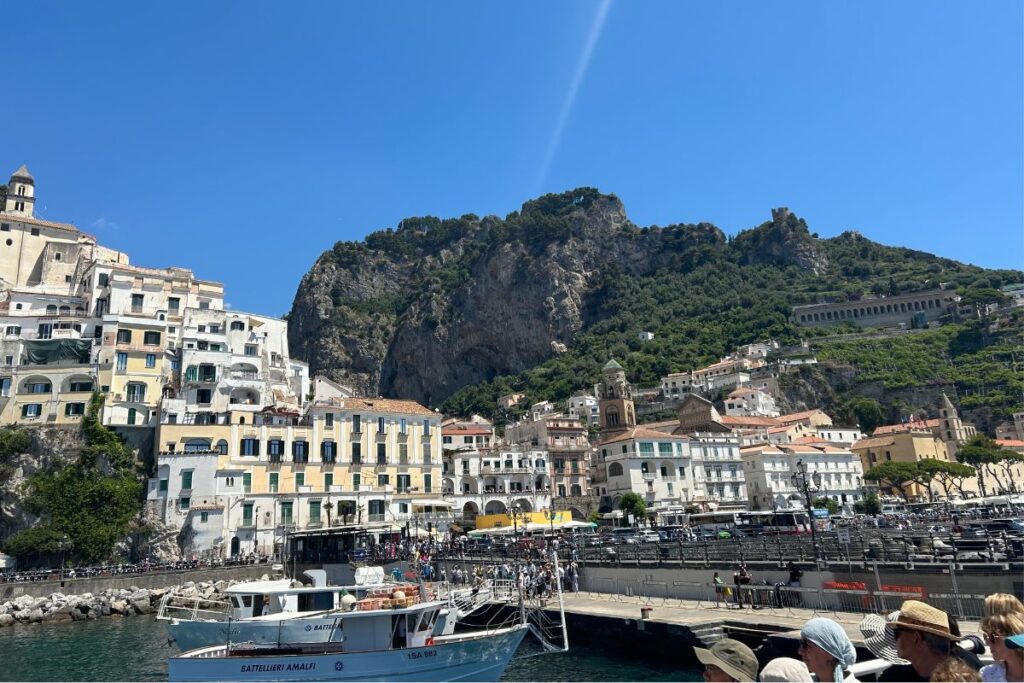
Planning a family trip means balancing different interests, energy levels, and travel styles—and somehow building a week where everyone gets at least a little of what they came for.
Everyone Has Their “Must Do”
For this trip, Pompeii was the obvious choice for my dad, who loves history. My mom loves photography, but more importantly, she loves capturing family memories. So after the hundredth family photo, my sister and I would remind ourselves that this was one of the things that genuinely made her happy. Then we’d smile and pose again.
My sister’s priority was much easier to accommodate: she wanted to spend as much time as possible at a beach club with the classic Positano view in the background.
I’m happy to say everyone got to experience their “must-do” moment. But one of my favorite memories from the trip wasn’t something any of us had planned.
We tease my mom a lot when we go out to eat because she happens to be the pickiest eater among us. In her defense, she’s also an excellent cook—not in the exaggerated “my mom is a good cook” kind of way, but genuinely. As a result, her standards can be a little higher than the rest of ours.
My dad, on the other hand, is the easiest restaurant customer imaginable. I’ve never seen him complain about a meal. If food appears in front of him, he’s usually happy.
The running joke in our family is that if something goes wrong at a restaurant, it somehow always happens to my mom. Maybe her order comes out wrong, a dish is overcooked or undercooked, or it’s simply not as good as she hoped it would be.
Because of that, whenever my mom declares a meal truly excellent, we treat it like a rare and historic event.
During our visit to Ravello, she found a dish that earned her full seal of approval. From that moment on, every meal for the rest of the trip was compared against “the Ravello meal.”
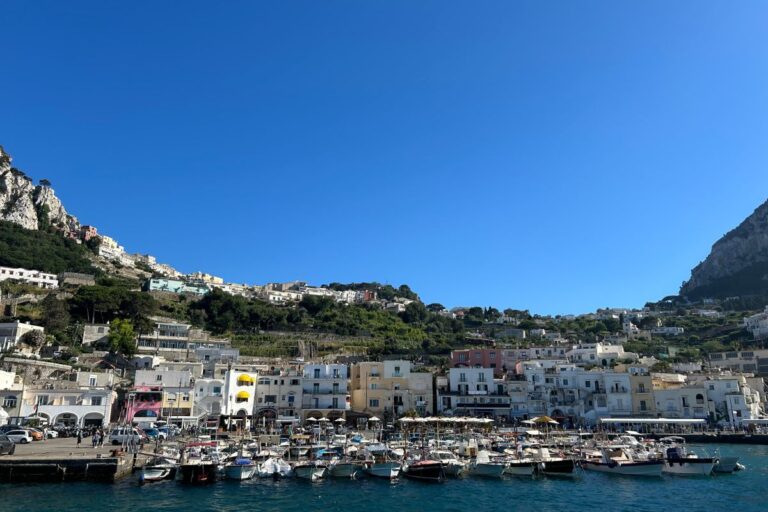
When she announced it was her favorite meal of the vacation, we jokingly declared the trip a complete success. Sure, we’d visited Pompeii, Capri, Positano, and the Amalfi Coast, but none of that seemed quite as important as the fact that my mom had found a restaurant worthy of becoming the new family benchmark.
The only disappointment was that we couldn’t go back and order half the menu.
The Rhythm of the Trip
One of the things I realized very quickly while planning this trip was that not everyone enjoys travel at the same pace. My dad could—and would—read every single card in a museum exhibit. My mom and sister would already be sitting at the end waiting for us, while I’d be somewhere in the middle, interested enough to linger but not quite ready to commit to reading the entire museum.
That reality shaped many of our decisions throughout the trip, and Pompeii ended up being a perfect example. It combined history, fascinating ruins, and an outdoor setting that felt engaging for everyone. Beach club days balanced out the more active sightseeing days, and long breakfasts in Maiori gave us time to slow down and simply enjoy being together.
I’ve also learned that the rhythm of a family itinerary matters almost as much as what’s actually on it. I try not to make every day a go-go-go sightseeing day or every morning an early one. More importantly, I try to pair what I think of as “harder” days with “easier” ones.
What counts as hard or easy will look different on every trip. For me, it’s less about how much we’re doing and more about how many things have to go right for the day to work. The more parts of the itinerary that depend on something else happening at a specific time, the “harder” I consider that day. An easy day on the Amalfi Coast might mean walking ten minutes from our hotel in Maiori to the ferry, taking it to one town, and spending the day simply getting to know that town. No timed entrances, no restaurant reservations, no complicated transportation connections. If we arrive an hour later than planned, nothing really changes.
A harder day was Pompeii. It was a full-day excursion that required about an hour of travel, and we had timed tickets and a private guide waiting for us. Getting there at the right time mattered. When we learned the train was on strike, there wasn’t a later train we could simply take—the trains weren’t running. We had to quickly figure out another way to get there because the rest of the day had already been booked around our planned arrival time.
That’s the kind of day I try not to schedule back-to-back. If one day requires an early start, multiple transportation steps, timed reservations, or simply a lot of mental energy, I try to make the next one more flexible.
I say “try” because I’m still not particularly good at leaving enough downtime. There’s always another town, restaurant, viewpoint, or day trip that looks close enough to squeeze in, and suddenly the relaxing day has acquired an itinerary. It’s something I’m still working on with every trip.
Our days on the Amalfi Coast eventually settled into a comfortable rhythm. Some mornings were spent catching ferries, climbing hills in Ravello, and navigating transportation schedules. Other days were slower, with leisurely meals, beach time, and wandering through small coastal towns.
Looking back, those slower moments together stand out just as much as the major attractions.
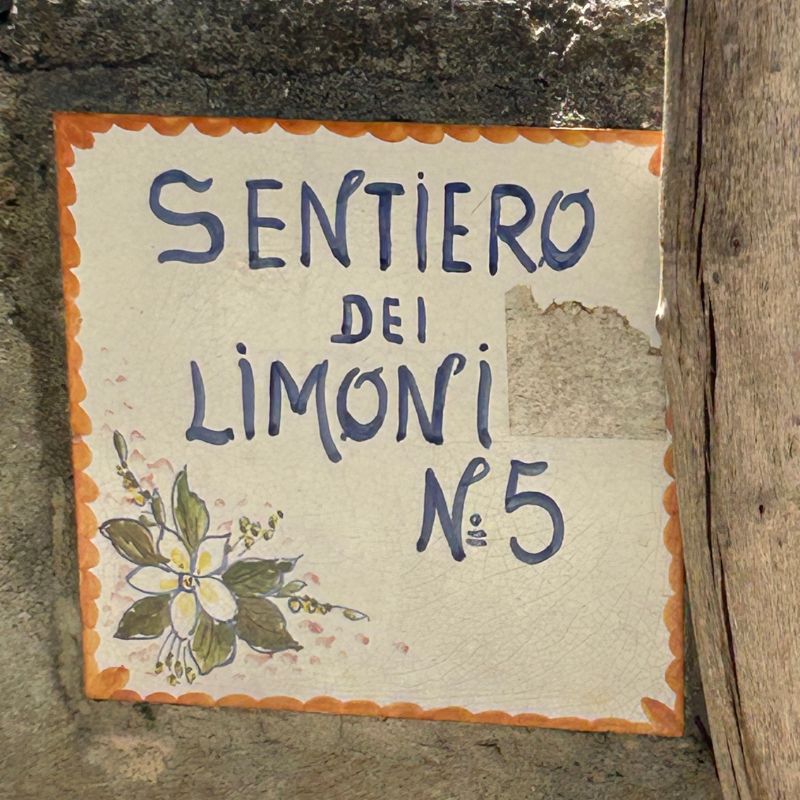
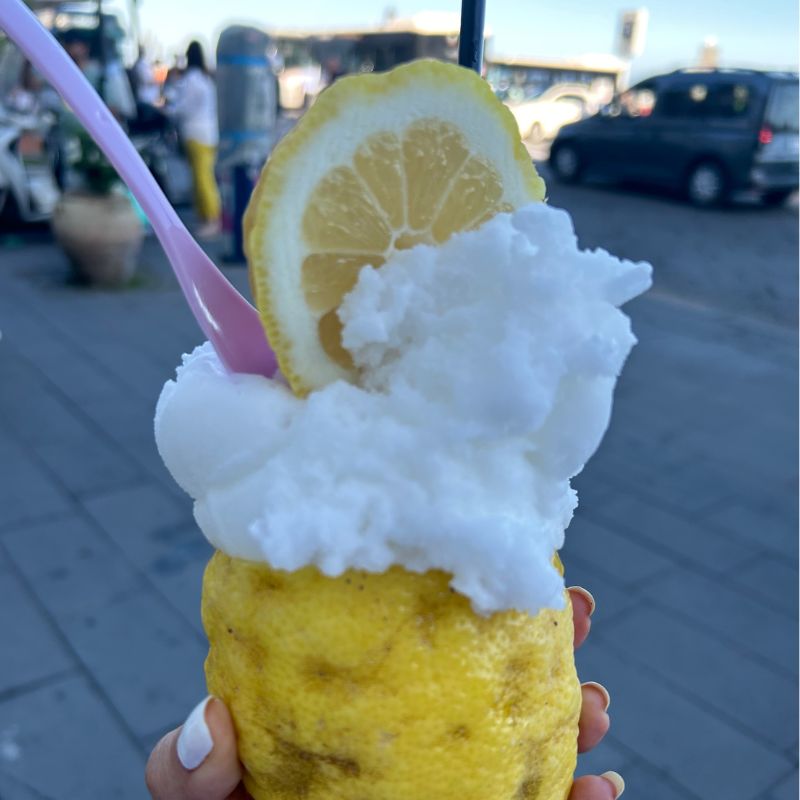
Not every memorable day needs a complicated itinerary. Sometimes wandering the Path of the Lemons and stopping for a lemon granita was more than enough.
What I’ll Remember Most
Of course, family travel also means shared stress.
One morning we stood at a bus stop slowly realizing we were going to miss our ferry. Another day we scrambled into an expensive taxi after learning the trains were on strike, threatening our Pompeii plans. In Naples, I accidentally led everyone toward the wrong train station entirely, resulting in a full-family speed walk across the city while trying not to miss our train back to Rome.
In the moment, all of those situations felt stressful and frustrating. Looking back, they’ve somehow become some of the funniest memories from the trip.
My family can never accuse me of planning boring vacations.
Family travel has also taught me to let go of the idea of a perfect itinerary. Sometimes your carefully researched ferry day to Capri turns into an unexpected beach club day in Positano because transportation doesn’t cooperate. Sometimes those unplanned pivots end up becoming the stories everyone talks about long after the trip is over.
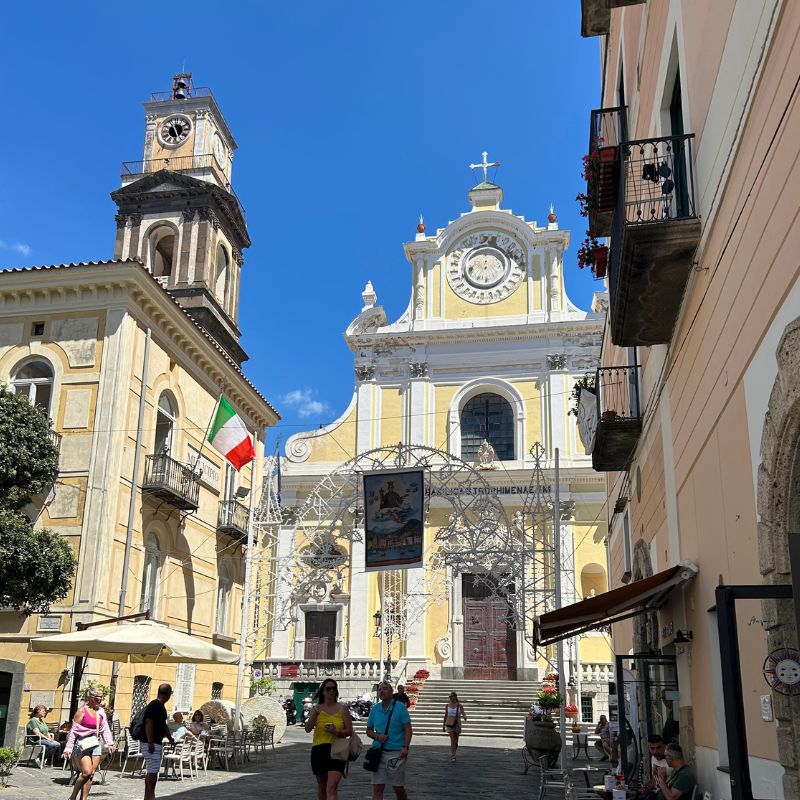
Looking through my camera roll afterward, I realized there were dozens of photos I probably never would have taken on a solo trip. Family selfies in Ravello. My parents enjoying breakfast on the hotel patio. My sister claiming the best beach chair before anyone else had a chance. Small moments that seemed insignificant at the time but now make me smile the most.
By the end of the week, what stood out most to me wasn’t any single landmark or town. It was sharing the ferry rides, long meals, stressful moments, wrong turns, inside jokes, and beautiful views together.
The Amalfi Coast absolutely lived up to its reputation visually, but what made the trip memorable was experiencing it alongside my family, imperfections and all.
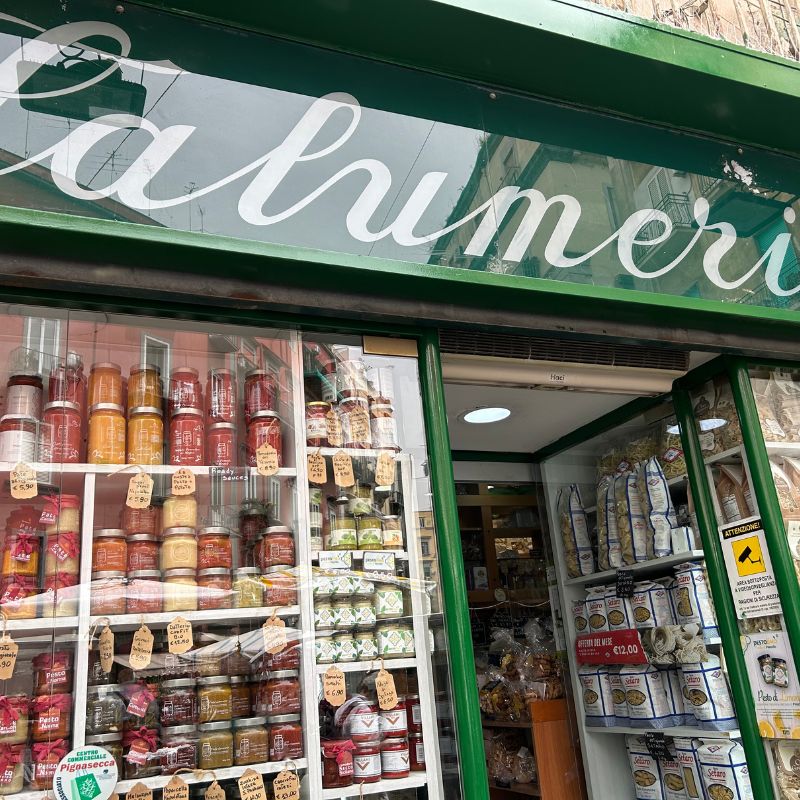
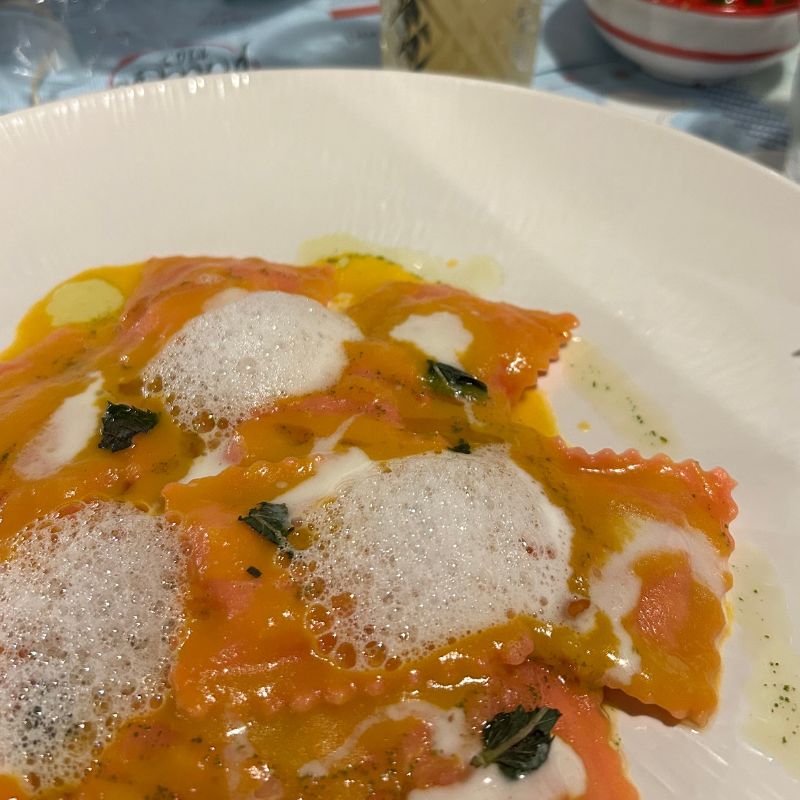
Some of our favorite Amalfi Coast memories came from the simplest parts of the trip, wandering into small shops, sitting down for a good meal, and enjoying whatever we found along the way.
Why Family Trips Stay With You
One of my favorite souvenirs from our family trips doesn’t come home in a suitcase.
A few years ago, my sister had the idea of creating a photo book for my parents every Christmas using pictures from our travels together. By the time Christmas arrives, six months or more have usually passed since the trip, and flipping through those pages gives us a chance to relive moments we’ve already started to forget.
The photos bring back the ferry rides, the meals, the wrong turns, the jokes, and all the little moments in between.
Maybe that’s why family travel feels different. Long after you’ve forgotten the hotel room number or what day you visited a particular town, you remember who you shared it with. And every Christmas, when we flip through those photo books together, we get to relive those moments all over again.
The Amalfi Coast gave us beautiful views, incredible food, and a week of adventures. The photo book reminds me that what mattered most was simply experiencing it together.
More From My Amalfi Coast Series
- Where to Stay on the Amalfi Coast: Why We Chose Maiori — Why Maiori worked so well as our home base, plus what to consider when choosing where to stay along the coast.
- Best Day Trips From the Amalfi Coast: What We Learned From Maiori — The places we visited from Maiori, what worked, and which day trips I’d prioritize next time.
- Planning an Amalfi Coast Trip? 7 Things I’d Do Differently— What I learned about ferries, buses, transportation, pacing, and planning a realistic itinerary.
- Is the Amalfi Coast Worth It? An Honest Review After One Week — The beautiful parts, the frustrating parts, and whether I think the Amalfi Coast lives up to the hype.
- Amalfi Coast vs Costa Brava: Which One Should You Visit? — How two of our European coastal trips compared, and which destination I’d choose depending on the kind of trip you want.
- Where to Stay on the Amalfi Coast: Best Towns & Hotels — How Maiori, Amalfi, Positano, Ravello, and Minori compare, plus the hotels I’d consider in each.
- How Many Days Do You Need on the Amalfi Coast? — How much time I’d plan for a first trip, from a quick 2–3 day visit to a slower week along the coast.
Need More Personalized Help?
If the Amalfi Coast is on your bucket list but you need more personalized guidance than these articles can provide, I’d love to help. I can help you sort through where to stay, how to structure your days, which experiences are worth prioritizing, and how to build an itinerary around your travel style, pace, and priorities.