Planning an Amalfi Coast Trip? 7 Things I’d Do Differently
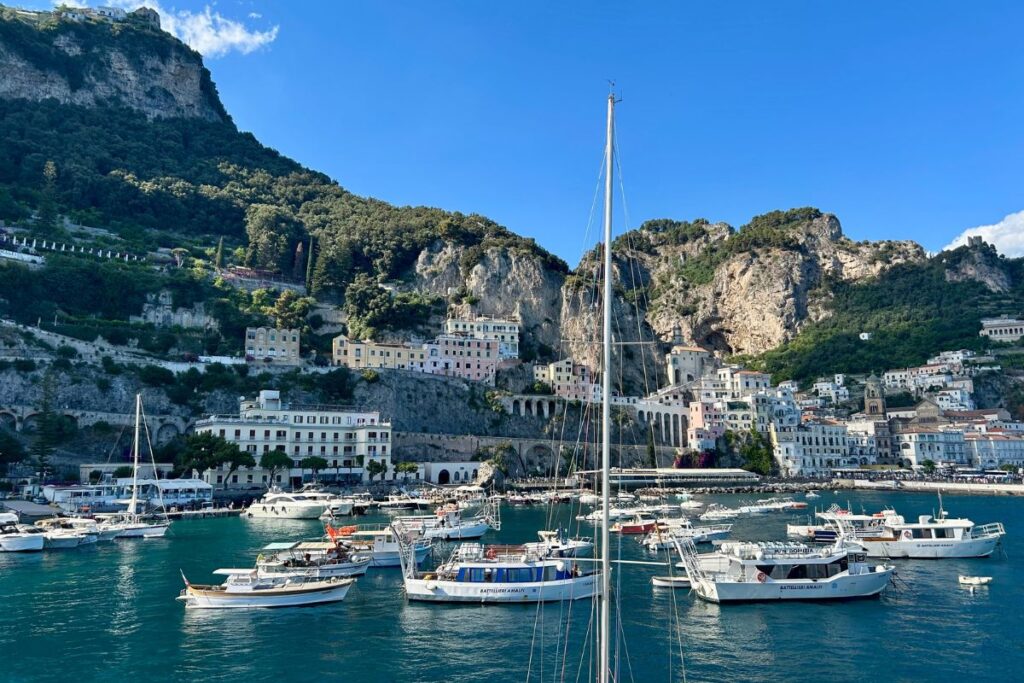
Planning a trip to the Amalfi Coast? This post is part of my Amalfi Coast series, where I share why we based ourselves in Maiori, the day trips we took, what I’d do differently, and what traveling the Amalfi Coast with family was like.
Planning an Amalfi Coast trip online seems deceptively simple until you actually start mapping out the transportation. After spending six nights based in Maiori and exploring the coast with my family, I came home with a much better idea of what worked, and what I’d do differently next time.
There isn’t a train line connecting the towns along the coast, so getting around often means relying on a combination of buses, ferries, walking, and occasionally expensive taxis when plans go wrong. Even reaching the coast can involve multiple connections depending on where you’re coming from.
Looking back, transportation shaped our trip almost as much as the destinations themselves. If I were planning it again, there are a few things I would do exactly the same and a few I would change immediately.
Pick One Home Base and Stay There
One of the best decisions we made was choosing a single home base rather than constantly moving hotels. We stayed six nights at the Reginna Palace Hotel in Maiori and used it as a base for exploring Ravello, Positano, Capri, Sorrento, Pompeii, and Naples.
Not having to pack and unpack every couple of days made the trip dramatically more relaxing. It also allowed us to become familiar with the local transportation system and settle into a comfortable rhythm.
That became even more valuable during peak season, when ferries were packed, bus stops were crowded, and moving around the coast often took longer than expected. The thought of dragging multiple suitcases onto crowded ferries every few days sounds exhausting in hindsight.
Whether you choose Maiori, Amalfi, Positano, or another base in the region, I’d rather spend my energy exploring than relocating. For a trip of six or seven nights, choosing one home base is a decision I’d make again without hesitation.
Explore Reginna Palace Hotel and check current rates →
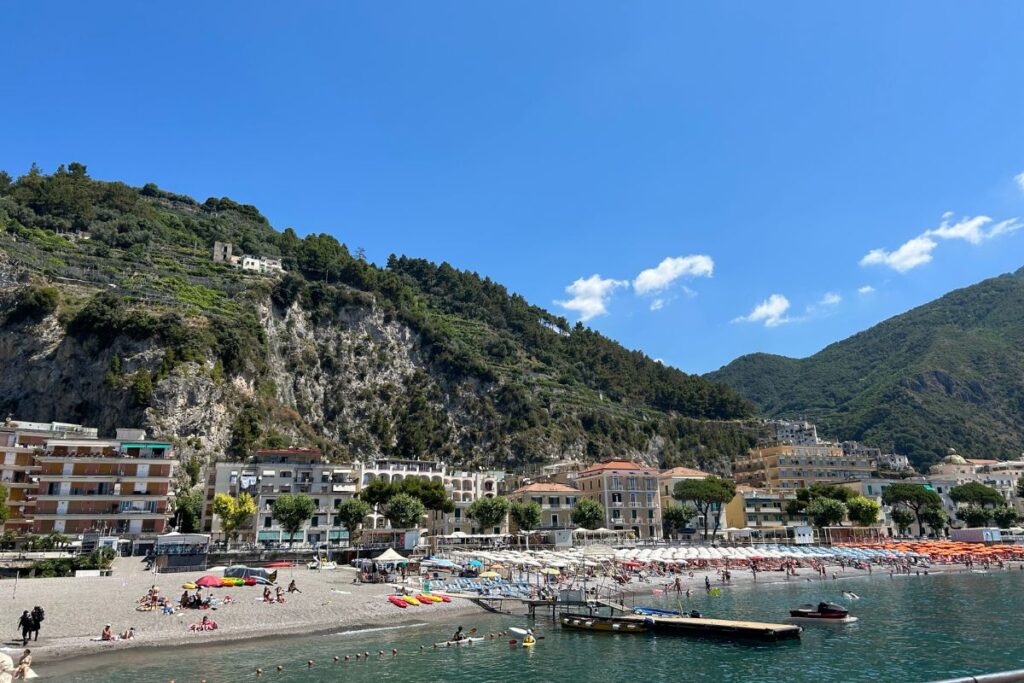
You planned too hard for a trip this beautiful to let one tight connection derail it. A little extra buffer time can protect the vacation you worked so hard to plan.
Build More Buffer Than You Think You Need
We flew overnight from New York to Rome and booked a train south later that day. At the time, I thought I was being overly cautious by building several hours between our flight arrival and train departure.
Looking back, I probably overcorrected. Everything went smoothly: immigration was quick, our luggage arrived, and we found ourselves sitting around the station for nearly two hours wishing the vacation would start already. At the same time, I don’t regret building in the buffer. The Amalfi Coast is not the place where I would want to gamble on a tight connection after an international flight.
My advice is simple: give yourself more time than you think you’ll need on major travel days. That applies whether you’re arriving on an international flight, heading back toward Rome for your departing flight, or leaving the Amalfi Coast to continue farther south. With so many transportation connections involved, I’d rather arrive early than build an itinerary that only works if every train, ferry, and bus runs exactly as planned.
If the budget allows, I would also seriously consider a private transfer from the airport directly to your home base, or at least as far as Salerno. After an overnight flight, reducing the number of connections and getting into vacation mode sooner has real value, especially when traveling with family or multiple suitcases.
Know When to Take the Ferry vs. the Bus
Before arriving, I assumed buses and ferries were somewhat interchangeable transportation options. They aren’t.
Whenever possible, I’d choose the ferry. The views are incredible, the experience is more enjoyable, and you avoid some of the traffic that can slow down the coastal roads. That said, buses are still an important part of getting around the Amalfi Coast and are often the only practical way to reach places like Ravello or connect smaller towns.
The bigger lesson is not to assume either option will always work exactly as planned. One morning, we were waiting in Maiori for a bus to Amalfi, where we were supposed to catch our planned ferry. We stood at the bus stop watching the minutes tick by as the ferry departure got closer and closer. The bus never arrived, which meant we missed the ferry and our carefully planned day disappeared with it.
Fortunately, we pivoted and ended up having a fantastic day in Positano instead. The lesson wasn’t to avoid buses, it was to build enough flexibility into the itinerary that one delayed bus doesn’t derail the entire day.
Don’t Try to Do Too Much in One Day
Of all the planning mistakes I made, this is probably the one I’d change first. I was convinced we could comfortably visit both Capri and Sorrento in a single day. Looking at a map, it seemed reasonable.
In reality, ferry schedules, transportation connections, and crowds meant we spent much of the day keeping an eye on the clock. We still enjoyed both destinations, but neither received the time it deserved.
In hindsight, the problem wasn’t just trying to fit too much into one day. We were also trying to fit two different regions into a single week. If I could redesign the trip today, I would probably save Sorrento and Pompeii for a separate itinerary focused on the Bay of Naples. A future trip there could easily include Naples, Pompeii, Herculaneum, Capri, Sorrento, and the surrounding coastline.
Meanwhile, I’d dedicate an Amalfi Coast trip more fully to Maiori, Amalfi, Ravello, Positano, Minori, and the smaller coastal towns. Trying to combine both regions wasn’t a disaster by any means, but it contributed to some of our busiest and most rushed days.
The Amalfi Coast rewards slowing down. I’d rather visit fewer places and have enough time to enjoy them than spend the trip watching the clock for the next ferry.



Some of our favorite moments came when we stopped watching the ferry schedule and simply enjoyed where we were, usually with something good to eat.
Budget for Transportation Surprises
One thing I completely underestimated while planning this trip was transportation costs. When I build travel budgets, I naturally focus on flights, hotels, activities, and food, while getting around once we’re there often becomes an afterthought. On the Amalfi Coast, that approach is a mistake.
Based on our experience, I would personally set aside at least €150 per person for transportation within the region on a trip like ours. For our family of four, that would mean budgeting roughly €600 and I’d still leave some extra room for the unexpected.
Because on the Amalfi Coast, unexpected transportation expenses happen. A rail strike forced us into a last-minute taxi to Pompeii, while a missed ferry resulted in additional costs as we pivoted our plans. By the end of the trip, transportation had become one of our largest expenses outside of flights and hotels.
If I were planning the trip again, I’d create a dedicated transportation budget from the start rather than treating it as a miscellaneous category. Ferries are absolutely worth using, but multiple tickets add up quickly, especially for a family, and having extra money set aside makes the inevitable change of plans much less stressful.
Don’t Overbook Transportation
One planning mistake I made was trying to prebook almost everything before arriving. I booked trains, ferries, and other connections weeks in advance because I thought having everything locked in would reduce stress. In reality, it sometimes created additional pressure.
We used Ferryhopper to book many of our ferry routes, and while the platform worked well, I found that things often made more sense once we were actually there. Local ticket offices could explain route options and alternative schedules much more clearly than I had been able to piece together online.
If I were planning the trip again, I would still book anything likely to sell out during peak season, but I wouldn’t lock every day into a fixed transportation schedule weeks in advance. One of my first stops after checking into our hotel would be the local ferry office, where I’d confirm availability, ask questions, and build more of the week’s schedule from there.
For anything I did book ahead, I’d also pay much closer attention to ticket flexibility. As the planner in the family, locking everything in early felt productive and often saved money but the Amalfi Coast doesn’t always cooperate with carefully constructed schedules.
If you’re watching prices increase and don’t feel comfortable waiting until arrival, compare the cost of a refundable or flexible ticket before automatically choosing the cheapest option. Paying a little more upfront may be worth it if your plans change, a connection doesn’t work, or you simply decide a day trip no longer makes sense.
The Amalfi Coast rewards flexibility, and sometimes having the freedom to change your plans is worth more than getting the absolute cheapest fare.
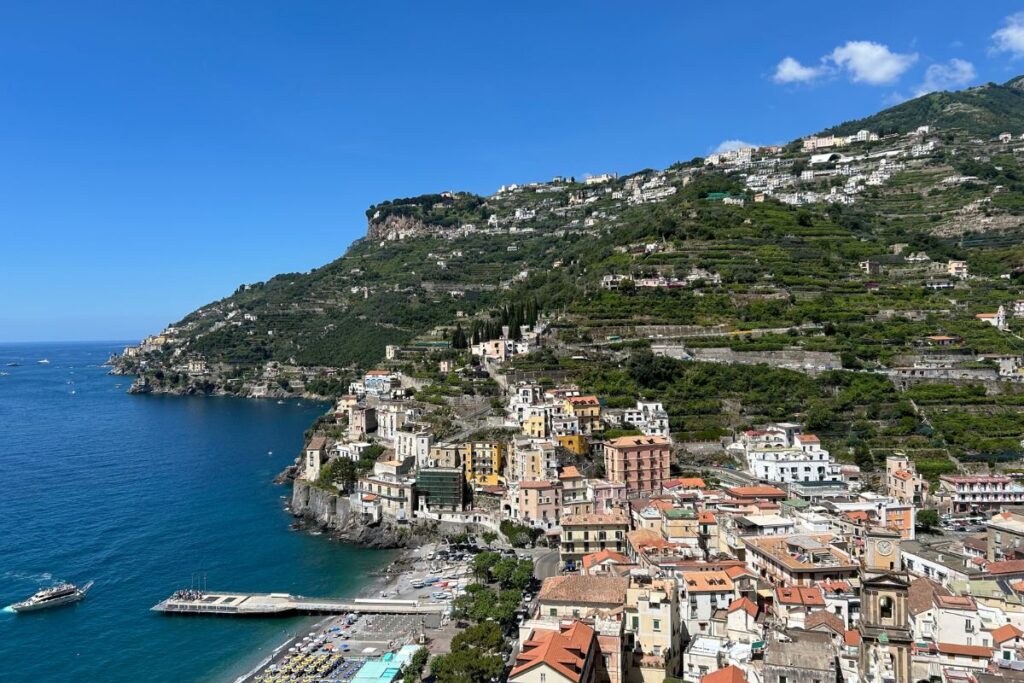
The Amalfi Coast may look effortless from above, but getting between its cliffside towns rarely is. Building extra time and flexibility into our plans made the inevitable transportation hiccups much easier to handle.
Leave Room for Something to Go Wrong
This might be the most important piece of advice in the entire article: at some point during your trip, something probably won’t go according to plan. We certainly had enough examples during our week on the Amalfi Coast.
A rail strike forced us to book a last-minute taxi and you’ll be shocked at how much taxis can cost along the Amalfi Coast. A weekend bus schedule caused us to miss a ferry, which meant buying brand-new ferry tickets when we changed our plans. And in Naples, we missed a train simply because we walked in the wrong direction trying to find the station.
None of those moments were part of the itinerary, but none of them ruined the trip either. We adjusted, paid more than we would have liked, and kept going. In some cases, the change even worked in our favor: that missed ferry ultimately turned into a fantastic beach club day in Positano.
The more willing we became to pivot instead of trying to rescue the original plan, the more enjoyable the trip became. Plan carefully, but leave enough room in both your schedule and your budget for the Amalfi Coast to ignore your plans completely.
Final Thoughts
Looking back, the biggest planning lesson wasn’t really about ferries, buses, or train schedules. It was about expectations.
The Amalfi Coast is beautiful, but it isn’t always easy. Transportation takes time, crowds can be frustrating, and even carefully planned days occasionally fall apart. But if you choose a good home base, build flexibility into your itinerary, create a realistic transportation budget, and leave room for the unexpected, you’ll spend far less time stressing about logistics and far more time enjoying the coast.
Some of our favorite moments came when we slowed down rather than trying to squeeze in one more destination. The Amalfi Coast rewards good planning but it also rewards knowing when to abandon the plan entirely.
More From My Amalfi Coast Series
- Where to Stay on the Amalfi Coast: Why We Chose Maiori — Why Maiori worked so well as our home base, plus what to consider when choosing where to stay along the coast.
- Best Day Trips From the Amalfi Coast: What We Learned From Maiori — The places we visited from Maiori, what worked, and which day trips I’d prioritize next time.
- Is the Amalfi Coast Worth It? An Honest Review After One Week — The beautiful parts, the frustrating parts, and whether I think the Amalfi Coast lives up to the hype.
- What the Amalfi Coast Taught Me About Traveling With Family— A more personal look at our week together and what the experience was really like as a family trip.
- Amalfi Coast vs Costa Brava: Which One Should You Visit? — Not every Mediterranean coast is built the same. See how the Amalfi Coast and Costa Brava compare for transportation, crowds, day trips, and overall ease of travel before deciding which one fits your trip.