Mostar: Bosnia’s Bridge Between Worlds
This is part of my Central Europe series. If you’re coming from Croatia’s coast, start with Split: Roman History Meets the Adriatic.
Before arriving in Bosnia and Herzegovina, I knew remarkably little about the country. I could point to it on a map, knew it had once been part of Yugoslavia, and knew Mostar was famous for a bridge.
That was about it.
After a week moving through Croatia, I boarded an evening bus in Split and crossed yet another border. A few hours later, I arrived in a country that would leave a much bigger impression than I ever expected.
Unlike some of the destinations on this trip, Mostar wasn’t somewhere I had spent months researching. It wasn’t on my bucket list or a place I had dreamed of visiting. It was simply the next stop on an itinerary that kept moving south.
And sometimes, those are the places that end up being the most memorable.
Arriving in Mostar
I arrived late in the evening and checked into Hotel Mostar, located about a 20-minute walk from the Old Town.
The city immediately felt different from Croatia. The architecture, food, and atmosphere had shifted, and perhaps most noticeably, the influence of the Ottoman Empire was impossible to miss.
Minarets rose above the skyline, Turkish coffee appeared on menus everywhere, and Mostar felt like a cultural crossroads unlike anywhere else I had visited on the trip so far.
Travel Breakdown Reality Check
Trip Goal: Explore Bosnia and Herzegovina beyond a quick day trip while discovering one of the Balkans’ most iconic cities.
Hotel Mostar
- Sticker Price: $200 total for 2 nights
- Out-of-Pocket: $136
- Travel Hack Used: Remaining $64 Capital One Venture X Travel Credit
Reality Check:
Would I normally choose a simple hotel outside the Old Town over one of the boutique guesthouses closer to the bridge? Probably not.
But Mostar was already one of the more affordable stops of the trip, and I still had a portion of my Venture X travel credit remaining. Hotel Mostar ended up being exactly what I needed: comfortable, clean, and with breakfast included, it provided a solid base for exploring the city.
The only real tradeoff was location. Staying here meant a roughly 20-minute walk to the Old Town rather than stepping directly out into the historic center, but for this trip, the savings and the Venture X travel credit made that an easy compromise.
Sometimes the best value isn’t found in the hotel. It’s found in how much further your money goes once you reach the destination.
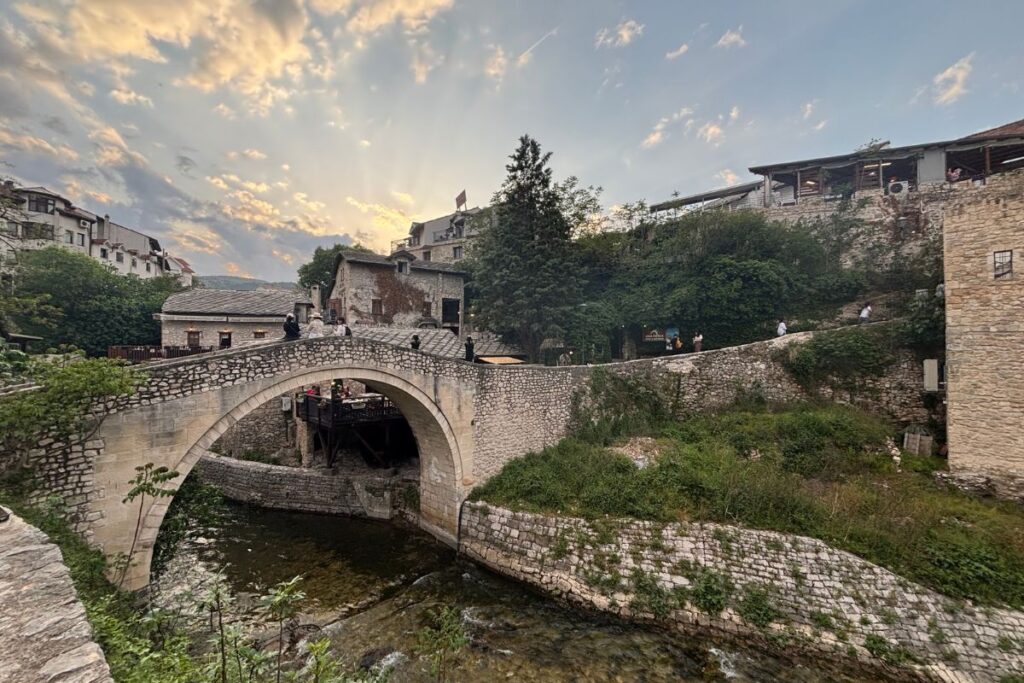
Before reaching Mostar’s famous Stari Most, smaller stone bridges offered an introduction to the architecture of the Old Town.
Understanding Mostar
The following morning, I joined a walking tour of the city. As had become a recurring theme throughout this trip, it ended up being one of the best decisions I made.
Before arriving, I knew Mostar was famous for its bridge. What I didn’t understand was how much of the city’s identity revolves around it.
Our guide explained how Mostar developed during the Ottoman period and how Stari Most connected communities on both sides of the Neretva River. More importantly, she explained what happened during the Bosnian War, the destruction of the bridge, and why its reconstruction means so much to the people who live here today.
Suddenly, it wasn’t just a beautiful landmark. It was a symbol of a city that had lost one of its defining landmarks and eventually rebuilt it.
Understanding that history completely changed the way I experienced the rest of Mostar.
Stari Most & The Divers
Eventually, every street in Mostar seems to lead back to Stari Most.
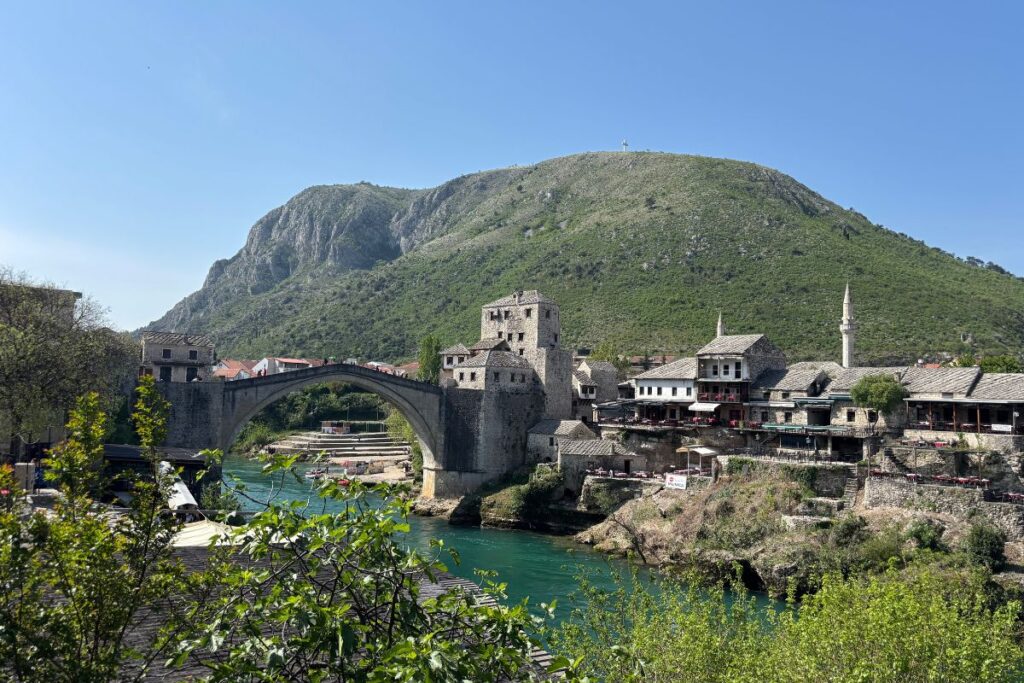
The bridge is undeniably beautiful. Its graceful stone arch stretches across the emerald-green Neretva River, connecting the two sides of the Old Town while drawing visitors from around the world.
What struck me most, though, wasn’t the bridge itself. It was the way people interacted with it. Tourists stopped constantly for photos, locals crossed it without a second thought, and every so often, a crowd would begin gathering along the bridge.
That’s usually the signal that one of Mostar’s famous divers is preparing to jump.
The tradition dates back centuries, with local men diving from the bridge into the cold waters of the Neretva below. During our walking tour, our guide intentionally paused to give us time to watch the divers and explain the history behind the tradition.
Then he casually mentioned that he was a member of the diving club and had completed the jump himself.
That detail made the tradition feel much more real. This wasn’t simply a performance put on for tourists; it was something locals still actively participated in and took pride in.
Standing there watching, it was impossible not to feel nervous for them. The drop looks significantly higher in person than it does in photographs.
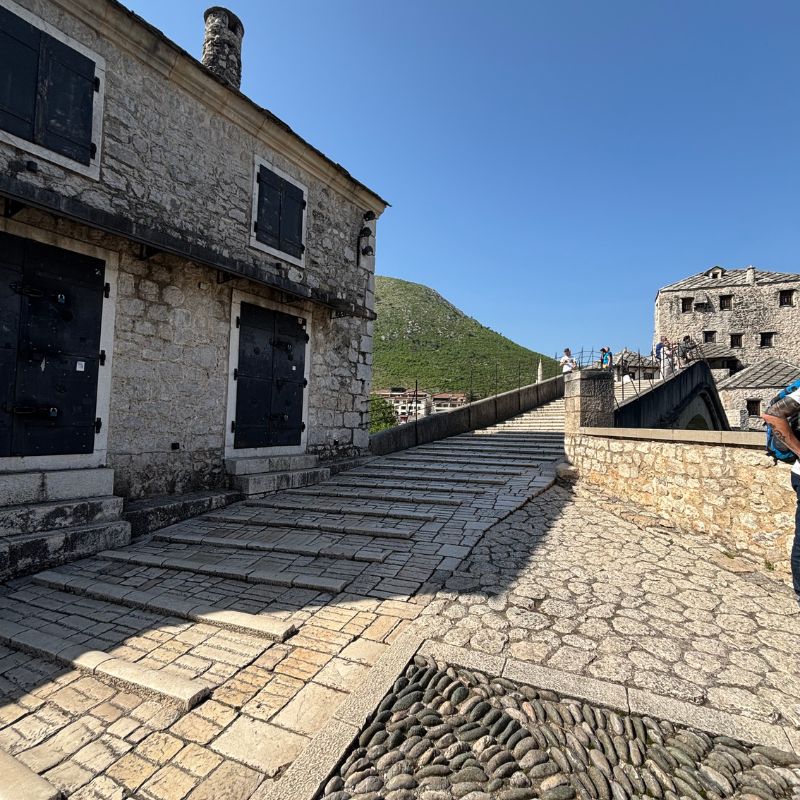
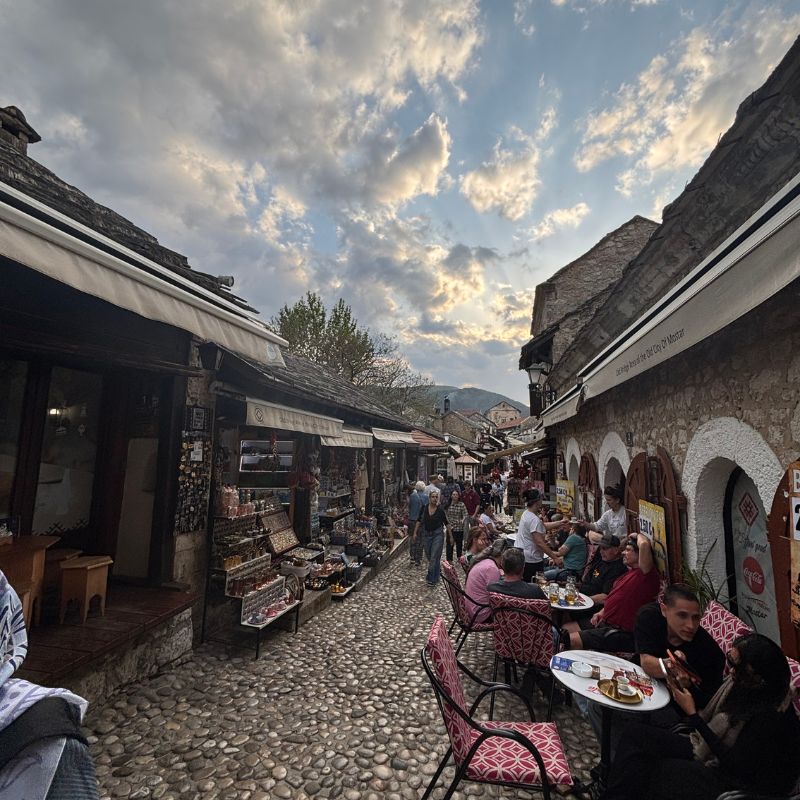
Mostar’s Old Town surrounds Stari Most with stone streets, small shops, cafés, and restaurants that make the historic center worth exploring beyond the bridge itself.
The Old Bazaar
Surrounding the bridge is the Old Bazaar, known as Kujundžiluk.
Cobblestone streets wind through rows of small shops selling handcrafted goods, copperware, textiles, jewelry, and souvenirs. Cafés and restaurants spill into the narrow streets, and seemingly everywhere you turn, another view of the bridge appears.
Unlike some historic districts that feel frozen in time, Mostar’s Old Town still felt alive. Shopkeepers chatted with one another, visitors lingered over coffee, and the scent of grilled food drifted through the streets.
It certainly felt touristy at times, but it never felt like the city existed solely for visitors. There was still a sense of everyday life happening around all of us who had come to see it.
A Brief Travel Panic
After the walking tour, I reached for my debit card so I could withdraw cash for the guide and immediately realized it wasn’t in my wallet.
For a brief moment, panic set in.
I didn’t think it had been stolen. My travel cards send push notifications whenever they’re used, I check my bank account every morning while traveling, and there were no unfamiliar transactions. Everything else in my wallet was still there.
The bigger problem was that I only had about nine euros left in cash.
Throughout most of this trip, that wouldn’t have mattered. Croatia, Slovenia, Austria, and Poland had all been incredibly card-friendly. Mostar was different.
While many hotels and some restaurants accepted credit cards, cash was still very much king. Before eventually finding somewhere that accepted cards for lunch, I had already been turned away from several cash-only establishments.
Even though I was fairly confident the card was sitting in my hotel room, I started working through the backup plan. If necessary, I could use Western Union, something I’d already learned during a previous trip to Argentina. I was returning to Croatia the following day, with Amsterdam after that. I had options.
Thankfully, I didn’t need any of them.
After lunch, I walked back to the hotel and found the card exactly where I’d left it. Crisis averted.
After a short break, I headed back into the city for the evening—this time with my debit card firmly accounted for and considerably more peace of mind.
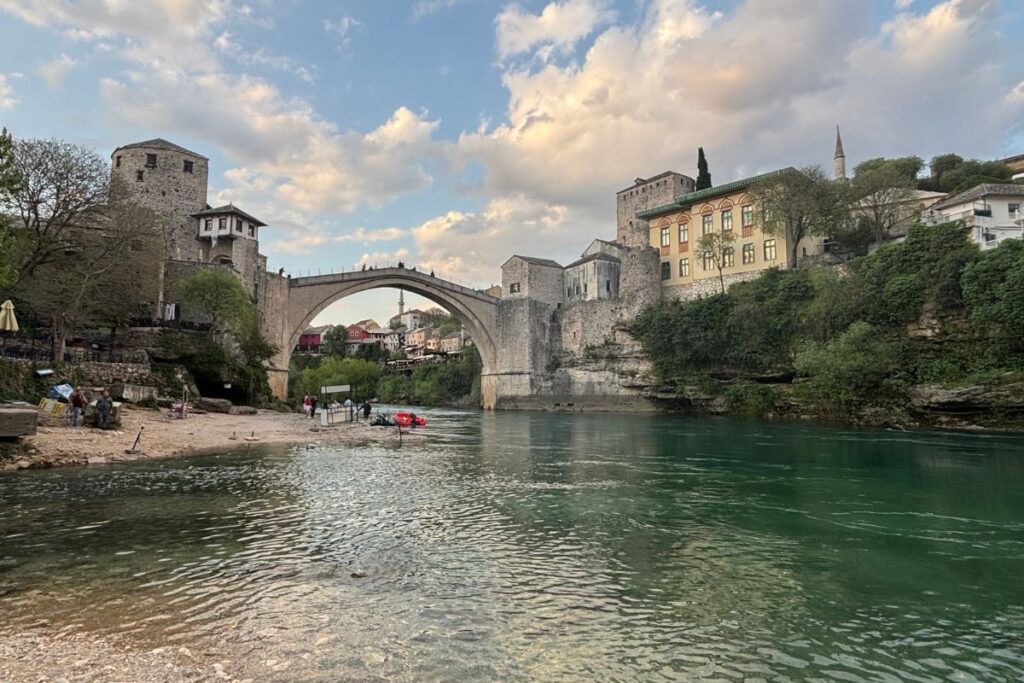
The view of Stari Most from the banks of the Neretva River, one of my favorite perspectives of the bridge.
Seeing the Bridge from Below
One of my favorite discoveries came after crossing Stari Most. Most visitors linger around the shops and cafés before eventually turning back toward the Old Town, but I kept walking.
The farther I moved from the main shopping streets, the quieter things became. Eventually, I found myself near the riverside area where spectators gather to watch the bridge divers.
From below, the perspective is completely different. Instead of standing on the bridge, you’re looking up at its famous stone arch stretching across the Neretva River while the Old Town rises behind it.
I also made a quick stop at Kriva Ćuprija, often referred to as the Crooked Bridge. Smaller and less crowded than Stari Most, it offered another glimpse of what Mostar feels like once you move beyond the busiest parts of the Old Town.
If you’re looking for some of the best views of Stari Most itself, I actually preferred seeing it from below to standing on the bridge. It also gave me a much better appreciation for just how high the divers are when they jump into the river.
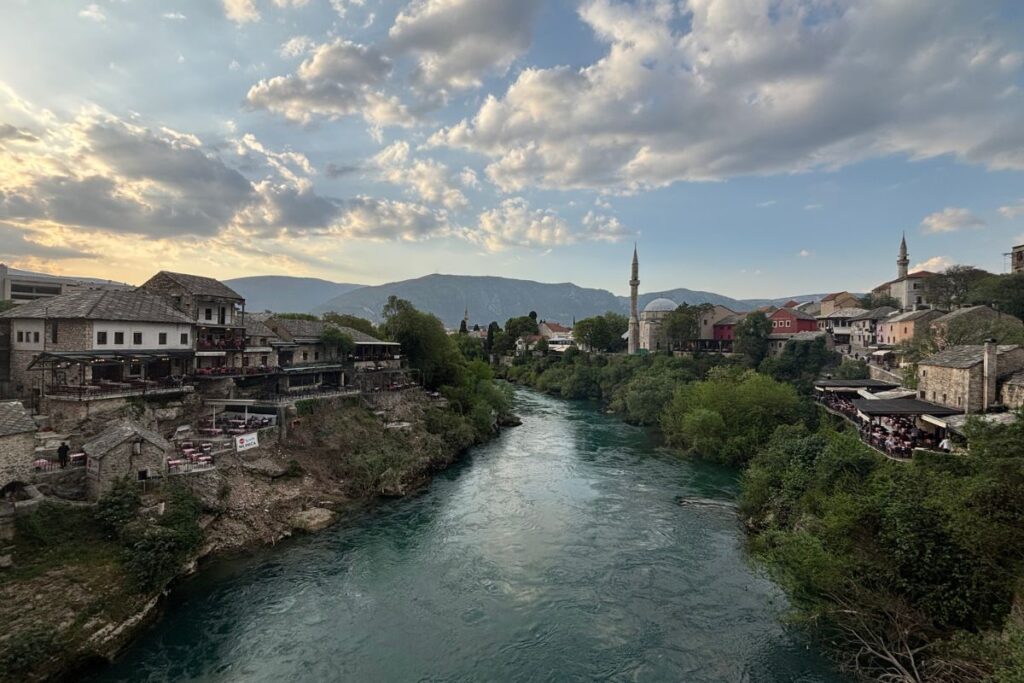
One last look along the Neretva River, a view that captures just how much of Mostar extends beyond its famous bridge.
What I’d Explore Next Time
If Split left me curious about Croatia’s coastline, Mostar left me curious about Bosnia and Herzegovina. The city made me realize just how little I knew about the country before arriving.
A future trip would give me time to explore:
- Blagaj Tekija — A historic Dervish monastery dramatically situated at the base of a cliff beside a vivid blue spring.
- Kravica Waterfalls — One of Bosnia and Herzegovina’s best-known natural attractions, with cascading waterfalls surrounded by lush greenery.
- Sarajevo — The destination I regret missing most. Bosnia and Herzegovina’s capital brings together Ottoman, Austro-Hungarian, and modern influences alongside an incredibly complex history.
- Počitelj — A historic town overlooking the Neretva River that’s often combined with visits to Mostar and Blagaj.
Most of all, I’d simply spend more time exploring Bosnia and Herzegovina. Mostar convinced me that the country deserves far more than being treated as a quick detour from Croatia’s coast.
Final Thoughts
Mostar ended up being one of the biggest surprises of my entire Central Europe trip. I arrived knowing almost nothing about Bosnia and Herzegovina and left wanting to return.
The bridge may be what initially drew me to Mostar, but it was the combination of history, culture, food, scenery, and genuine curiosity about the rest of the country that stayed with me long after I left.
Sometimes the destinations we research the least leave the strongest impression.
The next morning, I boarded the final bus journey of my Central Europe adventure. One more Croatian city remained before a flight to Amsterdam and a reunion with my sister and cousin: Dubrovnik.
Next Up: Dubrovnik: Worth the Hype? Croatia’s most famous destination lived up to its reputation—and left me planning a return trip.