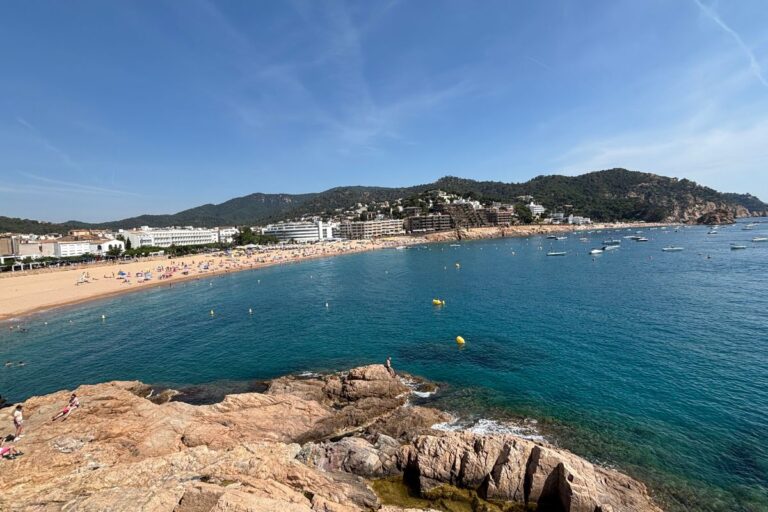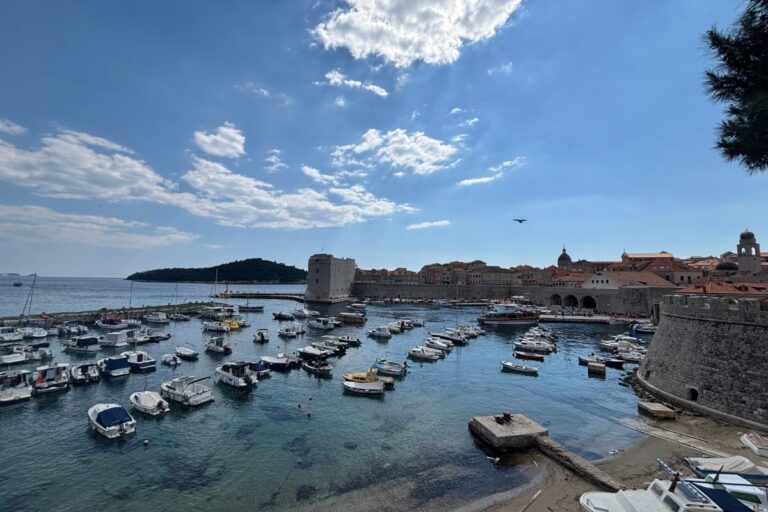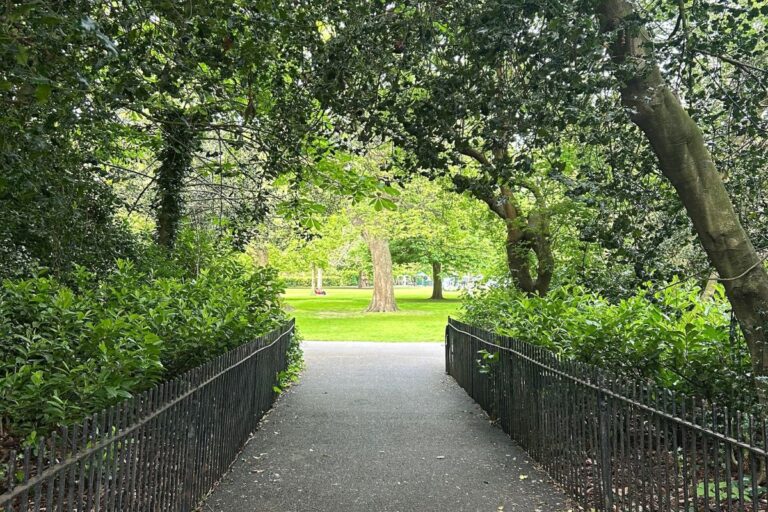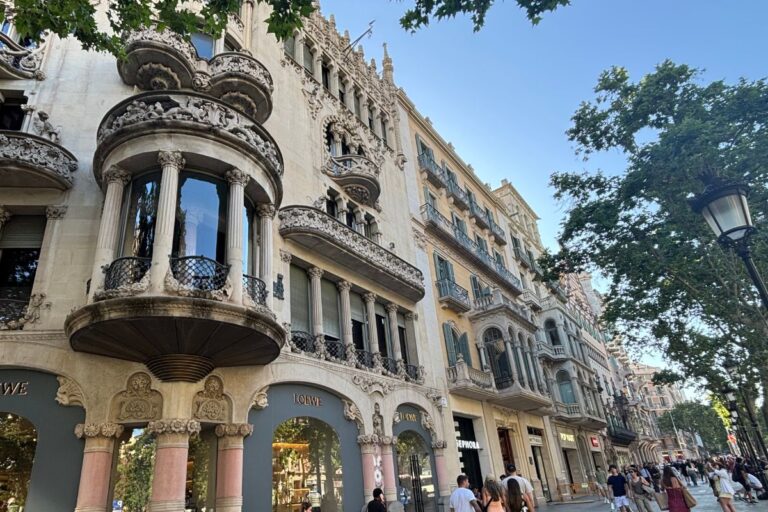
Split: Roman History Meets the Adriatic
This is part of my Central Europe series. If you’re coming from Croatia’s capital, start with Zagreb: Croatia’s Overlooked Capital.
After a single night in Zagreb, another early bus awaited.
This time, however, I was finally heading toward the Croatia I thought I was coming to see.
Before arriving in the country, the images that came to mind were coastal cities, ancient stone streets, sparkling Adriatic waters, and island-hopping adventures. Zagreb had surprised me, but Split felt much closer to the Croatia I had imagined while planning this trip.
A five-hour morning bus ride carried me from Croatia’s capital to its Dalmatian Coast, and before long palm trees, boats, and blue water had replaced the parks and Austro-Hungarian architecture I had spent the previous day exploring.
Like many visitors, I had originally hoped to spend some time on the water. Island hopping was never going to fit into such a short visit, but I figured I might be able to squeeze in a short coastal boat excursion.
Unfortunately, strong winds had other plans.
Looking back, that ended up working out in my favor.
I checked into the AC Hotel Split, which would be my home for the next night.
Travel Breakdown Reality Check
Trip Goal: Experience Croatia’s Adriatic coast while positioning for an evening bus to Bosnia and Herzegovina.
- Sticker Price: €117
- Out-of-Pocket: €117
- Travel Hack Used: Marriott Platinum Elite Benefits
Reality Check:
Would I normally prioritize booking directly with Marriott if I could find a cheaper rate elsewhere? Not necessarily.
But this was one of those situations where elite status mattered more than saving a few euros.
My bus to Mostar wasn’t leaving until 7 PM the following evening, and I specifically wanted the flexibility of a late checkout. Rather than spending my last day in Split dragging my luggage around or coordinating luggage storage, I booked directly through Marriott and hoped my Platinum status would come through.
It did, and not just with the late checkout. I was upgraded to a premium corner room with wraparound, floor-to-ceiling windows, which made the stay itself considerably nicer than I’d expected.
The late checkout was especially valuable the next day. I didn’t have to get up early just because it was technically a travel day, and I could enjoy another afternoon in Split knowing my room—and my luggage—were taken care of until it was time to leave for the bus.
Sometimes the best travel hack isn’t a free night or a points redemption. Sometimes it’s simply making a travel day easier.
Explore AC Hotel Split and check current rates →
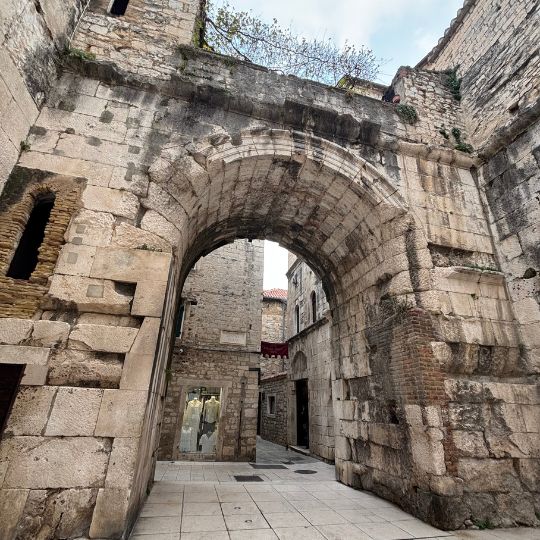
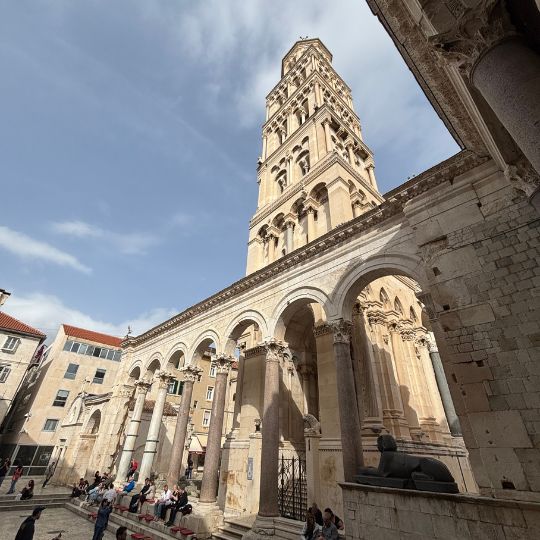
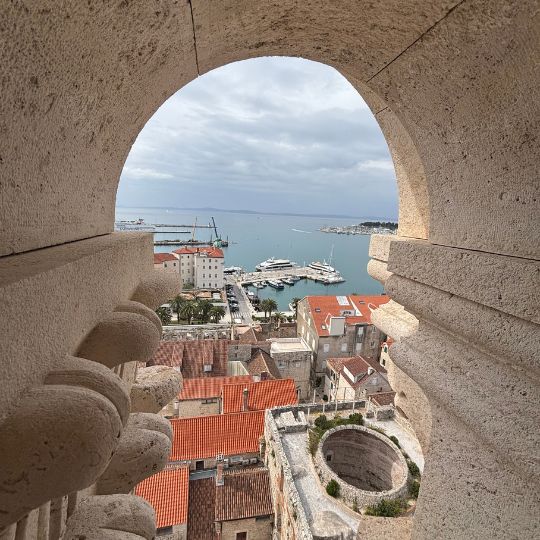
Inside Diocletian’s Palace, where Roman ruins, cathedral views, and the Adriatic all fit within a few minutes’ walk.
Diocletian’s Palace: The City Within the City
Shortly after arriving, I joined a walking tour of Split’s Old Town.
It turned out to be the perfect introduction to the city.
Before arriving, I knew Diocletian’s Palace was Split’s main attraction. What I didn’t fully understand was that the palace isn’t simply a historic site you visit.
In many ways, it is the city.
Built as a retirement residence for the Roman Emperor Diocletian around the 4th century, the palace still forms the heart of modern Split nearly 1,700 years later. Over the centuries, homes, businesses, churches, and public squares developed within and around its walls, transforming what was once an imperial residence into a living city.
Today, walking through the palace means passing apartments, restaurants, cafés, souvenir shops, and narrow alleyways that people use every day.
It’s part archaeological site, part historic center, and part functioning neighborhood.
That combination is what makes Split feel so different from many other historic destinations.
As our guide led us through the palace, we explored the Peristyle, the city’s historic central square, the Temple of Jupiter, the Cathedral of Saint Domnius, the palace substructures, and the monumental gates that once controlled access to the emperor’s residence.
The more I learned, the more impressive the city became.
Not because of a single landmark, but because of how seamlessly ancient history and modern life coexist.
The Bell Tower Views
One of my favorite stops was the Bell Tower of Saint Domnius.
The climb isn’t particularly long, but it does involve a series of staircases and platforms that gradually reveal wider views of the city below.
As you ascend, portions of the tower open directly to the outside, allowing you to look across Split’s rooftops, the harbor, the Adriatic Sea, and Marjan Hill rising in the distance.
The views somehow managed to tie together everything that makes Split special.
Roman history below.
The Adriatic in front of you.
And the natural beauty of the coastline stretching beyond the city.
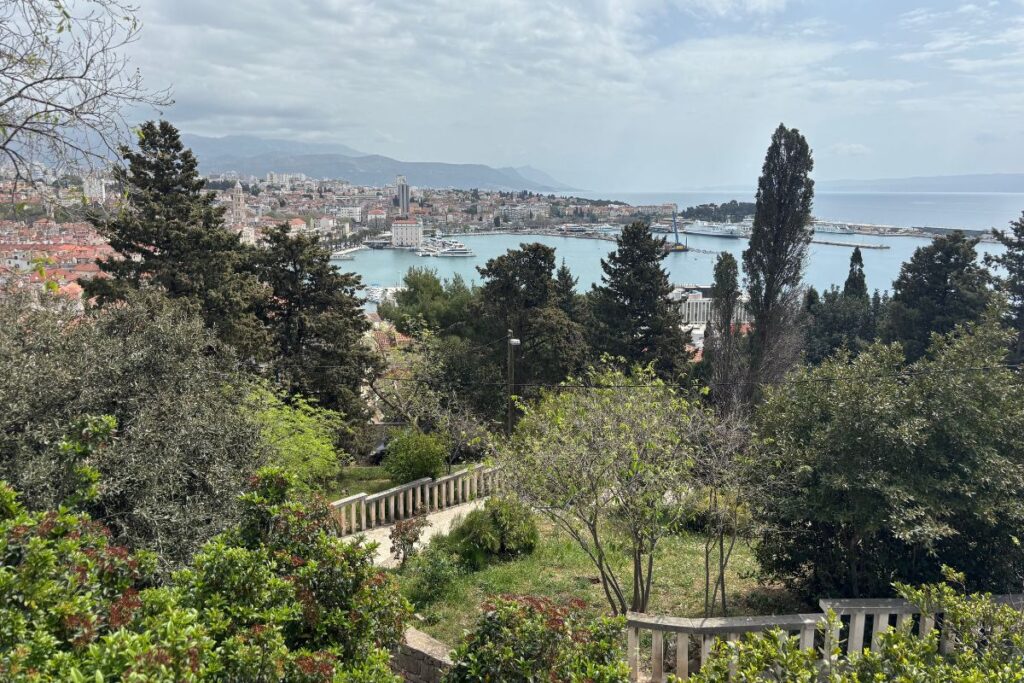
The climb up Marjan Hill trades Split’s busy Old Town for greenery, walking paths, and views stretching across the city and Adriatic.
Marjan Hill & A Different Side of Split
The following morning, I made my way up Marjan Hill. Most visitors come for the viewpoints, and for good reason. Marjan Forest Park occupies much of the peninsula west of Split’s historic center and offers a network of walking trails, beaches, viewpoints, and shaded pine forests.
If you’re ambitious, you could easily spend several hours exploring the area. I wasn’t. With an evening bus to Mostar and only a partial day remaining in Split, my goal was simply to reach the first viewpoint overlooking the city.
From the Old Town, the climb took roughly 15 to 20 minutes, mostly along a combination of stairs and paved pathways. That first viewpoint alone was worth the effort. From above, you can see Split’s harbor, the terracotta rooftops of the Old Town, the surrounding islands, and the Adriatic stretching into the distance.
If you’re visiting during the summer months or simply short on time, don’t feel obligated to explore every corner of Marjan. The park certainly rewards those who do, but the first viewpoint delivers exactly the panoramic view most visitors come to see.
After spending some time taking in the scenery, I made my way back toward sea level and continued west along the coastline. At first, it felt like an extension of the waterfront promenade. Eventually, the path became quieter, winding between residential areas and stretches of coastline where the city seemed to fade into the background.
Before arriving in Split, I wasn’t entirely sure where the city’s famous beaches were located. Were they on one of the nearby islands? Would I need a boat? Were they simply too far away to reach during my short visit? Since I wasn’t planning to dedicate an entire afternoon to sitting on a beach, I hadn’t gone out of my way to research where they were.
So I kept walking—and eventually found one.
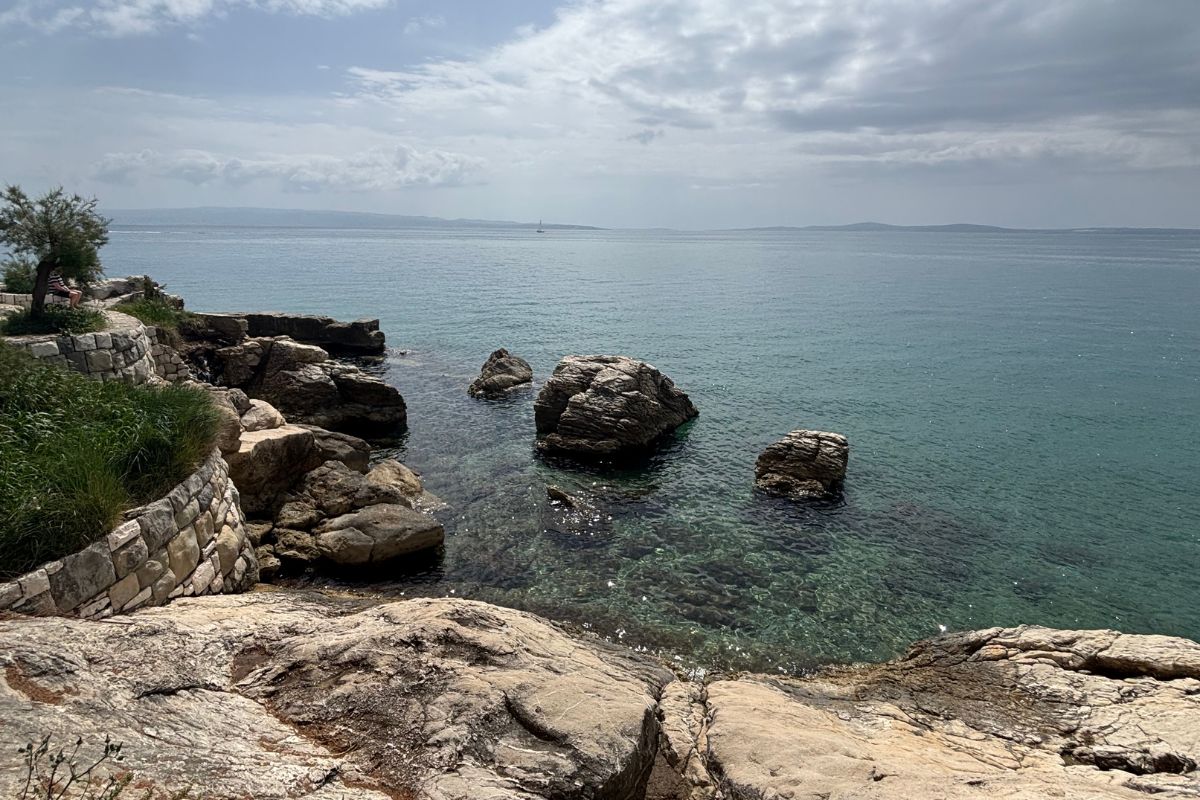
A short while later, I emerged onto a small waterfront promenade overlooking some of the clearest water I had seen during the trip. Shades of turquoise and deep blue stretched out in every direction as the coastline curved around the peninsula. Not long after, I arrived at Kašjuni Beach.
Standing there looking out over the Adriatic, I couldn’t believe this was still part of the same city I had spent the previous day exploring through Roman ruins and narrow stone alleyways. And then I had one immediate regret: I hadn’t packed a swimsuit.
I came to Marjan expecting a viewpoint. I left wishing I had planned an entire afternoon around the coastline.
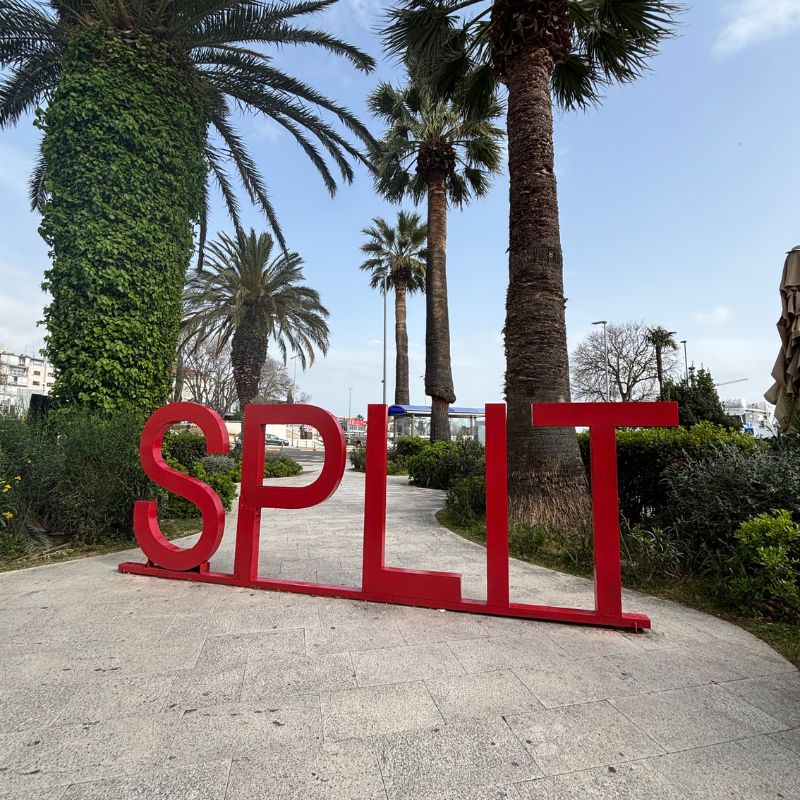
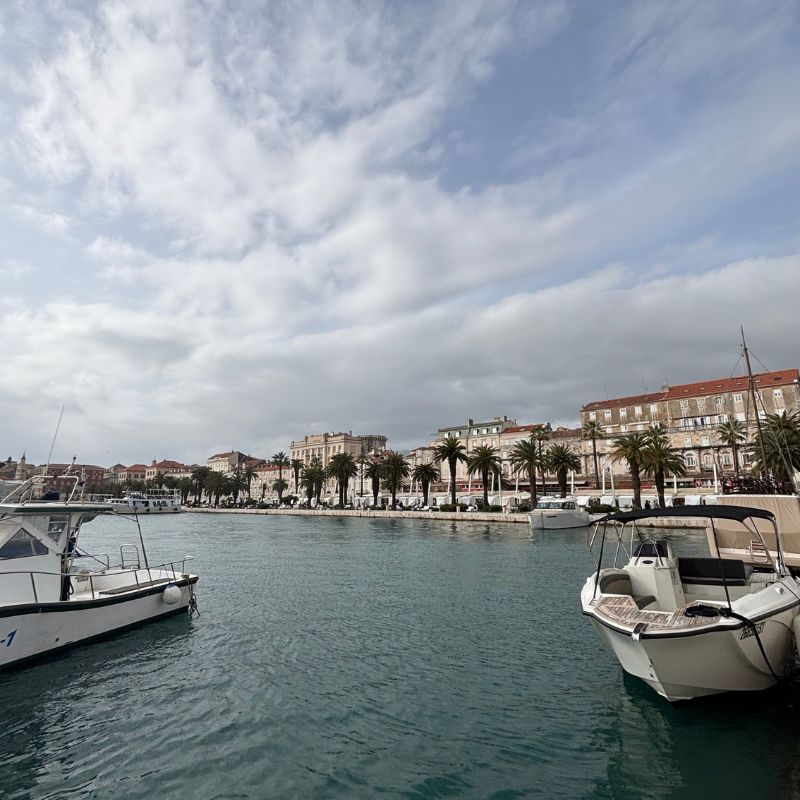
Split’s waterfront is never far away, whether you’re wandering past the city sign or watching boats come and go from the harbor.
What I’d Explore Next Time
If Zagreb left me curious about Croatia’s capital, Split left me curious about Croatia’s coastline. Everywhere I walked, travel agencies advertised day trips and excursions that I simply didn’t have time to fit into this itinerary.
A few that caught my attention:
- Krka National Park — waterfalls, wooden walkways, and emerald-colored pools; easily one of the excursions I saw advertised most often.
- Hvar — historic stone streets, waterfront restaurants, and one of Croatia’s best-known island destinations.
- Brač — home to Zlatni Rat, one of the country’s most recognizable beaches.
- Vis — a more remote island with dramatic coastline, sea caves, and a slower pace.
- Blue Lagoon boat trips — half-day excursions built around swimming, sightseeing, and actually getting out onto that ridiculously clear Adriatic water.
- Trogir — a UNESCO-listed historic town less than an hour from Split, with medieval streets and a waterfront setting.
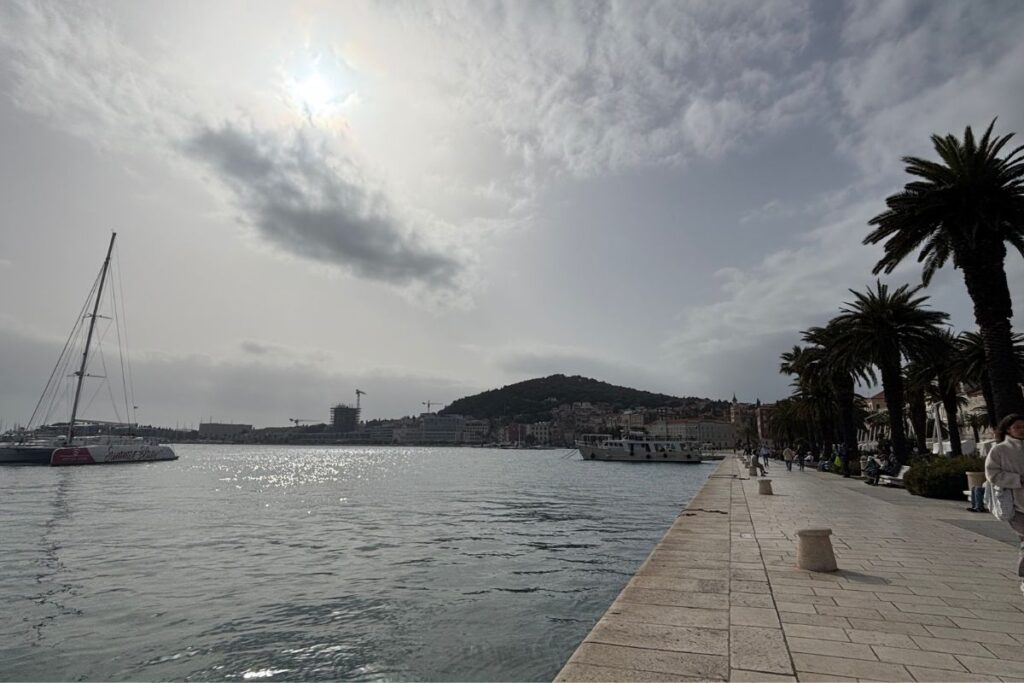
One last walk along Split’s waterfront before trading the Adriatic coast for an evening bus to Mostar.
One Last Walk Along the Harbor
After reluctantly pulling myself away from the beach, I made my way back toward the city center.
Eventually it was time to return to the hotel, freshen up, pack my bags, and take advantage of the late checkout that had been the entire reason for booking directly through Marriott.
With a few hours still remaining before my evening bus to Mostar, I made my way to the transportation hub along the waterfront.
One thing I appreciated was how convenient Split makes onward travel. The bus station, train station, ferry terminal, and luggage lockers are all located within a short walk of one another.
After storing my bag, I spent my final hours doing what felt most appropriate in Split: taking one last stroll along the Riva.
I grabbed a quick bite to eat, treated myself to a gelato, and slowly wandered back toward the bus station with the harbor beside me.
Between Diocletian’s Palace, Marjan Hill, the coastline, and one final walk along the waterfront, Split had already given me far more than I expected from a one-night stop.
Final Thoughts
Split was the Croatia I expected to find: ancient history, beautiful coastline, outdoor dining, and seemingly endless opportunities to explore the surrounding islands.
Yet somehow, the thing I remember most is that a 1,700-year-old Roman palace still functions as part of everyday life. People live there, work there, eat there, and pass through it on their way home. That’s what makes Split special.
Soon enough, another bus awaited. This time I was leaving Croatia behind and heading toward a country I knew even less about than Croatia.
Next Up: Mostar: Bosnia’s Bridge Between Worlds. A walking tour, a reconstructed bridge, and a destination that sparked my curiosity about the rest of Bosnia and Herzegovina.