Zagreb: Croatia’s Overlooked Capital
This is part of my Central Europe series. If you’re coming from Slovenia, start with I Thought Slovenia Was a Stop. It Should Have Been the Trip.
Fresh off Slovenia, where what I thought would be a brief stop quickly became one of the highlights of the trip, I was once again boarding a bus and heading south.
Zagreb was my introduction to Croatia, a country I knew surprisingly little about beyond the names Split and Dubrovnik.
In my mind, Croatia was all islands, coastline, and medieval walled cities.
It was also a logical stop.
One of my goals throughout this Central Europe itinerary was to avoid spending entire days in transit. Rather than taking a long journey directly from Ljubljana to Croatia’s coast, Zagreb provided a convenient break in the trip while giving me the opportunity to explore a city that many travelers simply pass through on their way elsewhere.
I arrived with few expectations.
By the end of the day, I was glad I hadn’t skipped it.
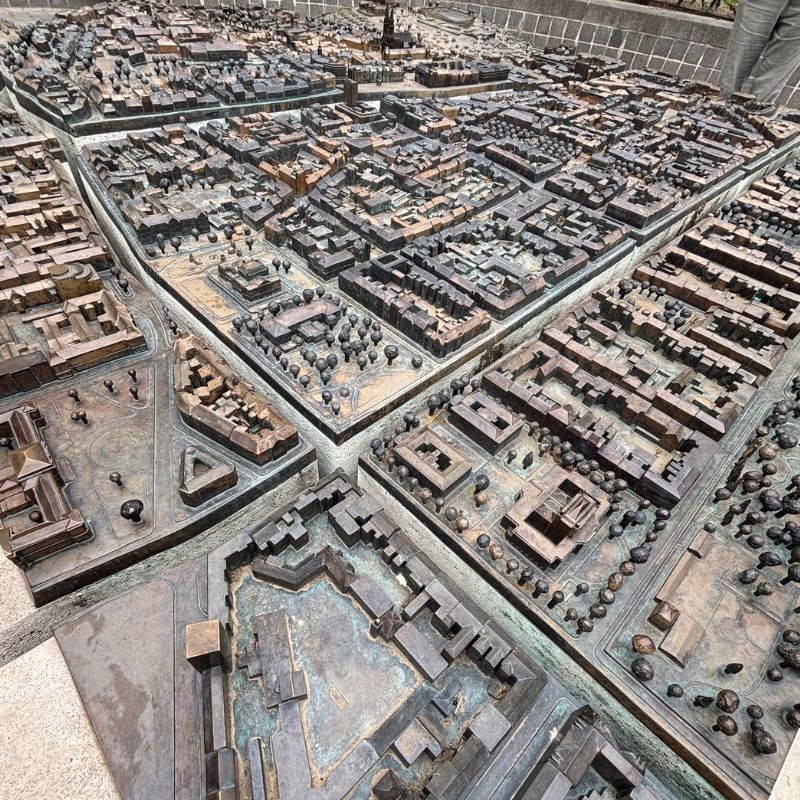
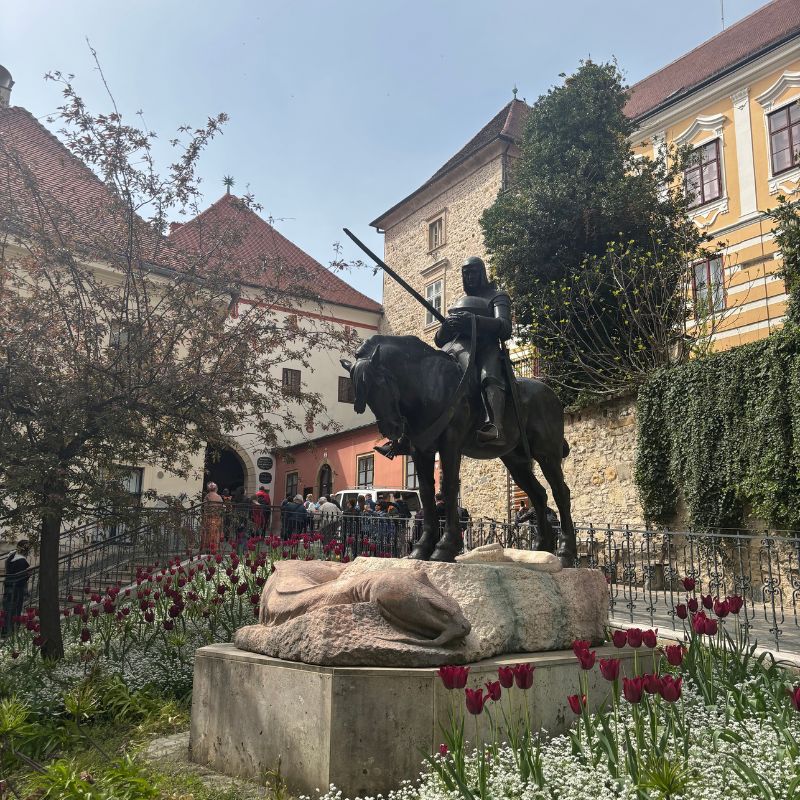
My first wander through Zagreb quickly showed how much history is packed into its compact center, from a detailed model of the old city to monuments tucked among the streets of the Upper Town.
Arriving in Zagreb
After an early morning FlixBus from Ljubljana, I arrived at Zagreb’s central bus station and quickly discovered one of the city’s biggest advantages: how easy it is to navigate.
My hotel for the night, the Canopy by Hilton Zagreb City Centre, was only about a ten-minute walk from the station, making for an effortless arrival even with a rolling suitcase.
Travel Breakdown Reality Check
Trip Goal: Break up the journey between Ljubljana and Croatia’s coast while exploring a city many travelers simply pass through.
Canopy by Hilton Zagreb City Centre
- Sticker Price: $119
- Out-of-Pocket: $69
- Travel Hack Used: $50 Chase Sapphire Preferred Hotel Credit (now $100 annually after the June 2026 refresh)
Reality Check:
Would I normally use a travel portal and give up my Hilton Diamond benefits? Probably not. But this was exactly the type of stay where it made sense.
I was only spending one night in Zagreb before catching an early morning bus to Split. Lounge access, complimentary breakfast, upgrades, and late checkout simply weren’t going to move the needle much on such a short stay.
What mattered most was location.
The hotel was an easy walk from Zagreb’s main bus station, which meant I could arrive from Ljubljana, drop my bags, spend the day exploring the city, and then walk back the following morning for my next bus without worrying about taxis or public transportation.
The room itself ended up being one of the nicest I stayed in during this portion of the trip—modern, comfortable, and stylish enough that I could easily see myself staying here again on a future visit.
For $69 out of pocket, I felt like I got excellent value. Sometimes the best hotel isn’t the cheapest or the most luxurious.
Sometimes it’s the one that makes a one-day visit effortless.
Exploring Zagreb
With only one full day in the city, I dropped off my bags and headed straight toward Ban Jelačić Square, the heart of Zagreb and the starting point for my walking tour.
The morning began under gray skies, but that didn’t stop the city from making an impression.
As we wandered through the streets, our guide explained that much of Zagreb was still recovering from earthquake damage and restoration projects. Once she pointed it out, it became impossible not to notice. Scaffolding seemed to surround many of the city’s most recognizable landmarks, including Zagreb Cathedral and its famous twin spires.
A quick stop at Dolac Market offered one of the city’s most recognizable scenes. The bright red umbrellas covering the market stalls stood out immediately and provided a colorful contrast to the gray skies overhead.
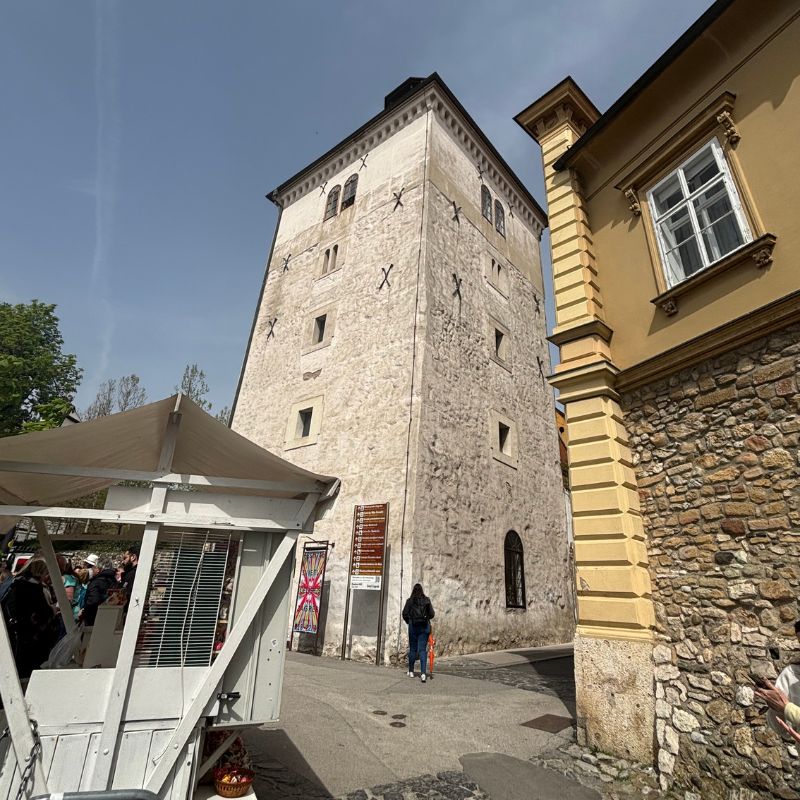
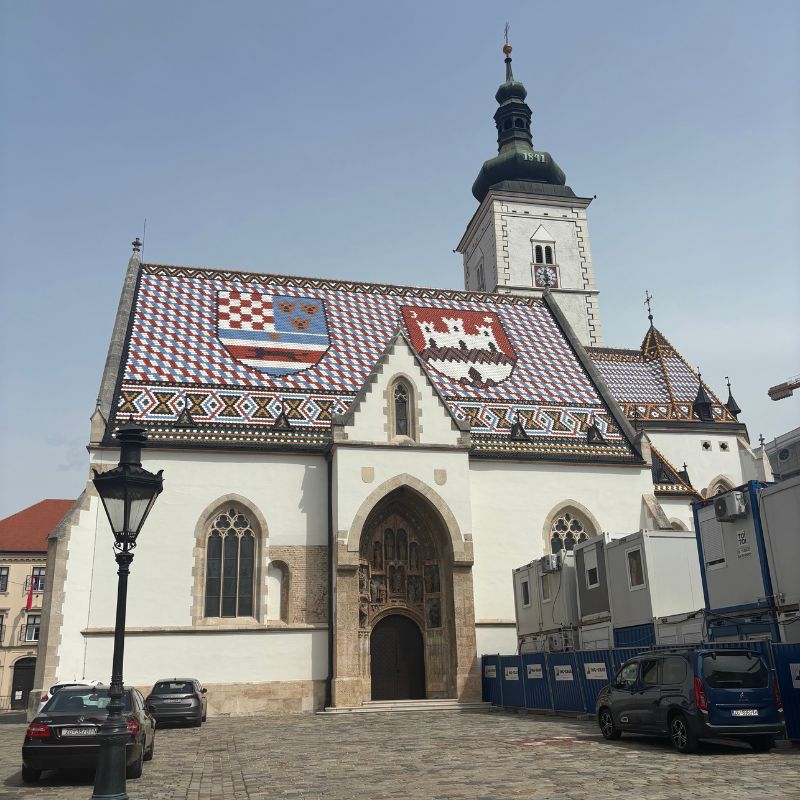
Zagreb’s Upper Town packs several of the city’s most recognizable landmarks into a surprisingly compact area. Lotrščak Tower and the colorful tiled roof of St. Mark’s Church were two highlights of my morning walking tour.
Exploring Upper Town
From the main square, we made our way through the historic Upper Town (Gornji Grad), home to some of Zagreb’s most recognizable sights.
St. Mark’s Church, with its colorful tiled roof, is one of the city’s most photographed landmarks, although visitors currently can’t enter the church itself. Nearby, the narrow cobbled streets and historic buildings gave the area a distinctly old-world atmosphere.
One of the more surprising stops on the tour was the Grič Tunnel, a former wartime shelter that now serves as a pedestrian passage beneath the city. Our guide mentioned that just a week earlier the tunnel had hosted a wine festival, which sounded like one of the more unique event venues I’ve encountered during my travels.
As noon approached, our group gathered near Lotrščak Tower, where the guide warned everyone to brace themselves for the daily cannon firing. I remember thinking she was exaggerating. She wasn’t.
The blast echoed through the city with surprising force. You don’t just hear it—you feel it. Phones visibly shook in people’s hands, several first-time visitors jumped despite the warning, and for a brief moment the entire city seemed to stop and acknowledge the sound.
It ended up being one of the most memorable moments of the day.
The tour concluded in the Upper Town, which felt like the perfect place to end. From there, you can enjoy views across Zagreb’s rooftops before slowly making your way downhill through tree-lined promenades and quiet residential streets.
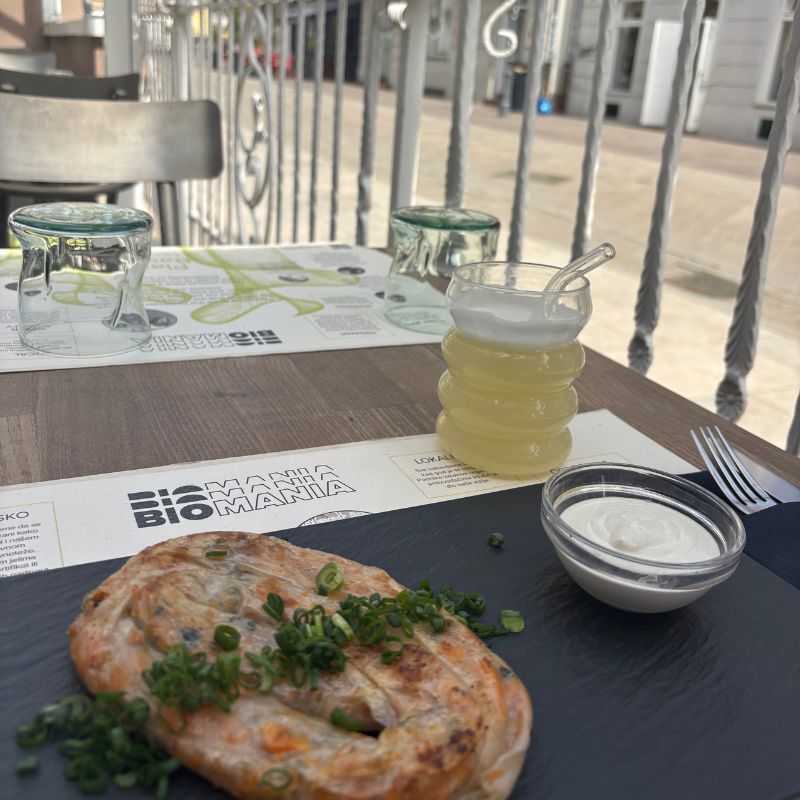
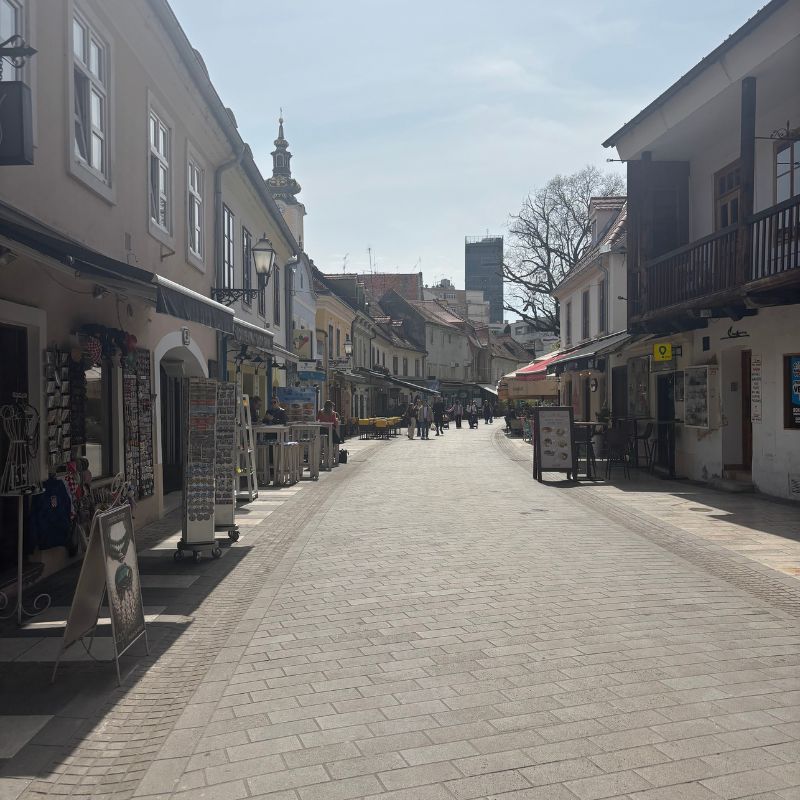
Tkalčićeva Street is made for slowing down. I stopped here for lunch before spending some time wandering the pedestrian street and taking in Zagreb’s relaxed café culture.
Tkalčićeva Street & Zagreb’s Café Culture
By then, the clouds had finally started to clear.
I headed toward Tkalčićeva Street, one of Zagreb’s most popular pedestrian streets, lined with cafés, restaurants, and outdoor terraces.
What many visitors don’t realize is that centuries ago this wasn’t a street at all. The Medveščak stream once flowed through what is now the heart of the neighborhood, forming the boundary between Zagreb’s medieval settlements of Gradec and Kaptol. The stream was eventually covered over in 1898, creating the street visitors enjoy today.
As I continued wandering through the area, I stumbled across one of my favorite little Zagreb quirks.
A nearby street is called Krvavi Most, which translates to “Bloody Bridge.”
Naturally, I started looking around for the bridge.
There isn’t one.
The bridge disappeared when the stream was covered, but the name survived. It originally crossed the Medveščak and became famous for the frequent disputes between the neighboring settlements. Today it’s simply a street, though I’ve since learned that plenty of visitors make the same mistake and find themselves looking for a bridge that no longer exists.
What I liked most about Tkalčićeva Street was that it didn’t feel manufactured for tourists.
Yes, you’ll find souvenir shops and visitors wandering about, but it never felt like a place that existed solely because tourists arrived. Sitting there in the sunshine, watching people linger over coffee and long lunches, it felt like a genuine part of everyday city life rather than a tourist attraction.
It’s one of those places that reminded me why I enjoy traveling through Europe so much.
Nobody seemed to be in a rush.
The goal wasn’t simply to eat and leave. It was to enjoy the outdoors, order another drink, continue the conversation, and make an afternoon of it.
With the sun finally making an appearance, it felt like the perfect place to slow down for lunch and soak in the atmosphere.
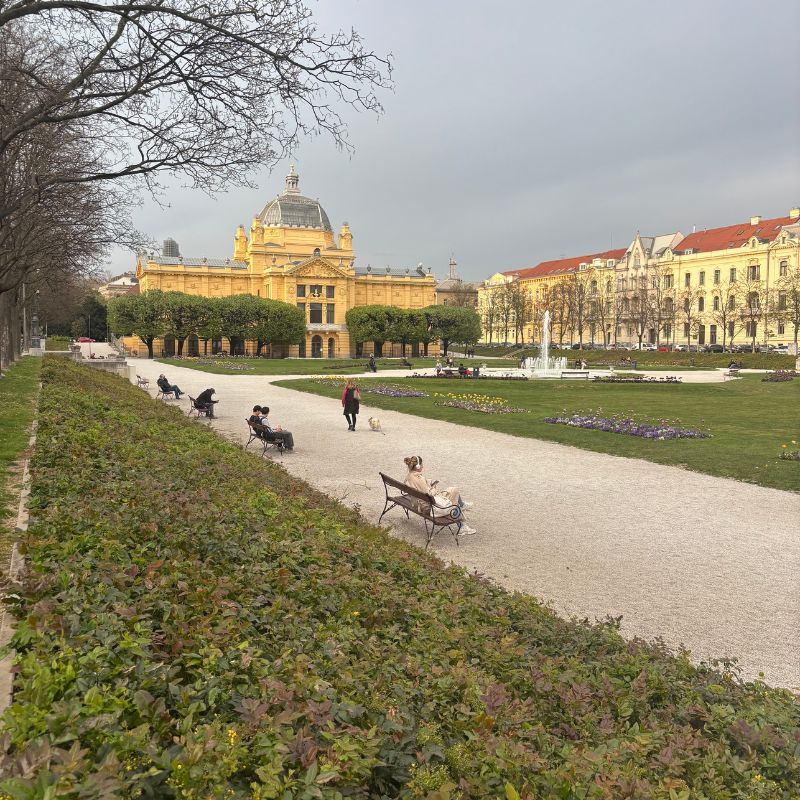
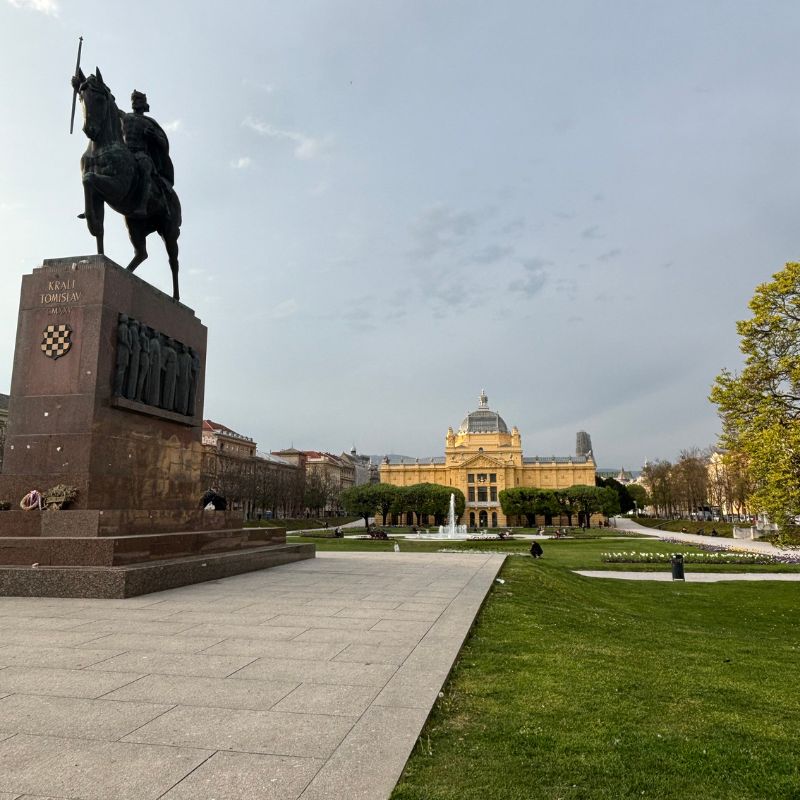
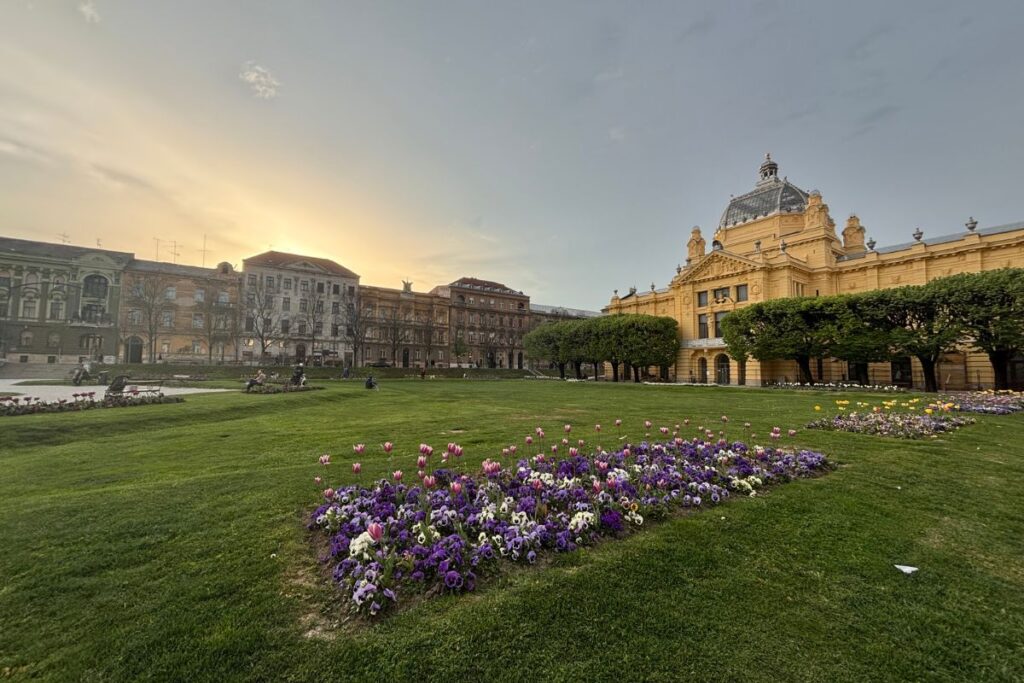
Zagreb’s Lower Town felt completely different from the historic streets above it. Grand buildings, landscaped squares, and wide green spaces showed me another side of the city and helped make Zagreb one of the surprises of this trip.
Lower Town & An Unexpected Surprise
Later in the afternoon, I continued exploring on foot through Zagreb’s elegant Lower Town (Donji Grad).
The city surprised me with its grand parks, fountains, and Austro-Hungarian architecture. Walking through Zrinjevac Park and the surrounding squares felt completely different from the medieval atmosphere of the Upper Town, giving Zagreb a blend of architectural styles that I hadn’t expected.
As evening arrived, I found myself reflecting on how quickly my opinion of Zagreb had changed.
Originally, the city wasn’t meant to be the highlight of my time in Croatia. It was simply a practical stop that helped break up the journey south while avoiding another full day spent on buses.
But looking back, I’m glad it became part of the trip.
While Split and Dubrovnik receive most of the attention, Zagreb offered something different. Grand parks, Austro-Hungarian architecture, lively café culture, and a pace that felt distinctly local compared to Croatia’s more famous coastal destinations.
I may have only spent one day here, but it was enough to make me curious about what else the city has to offer.
What I’d Explore Next Time
One of the recurring themes of this Central Europe trip was discovering places that deserved a return visit. Zagreb quickly became one of them.
A few places I’d make room for next time include:
- Mirogoj Cemetery: Known for its impressive arcades, gardens, and architecture, and often considered one of the most beautiful cemeteries in Europe.
- Maksimir Park: One of Zagreb’s largest green spaces, with walking trails, lakes, and a quieter side of the city I’d like to explore.
- Museum of Broken Relationships: One of Zagreb’s best-known museums and something I repeatedly saw recommended by both locals and travelers.
- Samobor: A charming town just outside Zagreb known for its colorful streets, relaxed atmosphere, and traditional pastries.
- Plitvice Lakes National Park: Perhaps Croatia’s most famous natural attraction—and easily the biggest omission from my brief visit.
Final Thoughts
Zagreb may not have Croatia’s beaches, islands, or dramatic coastline, but what it does have is character. It feels lived in. It feels local. And unlike many European capitals, it still feels like a place travelers often pass through rather than build an entire trip around.
For me, that ended up being part of its charm.
The next morning, another early bus awaited, this time heading south toward Split and Croatia’s Adriatic coast.
Next Stop: Split: Roman History Meets the Adriatic From Roman ruins to waterfront promenades, Split quickly proved it was much more than a gateway to Croatia’s islands.