How a Business Class Redemption Turned Into a Two-Week Central Europe Trip
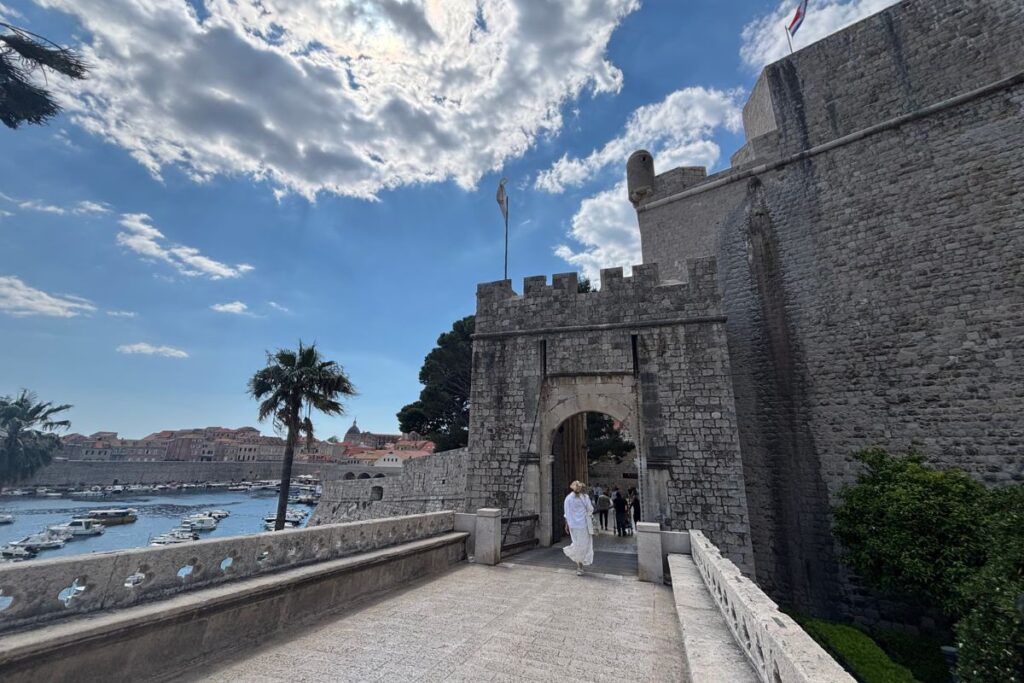
This post introduces my Central Europe series, which includes Poland, Slovakia, Austria, Slovenia, Croatia, and Bosnia and Herzegovina.
The Flight That Started the Trip
When I first started planning this trip, my goal wasn’t to fly business class. My goal was to use up a pile of Flying Blue points.
About a year earlier, I had transferred a large number of points from my credit card to Flying Blue for a family trip that ultimately never happened. If you’re new to points and miles, that’s one of the biggest lessons you’ll learn quickly: once you transfer points to an airline, you can’t transfer them back. The points simply live there until you use them—or until they expire.
If you’re collecting points and miles, do yourself a favor and keep track of expiration policies. Whether it’s a spreadsheet, a note in your phone, or a calendar reminder, having a system is far easier than trying to recover an expired balance later. Trust me, that’s not a lesson you want to learn the hard way.
After canceling the original trip and paying Flying Blue’s cancellation fee to redeposit the miles, I found myself slowly working through the remaining balance. I’d already used most of the points for a family trip to Spain in Premium Economy, but I still had roughly 60,000 Flying Blue miles sitting in my account.
Since airline programs regularly increase award prices over time, I generally prefer to use stranded airline miles before touching flexible currencies like Amex Membership Rewards, Citi ThankYou Points, or Capital One Miles. So when it came time to plan Central Europe, that’s where I started, not with a destination, but with a loyalty program.
My first question wasn’t, “Where do I want to go?” It was, “Where can Flying Blue get me?”
Originally, I focused on Poland because it fit nicely into a broader Central Europe route I wanted to build. I began searching flights into both Warsaw and Kraków, primarily looking for Premium Economy availability from New York.
Then something unexpected happened.
A few weeks earlier, I had flown home from Central America through Washington Dulles (IAD) for the first time. To my surprise, I realized the trip from Philadelphia wasn’t dramatically more difficult than getting to JFK, which opened up another airport for my search.
That’s when I found it: a business class seat from Washington Dulles to Warsaw on the exact date I wanted to travel for 60,000 Flying Blue miles plus approximately €225 in taxes and fees.
The funny thing is that I didn’t book it immediately. I stared at the award for a day or two because once I booked that flight, my Flying Blue balance would essentially drop to zero. Even after years of earning and redeeming points, that scarcity mindset can be surprisingly difficult to overcome. Part of me kept wondering, “What if something better comes along?”
Eventually, I reminded myself of something I tell people all the time: points are meant to be used. Airlines devalue their programs regularly, and unused points rarely become more valuable.
At that moment, I had no other Europe trips planned. I had never flown long-haul business class. And I had the exact flight I wanted sitting in front of me.
So I booked it.
For 60,000 Flying Blue miles and €225, I locked in my first business class flight and, without realizing it, the starting point of what would become one of my favorite trips in Europe.
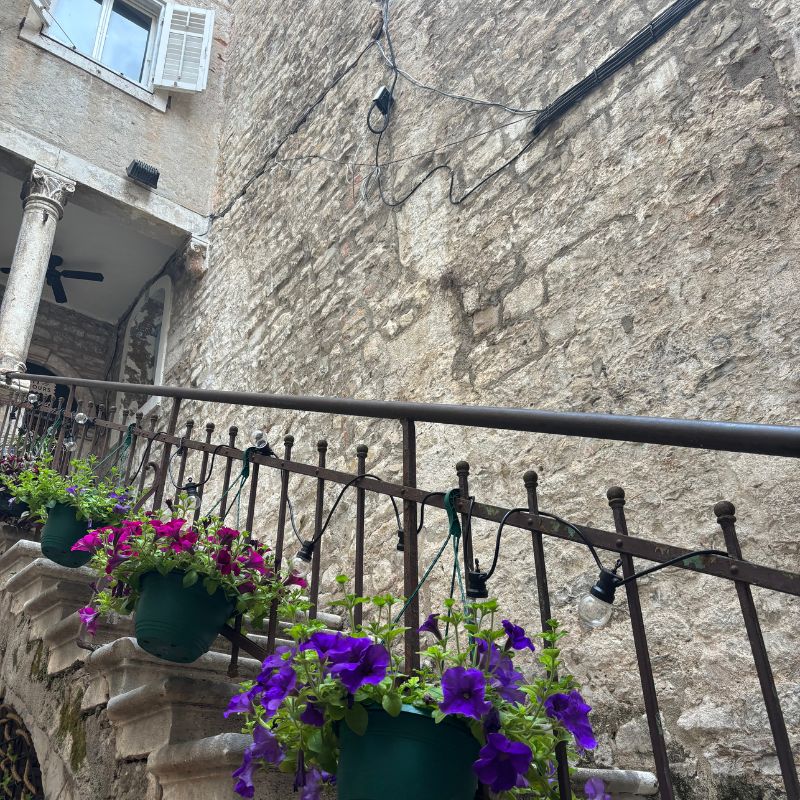
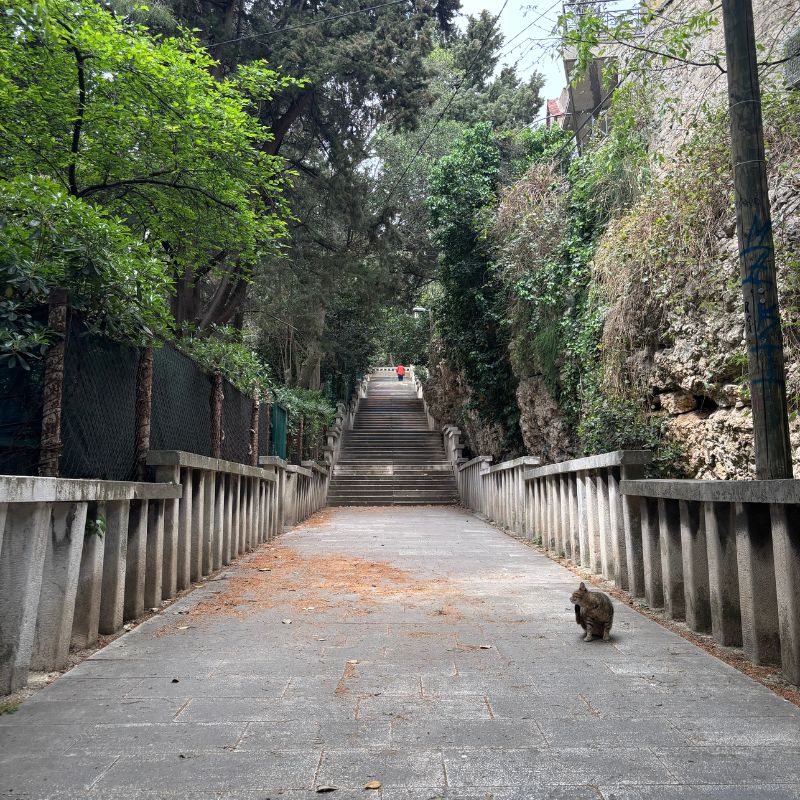
One of my favorite hotel strategies is staying just outside the busiest tourist areas. In Split, that meant easy access to Diocletian’s Palace and the Riva while also discovering peaceful neighborhoods and scenic streets that made the city feel much more authentic.
The Hotel Strategy
With my flight booked, the next challenge was figuring out where I would stay.
One thing I’ve learned over the years is that my hotel strategy changes depending on who I’m traveling with. When I traveled to Spain with my family, we paid cash for most of our accommodations. Moving hotels every couple of nights to maximize points, free night certificates, and travel credits simply wasn’t worth the hassle.
When I’m traveling solo, however, the equation changes. I’m much more willing to move around if it helps reduce costs or lets me take advantage of different loyalty programs, and that flexibility became a big part of this trip.
Rather than committing to a single hotel chain, I approached each destination independently. Sometimes that meant paying cash, sometimes it meant using travel credits, and other times it meant redeeming points through a travel portal. Occasionally, I even chose a less glamorous hotel because the location or overall value made more sense.
Throughout this series, you’ll notice a recurring theme in the Travel Breakdown sections. For each city, I’ll share:
- The hotel I chose
- What it cost
- Whether I used points or travel credits
- Whether I would make the same choice again
The goal wasn’t luxury, nor was it spending as little money as possible. It was finding the middle ground between paying cash and maximizing travel rewards.
Looking back, that approach worked remarkably well. My first business class flight got me to Europe, while a mix of points, travel credits, and affordable hotels kept me there.
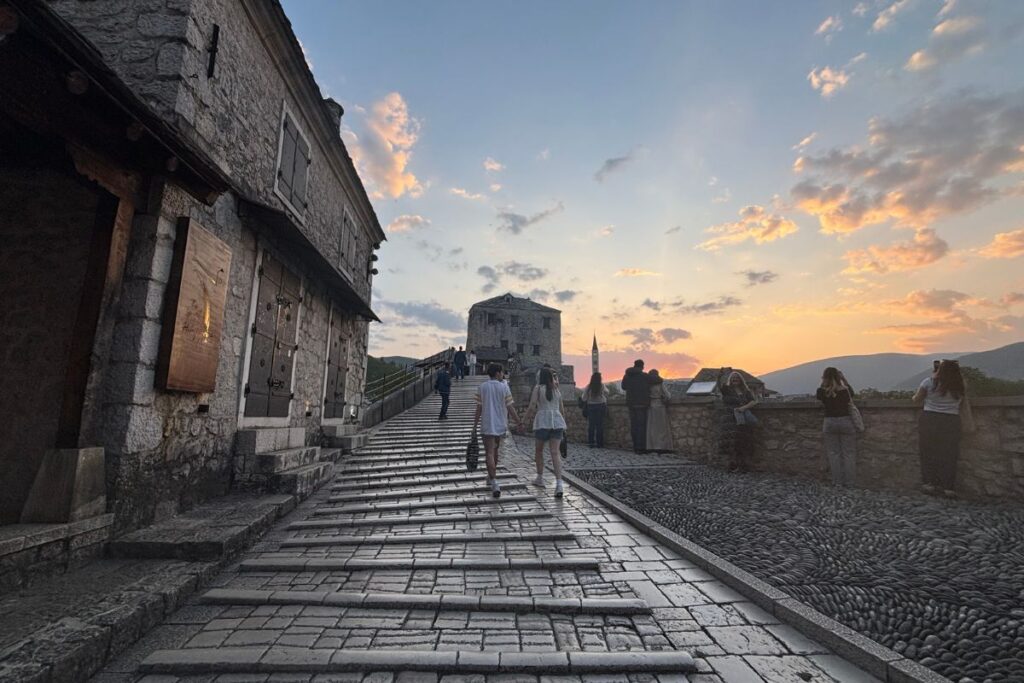
One of my favorite parts of this itinerary was traveling overland between destinations instead of constantly returning to the airport. The journey became just as memorable as the destinations themselves, with each train, bus, and border crossing revealing a new side of Central Europe.
The Challenge: One Flight In, One Flight Out
Once I booked my flight to Warsaw, I gave myself a simple challenge: could I make it all the way to Amsterdam without flying again?
The answer was always going to be yes. The real question was how.
A week after this trip ended, I was meeting my sister and cousin in Amsterdam for another week of travel. That meant my only fixed points were flying into Warsaw and eventually making my way to Amsterdam. Everything in between was flexible.
At first, I considered simply working my way west. On paper, it would have been easy, Germany, Belgium, and the Netherlands are incredibly well connected by rail. The problem was that I’d already visited many of those destinations on previous trips.
Instead of retracing my steps, I started looking south.
That’s when I realized there was an entire region of Europe I had barely explored. I’d heard great things about Poland, Slovakia, Slovenia, Croatia, and Bosnia and Herzegovina, but I’d never built a trip around them.
Suddenly, the route started taking shape:
- Warsaw
- Kraków
- Bratislava
- Graz
- Ljubljana
- Zagreb
- Split
- Mostar
- Dubrovnik
Before finishing with a short flight to Amsterdam to begin the next chapter of the trip.
One of the things that makes Central Europe so rewarding is how well connected everything is. Trains, buses, and short overland journeys make it surprisingly easy to move between countries without constantly returning to an airport. In fact, once I landed in Warsaw, I didn’t board another plane for nearly two weeks.
That ended up becoming one of my favorite parts of the trip. Instead of seeing countries as isolated destinations, I got to experience how they connected to one another.
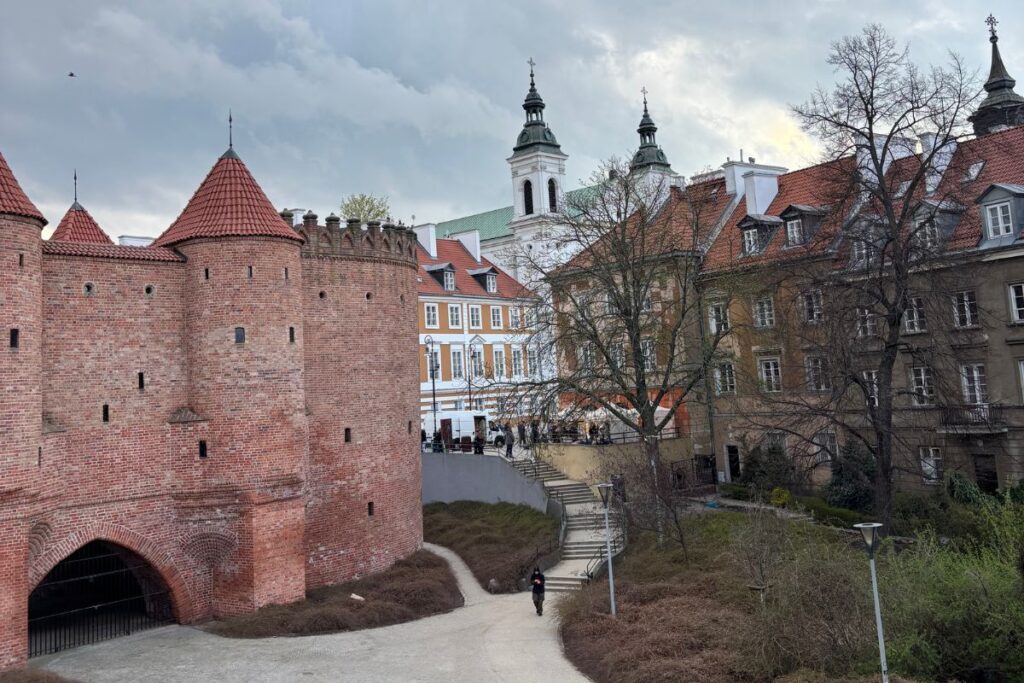
Every trip seems to begin with a plan and end with a few unexpected additions. Following my curiosity led me to places I hadn’t originally intended to visit, and those spontaneous detours often became some of the most memorable parts of the journey.
Travel Curiosity Got the Better of Me
Of course, travel curiosity got the better of me once again.
I wanted to visit all the places, see all the things, and experience as much of Central Europe as I could with the time I had available. There’s no question that my itinerary was more ambitious than it needed to be. I could have easily spent the entire two weeks in Poland or divided my time between Slovenia and Croatia alone.
But that wasn’t really the goal of this trip.
From the beginning, I viewed this itinerary as a sampler, a first introduction to a part of Europe I knew very little about. I wanted each destination to answer one simple question: Would I want to come back? If the answer was yes, then the trip had done its job.
Looking back, that strategy worked almost too well. Warsaw left me wanting another day. Kraków left me wanting another trip. Slovenia convinced me it deserved an itinerary of its own. And several destinations I knew almost nothing about before arriving quickly became places I would happily revisit.
I wasn’t checking countries off a list. I was building a list of places I wanted to explore more deeply in the future.
There were plenty of destinations that didn’t make the final itinerary. Gdańsk was probably the biggest omission from Poland, and I also considered spending more time in Slovenia or adding additional stops along Croatia’s coast. At one point, I probably had enough destinations saved in Google Maps to fill an entire month.
But every additional stop came with a cost: more transportation, more hotel changes, and more time spent packing and unpacking instead of actually experiencing the places I’d come to see.
Eventually, I stopped asking, “What else can I add?” and started asking, “What gives me the best overall trip?”
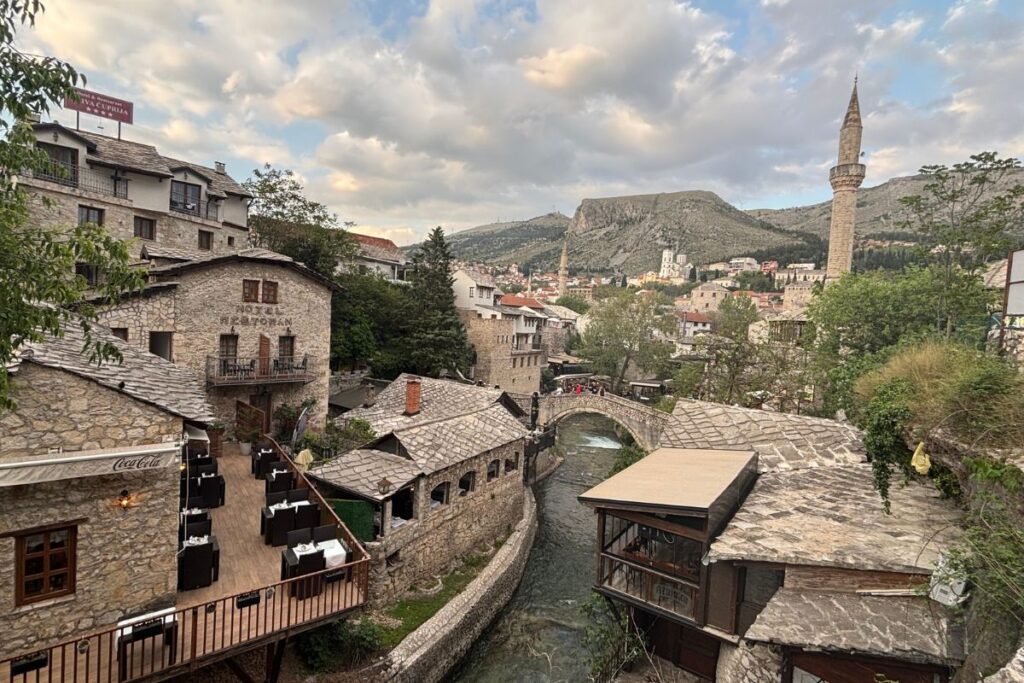
Before this trip, Bosnia and Herzegovina wasn’t even on my travel radar. By the time I reached Mostar, I realized some of the destinations I knew the least about were leaving the strongest impression—and inspiring future trips of their own.
What I Didn’t Know Yet
At the time, I thought Poland would simply be the beginning. I had no idea Warsaw would surprise me, Slovenia would become my favorite destination, or which cities would exceed my expectations and which would leave me wanting more.
All I knew was that I had a business class ticket to Warsaw, a rough route through Central Europe, and two weeks to explore a part of Europe I had never experienced before.
What followed became one of my favorite travel experiences to date.
And it all started with 60,000 Flying Blue miles.
Next Stop: Is Poland Worth Visiting? My Honest Thoughts After 5 Days Before arriving, Poland was simply the first stop on my itinerary. Five days later, I was already planning a return visit.