The Travel Planning Process I Wish I’d Learned Years Ago
A Realistic Travel Planning Process (Not Just Inspiration)
For years, I approached travel planning like there was a correct order to follow.
Pick a destination. Find the flights. Book the hotels. Make a list of everything you want to see. Then somehow turn all of it into an itinerary.
The more trips I planned, the more I realized that real travel rarely starts that neatly.
Sometimes I already know where I’m going. Sometimes I have specific dates I can’t change. Other times, there’s a person I want to visit, an experience I want to have, or a flight deal that suddenly makes a destination possible.
So instead of trying to start every trip with the same question, I now start with something much simpler:
What do I already know?
That gives me my starting point. From there, I can start figuring out what actually works around it—how much time I have, where else I can realistically go, how I’ll move between places, what I most want to experience, and eventually how I’m going to pay for it.
My travel planning process isn’t really about finding the perfect itinerary anymore. It’s about taking the pieces I already have and building a trip that makes sense around them.
Step 1: Start With the Constraint You Already Have
Most trips don’t actually begin with a completely blank page.
Usually, there’s already something I know.
Maybe I only have ten days of vacation. Maybe I’m visiting a friend who lives in Kuala Lumpur. Maybe I want to see cherry blossom season in Tokyo, or I’m traveling for a summer destination wedding. Maybe there’s one experience I already know I want to build the trip around. Or maybe I’ve found an unusually good flight or points redemption that gives the trip its starting point.
And sometimes the constraint is simply money.
Budgets are real, and there’s no point designing a $6,000 trip when I know I have $3,000 to spend. The same can be true of points. Maybe I have a hotel certificate I want to use before it expires, a specific points balance that can make an expensive flight possible, or a redemption opportunity that’s the reason I’m considering the trip in the first place.
Whatever the constraint is, I start there.
If I only have ten days, that immediately limits how much ground I can realistically cover. If I’m visiting someone in Kuala Lumpur, Malaysia becomes the anchor and I can figure out what else makes sense around it. If I want to see cherry blossoms in Tokyo, suddenly I’m working with a specific season instead of twelve months of possibilities.
I used to think travel planning meant starting with a giant list of possibilities and narrowing them down. Now, I prefer to identify what I already know can’t—or doesn’t need to—change.
That gives the trip its first set of boundaries.
From there, I can start asking a much more useful question: What can I realistically build around it?
Step 2: Put the Possibilities on a Map
This is usually when I open Google Maps.
Once I know my starting constraint, I start looking at the places I’m considering and how they actually fit together. Something can look perfectly reasonable when it’s sitting on a list and considerably less reasonable once I see the distances involved.
Peru taught me this lesson immediately.
When I first started planning, it seemed possible to visit Lima, Cusco, Arequipa, Puno, the Amazon, and Huacachina in one trip. They were all places in Peru I wanted to experience, so why not?
Then I put them on a map and started looking at what moving between them would actually require.
Suddenly I was dealing with domestic flights, long bus rides, altitude changes, airport transfers, and entire chunks of days disappearing to transportation. What looked like a two-week trip on a list started looking more like a month-long itinerary—or a much more focused two-week trip.
The map is usually where my wish list starts becoming an itinerary.
At this stage, I’m not necessarily deciding exactly how I’ll travel between every stop. I’m trying to understand the shape of the trip. Which destinations naturally fit together? Which one requires a major detour? Am I moving generally in one direction, or am I constantly backtracking?
And most importantly: does everything I want to do actually fit within the constraint I started with?
Usually, something gets cut.
That’s not the planning going wrong. That’s the planning finally becoming realistic.
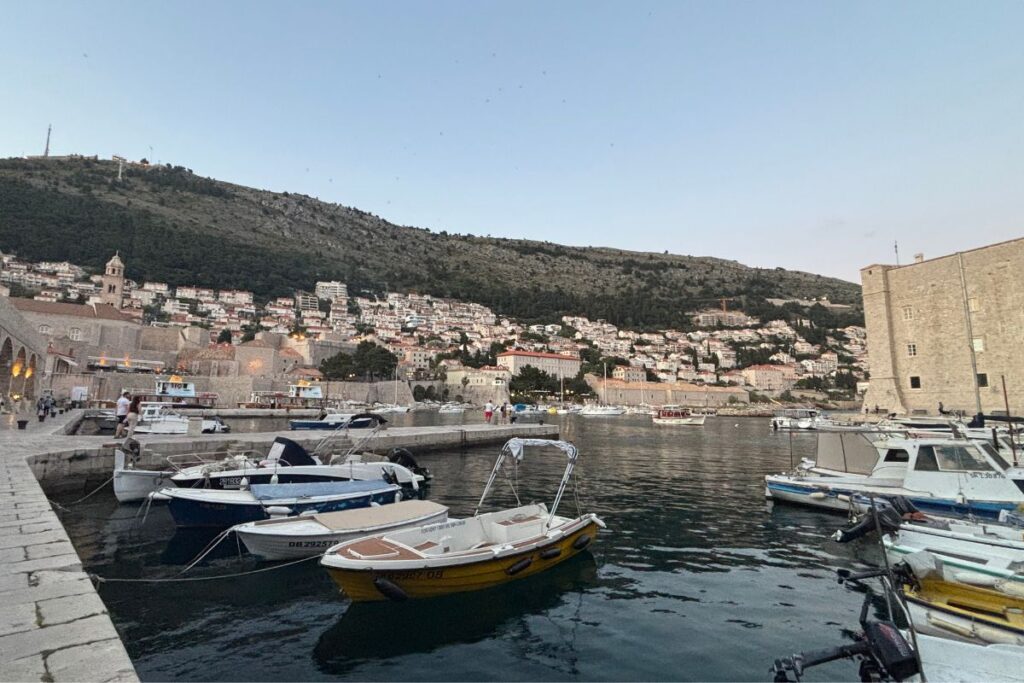
Sometimes getting from one place to the next is part of the experience. If there’s a scenic transportation option available, I’ll almost always choose it.
Step 3: Figure Out What Moving Between Places Actually Costs
Once the route makes sense on a map, I start looking at how I’ll actually move between each stop.
This is where distance can be misleading. Two cities might look close together, but that doesn’t mean getting between them is quick or easy. A one-hour flight can easily become half a travel day once I factor in getting to the airport, arriving early, collecting luggage, and getting into the next city. A three-hour train from city center to city center might actually be the faster option.
So I’m not just comparing transportation prices. I’m comparing what each option costs me in time and effort.
Can I take a direct train, or does it require multiple connections? Is there an overnight bus that saves me a hotel night but leaves me exhausted the next morning? Would renting a car make sense for a group but create more hassle for a solo trip? Does the ferry schedule mean I need to stay an extra night?
This is also where I start looking for unnecessary backtracking. If I can fly into one city, travel naturally through the country, and fly home from somewhere else, I’d much rather do that than lose a day returning to my starting point just because a roundtrip flight initially looked easier.
By the end of this step, I don’t need every train ticket or airport transfer booked. I just need to know that the route I’ve drawn on the map actually works in real life.
Step 4: Decide What the Trip Is Really About
Once I know where I can realistically go, I start narrowing down what I actually want to do there.
This is where I’ve changed the most as a traveler. I used to research a destination and immediately start collecting attractions: the famous museum, the viewpoint, the historic neighborhood, the day trip everyone recommends. Before long, I’d have a list long enough to fill twice the amount of time I actually had.
Now I try to identify the things I would genuinely be disappointed to miss.
What is the reason I’m excited about this trip in the first place?
Sometimes that answer is obvious. If I’m going to Egypt, the pyramids are making the itinerary. If I’m visiting Peru for the first time, Machu Picchu is probably shaping a significant part of the trip. Other times, the priority might be less famous: a particular neighborhood, a restaurant I’ve wanted to try, a hike, a beach day, or simply having enough time to enjoy the hotel I specifically chose.
Those priorities become the anchors. Everything else has to compete for the time around them.
That doesn’t mean I stop researching or leave half the trip empty. It means I know the difference between something I’m traveling there to experience and something I’d enjoy if it fits.
Once I know that, it becomes much easier to decide what stays, what gets cut, and how much I actually want to fit into each day.
Step 5: Decide How Tired You Want to Be
At this point, I usually have an itinerary that works on paper.
The destinations fit. The transportation makes sense. The things I care about most have a place in the schedule.
Now I ask myself a question I definitely wasn’t asking when I first started traveling:
How tired do I actually want to be on this trip?
Because there’s a big difference between an itinerary being possible and an itinerary being enjoyable.
I can book an early morning tour, spend the afternoon sightseeing, make a dinner reservation, and have another activity planned for that evening. But if I do that every day for two weeks, I’m probably going to reach the point where the next beautiful church, museum, or viewpoint starts feeling like another item I need to check off a list.
These days, my default is usually much simpler:
- One or two key activities in a day
- Slower mornings when the itinerary allows
- Enough time to actually enjoy meals
- Space to wander without needing to be somewhere next
That doesn’t mean every trip needs to be slow. Some destinations—and some trips—naturally have a faster pace. But I want that pace to be a choice, not something I accidentally create because every open hour looked like space for another activity.
The question isn’t just whether I can fit something into the itinerary. It’s whether I’ll still be enjoying the trip once I do.
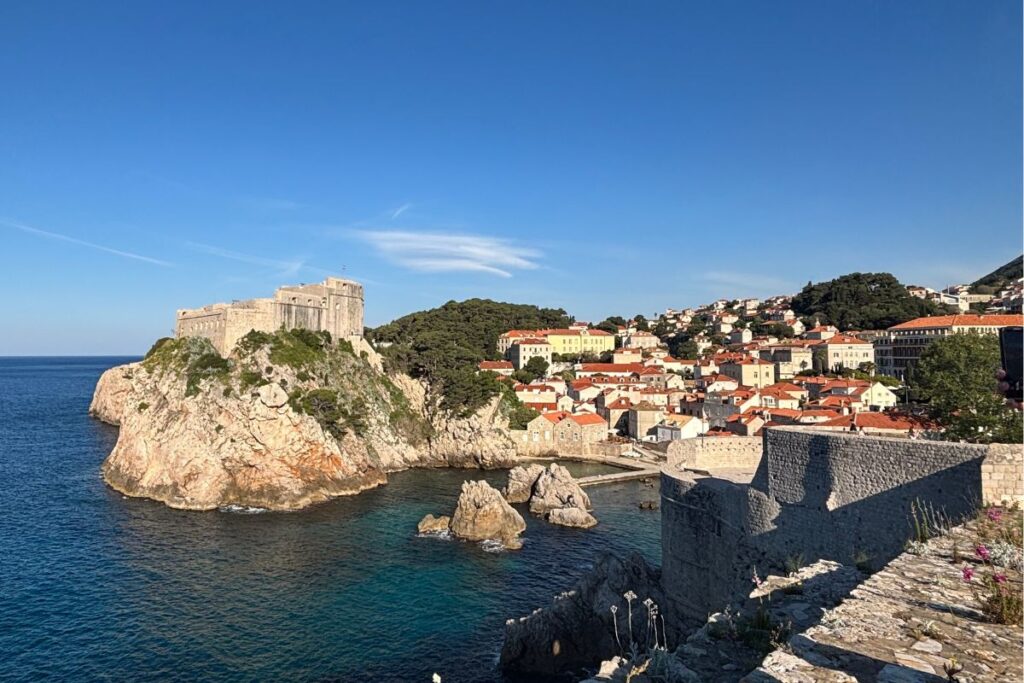
Walking Dubrovnik’s city walls took me considerably longer than planned because every other step apparently required another photo. Good thing I had nothing else booked that morning.
Step 6: Add the Empty Space
Once I’ve figured out the pace, I intentionally leave some room for nothing.
This was something I used to struggle with. An empty afternoon on an itinerary looked like wasted time. If I was flying all the way somewhere, shouldn’t I be using every hour I had?
Travel has taught me the opposite.
That empty space absorbs all the things I can’t predict while I’m planning from home. A flight gets delayed. A tour runs long. The weather changes. That attraction I carefully planned around has apparently decided it closes two hours earlier now. I discover a neighborhood I want to spend more time exploring. Or sometimes I’m simply tired and would rather sit at a café for an hour than immediately head to the next attraction.
It doesn’t always mean leaving an entire day blank. Sometimes it’s an open afternoon. Sometimes it’s arriving somewhere and not scheduling anything that evening. On a longer trip, it might mean deliberately building in a day with no major plans at all.
And trust me, you’ll fill that empty space. I don’t think I’ve ever taken a trip where the itinerary went exactly as planned. Something gets moved, something takes longer than expected, or we discover something we didn’t know we wanted to do until we got there. That suspiciously empty afternoon has saved the day more times than I can count.
The Amalfi Coast was a good reminder of why I value that space. Some of my favorite parts of that trip weren’t major attractions. They were slower mornings, ferry rides between towns, and afternoons where we had enough time to enjoy where we were instead of immediately moving on to the next thing.
I don’t think of that space as time I failed to plan anymore. I think of it as part of the plan.
Step 7: Decide Where Cash and Points Make the Most Sense
By this point, I’ve been thinking about cost throughout the entire planning process. If I started with a specific budget, every decision along the way has already been happening within that boundary.
Now I get more specific.
I start looking at which expenses make sense to cover with cash, where points or miles could make a meaningful difference, and whether any hotel certificates or credit card benefits fit naturally into the trip I’ve built.
That doesn’t necessarily mean using points everywhere I can.
One hotel might be a fantastic redemption while another is cheap enough that I’d rather pay cash. An award flight might make sense in one direction while the return is easier or cheaper with cash. A hotel certificate might cover an expensive night in a city I was already planning to visit.
And if points were one of my original constraints, this is where I make sure the rest of the trip still makes sense around that redemption.
The goal isn’t to use as many points as possible. It’s to decide which combination of cash, points, and benefits makes the trip I’m planning work best.
Sometimes points make a trip cheaper. Sometimes they make it more comfortable. Sometimes they make a trip possible in the first place.
And sometimes, even when I have the points available, paying cash is still the better decision.
By the time I’m ready to book, I’m not looking at each flight or hotel in isolation. I’m looking at the cost of the trip as a whole and deciding where each tool makes the biggest difference.
The Best Itinerary Is the One That Works for You
The biggest thing I’ve learned from planning more trips is that there isn’t one correct travel planning process.
Sometimes I start with the destination. Sometimes I start with the number of days I have. Sometimes there’s a friend, an event, a specific experience, a budget, or a points redemption already shaping the trip before I’ve opened a single map.
What matters is what happens next.
I take whatever I already know, figure out what realistically fits around it, look at how the pieces connect, decide what actually matters to me, and leave enough room to enjoy the trip once I get there.
Because a technically perfect itinerary can still be a terrible vacation.
I don’t want to come home proud that I successfully squeezed twelve attractions into three days. I want to come home remembering the places I wandered into, the meals that lasted longer than expected, the afternoon when plans changed, and yes, the major sights I traveled all that way to see.
Travel planning, for me, isn’t about maximizing every day. It’s about making the pieces fit together well enough that I can stop thinking about the itinerary once I’m actually there.
And that might be the part I wish I’d learned years ago.
Continue Learning
How to Start Planning a Trip When the Destination Feels Overwhelming
Sometimes the problem comes before the planning process even begins. If you have a destination in mind but don’t know what to research first, this is how I turn an overwhelming idea into the first few decisions of an actual trip.
Why I Almost Never Book Roundtrip Flights
Transportation can completely change the shape of an itinerary. Here’s why I compare my outbound and return flights separately—and how one-way, open-jaw, and positioning options can sometimes make a trip work better.
The Middle Ground Between Cash Travel and Travel Hacking
Budget, points, and miles can all shape a trip, but I don’t think every travel decision needs to be optimized. This is how I decide when to use points, when to pay cash, and when saving those points for another trip makes more sense.
Want Help Turning the Pieces Into an Actual Trip?
A trip can start with almost anything: ten days of vacation, a wedding, a friend you want to visit, a specific experience, a budget, or a points balance you’d finally like to use.
The harder part is figuring out how everything else fits around it.
Which destinations make sense together? How much time will you lose moving between them? What’s actually worth prioritizing? Where should you leave some breathing room? And where can cash, points, or travel benefits make the biggest difference?
This is the part of travel planning I love: taking all of those moving pieces and turning them into a trip that actually works.
If you have the beginnings of a trip but aren’t sure how to put everything together, I can help you build an itinerary around your time, budget, travel style, priorities, and points.