Planning a 6-Day Trip to Amsterdam (And Why We Chose Slow Travel)
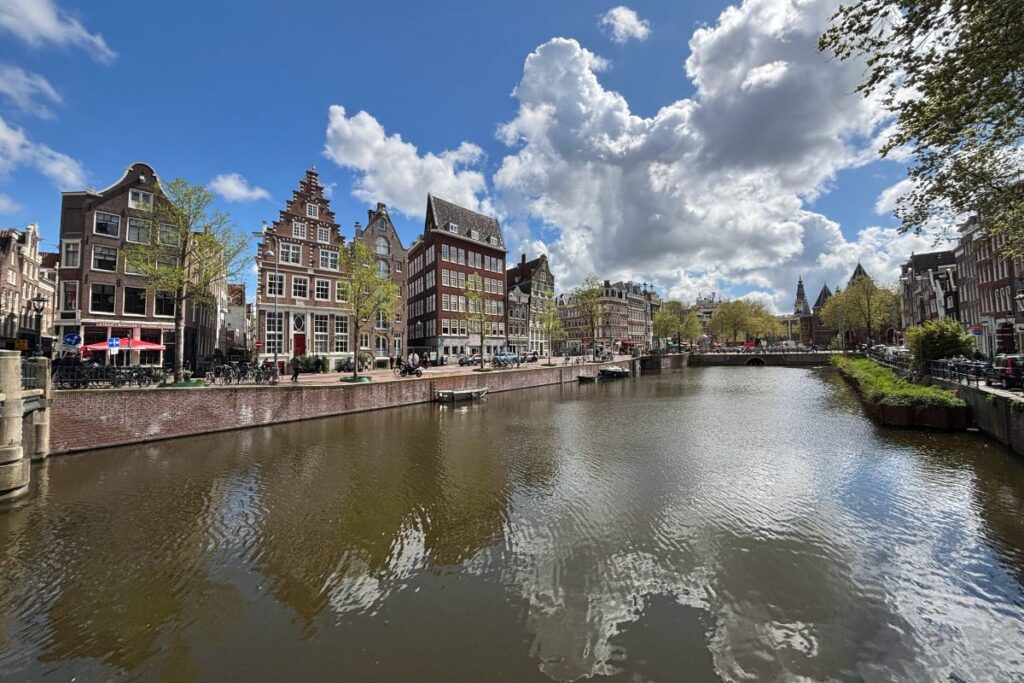
When people plan a trip to Amsterdam, they often ask the same question: how many days do you actually need?
We chose six nights.
At first, that sounded like more than enough. By the end of the trip, we realized it still wasn’t enough.
We based ourselves in De Pijp during tulip season and used Amsterdam for both exploring the city and day trips to Keukenhof and Utrecht. With six nights, we weren’t trying to race through a checklist. We wanted time to wander, eat, explore different neighborhoods, and still have room for a couple of bigger days outside the city.
And somehow, Amsterdam still left us wanting more.
Why We Chose Amsterdam
This trip almost looked very different.
A few months after returning from my backpacking trip through South America, my sister, cousin, and I started talking about taking a cousins’ trip together. Somewhere along the way, the idea evolved into something even better: what if we turned it into a mother-daughter trip? With our moms joining us, we’d have five travelers and the perfect excuse to plan something memorable together.
The obvious next question became: where should we go?
As with most trips, the destination wasn’t immediately obvious. We tossed around several ideas. Cartagena appealed to me because I thought our moms would love the colorful streets, Caribbean atmosphere, and incredible food. Scotland made the list simply because I’ve been wanting to visit for years and will gladly suggest it whenever I have the chance. London, one of my favorite cities in the world, was another contender, and Italy was hard to ignore after hearing my parents rave about their recent trip along the Amalfi Coast.
Eventually, like so many travelers do, we found ourselves scrolling through Instagram looking for inspiration. Before long, our feeds were filled with endless photos of colorful tulip fields, historic canal houses, bicycles crossing charming bridges, and cafés overlooking quiet canals. The more we looked, the more Amsterdam seemed to check every box.
It also helped that I had already spent time researching Amsterdam for a previous trip that ultimately changed course. I knew the city was incredibly walkable, had an excellent public transportation system, and offered plenty of opportunities for day trips if we wanted to venture beyond the city center. It felt like a destination that would be easy to navigate while still offering enough to fill nearly a week.
By the time we booked our flights, our plans had shifted once again. Unfortunately, both of our moms ended up being unable to join us, turning what had started as a mother-daughter getaway back into a cousins’ trip. While we were disappointed they couldn’t make it, we were still excited to finally spend several uninterrupted days together. Since we only get to see our cousin once or twice a year, a week exploring one city together suddenly sounded like the perfect trip.
Looking back, I can’t imagine this journey starting anywhere else. Amsterdam wasn’t just beautiful, it turned out to be exactly the kind of destination we were looking for. The only question left was how we wanted to experience it.
Why We Chose Slow Travel
By the time we started planning this trip, I already knew one thing: I didn’t want another fast-paced itinerary.
Just a few months earlier, I had returned from several weeks traveling through South America. It was an incredible adventure, but it also involved constantly moving from one destination to the next. Every few days meant another flight, another bus ride, another hotel, another set of logistics to figure out. I loved that style of travel for that trip because it allowed me to experience so many different places, but by the end, I was ready for something completely different.
This time, I wanted the destination itself to be the trip.
Instead of waking up every morning wondering how we were getting to the next city, I wanted to wake up wondering which café we’d try, which neighborhood we’d wander through, or which canal we’d end up sitting beside for an hour. I wanted a trip that left room for spontaneous discoveries instead of one built around checking attractions off a list.
Amsterdam felt like the perfect place to do exactly that.
The city is incredibly walkable, public transportation makes it easy to reach almost anywhere, and many of its best experiences aren’t things you rush through. Walking along the canals, exploring different neighborhoods, lingering over lunch, browsing local shops, or simply sitting by the water all felt just as rewarding as visiting the city’s famous museums and landmarks.
That’s ultimately why we decided on six days.
To some people, nearly a week in Amsterdam might sound like too much. It’s often treated as a city you can “do” in two or three days before moving on to somewhere else. But we intentionally built an itinerary that gave us room to slow down. We wanted time for a tulip day trip, a visit to Utrecht, museums, canal cruises, markets, shopping, and plenty of unplanned moments in between.
Ironically, slowing down made us appreciate Amsterdam even more. Instead of leaving with a checklist of attractions we’d visited, we left feeling like we’d actually gotten to know the city.
Looking back, choosing a slower pace wasn’t just one decision we made while planning Amsterdam, it became one of the biggest themes of the entire trip.
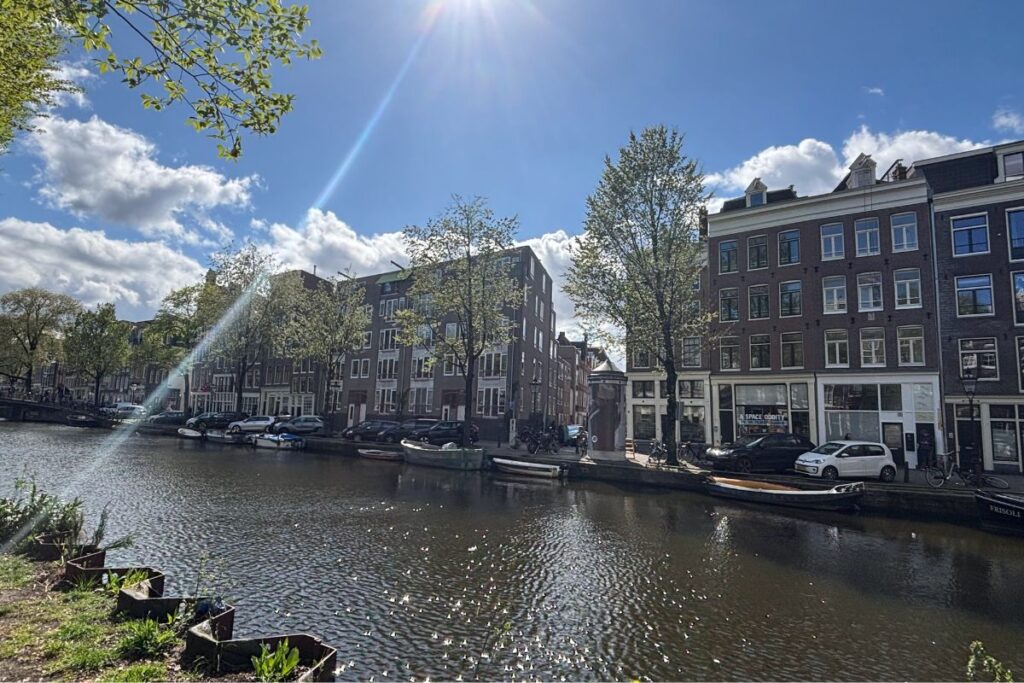
Beautiful canals were never more than a short walk away from our hotel in De Pijp.
Choosing Where to Stay in Amsterdam
Once we decided to spend six days in Amsterdam, finding the right place to stay became one of the most important parts of planning the trip.
Originally, we were searching for accommodations for five people. After our moms were no longer able to join us, the search shifted to finding a hotel that worked well for three adults. That turned out to be more challenging than we expected.
Many hotels advertise rooms for three guests, but once you look closer, you realize the third bed is often a small pull-out couch or three tightly packed twin beds with barely enough room to open a suitcase. Since we were staying nearly a week, we wanted somewhere that felt comfortable enough to settle into rather than simply sleep each night.
After comparing several options, we eventually came across Hotel Boutique De Pijp.
The reviews were a little mixed. It appeared the property was in the middle of renovations, or perhaps even changing ownership, which understandably made some guests nervous. At the same time, nearly everyone agreed on one thing: the location was excellent.
In the end, I was the one who made the decision.
My thinking was simple: the hotel was refundable, the price fit our budget, and the location seemed too good to pass up. Even if the renovations turned out to be a minor inconvenience, we planned to spend most of our time exploring Amsterdam anyway.
Looking back, I think it was exactly the right decision.
Yes, there was some construction happening during our stay, but it was minimal and mostly limited to daytime hours when we were already out exploring the city. Unless you planned to spend all day in your room, you probably wouldn’t have noticed it. By the end of the trip, I found myself oddly invested in watching the renovation progress and was excited to see parts of the lobby and reception area coming together before we checked out.
More importantly, staying in De Pijp ended up shaping our entire Amsterdam experience. Rather than feeling like tourists staying in the busiest part of the city, we felt like we had a neighborhood to come home to each evening.
That neighborhood ended up becoming one of our favorite discoveries of the trip.
Explore Hotel Boutique De Pijp and check current rates →
The canals, tree-lined streets, and relaxed atmosphere of De Pijp quickly made it one of our favorite neighborhoods in Amsterdam.
Why We Loved Staying in De Pijp
If there’s one decision I’d repeat without hesitation, it would be staying in De Pijp.
Before the trip, I spent far too much time debating whether we should stay closer to Dam Square or Amsterdam Centraal. On paper, those locations seemed like the obvious choice since they’re where many first-time visitors base themselves. But once we arrived, I quickly realized I wouldn’t have wanted to stay anywhere else.
De Pijp felt like a neighborhood rather than a tourist district.
Every morning, we’d step outside to tree-lined streets, neighborhood cafés, cyclists heading to work, and Sarphatipark directly across from our hotel. Instead of beginning each day surrounded by crowds, we started in a quieter part of the city that still felt unmistakably Amsterdam.
One of my favorite discoveries was just how walkable everything was.
Although Dam Square was about a 35-minute walk away, we rarely minded. In fact, those walks often became one of the best parts of the day. We’d wander along canals, stop to photograph another row of historic houses, browse shops we hadn’t planned on visiting, or grab coffee simply because a café looked inviting. More often than not, it took us much longer than Google Maps predicted because we kept finding reasons to stop.
When we didn’t feel like walking, Amsterdam’s public transportation made getting around incredibly easy.
The tram and metro stations were only a short walk from our hotel, and paying couldn’t have been simpler. We just tapped the same credit card when boarding and again when exiting. There was no need to figure out complicated ticket machines or day passes, and throughout our six days in Amsterdam, we only used Uber once, on the morning of our Keukenhof day trip when we were running behind schedule.
Another advantage of staying in De Pijp was being so close to Albert Cuyp Market, one of my favorite areas in Amsterdam. The neighborhood offered plenty of restaurants, cafés, bakeries, and local shops without feeling overwhelmingly touristy. It struck a nice balance between convenience and authenticity, giving us plenty to explore even close to our hotel.
Looking back, I think our hotel’s location played a bigger role in the trip than I expected. Instead of simply having a place to sleep, we had a neighborhood that became part of the experience. After long days of exploring, it was nice to return somewhere that felt relaxed, local, and a little removed from the busiest parts of the city.
If I ever return to Amsterdam, De Pijp will be the first neighborhood I look at again.
Planning Our Six Days
Once we had decided on Amsterdam, embraced the idea of slow travel, and found a neighborhood we were excited to call home for the week, it was finally time to answer the question that started this entire trip: what were we actually going to do for six days?
Amsterdam Was the Perfect Home Base
One of the biggest things we discovered while planning was that Amsterdam isn’t just a fantastic destination, it’s also an incredible base for exploring the Netherlands.
As I started researching possible day trips, I kept waiting to find the catch. Surely some of these places would require renting a car or spending half the day figuring out complicated connections. Instead, I found the opposite. Nearly every destination on my list was surprisingly accessibl.
Within the city, an extensive network of trams, buses, ferries, and the metro made it simple to reach almost any neighborhood. Beyond Amsterdam, Amsterdam Centraal connects travelers to destinations all across the country with frequent direct trains, while seasonal buses to Keukenhof make visiting the tulip gardens remarkably straightforward.
The more we researched, the more we realized that transportation was never going to be the limiting factor. Instead of spending hours figuring out complicated logistics, we could focus on the much harder question: which experiences interested us most?
Narrowing Down the Possibilities
That turned out to be much harder than we expected.
Once we started looking beyond Amsterdam itself, the list of potential day trips seemed endless. Utrecht, Haarlem, Delft, Rotterdam, The Hague, Zaanse Schans, Giethoorn, and of course Keukenhof during tulip season all looked like places we would genuinely enjoy.
At one point, I had enough potential day trips saved that we easily could have spent another week in the Netherlands without repeating an experience.
Rather than trying to squeeze in every popular destination, we started asking ourselves a different question: which experiences would feel the most different from one another? We wanted a mix of city neighborhoods, iconic spring scenery, and at least one opportunity to explore somewhere beyond Amsterdam without feeling like we were constantly packing up and moving.
Finding the Right Balance
In the end, we intentionally built an itinerary that left room for both exploration and spontaneity.
We planned one full day at Keukenhof during tulip season, one day trip to Utrecht, and dedicated the rest of our time to experiencing Amsterdam itself. That meant wandering neighborhoods, taking canal walks, visiting museums, shopping, lingering over meals, and leaving enough flexibility to follow whatever caught our attention along the way.
Looking back, I think that’s exactly why the trip worked so well.
Instead of trying to see everything the Netherlands had to offer in six days, we gave ourselves permission to experience a smaller part of it more fully. Amsterdam became more than just the city where we slept each night, it became the foundation for one of my favorite trips I’ve taken.
In the rest of this series, I’ll break down each part of that itinerary, from our chaotic day at Keukenhof to an unforgettable visit to Utrecht, the food we loved, and why six days still didn’t feel like enough.
What I’d Plan for Six Days in Amsterdam
If I were planning the trip again, I’d still use Amsterdam as my base for all six days rather than moving hotels. I’d divide the time roughly like this:
- 3–4 days in Amsterdam for neighborhoods, museums, canals, markets, food, and time without a strict itinerary
- 1 day for Utrecht or another easy city day trip
- 1 day for Keukenhof and the tulip region if traveling during tulip season
That balance gave us enough time to experience Amsterdam beyond its biggest attractions while still seeing more of the Netherlands. Outside tulip season, I’d use that extra day for another part of Amsterdam or choose a second day trip depending on what interested me most.
I also wouldn’t assign every Amsterdam activity to a specific day before arriving. Museums or other timed attractions are worth planning around, but one of the biggest benefits of having six days was being able to decide when we wanted to wander, shop, take a canal cruise, or simply spend more time in a neighborhood we liked.
Continue the Amsterdam Series
If you’re building your own Amsterdam itinerary, I’ve broken down the rest of our trip into guides covering where to stay, what to eat, day trips, and what tulip season actually looked like for us.
- Where to Stay in Amsterdam: Best Areas & Hotels for First-Time Visitors — Start here if you’re deciding which part of the city makes the most sense for your trip, with hotel options at different price points.
- Amsterdam Food Guide: From Stroopwafels to Kaasbar — What we ate, where we ate it, and the foods I’d look for again.
- Utrecht Day Trip — The Perfect Amsterdam Escape — An easy change of pace when you’re ready to spend a day outside Amsterdam.
- Amsterdam Tulip Day Trip — Keukenhof, Bikes & Chaos — What our very ambitious tulip day actually looked like.
- The Truth About a Tulip Day Trip (It’s Not Relaxing) — What I’d want to know before trying to fit Keukenhof, tulip fields, and biking into one day.
- The Perfect 2-Day Tulip Itinerary From Amsterdam — How I’d slow the experience down by spending two nights in the tulip region instead of fitting everything into one day.
- Why Amsterdam Needs More Time Than You Think — Why I think Amsterdam works especially well when you give yourself enough time to slow down.
Want Help Planning Your Trip?
There’s a big difference between knowing what’s possible and figuring out what actually makes sense for your trip. If you’d rather have help sorting through the options, I work with travelers on everything from points and flights to full itineraries and lighter-touch trip planning.
You can see the different ways I can help on my Work with Me page.