5 Days in El Salvador: My Route Through an Underrated Country
In León: Volcano Boarding, Rooftops & Nicaragua’s Adventure Capital, I wrapped up my time in Nicaragua before continuing south into El Salvador.
With just five days to explore, I focused on San Salvador and Santa Ana—a route that gave me a great introduction to a country that ended up surprising me in all the best ways.
When I first started planning my Central America trip, El Salvador wasn’t the obvious choice.
Originally, I considered Guatemala, but with less than a week available I knew I wouldn’t be able to experience it the way I wanted. Guatemala has been one of my biggest bucket-list destinations for years, and with so many friends interested in visiting, I could already picture it becoming the kind of trip that’s better shared than rushed. Rather than squeeze it into the end of this itinerary, I decided to save it for another adventure and head to El Salvador instead.
Looking back, I think it was the right decision.
Like neighboring Nicaragua, El Salvador doesn’t seem to get the attention it deserves. It offered everything I was looking for: vibrant cities, volcanoes, archaeological sites, hiking, and enough variety to make five days feel surprisingly full.
Given the time I had, splitting my trip between San Salvador and Santa Ana made the most sense. Together they balanced city life, history, and outdoor adventure while keeping travel time manageable. If you have more time, I’d also consider adding the beaches or spending longer exploring Ruta de las Flores, something I’ll talk more about in my next post.
San Salvador
I’ll admit, San Salvador wasn’t what I expected.
After Granada and León, I imagined another slower Central American capital. Instead, I arrived to a modern, energetic city that immediately felt larger and busier than I anticipated.
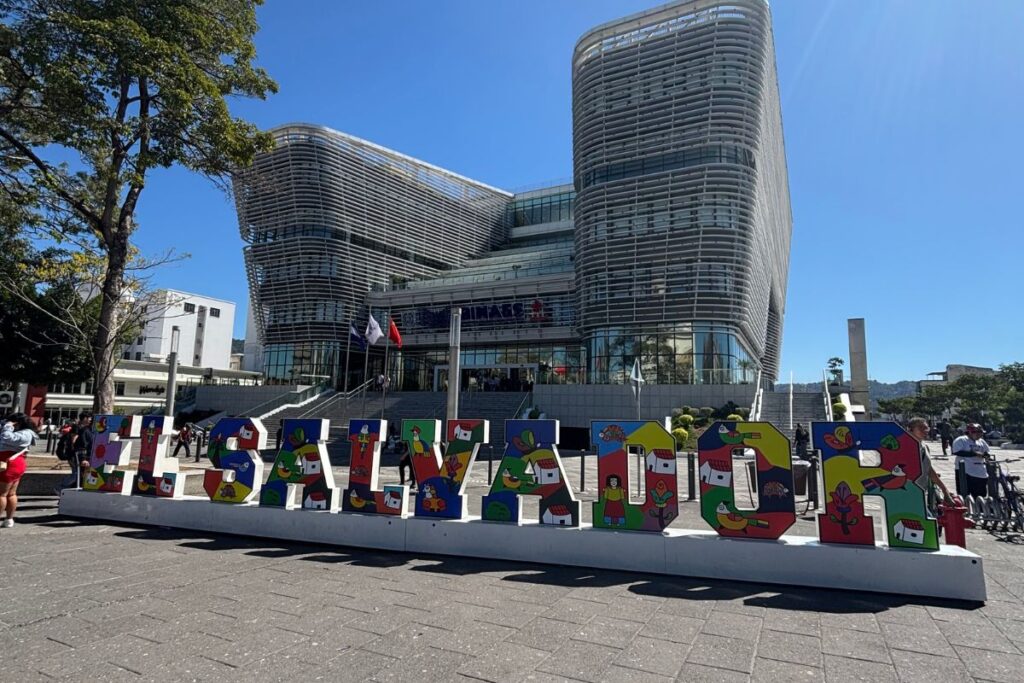
I split my time between El Boquerón National Park and the city’s historic center, where highlights like the National Palace, Iglesia El Rosario, the Metropolitan Cathedral, and the National Library (BINAES) quickly became some of my favorite places to explore.
One building I wasn’t expecting to enjoy as much as I did was BINAES, El Salvador’s National Library. Sitting directly across from some of the city’s oldest landmarks, it perfectly captures the contrast between El Salvador’s past and present. Walking through the historic center, it’s impossible not to notice how old and new exist side by side throughout the city.
One thing that stood out almost immediately was how eager locals were to talk about their country. Throughout Central and South America I’ve had plenty of great conversations with Uber drivers, but in El Salvador nearly every ride turned into a conversation about how much the country had changed.
Drivers pointed out new construction as we drove through the city, talked about neighborhoods they were returning to, and shared both their excitement and their mixed feelings about the pace of change. Those conversations became the perfect warm-up for my walking tour later that afternoon.
Like many cities, San Salvador’s history is impossible to fully appreciate without someone helping connect the dots. Learning about the country’s civil war, decades of violence, and recent transformation gave meaning to places I otherwise would have simply walked past.
By the end of the tour, the conversations I’d already been having with locals finally had context. The buildings, plazas, and monuments made far more sense than they had on my first day, and I left feeling like I understood not just San Salvador, but the country itself.
The walking tour also introduced me to several travelers I’d end up crossing paths with again later in my trip—something that would make El Salvador feel even smaller than I expected.
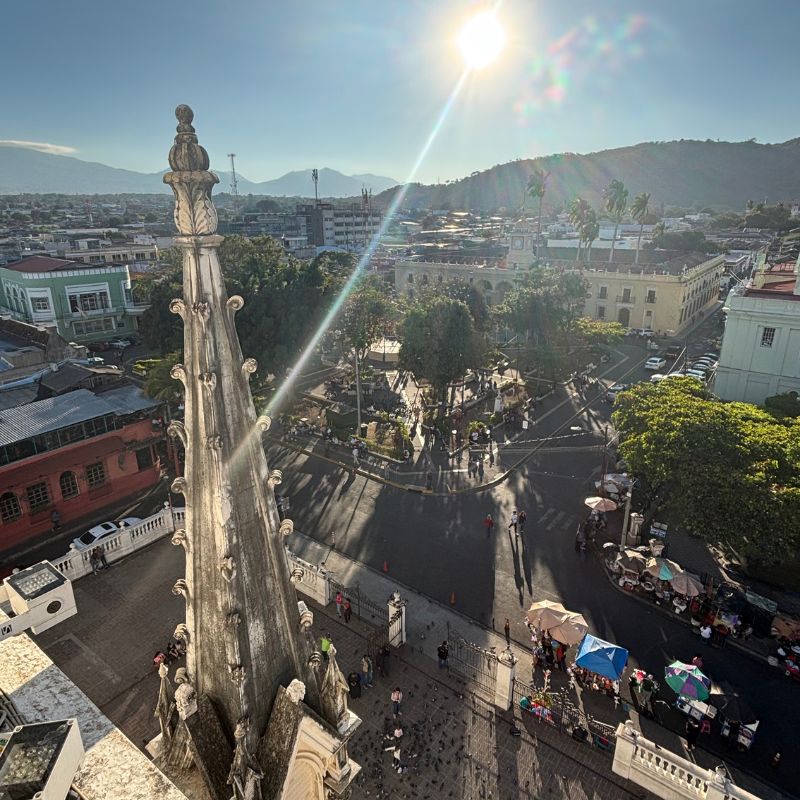
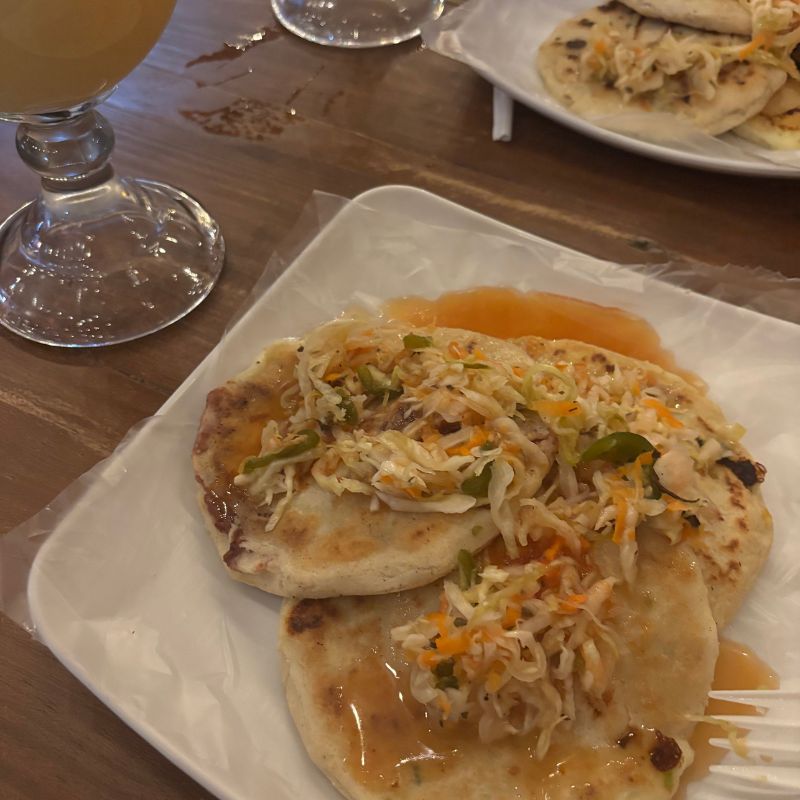
From panoramic views above the cathedral to my first taste of fresh pupusas, Santa Ana immediately felt different from the capital. It struck the perfect balance between local culture, walkable streets, and the slower pace I had been looking for.
Santa Ana
After two days in the capital, I made my way west to Santa Ana.
While San Salvador helped me understand El Salvador, Santa Ana was the side of El Salvador I had been most excited to experience. After spending the majority of the previous three weeks surrounded by beaches, volcanoes, and smaller colonial cities, San Salvador felt a bit like sensory overload. I was looking forward to getting back to a slower pace, and Santa Ana immediately felt like the perfect base for exploring western El Salvador.
Compared to the capital, Santa Ana felt calmer and much easier to settle into. The historic center is compact and walkable, the plaza naturally draws people together throughout the day, and it quickly became the kind of city where wandering without much of a plan felt just as rewarding as checking attractions off a list.
The bus itself was much more comfortable than I expected. Since I was traveling on a weekday morning, it wasn’t crowded at all, and I ended up with both seats to myself for most of the hour-and-a-half journey. For just a couple of dollars, it was an incredibly easy and comfortable way to get between the country’s two largest cities.
One tip I’d definitely recommend: bring some cash. Every few blocks, vendors would hop on the bus selling sliced fruit, cold drinks, pastries, chips, and other snacks before getting off and making way for the next seller. I hadn’t had time to grab breakfast before leaving San Salvador, so my breakfast ended up being whatever looked good as the vendors passed through the aisle. It was one of those small travel moments that made taking the local bus feel like part of the experience rather than simply transportation.
One thing I wish I’d known beforehand is that the bus doesn’t simply travel from one terminal to another. As you get closer to Santa Ana, it makes several unofficial stops throughout the city. If you’re staying near the historic center, keep an eye on Google Maps—you may be able to hop off much closer to your hotel instead of riding all the way to the terminal.
Back in Santa Ana, I spent the evening wandering around the cathedral, theater, and central plaza before grabbing dinner with someone I’d met during the San Salvador walking tour. We compared our experiences traveling through Central America and traded recommendations for the days ahead.
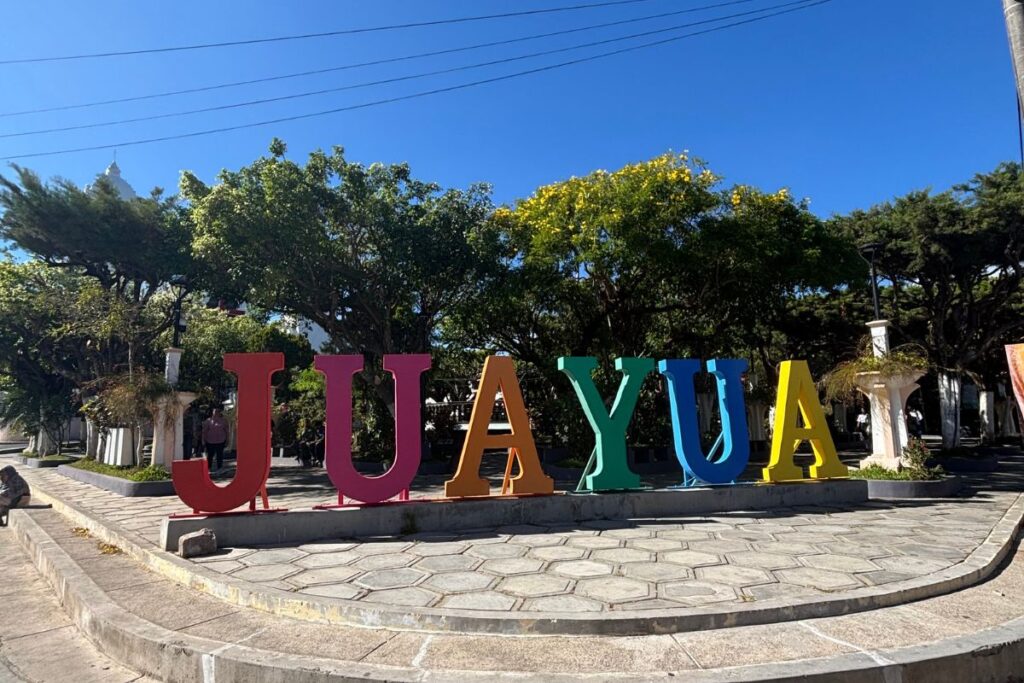
Even in just a few hours, Juayúa showed me why the Ruta de las Flores deserves more than a quick stop. The colorful towns, mountain scenery, and relaxed atmosphere made it one of the places I most wished I had given an extra day.
Ruta de las Flores
Originally, I had planned to spend two additional days in El Salvador. As my Central America itinerary evolved, those days disappeared, leaving me with just enough time to squeeze Ruta de las Flores into a single afternoon.
Still not wanting to miss one of the country’s most famous regions, I decided to make my way to Juayúa on my own.
Even with only a few hours to explore, it was easy to understand why so many travelers recommend spending several days here. Between the colorful streets, artisan shops, coffee culture, and relaxed atmosphere, Juayúa felt completely different from both San Salvador and Santa Ana. It offered a glimpse into the slower side of El Salvador that I found myself appreciating more and more throughout the trip.
Looking back, this is the place I’d build my next itinerary around.
While Uber worked well getting to Juayúa, it’s much less practical if you’re hoping to explore several towns in one day. If you only have one day, I’d recommend booking a guided tour. If you have an extra two or three days, I’d actually skip the day trip altogether and stay somewhere along Ruta de las Flores. That would give you the flexibility to explore towns like Juayúa, Ataco, and Apaneca at a much more relaxed pace.
Even though I only scratched the surface, Juayúa left me wanting to come back.
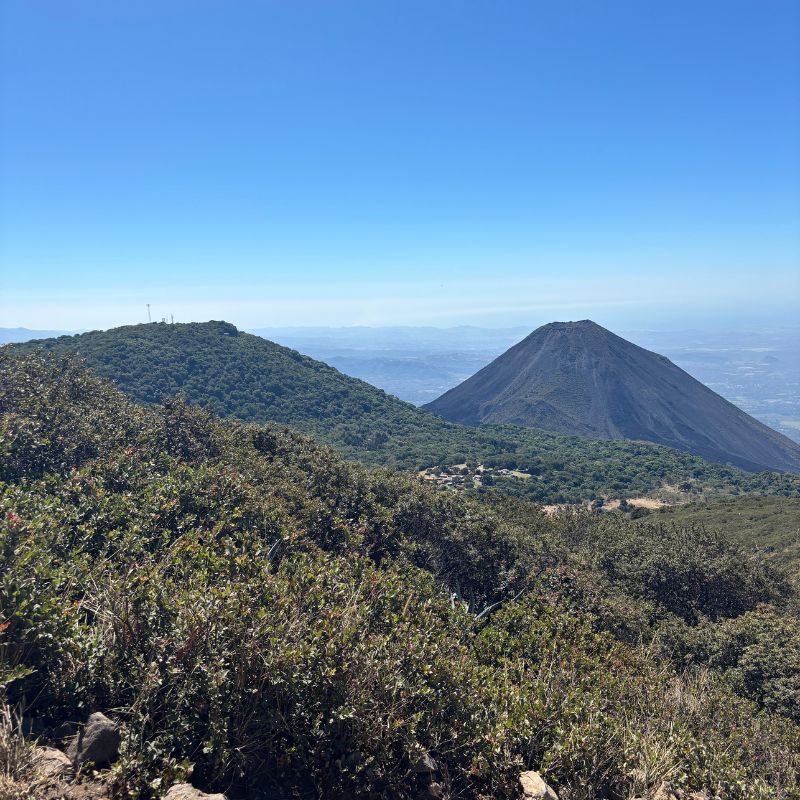
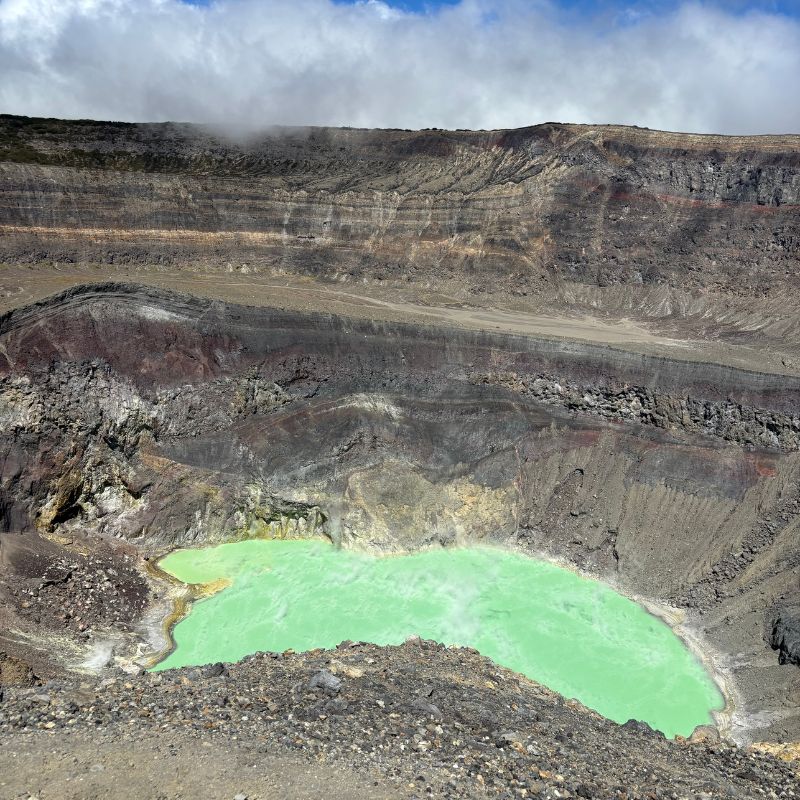
From sweeping views of the surrounding volcanoes to the brilliant green crater lake at the summit, the Santa Ana Volcano hike delivered some of the most memorable scenery of my entire Central America trip.
Climbing Santa Ana Volcano
If there was one activity I absolutely didn’t want to miss, it was the Santa Ana Volcano hike.
The hike itself is completely manageable for anyone with a reasonable level of fitness, but don’t mistake “manageable” for easy. The trail becomes rocky in sections, and while the climb isn’t overly technical, sturdy hiking shoes made a huge difference—especially on the descent.
As you climb higher, the temperatures begin to cool, offering a welcome break from the heat below. Reaching the summit feels incredibly rewarding, although don’t let the final stretch fool you. Even when you can see the crater, the trail somehow seems to keep going just a little farther than you expect.
Standing on the rim overlooking the brilliant turquoise crater lake was easily one of the highlights of my entire Central America trip.
It also reminded me what a small world travel can be. While taking in the view, I struck up a conversation with another hiker who, of all places, turned out to be from Philadelphia. Thousands of miles from home, standing on top of a volcano in El Salvador, and somehow we still managed to find someone from the same city.
One final tip: bring cash. Just like on the buses, there are small vendors near the summit selling drinks and snacks. After the hike, you’ll probably be glad you have a few dollars in your pocket.
On the way back to Santa Ana, I stopped at one of the neighborhood fruit markets for fresh pineapple, mango, juice, and whatever else looked good. After spending the morning hiking in the heat, it was exactly what I needed.
Looking back, that stop at the market probably changed the rest of my day. After cooling off and refueling, I found the energy to head back out for the evening walking tour instead of calling it a night.
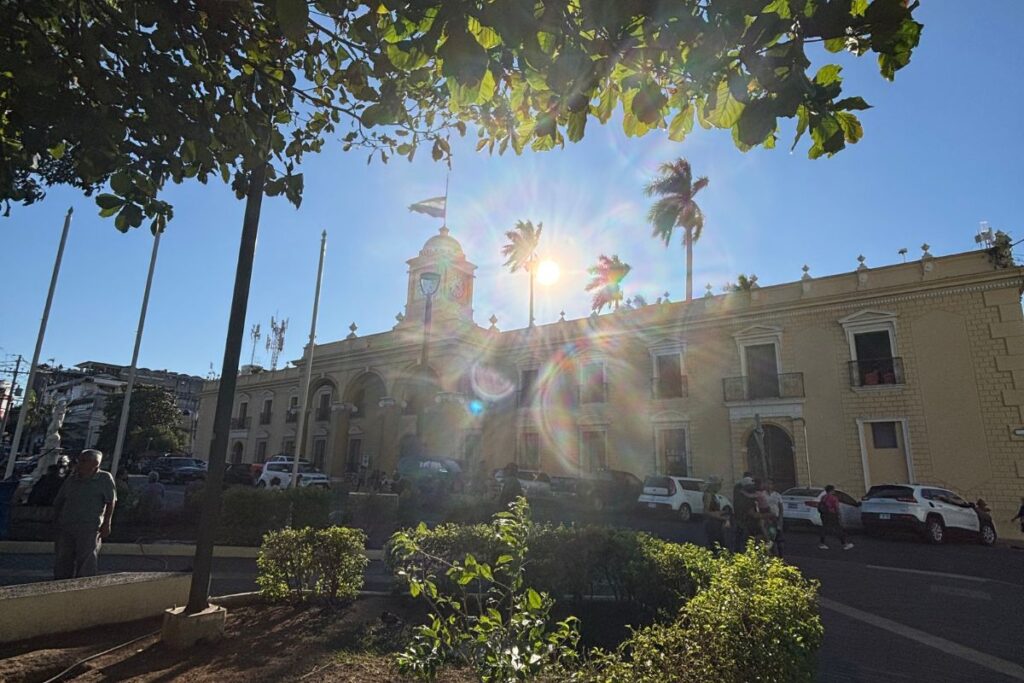
The walking tour gave me the context I needed to appreciate San Salvador, turning what almost became a skipped activity into one of the most valuable experiences of my time in El Salvador.
The Walking Tour I Almost Skipped
By this point, weeks of travel were finally catching up with me.
I seriously considered canceling the walking tour.
Instead, I went.
I’m so glad I did.
The history of Santa Ana was fascinating, but what I’ll remember most are the people.
I met a retired Dutch couple who spend every winter escaping Europe’s cold by crossing the Atlantic on repositioning cruises before slowly making their way through Central America. I met two women traveling through the region by motorcycle. After the tour, several of us grabbed dinner together and spent hours swapping stories about where we’d been, where we were headed next, and what had brought us all to this underrated corner of Central America.
It ended up being the perfect way to end my time in El Salvador.
Final Thoughts
Before visiting, I thought of El Salvador as a country I’d squeeze into the end of a larger Central America trip.
After five days, I left wondering why it isn’t talked about more.
It offered history, volcanoes, welcoming locals, colorful towns, and two cities that complemented each other remarkably well. More than anything, it reminded me that some of the most rewarding destinations are often the ones that receive the least attention.
At the same time, I also learned a lot about how I would plan an El Salvador trip differently.
Five days gave me a wonderful introduction to the country, but it also showed me just how much I had left to explore. If I returned, I’d rethink how I divided my time, spend longer around Ruta de las Flores, and build an itinerary that better reflects the kind of traveler I’ve become.
I’ll share exactly how I’d redesign this trip, and why, in my next post.
Up next: Five days gave me a great introduction to El Salvador, but it also showed me what I’d do differently. In How I’d Plan My First Trip to El Salvador Today, I’ll share how I’d redesign this itinerary based on what I learned after visiting the country.