Granada: Why It Was the Perfect Base for Exploring Nicaragua
In My First Week in Costa Rica: What Lived Up to the Hype (and What Surprised Me), I looked back on the experiences that made Costa Rica so memorable.
Nicaragua had a different rhythm. Instead of moving between destinations, I settled into Granada and used it as a base to explore the surrounding region. These three adventures ended up becoming the highlights of my time there.
Leaving Costa Rica for Nicaragua
By the time my Costa Rica trip wrapped up, I was ready for the next chapter.
After a week of moving through Costa Rica, I was surprisingly excited about one thing:
Checking into the same hotel for four nights.
My friend was flying back to the United States from Liberia Airport, and I was continuing on to Nicaragua solo. Ending our Costa Rica itinerary near Liberia actually worked out really well logistically. We had finished the trip with a slower, more comfortable stay at the Waldorf Astoria Costa Rica Punta Cacique, which gave us time to rest, enjoy the water, and make the transition easier.
From there, she could fly home from Liberia, and I could continue overland to Nicaragua.
This was also my first time crossing a border by land.
Because of that, I knew I wanted to make the process as simple as possible. I wasn’t looking for the absolute cheapest route. I wanted a shuttle that would help me get from Costa Rica into Nicaragua without leaving me to figure out transportation on the other side.
Budget travelers can absolutely do this more independently by crossing the border and then picking up local transportation in Nicaragua. But for my first land border crossing, I was happy to pay more for the peace of mind.
Crossing the Border at Peñas Blancas
The main land border crossing between Costa Rica and Nicaragua is Peñas Blancas, located near the northwest corner of Costa Rica.
The shuttle first dropped us near the Costa Rican side of the border. From there, we had to walk through the crossing ourselves.
The Costa Rica exit process was simple. There was no long wait, and once we paid the required exit fee and received our passport stamp, we were through within minutes.
Then we continued walking toward the Nicaraguan side.
That part took longer.
The line to enter Nicaragua moved much more slowly, and the process took close to an hour. What stood out to me was that most of the people crossing didn’t look like tourists with rolling suitcases. Many seemed to be crossing as part of everyday life, which immediately reminded me that this wasn’t simply a travel logistics moment. It was a real border used every day by people moving between two neighboring countries.
Once my passport was stamped, I exited the border area and found our shuttle driver waiting on the Nicaraguan side.
That was exactly why I had chosen a more organized shuttle.
There were other transportation options around, including taxis and smaller local vehicles, but I was relieved to simply find my driver, get back into the shuttle, and continue toward Granada.
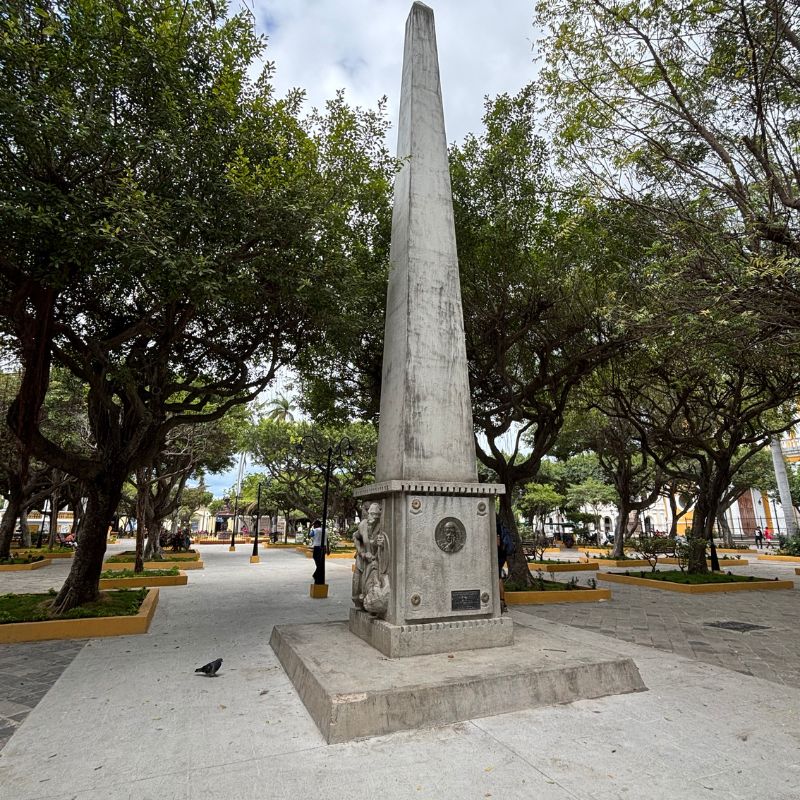
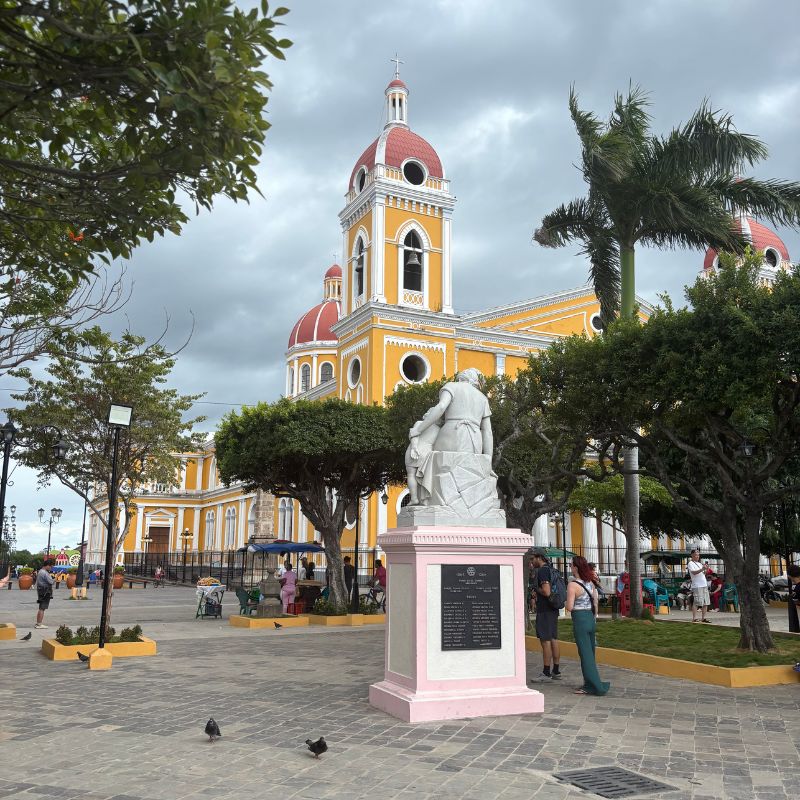
Granada immediately felt like the right place to begin exploring Nicaragua. Its colorful plazas, colonial architecture, and relaxed atmosphere made it an easy city to settle into after a long travel day and an ideal base for the adventures that followed.
Why I Skipped the Beach and Went Straight to Granada
Originally, I had considered breaking up the travel day by stopping somewhere closer to the coast.
But once the trip got closer, I realized I was ready to get started with the part of Nicaragua that interested me most.
A lot of travelers add beach time in places like San Juan del Sur, especially if they’re interested in surfing, nightlife, or a more social backpacker scene. That can absolutely make sense for the right trip.
For me, though, after Costa Rica, I wasn’t craving another beach stop.
I wanted a colonial city, volcanoes, lakes, history, and a comfortable base where I could settle in instead of packing my suitcase every morning. As much as I love moving from place to place, there’s something incredibly satisfying about knowing you’re checking into the same hotel for four nights. You can finally unpack your suitcase, settle into a routine, and start feeling like you’re living in a destination rather than just passing through.
So instead of shortening the travel day, I continued straight to Granada.
It made the day longer, but it was the right choice.
Arriving in Granada
Granada is one of the oldest colonial cities in the Americas. Founded by the Spanish in 1524, it sits along the shores of Lake Nicaragua, also known as Cocibolca. For centuries, its location made it an important commercial center, with access to the lake and the San Juan River connecting inland Nicaragua toward the Caribbean.
Walking through Granada today, it’s remarkably easy to see that history reflected in its colorful colonial buildings, lively plazas, and streets that have welcomed travelers for centuries.
Today, Granada is one of Nicaragua’s most popular bases for travelers because it combines colorful colonial architecture, a compact historic center, nearby volcanoes, lake activities, and easy access to day trips.
After a long travel day, arriving there felt like a relief.
I checked into voco Lake Nicaragua – Granada by IHG, where I stayed for four nights.
I really loved this hotel. Even though it’s part of IHG, it never felt like a generic chain property. The building blended beautifully into Granada’s colonial architecture, the room was comfortable and the location could not have been better.
The hotel sits just steps from Parque Central de Granada, placing restaurants, cafés, tour agencies, the cathedral, and many of the city’s most beautiful streets right outside the front door.
After the long border-crossing day, that convenience mattered.
Explore voco Lake Nicaragua – Granada by IHG and check current rates →
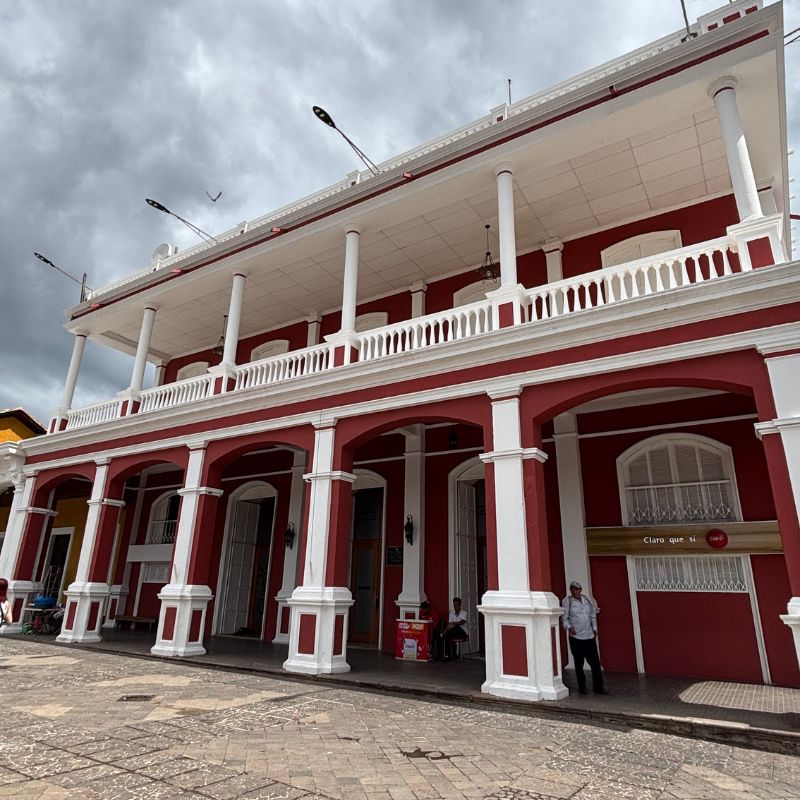
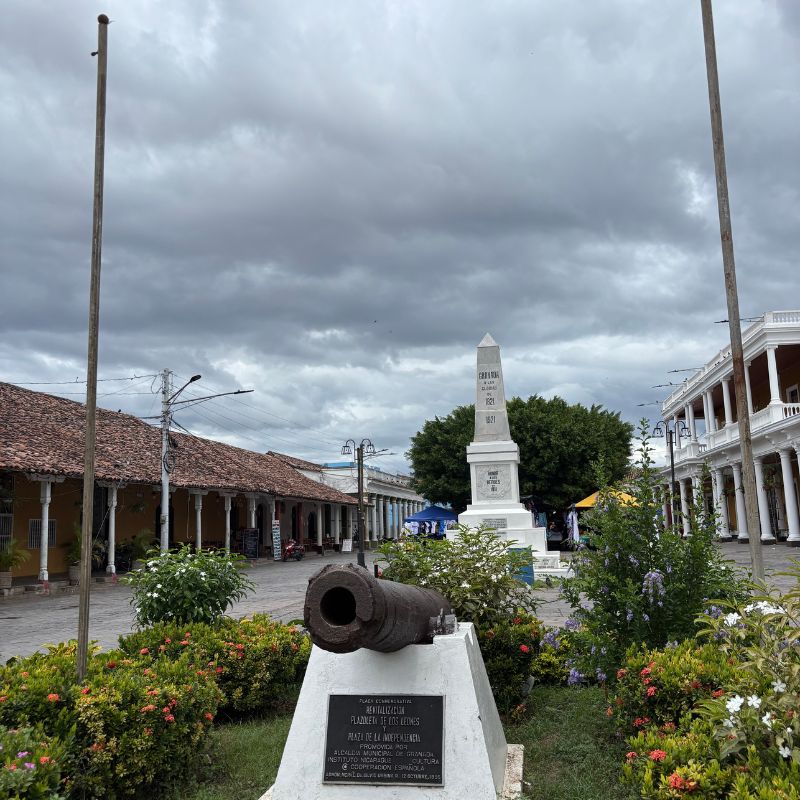
A walking tour quickly introduced me to Granada’s colorful streets, historic plazas, and colonial architecture, making it easy to understand why it’s considered one of the best-preserved cities in Central America.
Getting Oriented in Granada
On my first full day, I joined a morning walking tour.
For me, walking tours are one of the easiest ways to get oriented in a new city. They help me understand the layout, learn a bit of history, and figure out where I might want to return later on my own.
Granada is an incredibly walkable city, especially around the historic center.
Most visitors spend much of their time near Parque Central de Granada, Catedral de Granada, and Calle La Calzada, the colorful pedestrian-friendly street lined with restaurants, cafés, and tour agencies.
The walking tour gave me a better sense of the city, but it also ended up shaping the rest of my stay.
I started chatting with another solo traveler during the tour, and we quickly realized we were interested in many of the same activities. Later that evening we met up again for a Masaya Volcano tour, and a few days later we explored Las Isletas together by boat.
One thing I appreciated about Granada was how easy it was to arrange activities after arrival.
You don’t need to have every excursion booked before you get there. Tour agencies are everywhere—especially around Calle La Calzada and the surrounding streets—and prices were generally very similar from one place to another.
That made Granada feel refreshingly manageable.
You could arrive, settle into the city, and then decide what sounded interesting based on your energy level, the weather, or simply what you felt like doing that day.
What Granada Felt Like
Granada was exactly the kind of place I needed after the faster pace of Costa Rica.
Every morning, I’d step out of my hotel directly onto Parque Central and watch the city slowly come to life. Horse-drawn carriages rolled through the plaza, church bells echoed in the distance, locals opened their shops, and travelers wandered the streets searching for breakfast before heading off on the day’s adventures.
Finding a different café each morning quickly became one of my favorite routines. Don’t worry—you’ll have plenty of options. Whether you’re craving a traditional Nicaraguan breakfast with gallo pinto and fresh tropical juices or something more familiar like sandwiches, smoothie bowls, pancakes, or excellent coffee, Granada has something for everyone.
One of my favorite discoveries was Gaia Forest Café & Bistro. From the food to the atmosphere, it immediately felt welcoming. Set inside a beautifully restored colonial home with an open-air courtyard at its center, the café surrounds you with lush greenery, making it the kind of place where breakfast naturally stretches into a slow, relaxing start to the day. The Garden Café is another longtime favorite among visitors and is especially well known for its pancakes and relaxed courtyard setting.
Beyond the cafés, the historic center itself is compact, colorful, and incredibly easy to explore on foot. Churches, colonial buildings, quiet side streets, restaurants, and small plazas make wandering feel effortless.
But Granada isn’t only its historic center.
Every time I left the tourist core for an excursion, I was reminded that the city extends far beyond the polished colonial streets most travelers see first. Driving through the surrounding neighborhoods, you pass local shops, buses, restaurants, homes, and everyday life.
That contrast is important.
The historic center makes Granada easy and enjoyable as a visitor, but it’s only one part of the city.
Still, as a base, I thought it worked beautifully. I could spend my mornings on tours, return in the afternoon to rest, and head back out in the evening for dinner or a walk along the Malecón.
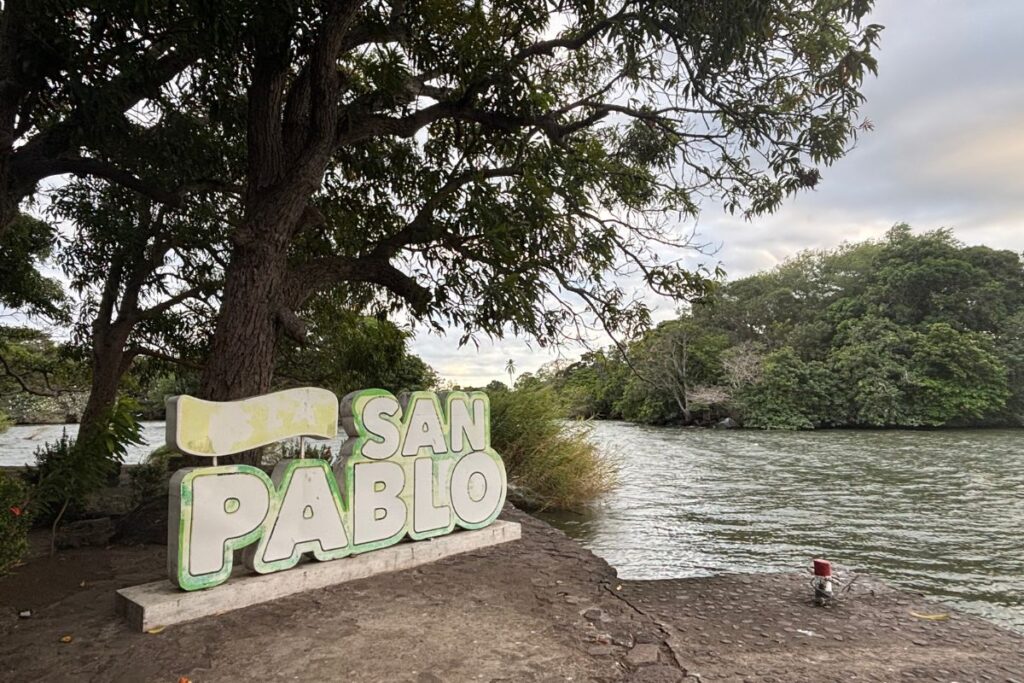
From island boat tours on Lake Nicaragua to nearby volcano hikes and chocolate workshops, Granada offers far more than its beautiful colonial streets. It’s the kind of destination that rewards travelers who stay for a few days instead of simply passing through.
Experiences I’d Recommend in Granada
This post is mostly about why Granada worked so well as a base, but these are the experiences that shaped my stay.
Walking Tour
A walking tour was the perfect way to begin.
Granada is an easy city to navigate, but understanding its history and layout from the beginning made the rest of my stay even more rewarding.
I was also impressed by how many solo travelers were exploring Granada. Even if you’re naturally a little reserved, a walking tour is an easy way to meet people, swap recommendations, and maybe even find someone to join for an excursion later in your trip.
Catedral de Granada
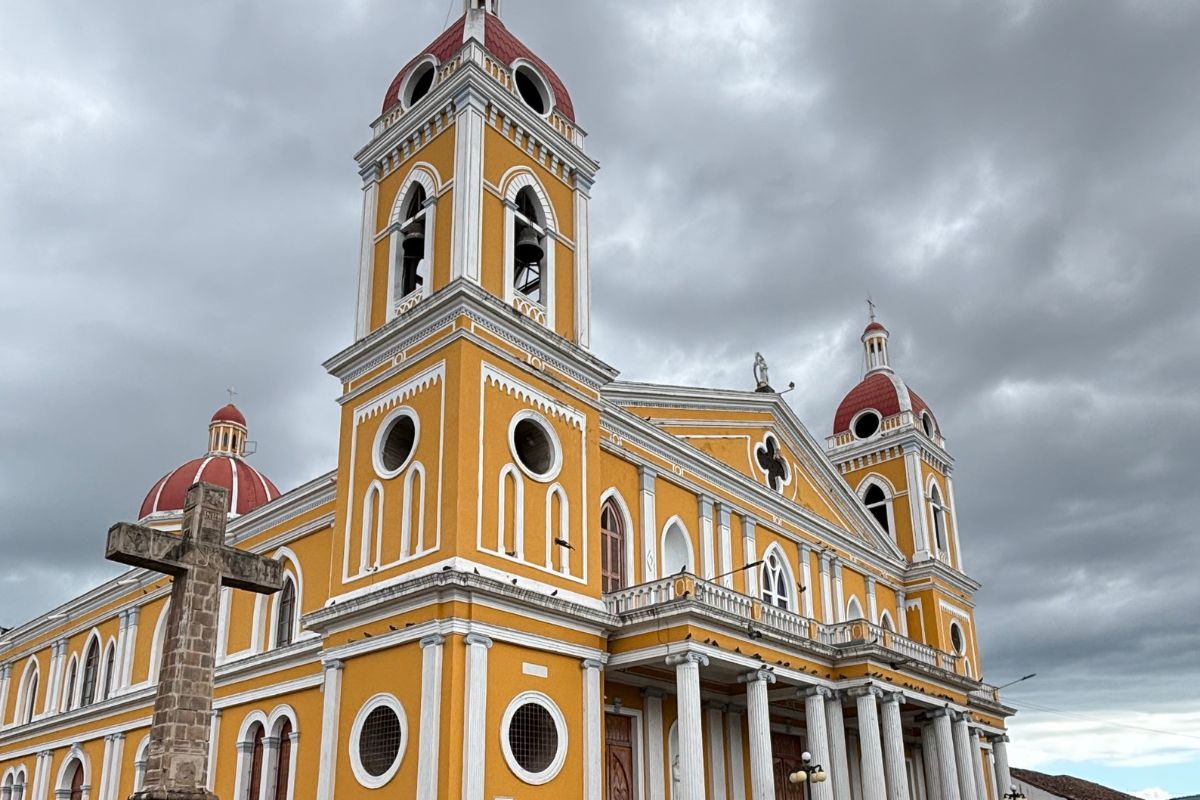
The cathedral is one of the city’s most recognizable landmarks, located directly on Parque Central.
Whether you’re admiring the bright yellow façade from the plaza or climbing to the bell tower for panoramic views, it’s one of the first places I’d recommend visiting.
It’s also a great point of reference throughout your stay since so much of Granada’s historic center radiates outward from the square.
Calle La Calzada
This is Granada’s main restaurant and nightlife street, and chances are you’ll find yourself walking along it several times a day.
Colorful buildings, outdoor seating, cafés, bars, souvenir shops, and tour operators line the street, making it one of the easiest places to plan the rest of your trip.
Whether you’re booking a volcano hike, a Las Isletas boat tour, or simply deciding where to have dinner, this is where much of Granada’s tourist activity comes together.
Follow the street all the way to the end and it leads directly to the Malecón de Granada.
Malecón de Granada
Granada sits along the shores of Lake Nicaragua, and the Malecón offers a completely different atmosphere from the historic center.
It’s quieter, more open, and a nice place for an evening stroll after spending the day exploring churches, museums, and colonial streets.
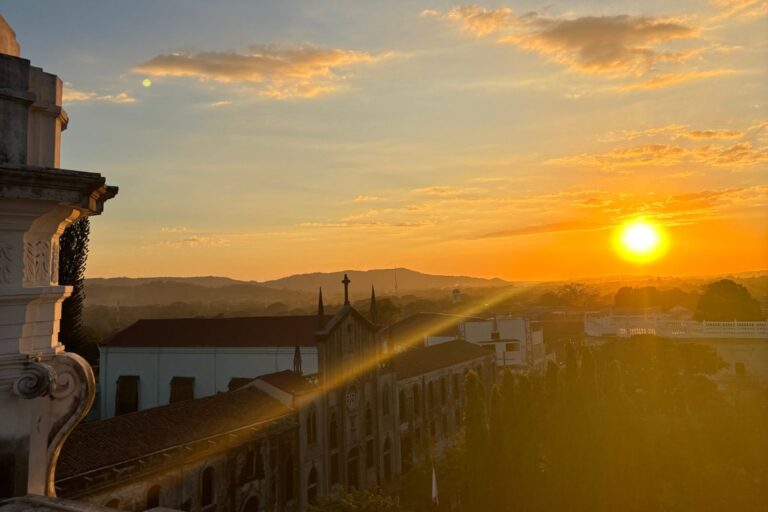
If you’re looking for a slower pace or simply want to watch the sunset over the lake, it’s well worth the short walk from Parque Central.
Nearby Adventures
One of Granada’s biggest strengths is that you don’t have to choose between city sightseeing and outdoor adventure.
Within a short drive you can explore Masaya Volcano National Park, hike through the cloud forests of Mombacho Volcano Nature Reserve, or take a boat through Las Isletas de Granada.
Those experiences deserve posts of their own because they became some of my favorite memories from Nicaragua, but they also reinforced why Granada worked so well as a base. I never felt like I was constantly packing and unpacking—I simply headed out each morning and returned to the same familiar city each evening.
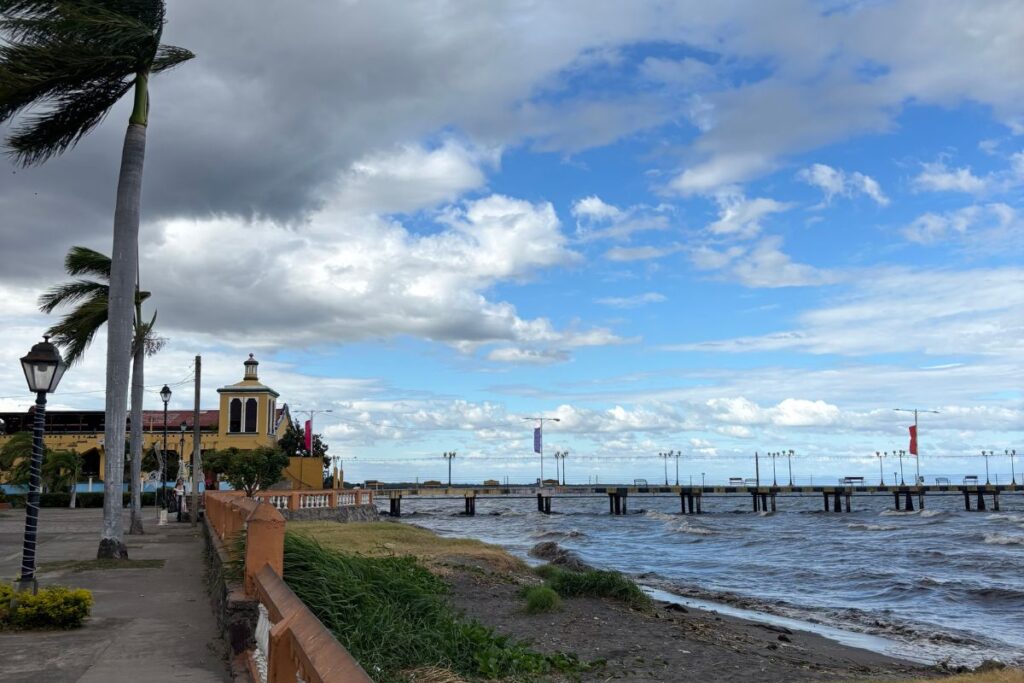
Four nights gave me enough time to experience Granada beyond the main sights, settle into the city’s relaxed pace, and take a few memorable day trips without ever feeling rushed.
Why Four Nights Felt Right
I stayed in Granada for four nights, and for my travel style, it felt just about perfect.
It gave me enough time to:
- Cross the border without feeling rushed into sightseeing immediately.
- Take a walking tour and get oriented.
- Visit Masaya Volcano National Park.
- Hike in Mombacho Cloud Forest.
- Explore Las Isletas by boat.
- Enjoy slower afternoons and evenings wandering Granada itself.
Could you see Granada in two days?
Absolutely.
But I don’t think you’d experience it the same way.
The extra time gave me room to develop small routines, discover favorite cafés, meet another traveler, and enjoy the city between excursions rather than simply sleeping there each night.
That balance is one of the biggest reasons I enjoyed Granada so much.
Final Thoughts
Granada ended up being exactly the introduction to Nicaragua I had hoped for.
It was colorful, walkable, historic, and the perfect base for exploring the surrounding region. Every day brought a new adventure, yet every evening I found myself returning to the same familiar streets, cafés, and plaza.
That’s what made Granada so special.
Four nights gave me time to settle into the city instead of simply passing through it, and after the faster pace of Costa Rica, that slower rhythm felt exactly right.
Granada wasn’t just my first stop in Nicaragua.
It was where Nicaragua began to unfold.
And looking back, I can’t imagine a better place to start.
Up next: Granada isn’t just a beautiful colonial city—it’s also the perfect base for exploring the surrounding region. In Three Adventures Worth Taking from Granada: Masaya Volcano, Mombacho & Las Isletas, I’ll share the three excursions that became the highlights of my time in Nicaragua.
Continue Exploring Central America
- 3 Days in Panama City: The Central American Stopover That Completely Surprised Me — See how I spent three days in Panama City and why what started as a convenient stopover became one of the surprises of my Central America trip.
- 5 Days in El Salvador: My Route Through an Underrated Country — Follow my five-day route through El Salvador and see how I combined cities, volcanoes, small towns, and the Pacific coast.
- My First Week in Costa Rica: What Lived Up to the Hype (and What Surprised Me) — Follow my first week through Costa Rica and see what lived up to everything I’d heard—and what caught me completely by surprise.