What Nobody Told Me About Traveling Around Costa Rica Without a Car
Previously: In If I Planned Costa Rica Again, Here’s Exactly How I’d Do It, I shared how I’d build a first trip to Costa Rica today. But one of the biggest questions I had before visiting wasn’t where to go—it was how to actually get there. Here’s what I learned about exploring Costa Rica without renting a car.
Like most trips I plan, I handled almost everything myself. Flights were booked, hotels were reserved, activities were researched, and our itinerary was set.
The only thing left?
Transportation.
By that point, I had completely run out of planning energy. After spending so much time researching flights, hotels, restaurants, activities, and piecing together our itinerary, I had no desire to figure out shuttle schedules, transfers, and how we were actually going to move between destinations once we landed.
Thankfully, I was traveling with a friend.
When she offered to take over booking our shared shuttles, private transfers, and everything in between, I didn’t hesitate. It was one less thing for me to think about, and I was incredibly grateful to hand that part of the trip over to someone else.
Looking back, that experience taught me something I wish I’d understood before I started planning.
Transportation isn’t just another part of your Costa Rica itinerary.
It is your itinerary.
That doesn’t mean you need a rental car—we had an incredible trip without one. But it does mean you’ll plan Costa Rica a little differently than you might plan somewhere with an extensive public transportation network.
Here are the biggest lessons I brought home.
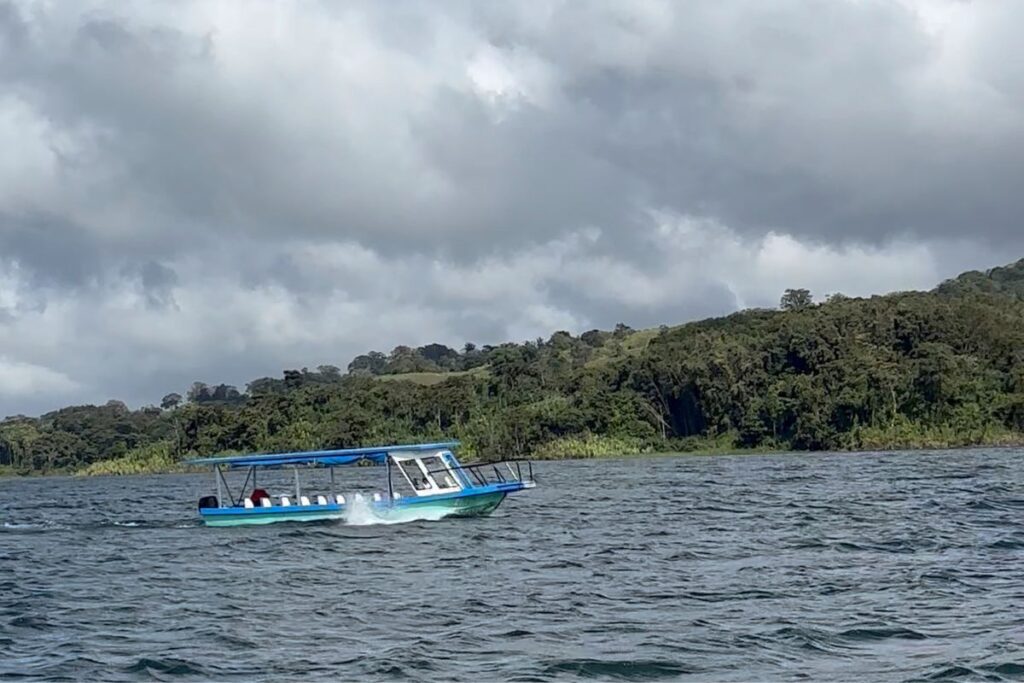
In Costa Rica, transportation is part of the adventure. Some of the country’s most memorable destinations are connected by boat, shuttle, or winding mountain roads, making it just as important to plan the journey as the destination itself.
Before You Fall in Love With a Destination, Research How You’ll Get There
If I could go back and change one thing about my planning process, it would be this.
Before reading dozens of blog posts, watching YouTube videos, or building Pinterest boards for a destination, I’d spend ten minutes researching transportation.
Can I realistically get there?
How much will it cost?
How often do shuttles run?
Will I lose half a day traveling?
Is this destination worth the extra logistics?
It’s easy to fall in love with photos of a beautiful beach, waterfall, or mountain town, only to realize later that reaching it requires an entire travel day or stretches your budget more than expected.
Now, transportation is one of the first things I research. It doesn’t have to be a deep dive—just enough to understand what’s realistic before I build the rest of my itinerary.
That one change has completely transformed how I plan trips.
Build Your Itinerary Around Transportation, Not Attractions
When I first started planning, I focused on the fun part: volcanoes, waterfalls, hot springs, and cloud forests.
Then I looked at a map.
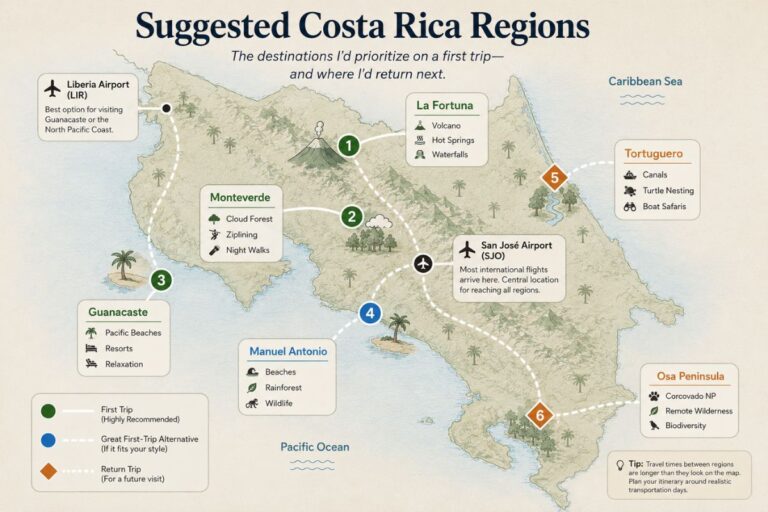
I quickly realized many of Costa Rica’s most popular destinations are several hours apart, and those travel days add up faster than you might expect.
A transfer between destinations can easily take half a day.
That’s not necessarily a bad thing—it just means your itinerary has to account for it.
Instead of asking, “What else can I squeeze in?”
I’d encourage you to ask, “What comfortably fits before or after this travel day?”
Costa Rica isn’t a country I’d rush through. The itineraries that make the most sense are the ones built around realistic travel days rather than trying to fit in every attraction.
Shared Shuttles Work Really Well—If You Plan Around Them
Shared tourist shuttles ended up being our primary way of getting around Costa Rica, and I’d happily use them again. The drivers knew exactly where travelers were staying, pickups were straightforward, and once we reached each destination, we never felt like we needed a rental car.
The biggest thing to know is that most shuttle companies operate on fixed schedules, with many routes offering only one or two departures each day.
We learned that lesson almost immediately.
Our flight from Panama landed after the morning shuttle to La Fortuna had already left. Rather than wait several hours for the afternoon departure, we booked a private transfer instead.
It cost more than a shared shuttle, but it also gave us back several hours of vacation.
Looking back, I’d make the exact same decision.
Sometimes spending a little more on transportation buys you something even more valuable: extra time to enjoy your destination.
Hotel Location Matters More Than You Think
One thing that surprised me while planning Costa Rica was how much my hotel choice affected the rest of the trip.
If you’re not renting a car, I’d pay just as much attention to a hotel’s location as its amenities.
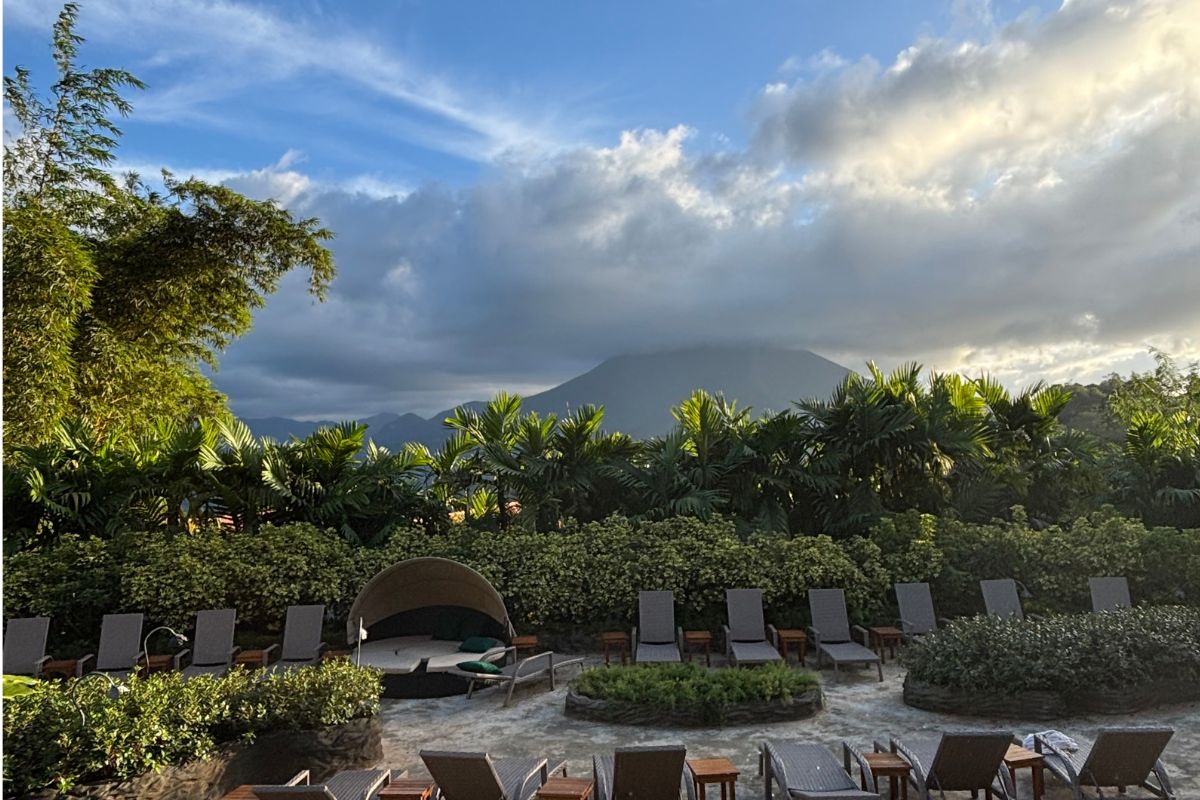
Hotels closer to restaurants and town centers often make it easy to walk to dinner, browse local shops, or catch a taxi. More secluded properties usually reward you with volcano views, rainforest settings, or private hot springs, but you’ll likely need transportation every time you leave.
Neither option is better, it simply depends on the kind of trip you want.
Personally, I loved staying close enough to walk into town after a full day of exploring, then saving our more secluded luxury stay for the very end of the trip.
Transportation Can Change From Town to Town
One thing we noticed was that transportation wasn’t the same everywhere.
In La Fortuna, getting an Uber was relatively easy.
Monteverde was different.
Instead of opening an app, our hotel simply called us a taxi. Another guest happened to be heading to the same place, so we decided to share the ride. What started as an easy way to split the fare turned into one of my favorite travel memories. We spent the drive chatting, exchanged travel recommendations, and ended up meeting again for dinner later that evening.
Sometimes the logistics lead to the best unexpected moments.
Not Every Activity Includes Transportation
As you compare tours, pay attention to what’s included.
Some activities provide hotel pickup, while others expect you to arrange your own transportation.
It sounds like a small detail, but if you’re relying on taxis or staying outside town, it can easily add extra cost, time, and planning to your day.
I found it much easier to think about transportation while booking activities rather than scrambling to figure it out the night before.
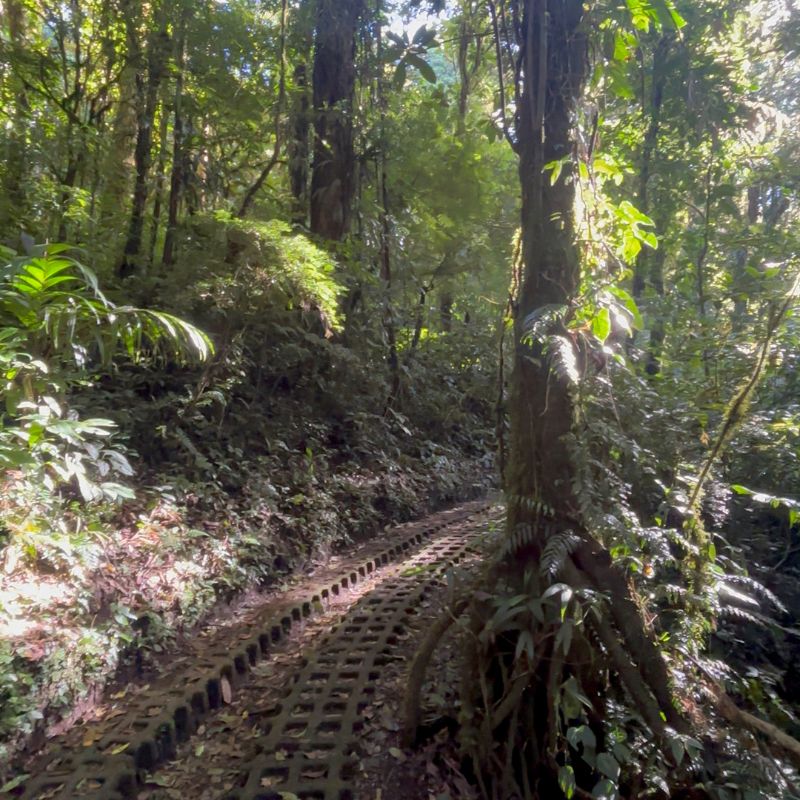
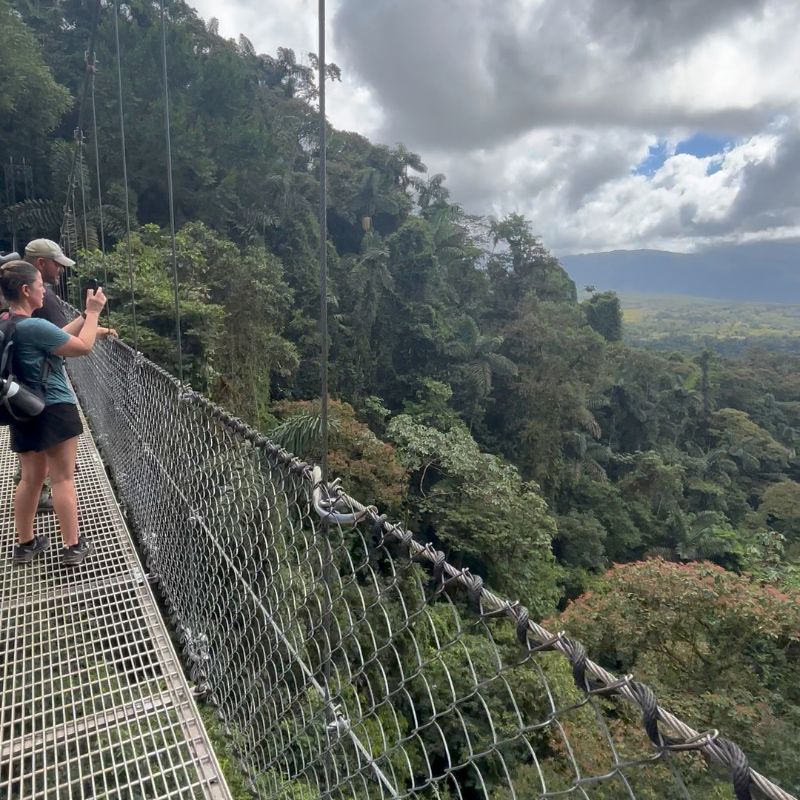
Costa Rica offers more activities than most itineraries can realistically fit into one trip. Choosing the experiences that excite you most, and letting go of the rest, often leads to a more relaxed and memorable vacation.
Don’t Feel Like You Have to Do Everything
One of the best decisions we made was accepting that we didn’t have to spend every hour together.
My friend isn’t a fan of heights, so while I spent one afternoon ziplining through the rainforest, she booked a coffee tour instead.
That evening, we met back up for dinner and spent the rest of the night swapping stories about our completely different afternoons.
Looking back, I wouldn’t change a thing.
Traveling together doesn’t mean every hour has to look the same. Sometimes giving each other the freedom to choose the experiences you’re most excited about makes the trip even better.
Plan One Day to Simply Enjoy Costa Rica
One of the best decisions we made was ending our trip with a day that didn’t revolve around sightseeing.
After a week of moving between destinations, hiking, and early mornings, we spent our final night along the Pacific coast with no real agenda.
We relaxed by the pool, watched the sunset over the ocean, and reflected on everything we’d experienced during the week.
If you’re planning your own trip, I’d encourage you to leave room for a day like this.
Costa Rica is known for adventure, but ending the trip with a chance to recharge made us appreciate the rest of the journey even more.
How I’d Connect My Trip
One thing that surprised me while planning Costa Rica is that some destination combinations are much easier than others.
If you’re relying on shared shuttles instead of renting a car, I’d think about transportation before finalizing your itinerary.
5 Days: La Fortuna
This is one of the easiest trips to plan without a car. From San José Airport, shared shuttles and private transfers regularly connect travelers directly to La Fortuna in about 3–4 hours, making it a great option if you’re short on time.
7 Days: La Fortuna + Monteverde
This is still my favorite first-time itinerary.
The transfer between the two is straightforward, and many travelers choose the Jeep-Boat-Jeep route across Lake Arenal. Instead of driving all the way around the lake, you cross by boat before continuing on to Monteverde, turning what could have been just another transfer into part of the experience. This is the option we chose, and I absolutely loved it. Rather than feeling like a travel day, it became another memorable part of the trip.
10 Days: La Fortuna + Monteverde + Guanacaste
This route flows naturally from one destination to the next without requiring you to backtrack across the country. It was one of the reasons I enjoyed ending our trip on the Pacific coast before continuing on to Nicaragua.
10 Days: La Fortuna + Monteverde + Manuel Antonio
This is another very manageable combination if wildlife and beaches are higher on your priority list. Just be prepared for a longer travel day between Monteverde and Manuel Antonio.
Two Weeks
With two weeks, you have enough time to add destinations like Tortuguero or the Osa Peninsula, but they require more planning than the rest of the classic Costa Rica route. Tortuguero is most commonly reached via shuttle and boat from the San José area, while the Osa Peninsula is a five- to seven-hour drive from Manuel Antonio or a short domestic flight from San José. I’d choose one or the other rather than trying to visit both on the same trip.
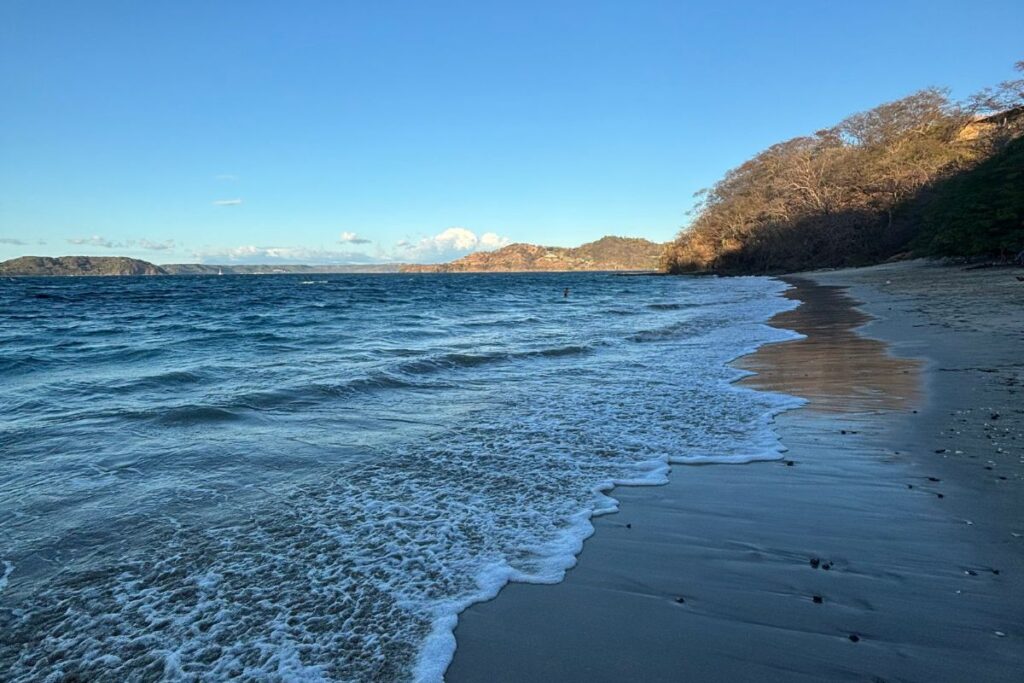
Some of the best trips don’t come from seeing everything, they come from planning realistically. Understanding how you’ll get around before you build your itinerary can make the entire journey smoother, less stressful, and far more enjoyable.
My Biggest Planning Lesson
If I could give one piece of advice to someone visiting Costa Rica for the first time, it would be this:
Research transportation first.
Not because it’s the most exciting part of planning—but because it influences every decision that comes after it.
Once you understand how you’ll move around the country, choosing destinations, hotels, and activities becomes so much easier.
And if you’re wondering whether Costa Rica is worth visiting without renting a car?
Absolutely.
I’d do it again in a heartbeat.
I’d simply make transportation one of the first things I planned instead of the last.
Up next: After saying goodbye to Costa Rica, my friend flew home and I continued the rest of my Central America journey on my own. My first stop was Granada, a colorful colonial city that turned out to be the perfect base for exploring Nicaragua. In Granada: Why It Was the Perfect Base for Exploring Nicaragua, I’ll share why it quickly became one of my favorite stops of the trip.
Continue Exploring Central America
- 3 Days in Panama City: The Central American Stopover That Completely Surprised Me — See how I spent three days in Panama City and why what started as a convenient stopover became one of the surprises of my Central America trip.
- 5 Days in El Salvador: My Route Through an Underrated Country — Follow my five-day route through El Salvador and see how I combined cities, volcanoes, small towns, and the Pacific coast.
- My First Week in Costa Rica: What Lived Up to the Hype (and What Surprised Me) — Follow my first week through Costa Rica and see what lived up to everything I’d heard—and what caught me completely by surprise.