How I’d Plan My First Trip to El Salvador Today
In 5 Days in El Salvador: My Route Through an Underrated Country, I shared the itinerary I followed through San Salvador and Santa Ana. But after returning home, I realized I would plan my first trip a little differently.
Here’s the route I’d recommend today based on everything I learned along the way.
Five days was enough to convince me that El Salvador deserves far more attention than it gets.
When I first planned my Central America itinerary, I treated El Salvador as the final stop on a three-week journey through the region. By the time I flew home, I realized I’d learned just as much about how to plan an El Salvador itinerary as I had about the destinations themselves.
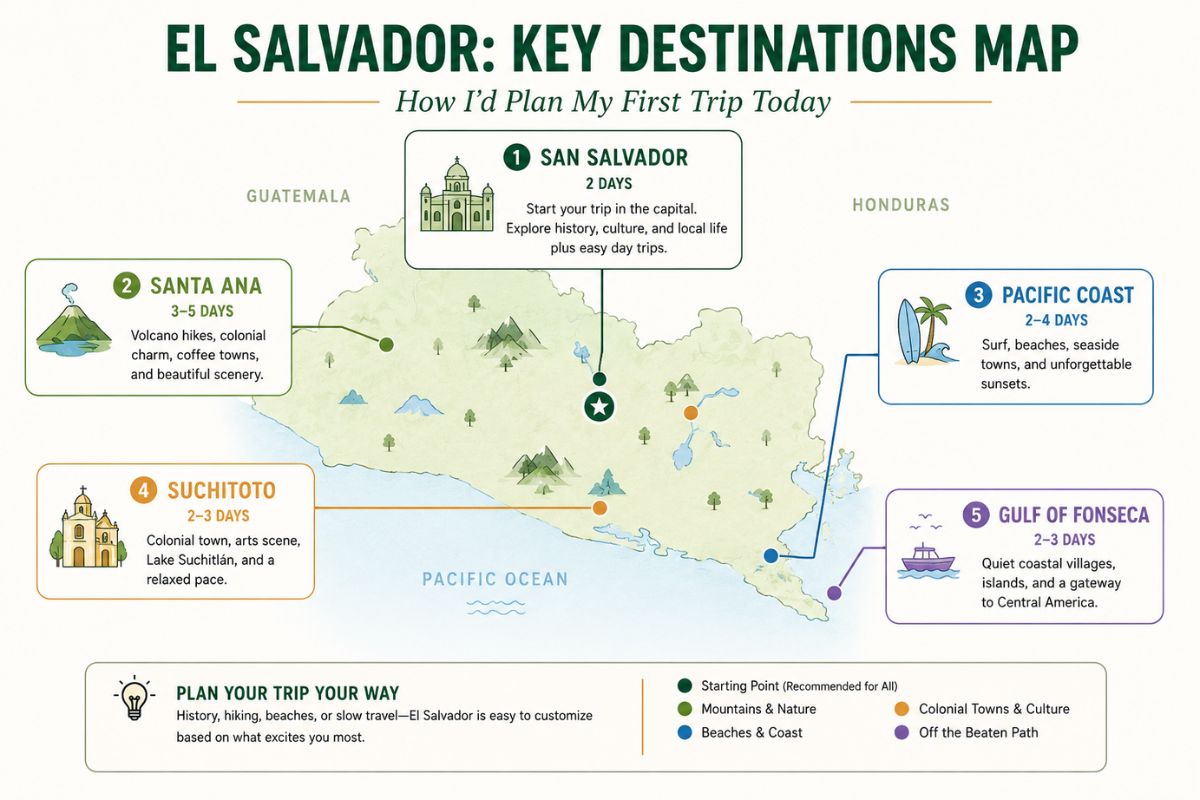
Rather than giving you one fixed itinerary, think of this as a planning guide. Every traveler is different, and El Salvador is surprisingly easy to customize depending on whether you’re drawn to history, volcanoes, beaches, hiking, or slower colonial towns.
Every Trip Starts in San Salvador
Recommended stay: 2 days
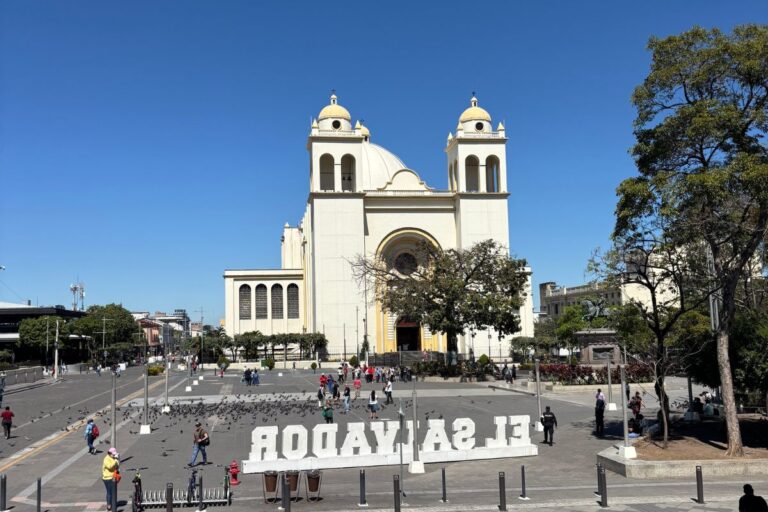
For almost everyone, San Salvador will be your introduction to El Salvador. It’s where you’ll most likely fly into, and I think it deserves two full days before heading elsewhere.
Base Highlights
Spend your time exploring the Historic Center, touring the National Palace, stepping inside Iglesia El Rosario, visiting BINAES, and joining a walking tour. Together, they provide an excellent introduction to El Salvador’s history while helping explain the country’s remarkable transformation over the past decade.
Day Trips
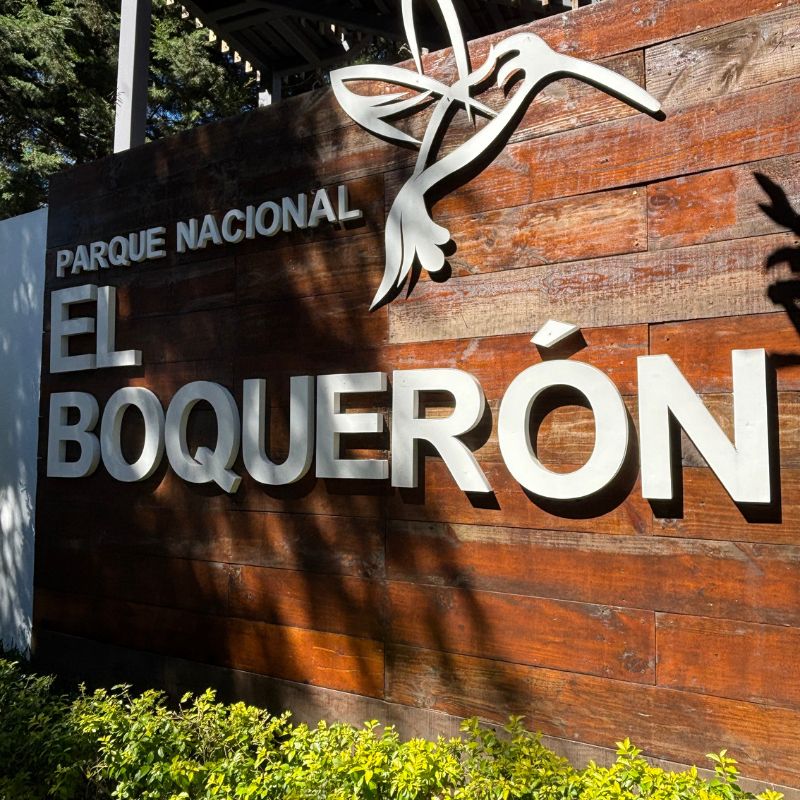
El Boquerón National Park
One of the easiest half-day trips from the city, El Boquerón offers panoramic views into the crater of the San Salvador Volcano and is a great introduction to the country’s volcanic landscape.
Joya de Cerén & San Andrés
Located about 45 minutes west of the capital, these two archaeological sites pair perfectly into a single day. Joya de Cerén, often called the “Pompeii of the Americas,” offers a rare glimpse into everyday Mayan life, while nearby San Andrés showcases one of the country’s most important ceremonial centers.
Once you’ve explored the capital, it’s time to decide what kind of trip you want to have.
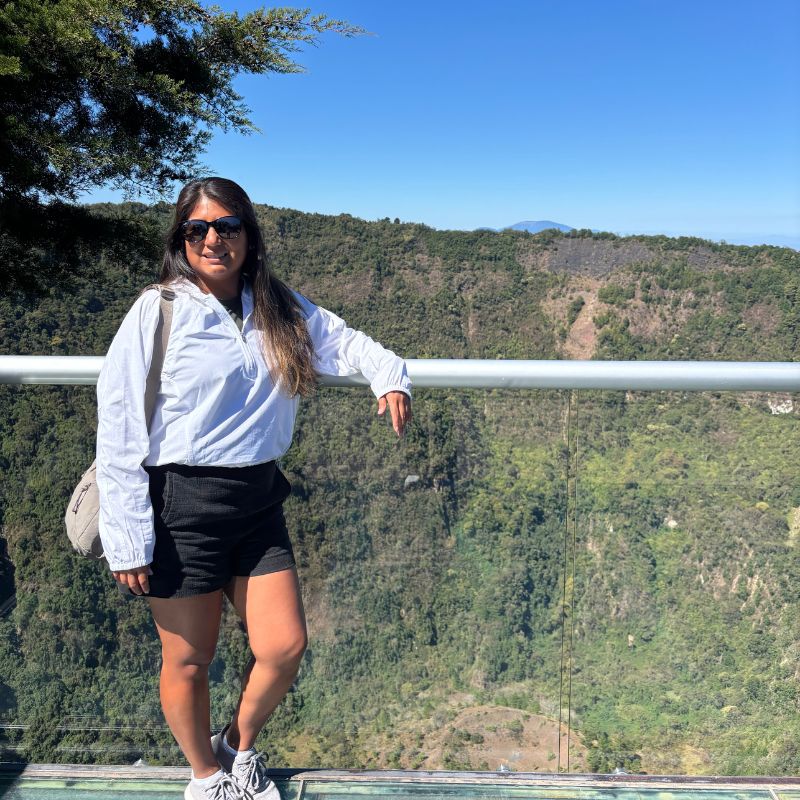
Western El Salvador quickly became my favorite part of the country, combining volcanic landscapes, scenic viewpoints, and charming colonial towns into an itinerary that felt both adventurous and easy to explore.
Continue West → Santa Ana
Distance from San Salvador: Approximately 1.5–2 hours by bus
If your ideal trip includes volcanoes, colonial architecture, hiking, archaeology, and colorful mountain towns, this is the direction I’d recommend.
Base Highlights
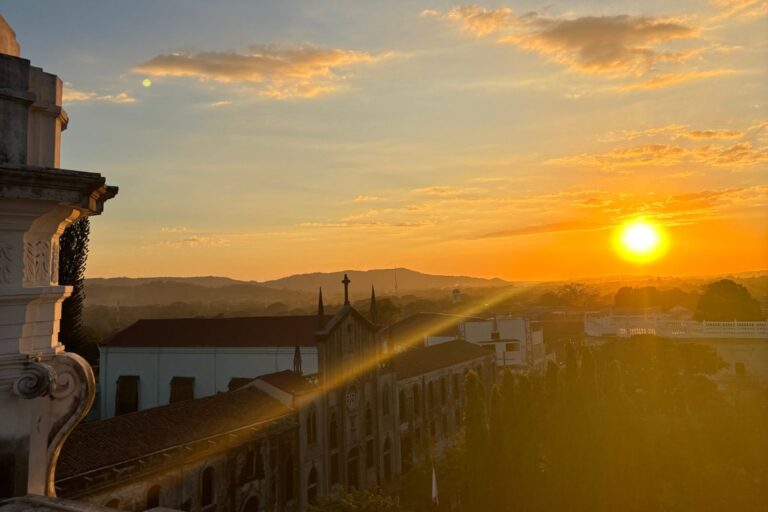
Santa Ana makes an excellent base for western El Salvador, If I were planning my own first trip again, this is where I’d spend the largest portion of my time. Spend time wandering the historic center, visiting the cathedral and theater, exploring local markets, relaxing in cafés around the plaza, and joining one of the city’s walking tours.
Day Trips
Santa Ana Volcano
If you’re only going to do one hike in El Salvador, make it this one. The moderate trek from Cerro Verde National Park rewards you with one of the country’s most spectacular views: the turquoise crater lake sitting inside an active volcano.
Ruta de las Flores
This scenic mountain route connects some of El Salvador’s most charming towns, including Juayúa, Ataco, and Apaneca. If your time is limited, I’d recommend joining a guided day tour from Santa Ana rather than trying to piece the route together independently. If there’s one regret from my trip, it’s not giving Ruta de las Flores more time.
Lake Coatepeque
If you’re looking for a slower day, Lake Coatepeque offers beautiful scenery, waterfront restaurants, kayaking, and a chance to relax between more active days.
Tazumal
One of El Salvador’s best-preserved Mayan archaeological sites and an easy half-day excursion from Santa Ana.
Nature Lovers
If hiking is your priority, Santa Ana makes an excellent base. Beyond the Santa Ana Volcano, Cerro Verde National Park has additional trails and viewpoints, while more experienced hikers may want to continue west to El Imposible National Park, El Salvador’s largest protected forest.
Continue South → Pacific Coast
Distance from San Salvador: Approximately 1–1.5 hours
El Salvador’s Pacific Coast offers a completely different experience from the country’s interior.
Base Highlights
If surfing, sunsets, and beach towns are your priority, I’d head south directly from San Salvador. The towns of El Tunco, El Sunzal, and El Zonte have become some of Central America’s best-known surf destinations and make an excellent addition for travelers looking to slow down by the ocean.
Day Trips
Spend your time beach hopping, taking a surf lesson, exploring the coastline, or simply enjoying sunset from one of the many beachfront cafés.
Head Northeast → Suchitoto
Distance from San Salvador: Approximately 1–1.5 hours
Although I didn’t have time to visit Suchitoto on this trip, it’s probably the destination I’d add first if I returned to El Salvador.
Base Highlights
Known for its colonial architecture, colorful streets, thriving arts scene, indigo workshops, and views over Lake Suchitlán, Suchitoto feels like the kind of destination where wandering without much of an itinerary becomes part of the experience.
Day Trips
Take a boat ride on Lake Suchitlán, visit nearby waterfalls during the rainy season, or simply spend another day enjoying the slower pace of one of El Salvador’s most charming towns.
Continue East → Gulf of Fonseca
Distance from San Salvador: Approximately 3–4 hours
Eastern El Salvador receives far fewer visitors than the western half of the country, making it a better fit for travelers with extra time.
Base Highlights
The Gulf of Fonseca region offers quiet coastal scenery, fishing communities, and serves as a convenient gateway for travelers continuing into Honduras or Nicaragua.
Day Trips
Explore the islands of the gulf, visit La Unión, or simply use the region as the next step in a longer Central America itinerary.
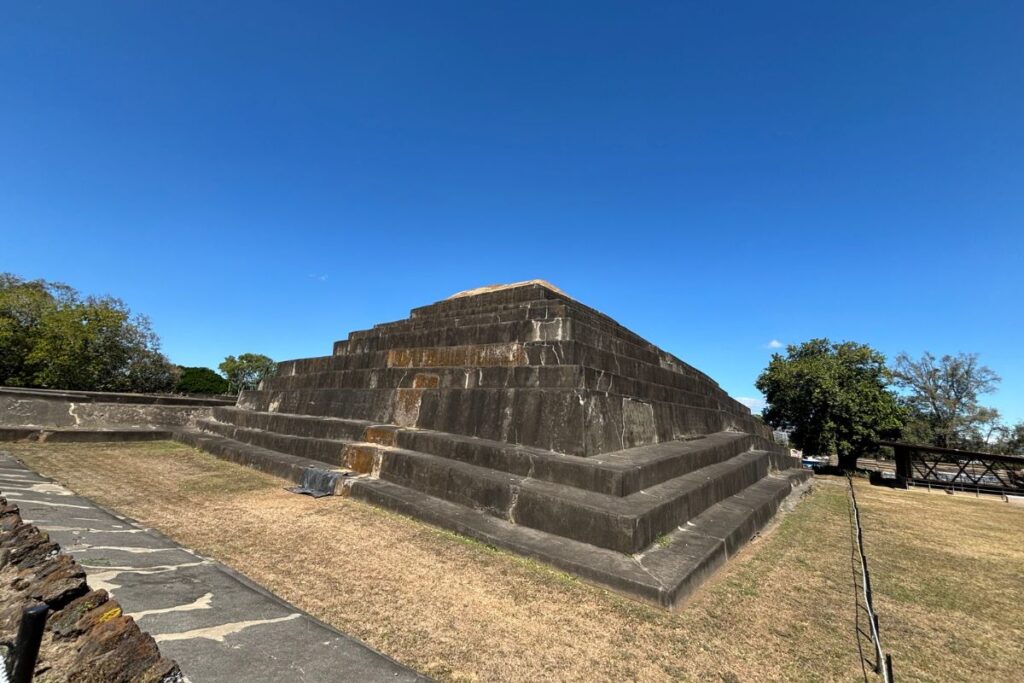
Joya de Cerén offered a completely different perspective on El Salvador, revealing the country’s ancient history and reminding me that a first visit can combine archaeology, volcanoes, colonial towns, and beaches into one unforgettable trip.
Bringing It All Together
One question I kept asking myself after returning home was whether it was possible to experience all of these regions in one trip.
The answer is yes—but not Joya de Cerén offered a completely different perspective on El Salvador, revealing the country’s ancient history and reminding me that a first visit can combine archaeology, volcanoes, colonial towns, and beaches into one unforgettable trip.all at once.
If you have five days, I’d focus on San Salvador and Santa Ana.
With seven to eight days, I’d add a full day exploring Ruta de las Flores.
If you have ten days or more, that’s when I’d start adding destinations like Suchitoto or the Pacific Coast depending on your interests.
The good news is that you don’t need to keep returning to San Salvador after every stop. Buses and shuttles connect much of the country surprisingly well, making it entirely possible to explore El Salvador without renting a car. A car certainly adds flexibility—especially if you’re hoping to combine several regions into one larger circuit—but I don’t think it’s a requirement for a fantastic first trip.
One of my favorite things about planning El Salvador is that there isn’t one perfect itinerary.
History lovers will naturally spend longer around San Salvador. Hikers will find themselves drawn west toward Santa Ana. Surfers will probably head straight for the Pacific Coast, while travelers who enjoy slower colonial towns may never want to leave Suchitoto.
That’s what makes El Salvador so rewarding.
It’s small enough to explore in a week, yet varied enough that no two itineraries have to look the same.
Up next: After three weeks traveling through Panama, Costa Rica, Nicaragua, and El Salvador, one thought kept coming back to me: Central America is far closer—and far easier to explore—than most people realize. In Central America Is Closer Than You Think, I’ll share why I think this underrated region deserves a place on more travelers’ itineraries.
Continue Exploring Central America
- 3 Days in Panama City: The Central American Stopover That Completely Surprised Me — See how I spent three days in Panama City and why what started as a convenient stopover became one of the surprises of my Central America trip.
- My First Week in Costa Rica: What Lived Up to the Hype (and What Surprised Me) — Follow my first week through Costa Rica and see what lived up to everything I’d heard—and what caught me completely by surprise.
- Granada: Why It Was the Perfect Base for Exploring Nicaragua — See why I chose Granada as my base in Nicaragua and how it made exploring more of the country surprisingly easy.