100,000 Points: Across the Ocean – Singapore
Booking an international flight with points can feel intimidating, but you don’t need a perfect business-class redemption to make it worthwhile. In my 100,000 Points series, I explore realistic ways to put that balance toward a trip, starting with flights. When round-trip airfare uses less than the full budget, I’ll look at what’s left for hotels—or what I’d save for another adventure. The goal is to see how far those points could take you, without spending more just to use them all.
Why Singapore?
My first trip to Asia wasn’t supposed to include Singapore.
I was flying from Kuala Lumpur to Bangkok when my friend and I decided to turn the journey into an adventure by spending the day in Singapore before continuing on to Thailand.
In just one day, we managed to see many of the city’s highlights. But instead of feeling like I had “done” Singapore, it had the opposite effect.
It gave me just enough of a taste to know I wanted to come back.
Singapore has a little bit of everything. You can wander through Gardens by the Bay, admire the skyline from Marina Bay, explore neighborhoods like Chinatown and Little India, eat incredible meals at world-famous hawker centers, and finish the day with a rooftop view of one of the most impressive skylines in Asia. It’s a city that’s easy to navigate, incredibly clean, and makes a fantastic introduction to Southeast Asia.
Four years later, I’m planning to return, this time for several days instead of a single day. That makes Singapore a fitting place to launch this series because I’m doing the same research many readers are: comparing award programs, weighing different routes, and figuring out how to make the trip happen.
Singapore Award Flights at a Glance
Economy prices I found, per person, one way:
- Atmos Rewards: From 42,500 points
- Emirates Skywards: From 42,500 miles—with higher cash charges and varying transfer ratios
- Singapore KrisFlyer: From 46,000 miles via Frankfurt
- United MileagePlus: From 60,500 miles
- Flying Blue: From 62,500 miles
Considering Premium Economy? I also found partner awards through Atmos from 55,000 points, United Premium Plus nonstop from San Francisco for 65,000 miles, and Singapore Airlines nonstop awards through KrisFlyer from 79,000 miles.
Taxes and fees are additional. These are examples from my searches; pricing and availability vary by route and date. Credit card points required may differ from airline miles because of transfer ratios.
Quick Trip Snapshot
| Topic | Quick Take |
|---|---|
| Best weather | Singapore is warm year-round (around 80–90°F / 27–32°C). While rain is possible in any month, February through April are generally among the sunniest times to visit. |
| High season | December through February and major school holidays tend to bring the highest hotel prices. |
| Shoulder season | April–May and September–October often strike a great balance between weather, crowds, and value. |
| How long to stay | Three to four days is enough for a first visit, though Singapore also pairs well with a longer Southeast Asia itinerary. |
| Airport & Connections | Even if you’re only connecting through Singapore, don’t rush out of the airport. Changi Airport is consistently ranked among the world’s best, with indoor gardens, the Jewel complex, the HSBC Rain Vortex—the world’s tallest indoor waterfall—and enough attractions that many travelers intentionally schedule a longer layover to experience it. |
What to Know Before Booking With Points
You don’t need to become an award-travel expert to book a good trip. But before comparing programs or transferring points, here are five things I keep in mind.
1. Flexibility gives you more options
My goal isn’t to showcase unicorn redemptions that require months of searching or incredible luck. I’m looking for flights I’d realistically book.
Still, flexibility helps. Changing your dates, considering another departure airport, or choosing a different cabin can make a significant difference. The more constraints you have, the fewer options you’ll find.
2. Award searches aren’t one and done
One search tells you what’s available when you look—not everything that might become available before your trip. Prices can change, seats can appear, and a month that looks disappointing today may offer better options later.
If your trip is still far off, keep an eye on it. You don’t need to search every day, but I wouldn’t write off a route or program based on one unsuccessful search.
3. Search from home before considering positioning
A connecting award from your home airport may be available even when an award-search tool doesn’t show it. Check directly with the airline program before assuming you need a separate ticket.
If you do book a separate flight to reach your departure airport, that’s called positioning. Leave a generous buffer—ideally overnight—because a delay on one ticket could cause you to miss the next. Include the extra transportation, hotel, and time in your comparison.
4. Compare the whole trip
The cheapest mileage price isn’t always the best choice. Spending a few thousand more points could reduce taxes and fees, eliminate a hotel night, or save hours of travel.
Compare cash fares too, and check transfer ratios: the airline miles required may not equal the credit card points you’ll need. Evaluate the entire journey, not just the headline redemption.
5. Know the rules before transferring
Once credit card points are transferred to an airline or hotel program, you generally can’t move them back.
Before transferring:
- Confirm the flights and seats through the program you’ll book with—not just an award-search tool or calendar.
- Check the final points price and taxes.
- Review change, cancellation, and mileage-expiration rules.
- Check whether fees apply per traveler; they can add up quickly for a group.
Transfer when you’re ready to book, remembering that availability can change while a transfer processes.
Flying to Singapore
Singapore is served by Singapore Airlines, the country’s flag carrier and one of the world’s most highly regarded airlines.
From the United States, Singapore Airlines operates nonstop service from New York (JFK), Newark (EWR), Los Angeles (LAX), and San Francisco (SFO). These are among the longest nonstop flights in the world and are often the most desirable award redemptions to Singapore.
If you don’t live near one of these airports, search from home first. A connecting award on one ticket may save you from arranging a separate positioning flight. As we discussed earlier, don’t focus only on the points required. Consider the total cost of the trip, including domestic flights, airport hotels, taxes, and travel time.
In the sections below, we’ll start with Singapore Airlines before exploring other airline programs that can also get you to Singapore using points.
While the most straightforward way to book Singapore Airlines is through its own KrisFlyer program, the airline is also a member of Star Alliance, which means you can often book the same flights through partner programs like United MileagePlus or Air Canada Aeroplan. The tradeoff is that partner programs typically have access to fewer award seats than you’ll see when booking directly through Singapore Airlines.
Singapore KrisFlyer
Transfer partners: American Express • Capital One • Chase • Citi
Singapore Airlines operates nonstop flights to Singapore from JFK, Newark (EWR), Los Angeles (LAX), and San Francisco (SFO), making KrisFlyer a natural starting point. Its stopover program also lets you add time in Singapore before continuing elsewhere on eligible itineraries.
The program has three award tiers: Saver offers the lowest mileage prices, while Advantage and Access provide additional options at higher rates.
Here are examples I found, per person, one way:
- JFK → Frankfurt (FRA) → Singapore (SIN), Saver Economy: 46,000 miles
- LAX → SIN nonstop, Saver Premium Economy: from 79,000 miles
- EWR or JFK → SIN nonstop, Saver Premium Economy: from 84,500 miles
The Frankfurt routing fit this series best: 92,000 miles round trip, plus taxes and fees, if available at that price in both directions.
But Saver doesn’t always mean a confirmed seat. Some dates offered only a Saver Waitlist, which isn’t guaranteed to clear. I wouldn’t build my trip around that—I’d keep searching for confirmed availability.
The nonstop Premium Economy awards caught my attention too. They’d push the trip beyond 100,000 points even with an Economy return, but for a journey this long, extra comfort one way is a splurge I’d consider.
💰 Award Changes: Cancelling a KrisFlyer Saver award costs US$75 per ticket to redeposit eligible, unexpired miles. Advantage and Access awards carry a US$50 fee. Cancel before departure to avoid additional no-show charges.
United MileagePlus
Transfer partners: Bilt • Chase
United’s U.S. network and Star Alliance partnerships give you options from airports across the country, including nonstop service from San Francisco to Singapore.
Here are examples I found, per person, one way:
- Economy from multiple U.S. airports: from around 60,500 United miles + about $50 in taxes
- SFO → SIN nonstop in United Premium Plus: 65,000 miles + $5.60
Premium Plus is United’s Premium Economy cabin, and this was the option that stood out to me. It required just 4,500 more miles than the Economy examples I found—a difference I’d seriously consider for a flight lasting more than 16 hours.
Those weren’t necessarily matching dates or departure airports, so I’d compare the full itinerary. I’d also search from home before booking a separate positioning flight to San Francisco, since a domestic connection might be available on the same award.
At these prices, round-trip flights would exceed the 100,000-point target. Still, the Premium Plus option would stay on my list if the extra comfort justified the additional points and any positioning costs.
📅 Award Calendar: United MileagePlus has a monthly award calendar, making it easy to search an entire month for lower-priced redemptions.
Atmos Rewards
Transfer partner: Bilt
Atmos Rewards, the combined loyalty program of Alaska Airlines and Hawaiian Airlines, offers Singapore awards through partners like Cathay Pacific and Starlux. It’s one of the first programs I’d check from Seattle, San Francisco, or Los Angeles.
Here are examples I found, per person, one way:
- Economy via Taipei (TPE) or Hong Kong (HKG): from 42,500 points + about $40 in taxes
- Premium Economy on select itineraries: from 55,000 points, with more limited availability
Round-trip Economy at those prices would total 85,000 points, leaving 15,000 points for another use. But the combination that caught my attention was Premium Economy outbound and Economy home: 97,500 points, plus taxes and fees. That adds comfort in one direction while keeping the flights within the series’ budget.
I’d check the cabin on every segment before booking, so I know how much of the journey would actually be in Premium Economy.
📅 Award Calendar: Atmos has a monthly award calendar, making it easy to scan an entire month for lower-priced redemptions.
Air France-KLM Flying Blue
Transfer partners: American Express • Bilt • Capital One • Chase • Citi • Rove
Flying Blue gives you another option for Singapore, especially from Atlanta (ATL). I’d check it if I already had miles in the program or availability elsewhere wasn’t working.
Here are examples I found, per person, one way:
- Economy via Paris (CDG) or Amsterdam (AMS): around 62,500 miles + $200–250 in taxes and fees
- Economy via Seoul (ICN): around 62,500 miles + about $50 in taxes and fees
The Seoul itineraries caught my attention because the cash charges were roughly $150–200 lower one way. But I’d still compare total travel time and connections before choosing.
At those prices, round-trip flights would require 125,000 miles, exceeding the series’ budget. Flying Blue wouldn’t be my first choice here, but it’s worth comparing—particularly when the routing makes such a difference to your out-of-pocket cost.
📅 Award Calendar: Flying Blue has a monthly award calendar, making it easy to search an entire month for the lowest-priced redemptions.
💰 Award Changes: Flying Blue partner awards generally carry a €70 fee per ticket to change or cancel. Confirm the conditions of your specific award before transferring points, including whether cancellation returns your miles.
Emirates Skywards
Transfer partners: American Express (5:4) • Bilt (1:1) • Capital One (2:1.5) • Citi (1:0.8)
Emirates offers another option from Dallas/Fort Worth (DFW), connecting through Dubai (DXB).
One example I regularly found, per person, one way:
- DFW → DXB → SIN in Economy: 42,500 Skywards miles + roughly $300 in taxes and fees
But the airline miles required aren’t necessarily the credit card points you’ll spend. At the transfer ratios above, that award would require approximately:
- Bilt: 42,500 points
- American Express or Citi: 53,125 points
- Capital One: 56,667 points
Transfer minimums and increments may require rounding up.
At matching prices in both directions, that’s 85,000 Skywards miles plus roughly $600. It fits the 100,000-point budget through Bilt, but exceeds it through the other listed partners.
For me, those cash charges would give me pause. I’d keep Emirates on the comparison list, but weigh the transfer ratio, routing, and total cost before being drawn in by the lower mileage price.
💰 Award Changes: Cancelling an unused Emirates Classic Saver award costs US$75 per ticket. Classic Flex Plus awards can be cancelled free before travel. Check the award type before booking; miles must still be valid to be redeposited.
Which Flight Would I Book?
If I were planning this trip, the first award I’d search for would be United Premium Plus from San Francisco for 65,000 miles. At that price, I’d happily consider positioning for the added comfort on a flight lasting more than 16 hours. I’d even turn it into a one-day stop and spend another day exploring San Francisco before continuing to Singapore.
For the journey home, my priorities would be different. Rather than positioning through the West Coast again, I’d look for Singapore Airlines Saver Economy into New York (JFK), connecting through Frankfurt, for 46,000 KrisFlyer miles. From there, I could make the relatively short trip back to Philadelphia.
That combination would look like this, per person:
- Outbound: United Premium Plus, San Francisco to Singapore — 65,000 United miles
- Return: Singapore Airlines Economy, Singapore to JFK via Frankfurt — 46,000 KrisFlyer miles
- Total: 111,000 airline miles, plus taxes, fees, and positioning costs
That’s above the series’ 100,000-point target, but it’s a combination I’d seriously consider for the extra comfort outbound and a return airport closer to home.
If I wanted to stay within the budget, I’d compare the Atmos options: 85,000 points round trip in Economy, or 97,500 points with Premium Economy one way, assuming I could find the availability. I’d then weigh those savings against the routing and the cost of getting to and from the departure airport.
That was my biggest takeaway from researching Singapore. The lowest mileage price wasn’t automatically the flight I’d choose. For a journey this long, comfort, connections, and where I’d start and finish would all matter. I’d keep my points flexible until I found the combination I actually wanted to book.
Start Planning Your Points Strategy
Found a flight you’d like to book, but still working toward the points? These guides can help you decide what to earn—and when to use it.
- Capital One Venture X Review — Why I keep this card and how it fits into my travel rewards strategy.
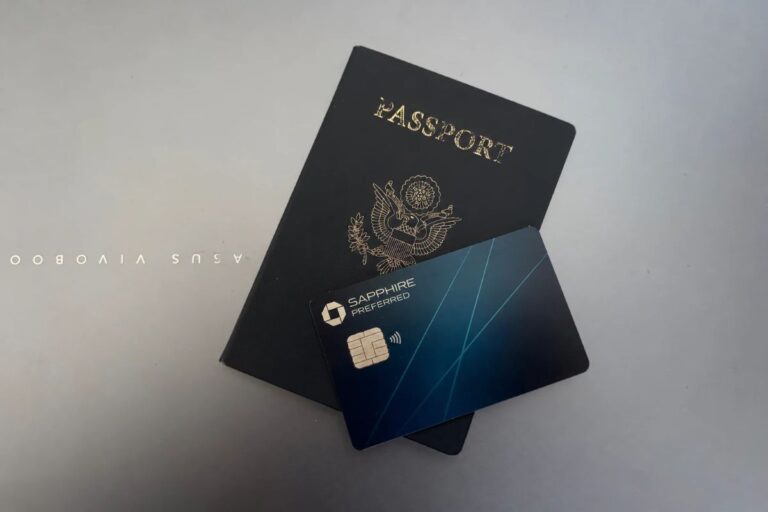
- Chase Sapphire Preferred: My Favorite Beginner Travel Card — Why it’s one of the cards I’d consider when getting started with transferable points.
- Are You Building, Earning, or Burning? — My framework for deciding whether to build your balance, focus your earning, or put those points toward a trip.
Explore More of the 100,000 Points Series
- 100,000 Points: Across the Ocean – Argentina — Compare Economy and Premium Economy options for a different kind of long-haul trip.
- 100,000 Points: Weekend Edition – Panama City — See how I’d put 100,000 points toward a shorter getaway, combining flights, hotels, and time exploring the city.