Amalfi Coast vs Costa Brava: Which One Would I Return To?
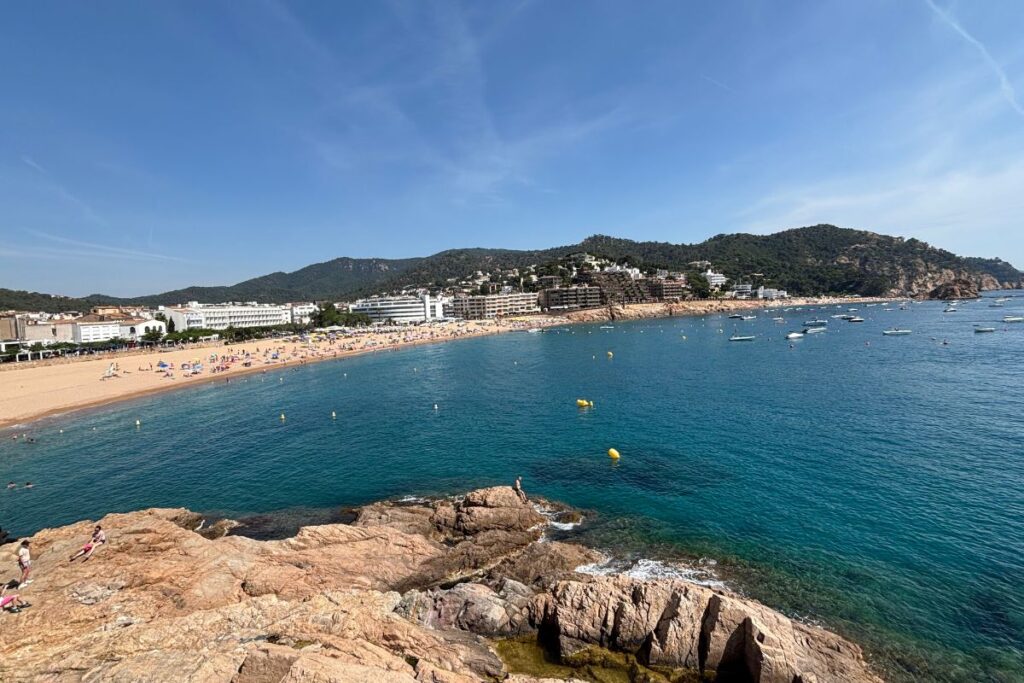
If you’ve followed my Spain series this far, you’ve seen why Costa Brava became one of the highlights of the trip. This comparison looks at how it stacks up against another famous European coastline: Italy’s Amalfi Coast.
Comparing the Amalfi Coast and Costa Brava wasn’t something I set out to do.
It really only occurred to me once we were in Tossa de Mar that this was our second family trip centered around a European coastline. A few years earlier, we’d spent a week exploring Italy’s Amalfi Coast. Now we were on Spain’s Costa Brava, having a very different kind of coastal vacation.
Naturally, the occasional comparison came up. The beaches. The scenery. The food. The hotels. How much we were spending. How easy—or complicated—it was to simply enjoy the day.
And the more I thought about it, the more I realized that while the two destinations may look similar on paper, they deliver very different vacations.
Both offer beautiful Mediterranean scenery, coastal towns, great food, and plenty of opportunities to slow down. But the experience of actually traveling through them felt completely different.
The Amalfi Coast gave us bigger wow moments. Costa Brava made almost everything feel easier.
And when I started thinking about which one I’d choose to return to next, my own answer surprised me.
First, What Are We Actually Comparing?
The Amalfi Coast is a relatively compact stretch of southern Italy running along the Gulf of Salerno from Positano to Vietri sul Mare, known for its cliffside towns, terraced citrus groves, dramatic Mediterranean views, and winding coastal roads. Famous stops include Positano, Amalfi, and Ravello, and much of the experience involves moving between towns by ferry, bus, car, or boat.
Costa Brava is much larger. Stretching for roughly 200 kilometers from Blanes to Portbou near the French border, it includes beaches and rocky coves, fishing villages like Cadaqués and Calella de Palafrugell, medieval towns, protected natural areas, and a much broader stretch of Mediterranean coastline. Tossa de Mar, where we stayed, is only one small part of it.
That’s an important distinction in this comparison. I’ve experienced more of the Amalfi Coast than I have of Costa Brava. My Costa Brava impressions are based primarily on Tossa de Mar and our trip to Cala Giverola, so I’m not pretending I’ve thoroughly explored the entire region.
What I can compare is how those two coastal trips felt: the scenery, logistics, costs, pace, and ultimately which experience made me more eager to return.
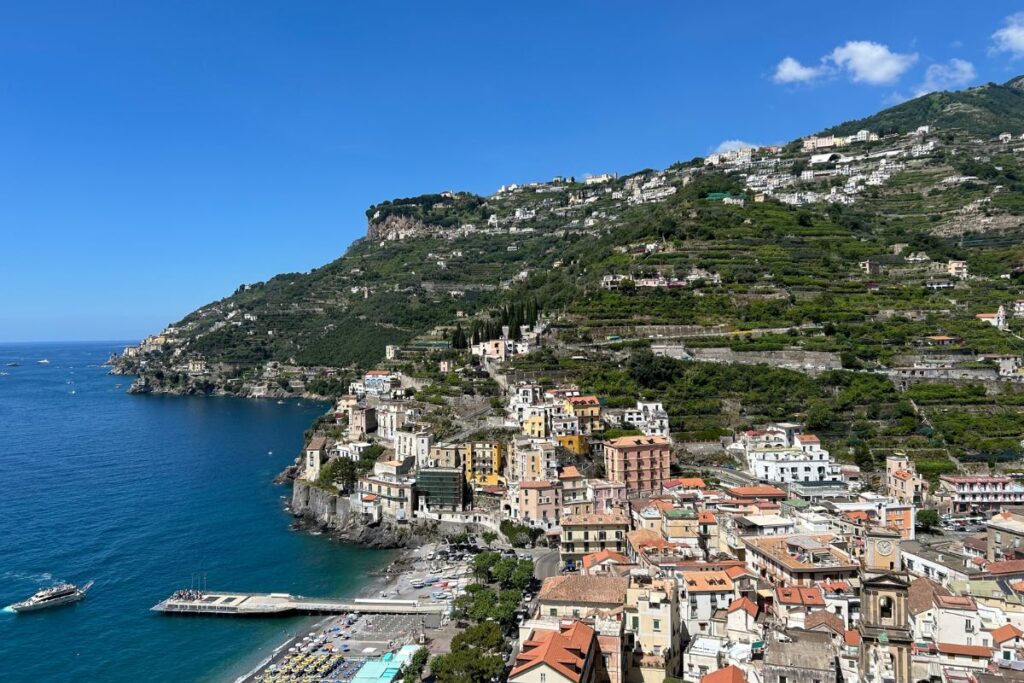
The Amalfi Coast wins on pure drama for me, colorful towns tucked beneath terraced cliffs, with the Mediterranean stretching out below.
The Amalfi Coast Delivers Bigger “Wow” Moments
If we’re talking about dramatic scenery, the Amalfi Coast wins. Positano is iconic for a reason. The cliffs seem to rise directly out of the sea, and approaching the coastal towns by ferry can feel almost cinematic.
Even years later, I can still picture looking at the coastline from the water and thinking, “This can’t possibly be real.”
The Amalfi Coast feels like a destination you’ve dreamed about long before you ever arrive, and once you’re there, it largely delivers on that dream. If someone asked me which of the two has the more spectacular scenery, I’d give the edge to the Amalfi Coast.
Costa Brava Feels Easier
What surprised me most about Costa Brava was how easy it was to relax there. The scenery was every bit as beautiful as I’d hoped, but what stayed with me just as much was how little effort it took to enjoy it. There was less pressure to plan every day, less time spent thinking about logistics, and less urgency to make the most of every hour.
In Tossa de Mar, we rented four beach chairs and an umbrella for about 42 euros and spent the day going back and forth between the beach, restaurants, and town. Nobody was checking ferry schedules, worrying about missing a bus, or trying to maximize an expensive day trip. The entire experience simply felt easier.
That simplicity has a lot of value, especially on a coastal trip where the whole point is supposed to be slowing down.
Another advantage of Costa Brava is how easily you can combine it with Barcelona. You can spend most of your trip enjoying beaches, coastal towns, and a slower pace while still having easy access to a major city when you’re in the mood for museums, architecture, shopping, or simply a little more energy.
For me, that flexibility is one of Costa Brava’s biggest advantages. On a future trip, I’d happily stay in Tossa de Mar for a week and use Barcelona as an occasional day trip rather than splitting my time between multiple hotels.
If you’re considering Costa Brava for your own trip, I share more about why Tossa became one of my favorite stops in Spain in Looking for Beaches Near Barcelona? Why I Loved Tossa de Mar.
The Cost Difference Adds Up Quickly
One thing I noticed almost immediately was how differently the two destinations affected our spending. On the Amalfi Coast, we stayed at Reginna Palace Hotel in Maiori, which put us within walking distance of the beach, restaurants, and the town center. But exploring the rest of the coastline still meant relying on ferries, buses, taxis, or day trips, and those costs added up quickly.
Costa Brava certainly isn’t cheap, especially during summer, but I found it easier to have a great day without spending much beyond the basics. We stayed at Hotel Delfín in Tossa de Mar, where we could walk to the beach, restaurants, and old town, and some of our favorite hours were spent swimming, wandering, or simply sitting by the water.
That difference affected more than our budget. When enjoying the destination required less transportation and fewer logistics, the entire trip felt more relaxed.
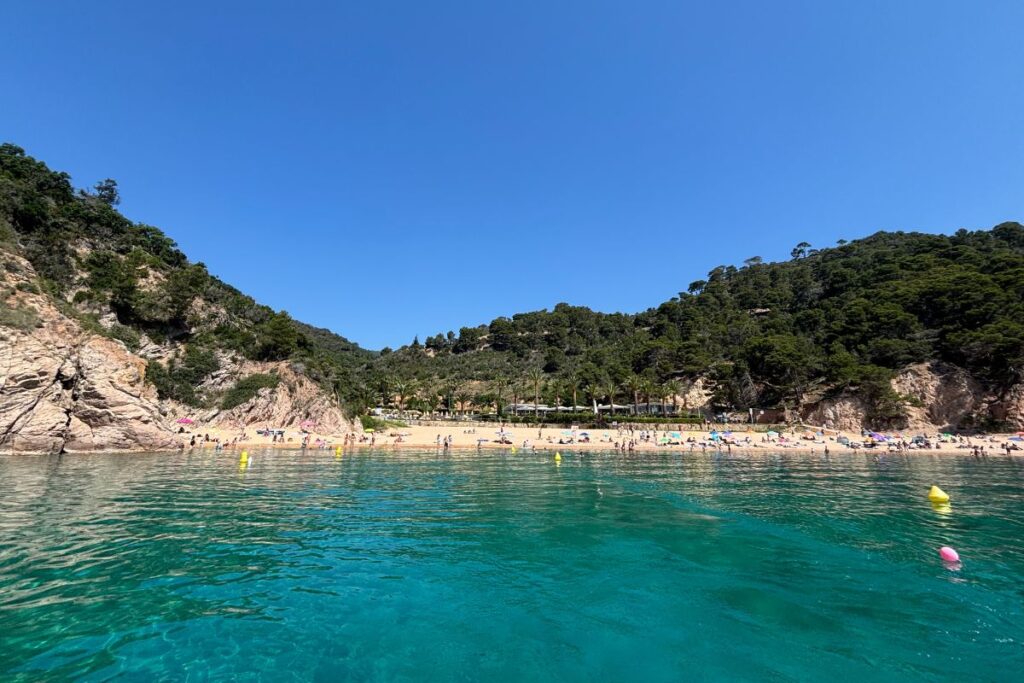
Costa Brava reminded me that a great travel day doesn’t always need an itinerary. Sometimes clear water, a beach, and nowhere else to be is enough.
The Biggest Surprise: I Enjoyed Slowing Down
For years, many of my favorite trips involved moving quickly between cities and even countries, trying to fit as much as possible into the time I had. The Amalfi Coast was one of the first trips where I started intentionally slowing down, and Costa Brava reinforced how much my travel style has changed.
I’ve realized that slowing down doesn’t mean there’s less to do. It creates more space to enjoy where you already are—to wander without a destination, sit at a café longer than planned, spend another hour at the beach, or follow a side street simply because it looks interesting.
If anything, both destinations taught me that there will always be more to see than time allows. I’m increasingly okay with leaving some of it for another trip.
Which One Would I Return To?
This is where my answer surprised me.
Would I return to the Amalfi Coast? Absolutely. There are still places I’d love to revisit and others I’d like to explore more deeply.
But if you handed me a week tomorrow and told me to choose between the two as a solo traveler looking to recharge, I’d choose Costa Brava.
Not because it’s more beautiful or objectively better, but because right now, it aligns more closely with how I want to travel. It’s easier to navigate, generally more affordable, and requires less planning to simply enjoy where you are.
Perhaps most importantly, Costa Brava makes it easy to embrace the slower style of travel I’ve grown to appreciate.
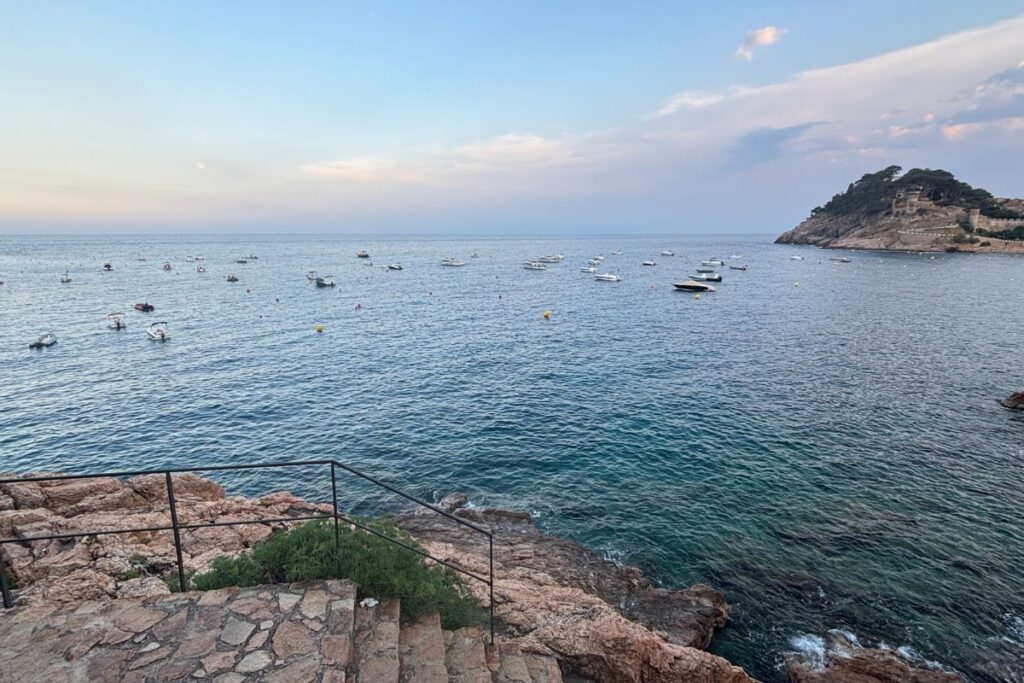
My first visit to Costa Brava only showed me a small piece of the coastline and left me wanting to see what else is out there.
Two Coastlines I’d Happily Return To
The truth is, choosing Costa Brava for my next trip doesn’t make the Amalfi Coast a loser. The Amalfi Coast impressed me more; Costa Brava relaxed me more. One gave me some of the most dramatic scenery I’ve ever experienced, while the other left me curious about how much more of the coastline I have yet to see.
I’ve also learned not to judge a destination entirely by my first visit. I was introduced to the Amalfi Coast during a short study-abroad trip, but it wasn’t until I returned years later for a family wedding that I really got to experience the region. That second visit became one of my favorite family vacations.
Tossa de Mar may have only been my introduction to Costa Brava, too. And if leaving a destination already wanting to see what else is out there is any indication, I have a feeling this won’t be my last trip.
If you’re considering the Amalfi Coast, you can read Is the Amalfi Coast Worth It? An Honest Review After One Week for a closer look at what spending a full week there was actually like.
Next up in the Spain series: The Real Cost of a Comfortable Spain Trip in 2026.
Choosing between destinations is only part of planning a trip. Understanding what the trip actually costs can matter just as much when deciding what fits your travel style and budget.