Peru Is More Than Machu Picchu: A Guide to One of South America’s Most Diverse Countries
For many travelers, Peru starts with Machu Picchu. It makes sense. It’s one of the most recognizable places in the world and, having been there myself, I can say it’s absolutely worth the attention it gets.
But the more time I’ve spent in Peru, the less Machu Picchu feels like the defining experience of traveling there.
I’ve wandered through Lima’s neighborhoods and eaten some of my favorite meals in South America. I’ve watched the desert drop into the Pacific in Paracas, bounced across enormous sand dunes in Huacachina and explored Arequipa with volcanoes rising behind the city. Then there’s Cusco, a place I originally associated almost entirely with Machu Picchu and now think deserves time of its own.
And I’ve still only seen a fraction of the country.
That’s what makes Peru such an interesting place to plan a trip. You don’t need to see everything at once, and you probably shouldn’t try. Start with the places that brought you to Peru in the first place, then look at how much time you have and what else makes sense to add.
Because Machu Picchu may be where the trip starts, but it doesn’t have to be where your experience of Peru ends.
Where to Go in Peru Beyond Machu Picchu
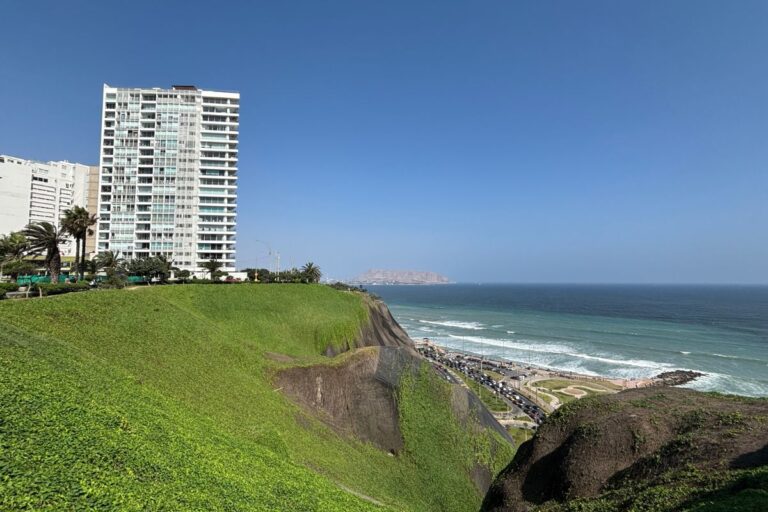
Give Lima three to four days. I’d split them between the start and end of the trip to explore the historic center, walk the cliffs in Miraflores, and eat my way through Barranco. I’d leave at least one full day in Lima before flying home.
Add Paracas, Ica, and Huacachina if you have three to four more days. This is the easiest extension I’d make from Lima. You can travel by bus and fit in the Ballestas Islands, the desert cliffs of Paracas National Reserve, and the dunes around Huacachina.
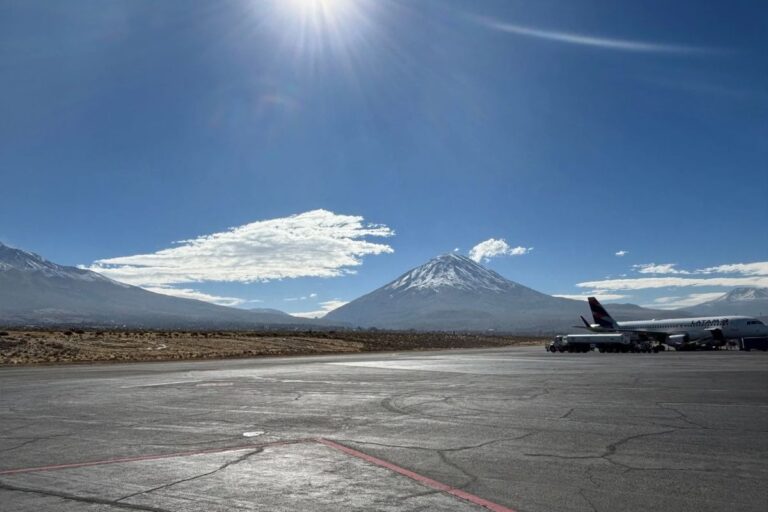
Give Arequipa two full sightseeing days. We skipped Colca Canyon and still had one of my favorite stops of the trip. I’d go for Santa Catalina Monastery, Mercado San Camilo, and the volcano views, then add time if you want to see the canyon.
Allow at least four to five days for Cusco, the Sacred Valley, and Machu Picchu. Give Cusco time of its own. Wandering through San Blas or sitting above the Plaza de Armas with an alfajor was part of what made me want to go back.
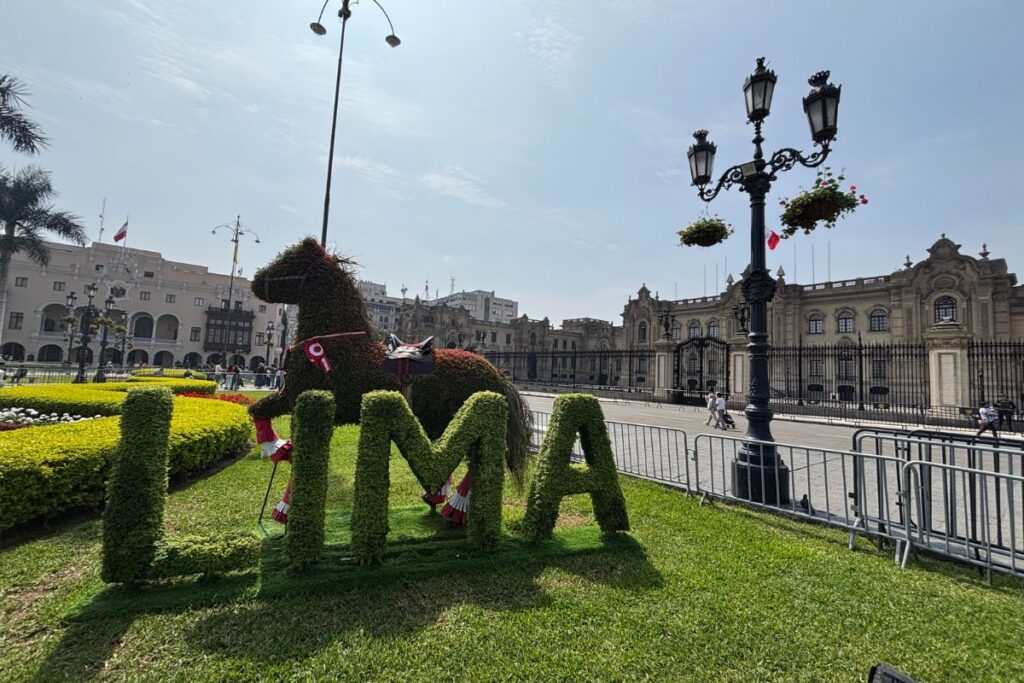
Exploring Lima’s historic center around the Plaza Mayor.
Lima: The City I Had to Stop Rushing Through
It took me multiple trips to Peru to realize how much I actually like Lima.
For a long time, I treated it the way I think a lot of travelers do: as the city I flew into before going somewhere else. I’d spend a little time there, visit family and then move on to Cusco, Paracas, Arequipa or wherever else I was headed next. Lima was useful, but it wasn’t necessarily the part of the trip I was most excited about.
Eventually, that changed.
Lima isn’t a city where I’d build my entire visit around one major attraction. What I enjoy is how different its neighborhoods feel. You can spend a morning walking through the historic center, an afternoon along the cliffs in Miraflores and an evening eating your way through Barranco. Add the museums, markets and some of the best food I’ve had in South America, and Lima has become a city I genuinely want time to explore rather than simply pass through.
For a first trip, I’d give Lima around three to four days, but they don’t need to be consecutive. If you’re building a larger Peru itinerary, Lima works particularly well at both ends of the trip. Spend a couple of days there when you arrive, travel elsewhere in Peru, then come back for another day or two before flying home.
I’d also recommend leaving at least one full day in Lima before an international flight home rather than flying in from another part of Peru and immediately connecting onto a separate international ticket. After having a nine-hour buffer nearly disappear on one trip and spending an entire day dealing with weather-related cancellations on another, that’s one piece of flexibility I’m increasingly happy to build into my plans.
Planning your own stay? Read my full guide to What to Expect When Visiting Lima.
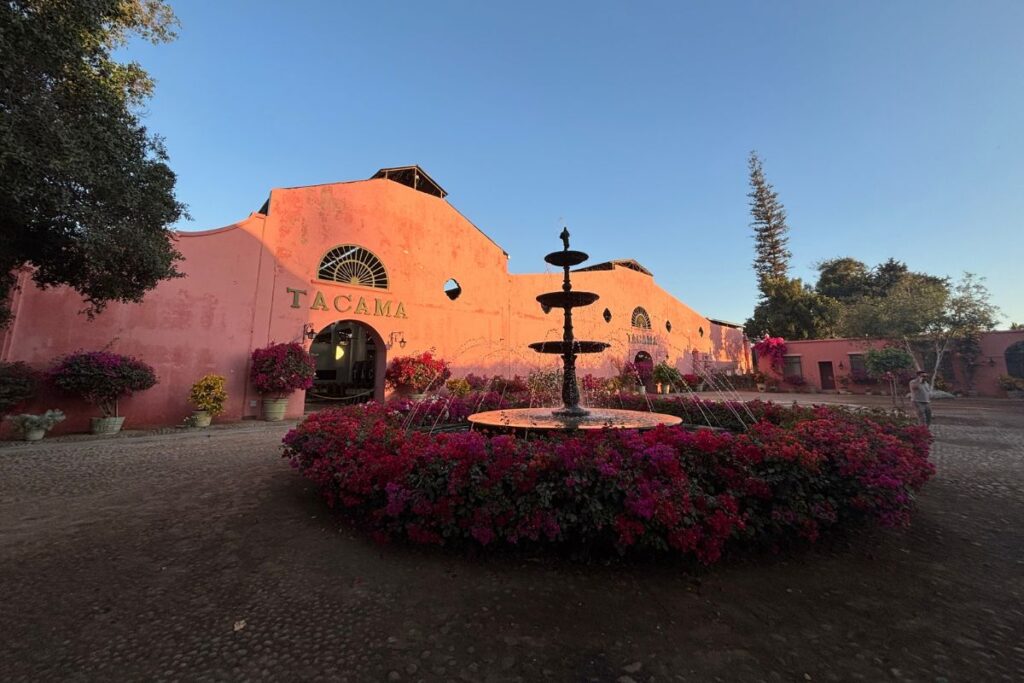
Visiting Tacama, a historic winery just outside Ica, during our time exploring Peru’s southern coast and desert.
Paracas, Ica & Huacachina: One of the Easiest Add-Ons to a Peru Trip
If you’re already spending time in Lima, Paracas, Ica and Huacachina are some of the easiest places to add to a Peru itinerary. You don’t need another flight or another airport day. Just get on a bus from Lima and a few hours later, the scenery starts to change completely.
We started in Paracas, where the desert meets the Pacific. The Ballestas Islands were the main reason I’d wanted to visit, with a morning boat trip taking us past sea lions, enormous colonies of birds and the rocky coastline just offshore. But I ended up enjoying the Paracas National Reserve just as much. Driving through an almost completely barren landscape before suddenly reaching cliffs overlooking the ocean was one of my favorite parts of our time there.
From there, we continued inland to Ica and Huacachina, where the landscape changed all over again. Huacachina is the tiny desert oasis you’ve probably seen in photos, surrounded by enormous sand dunes. The dune buggy ride was easily one of the most fun things we did on the trip—and much more intense than I expected—while climbing the dunes around the oasis gives you the view that makes Huacachina look almost unreal.
I also wouldn’t treat Huacachina as the only reason to stop in the area. We stayed in Ica rather than directly around the oasis, which gave us a quieter base while keeping Huacachina only a short taxi ride away.
I’d give this part of Peru around three to four days rather than trying to turn everything into a rushed day trip from Lima. The logistics are simple: Lima → Paracas → Ica/Huacachina, all without getting on another plane. For relatively little extra travel hassle, you get the Pacific coast, wildlife, desert landscapes and one of Peru’s most unusual destinations.
Want to add the coast and desert to your trip?
Read my guide to How Many Days Do You Need in Paracas, Ica & Huacachina?
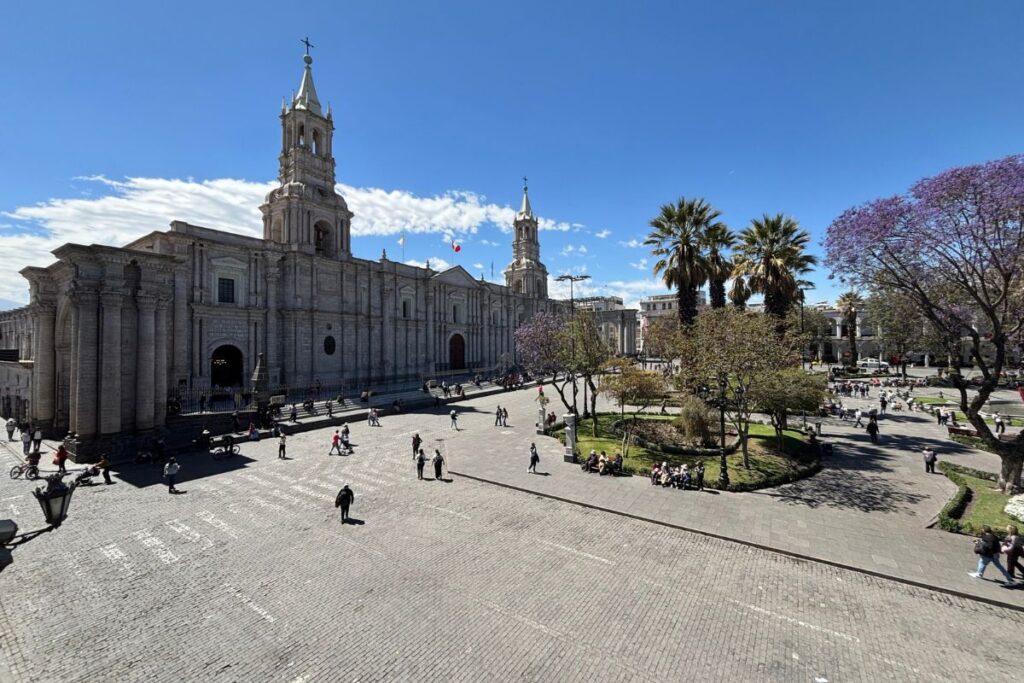
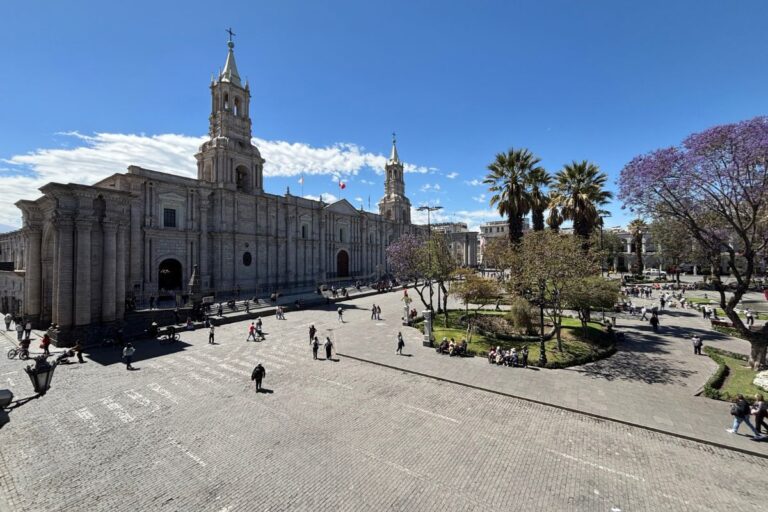
Arequipa’s Plaza de Armas, surrounded by the white volcanic-stone architecture that gives the city its nickname, the White City.
Arequipa: Worth Visiting Even Without Colca Canyon
Arequipa was one of the places I was most curious about adding to our Peru trip because, unlike Lima and Cusco, I didn’t have a strong picture of what it would be like before we arrived. After a slightly ridiculous journey getting there, we ended up with two full days to explore—and that was enough for Arequipa to become one of my favorite stops.
The historic center is beautiful, filled with white volcanic-stone buildings and views of the volcanoes surrounding the city. We toured the enormous Santa Catalina Monastery, wandered through Mercado San Camilo, visited the museum where you can learn about Juanita and spent a surprising amount of time seeking out viewpoints. Some of my favorite moments were also the simplest ones: sitting on a balcony overlooking the Plaza de Armas, drinking fresh papaya juice at the market and walking around a city that felt noticeably calmer than Lima or Cusco.
Arequipa is also known as the gateway to Colca Canyon, but we didn’t visit Colca on this trip—and I don’t think you need to in order to justify coming here. There’s enough to see, eat and explore in Arequipa itself to make the city worthwhile.
If you’re visiting without Colca Canyon, I’d give Arequipa two full sightseeing days. Unlike Paracas and Huacachina, getting here usually means adding a flight to your itinerary, so I’d be more cautious about squeezing it into an already packed trip. But if you have the time, I think the city easily earns its place on a longer Peru itinerary.
Thinking about adding Arequipa?
Read my 2 Days in Arequipa: A Relaxed Itinerary for Peru’s White City.
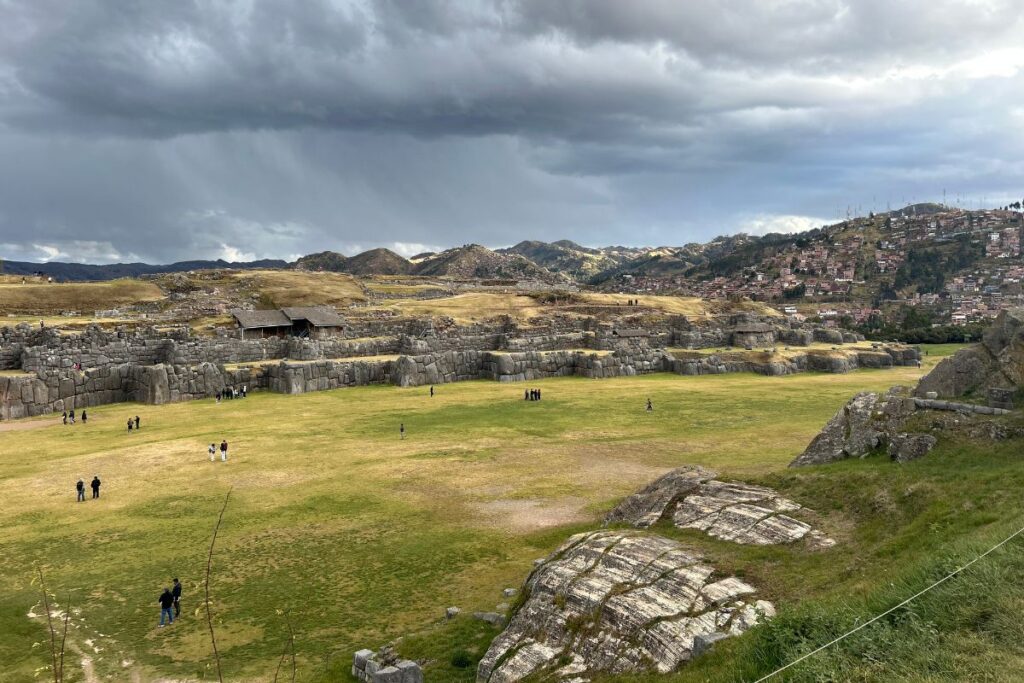
Exploring Sacsayhuamán above Cusco, one of the many reasons to give the city time beyond a visit to Machu Picchu.
Cusco & Machu Picchu: Famous for a Reason
For many travelers, this is the part of Peru they’ve been dreaming about long before they book the flight, and I get it. Machu Picchu is one of those places that somehow manages to live up to the enormous amount of attention it gets.
But I wouldn’t make the mistake of treating Cusco as simply the place you sleep before heading there. I’ve now spent enough time in the city to appreciate it on its own, whether that meant wandering through San Blas, sitting above the Plaza de Armas with an alfajor or simply having an afternoon with nowhere we needed to be. There are markets, museums, archaeological sites and plenty of reasons to slow down before moving on.
Then there’s the Sacred Valley. Towns and archaeological sites are spread throughout the region, and trying to squeeze Cusco, the Sacred Valley and Machu Picchu into just a few days means spending a lot of that time getting from one place to another.
I’d give this part of Peru at least four to five days, and more if your overall trip allows it. You’ll also want to think about the altitude when deciding how to order your days rather than landing in Cusco and immediately packing your schedule. Machu Picchu may be what first brings you here, but there’s enough around it that it shouldn’t be the only thing you make time for.
Don’t make Cusco just a stop on the way to Machu Picchu.
Read Cusco Is Not Just a Base for Machu Picchu for why I’d give the city time of its own.
How I’d Think About Planning a First Trip to Peru
For most travelers, Lima will be the starting point for a trip to Peru. From there, I’d think less about creating one massive itinerary and more about which regions you actually have enough time to add.
Cusco and Machu Picchu might be the obvious first addition. If you have more time, maybe you head south to Arequipa, take the bus down the coast to Paracas and Huacachina, or explore somewhere completely different. Each addition gives you another experience, but it also means another travel day and less time everywhere else.
With so many places to explore, I’d focus on making the most of the regions you choose rather than trying to fit as many stops as possible into one trip. Give yourself enough time to actually experience each place, and leave the rest for another visit.
Your Lima days don’t need to be consecutive, either. Splitting them between the beginning and end of a longer itinerary works well, and I’d leave at least a day in Lima before your international flight home rather than cutting that connection too close.
Most importantly, don’t worry too much about everything you aren’t fitting in. Once you start exploring Peru, you’ll quickly realize this isn’t really a one-trip-and-done destination. There will always be another region worth coming back for.
There’s Still So Much of Peru I Haven’t Seen
The funny thing about spending more time in Peru is that my list of places I still want to visit has gotten longer, not shorter.
Lake Titicaca was actually supposed to be part of my most recent trip. The original plan was to continue from Arequipa to Puno and spend a few days around the lake before returning to Lima. But by that point in a longer trip, travel and decision fatigue had started to catch up with us. Adding another destination meant another hotel, another long travel day and another set of plans to figure out, so we cut it.
I still really want to go. Lake Titicaca sits high in the Andes along the Peru-Bolivia border, with Puno serving as the main base on the Peruvian side. The Uros floating islands are probably its most recognizable sight, but I’m equally interested in getting farther out onto the lake to places like Taquile. It deserves to be part of a trip when I actually have the time and energy to enjoy it rather than something I squeeze in because it’s on the itinerary.
Iquitos is probably even higher on my list. It would introduce me to another part of Peru I haven’t experienced at all yet: the Amazon. I want the river, the jungle and the chance to get outside the city rather than simply adding another urban stop to a future trip.
And that’s really the point. Peru is huge. I’ve now seen the Pacific coast, desert dunes, colonial cities and the high Andes, and there are still enormous parts of the country I haven’t touched. Northern Peru could become an entirely different trip on its own, and then there’s the Amazon, Lake Titicaca, Huaraz and plenty of smaller places I’ve barely started researching.
I already know I’ll be returning to Peru in about a year. What I don’t know yet is where I’ll go. Maybe it’ll finally be Lake Titicaca. Maybe I’ll make Iquitos happen. Maybe I’ll find somewhere that hasn’t even made it onto my list yet.
Machu Picchu might be what first puts Peru on a traveler’s list. But the more of the country I see, the more convinced I am that it’s everything beyond Machu Picchu that can keep you coming back.
I’ve been back multiple times, and I still don’t feel remotely finished with Peru.
Continue Exploring Peru
- What to Expect When Visiting Lima — Get to know the capital beyond its role as an arrival point.
- Is Paracas Worth Visiting? — Explore a coastal escape where the desert meets the Pacific.
- How Many Days in Arequipa? — Consider the White City and the excursions you could build around it.
- Cusco Is Not Just a Base for Machu Picchu — Discover why even Peru’s most famous gateway city deserves its own time.