What to Expect When Visiting Lima
Lima is a city I’ll probably never stop visiting.
I have family here, which means Peru’s capital has been part of my travels for years. I love that I can return again and again and still have a reason to come back.
But I’m also the first to admit that I haven’t always given Lima the time it deserves.
On previous trips, Lima was often somewhere I passed through on the way to somewhere else. Even on my last trip with friends, we spent a little time here before continuing on to Cusco. I knew Miraflores, some of the major sights, and definitely my favorite foods, but I hadn’t really slowed down enough to experience Lima as a destination of its own.
This trip changed that.
Lima isn’t necessarily a city that wins you over immediately. It’s huge, spread out, and very different from the version of Peru many travelers picture when they book their trip. But give it a little time, and there’s a lot here to discover.
So before you start planning exactly what to see, let’s start with the basics: what should you actually expect when visiting Lima?
Lima at a Glance
- Where I’d stay: Miraflores for a first visit; Barranco is where I’d like to stay next time.
- How much time to allow: At least one full sightseeing day—even on a busy Peru itinerary. Four or five days leave more room to explore.
- What weather to expect: Warmer, sunnier summers and cooler, often gray winters. Pack for Lima separately from the Andes or Amazon.
- Getting around: Walk within neighborhoods and use rides between areas. Group your sightseeing geographically—traffic can eat into your day.
- Money: Peru uses soles. I use cards for most purchases and keep cash for smaller transactions, InDrive rides, and public restrooms.
- Altitude: Lima is essentially at sea level, so altitude acclimatization isn’t part of your arrival here.
Arriving in Lima: What to Know Before You Leave the Airport
If you’ve visited Lima before, your arrival may look very different this time. The new Jorge Chávez International Airport fully opened in June 2025, replacing the old terminal with a much larger, modern airport.
And when I say larger, you’ll feel it.
On my most recent arrival, it felt like I walked forever before reaching immigration—in reality, it was probably closer to ten minutes. The same applies when flying domestically, so build in some walking time and don’t cut your airport arrival time too close when flying home.
If you do arrive early, there are plenty of restaurants and shops, along with domestic and international lounges. I visited both lounges on this trip, and the international lounge in particular is quite large.
Get Some Soles Before You Leave
Before leaving the airport, I like to take out some local currency. I never use airport currency-exchange counters. I’ve traveled for more than a decade with a debit card that reimburses ATM fees, so I simply use an ATM when I arrive.
Credit cards are widely accepted around Lima, but cash is still useful for smaller purchases, and you may occasionally pay a little less in soles. Keep a few small coins handy, too, many public restrooms charge a few soles to use them.
Uber vs. InDrive in Lima
I primarily rely on Uber for getting around Lima, but it’s also worth downloading InDrive. When I compared prices, InDrive almost always offered a lower fare.
The catch for international visitors is payment. You’ll hear Yape mentioned frequently in Peru. Think of it somewhat like Venmo or Zelle, but as a short-term international visitor, you probably won’t be set up to use it. I simply paid my InDrive drivers in soles.
So my setup is simple: credit card for most purchases, soles for smaller transactions and InDrive, Uber when I want the easiest option, and InDrive when I want to compare prices.
Do You Need to Speak Spanish in Lima?
If you haven’t brushed up on your high school Spanish, don’t panic. Lima is very used to international visitors, particularly in areas like Miraflores and the Historic Center.
Still, even a basic grasp of Spanish can be surprisingly useful for rides, restaurants, and everyday interactions. And don’t worry about perfect grammar or pronunciation. In my experience, people are often excited that you’re making the effort to speak Spanish.
A Quick Note About Safety
I approach Lima the same way I would any other major city: stay aware of your surroundings, don’t flash expensive jewelry, and be conscious of when and where you pull out your cell phone, since phone snatching is something to be aware of. If I don’t want to stand on the street staring at my phone for directions, I call a ride instead.
I’ve never felt that Lima requires approaching the city with fear. It just requires the kind of awareness I’d use in any large city.
And one thing you don’t need to worry about when you land in Lima? Altitude. Unlike Cusco and other destinations in the Andes, Lima sits essentially at sea level, so you can save those concerns for later in your Peru itinerary.
What you might notice almost immediately is the weather.
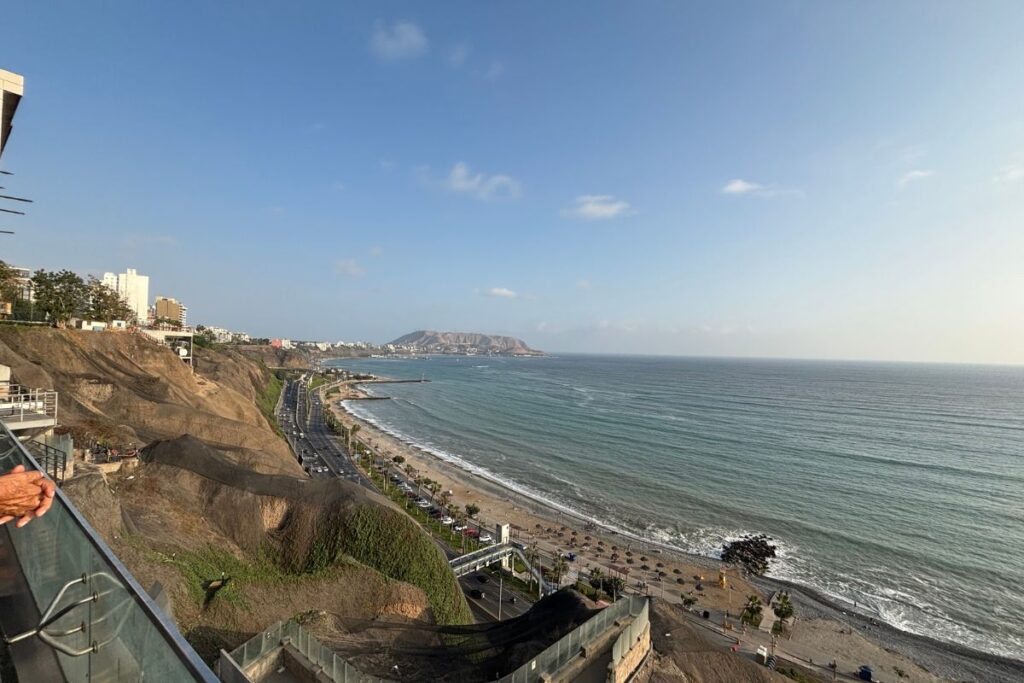
Lima’s summer months can bring blue skies, sunshine, and a completely different feel along the coast.
Lima’s Weather Isn’t What Most Travelers Expect
One important caveat: this section is specifically about Lima. Peru has dramatically different climates. I once traveled around the country for two weeks in June and packed for what felt like three different trips: “winter” in Lima, genuinely cold temperatures in Cusco, and hot, humid weather in Tarapoto.
When Is the Best Time to Visit Lima?
Lima essentially has two main seasons: summer and winter, although neither looks quite like what many North American travelers picture.
Summer runs roughly from December through April, with January through March bringing the warmest weather. Expect temperatures in the upper 70s to low 80s°F (mid-to-upper 20s°C), higher humidity, more sunshine, and the blue skies and coastal afternoons you may picture when thinking about Lima.
Winter runs roughly from June through September, with daytime temperatures typically in the 60s°F (around 16–20°C) and much grayer skies.
I visited most recently in August and found the temperatures surprisingly comfortable. Some days reached around 70–75°F, and the cooler coastal breezes were a welcome change from the summer heat and humidity back home on the East Coast.
Summer is better if sunshine and warmer weather are priorities, while winter can be great for sightseeing if you don’t mind gray skies. April, May, October, and November can offer a compromise between the two.
What Should You Pack for Lima?
For summer, pack lightweight clothing, comfortable walking shoes, sunglasses, sunscreen, and a light layer for breezy evenings.
For winter, think layers rather than a heavy coat: long pants, T-shirts or long sleeves, a sweater or sweatshirt, and a light-to-medium jacket.
And don’t let the gray skies fool you into leaving the sunscreen at home.
If you’re traveling elsewhere in Peru, don’t use your Lima packing list for the entire trip. What you need in the Andes or Amazon can be completely different.
Why Is Lima Always Gray?
No, it’s not pollution.
If you arrive in Lima during the winter, you might wonder why the city seems to be sitting under a permanent layer of haze. The sky is gray, the sun can disappear for days, and even when it isn’t raining, the air can feel slightly damp.
That’s garúa, the misty coastal fog that settles over Lima for much of the winter.
Lima sits along the Pacific coast, where the cold Humboldt Current helps keep the air cool and moist. Combined with the surrounding geography, the result is a low blanket of clouds that can hang over the city, particularly from roughly May through October.
And when I say gray, I mean gray.
You can spend an entire day exploring and realize at dinner that you never actually saw the sun. There may be a little mist in the air, but a dramatic rainstorm never arrives.
But don’t worry, the sun does like to make an appearance. I’ve had plenty of winter afternoons when the gray suddenly breaks and Lima feels like a completely different city.
The cliffs along the Malecón can look moody and dramatic under the gray sky, while Barranco’s colorful streets stand out against it. Then the sun appears, and those exact same places suddenly look completely different.
So if you’re visiting in July or August, don’t expect every day to look like the bright, blue-sky photos of Lima you see online but don’t assume you’ll never see the sun either.
Once you know the gray is part of Lima’s coastal climate—not a cloud of pollution hanging over the city—it makes a lot more sense.
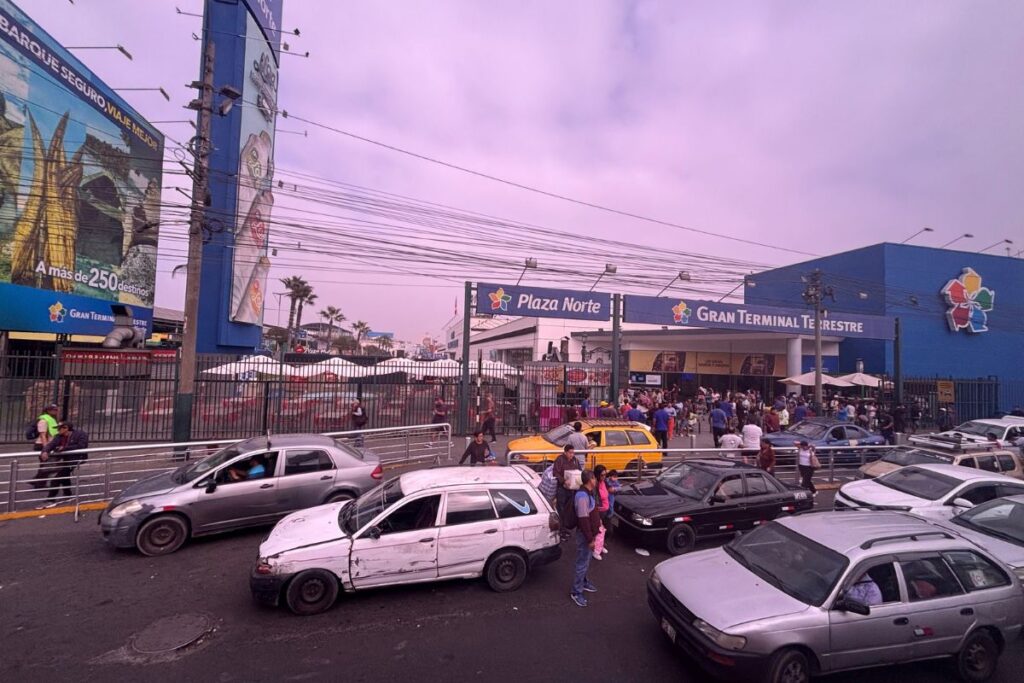
Lima’s gray skies can make the city feel damp, but significant rainfall is surprisingly rare.
One of the Driest Capitals in the World
If you start noticing open courtyards in Lima’s restaurants, shops, and homes, there’s a good reason for them: rain is barely a concern here.
Despite the gray skies and damp-feeling winter air, Lima is one of the driest capital cities in the world. What can feel like rain is usually garúa, the fine mist I mentioned earlier, rather than a steady downpour.
That lack of rain influences the city itself. Courtyards and partially open-air spaces are common, and you’ll see plenty of rooftops being used as functional spaces.
Look up and you may also notice large water tanks sitting on rooftops. Lima gets much of its water from rivers fed by the Andes, while rooftop tanks help buildings store and maintain a reliable supply.
Which raises another question: if Lima gets so little rain, why is so much of it green?
The parks, gardens, and landscaped medians rely on irrigation rather than rainfall. It’s particularly noticeable in Miraflores and San Isidro, where manicured green spaces can make it easy to forget how dry Lima actually is.
For a first-time visitor, that might be the strangest part: the sky can look like rain, the air can feel damp, and everything around you can be green, yet actual rain is remarkably rare.
Lima’s Traffic Will Affect How You Plan Your Days
If your first glimpse of Lima happens late at night, you might get a misleading impression of how easy the city is to navigate. There’s often far less traffic, and you can make your way from the airport toward Miraflores surprisingly quickly.
You are in for a shock the next day.
Lima’s traffic is insane.
This is an enormous city made up of dozens of districts, and places that don’t look particularly far apart on a map can take much longer to reach than you expect, especially during rush hour.
Fortunately, basing yourself in Miraflores means you won’t be sitting in traffic every time you leave your hotel. Miraflores itself is very walkable, and neighboring Barranco is relatively easy to reach.
You’ll notice the difference when you venture farther away. Head toward Lima’s Historic Center, for example, and suddenly transportation time becomes part of your itinerary.
That’s why I wouldn’t plan your days based purely on distance. A place that looks 20 or 30 minutes away when you check Google Maps at night might take considerably longer during the day. Check travel time around the hour you’ll actually be making the trip, and remember to account for the ride back.
Most importantly, group your sightseeing geographically. Plan your days around neighborhoods rather than bouncing from one side of the city to another.
You’ll spend a lot more time experiencing Lima, and a lot less time experiencing Lima’s traffic.
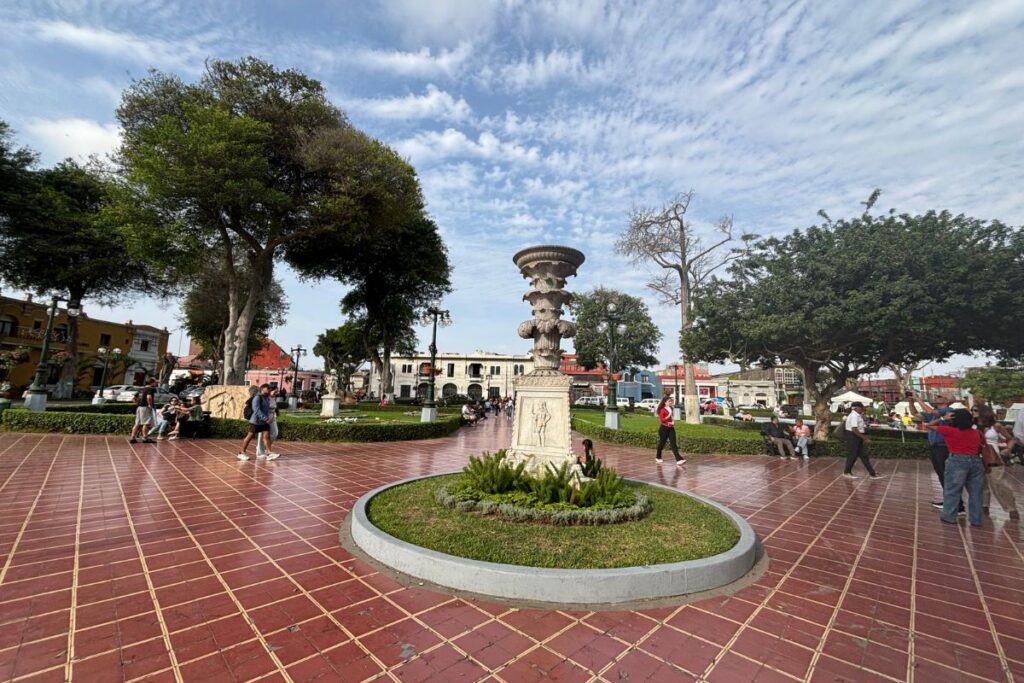
Barranco’s leafy central plaza is one example of how different Lima can feel from one neighborhood to the next.
Lima Is a City of Neighborhoods
You probably aren’t going to experience Lima as one giant city. You’re going to experience it neighborhood by neighborhood, and those neighborhoods can feel remarkably different from one another.
Spend the morning among the manicured parks and high-rise apartments of Miraflores, cross into colorful Barranco for the afternoon, and head to Lima’s Historic Center another day, and you may feel like you’ve visited three different versions of the city.
There isn’t one central tourist district containing everything you came to see. For a first trip, Miraflores, Barranco, and the Historic Center are the three I’d focus on first.
Miraflores
Miraflores is probably the neighborhood you’ll hear about most. It’s walkable, full of restaurants, cafés, shops, hotels, and parks, with easy access to Lima’s coastal cliffs and Malecón.
It’s also why I think Miraflores is the easiest base for most first-time visitors, even if it isn’t necessarily the neighborhood you’ll find most interesting by the end of your trip.
Barranco
Immediately south of Miraflores, Barranco has a completely different personality: colorful streets, old mansions, murals, cafés, galleries, and the famous Puente de los Suspiros.
It’s smaller and more intimate than Miraflores, making it particularly enjoyable to explore on foot. The two neighborhoods also pair naturally together.
Lima’s Historic Center
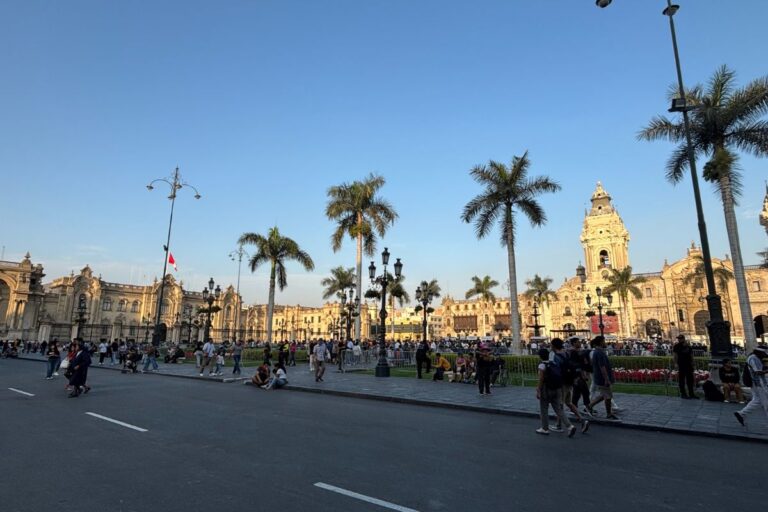
Then there’s the Historic Center, where you’ll find Plaza Mayor, colonial architecture, historic churches, and landmarks tied to Lima’s Spanish colonial history.
It’s absolutely somewhere I’d include on a first visit, but give the Historic Center its own time rather than trying to tack it onto a Miraflores afternoon.
Beyond the Big Three
San Isidro shows you a greener, more residential side of modern Lima, including the pre-Hispanic Huaca Huallamarca surrounded by modern buildings. Pueblo Libre is worth knowing for Museo Larco, while Magdalena del Mar and Jesús María take you farther beyond the areas most international visitors explore.
I wouldn’t prioritize all of them on a short first trip. With two or three days, concentrate on Miraflores, Barranco, and the Historic Center, adding Pueblo Libre if Museo Larco is a priority.
And don’t turn Lima’s neighborhoods into a checklist.
Pick an area. Spend a few hours there. Walk around. Eat something. Notice how it differs from where you were yesterday.
The Food Is Part of the Destination
You could visit Lima without knowing much about its food scene and quickly realize that eating is one of the main reasons to be here.
Lima has internationally recognized fine dining, but you absolutely don’t need an elaborate tasting menu to eat incredibly well. Honestly, I don’t think I’ve ever had a bad meal in Lima.
You’ll encounter classics like ceviche, pollo a la brasa, lomo saltado, arroz chaufa, and tiradito, along with the Chinese and Japanese influences of chifa and Nikkei cuisine.
And don’t forget the drinks. Try Peru’s unmistakably yellow Inca Kola, a glass of chicha morada made from purple corn, and, if you drink alcohol, a pisco sour.
But some of my favorite food experiences haven’t involved much planning at all.
Use your nose. If something smells delicious, you’ve probably found a winner.
That’s especially true in the evenings, when you’ll often see picarones being fried streetside, including around Barranco. These warm rings made with sweet potato and squash are served with sweet chancaca syrup, and they’re one of those foods I immediately associate with being back in Peru.
Markets, neighborhood restaurants, cevicherías, pollerías, street vendors—Lima’s food doesn’t have to be luxurious or expensive to be memorable. Make room for a special meal if that’s something you enjoy, but leave room for the places you discover simply because you walked past and something smelled too good to ignore.
Because in Lima, food isn’t something you plan around the trip.
It’s part of the trip.
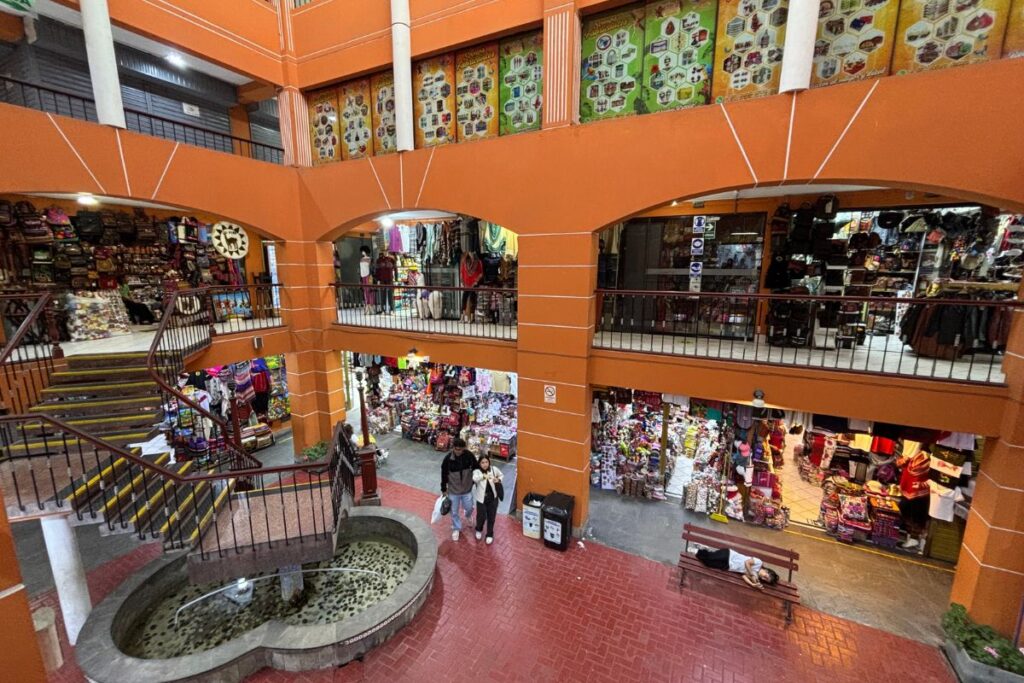
Mercado Santo Domingo is one of the many places worth slowing down to explore in Lima’s Historic Center.
How Many Days Should You Spend in Lima?
If it’s your first trip to Peru and your itinerary takes you elsewhere around the country, I’d still give Lima at least one full day of exploring rather than treating it purely as a place to fly in and out of.
If you have more time, take it. Lima is a city many travelers are slow to warm up to, and there’s easily enough to fill four or even five days without running out of things to do.
You don’t need that long for a worthwhile introduction, but Lima can handle more time than many Peru itineraries give it.
Final Thoughts
Lima isn’t a city I think you fully understand the moment you arrive.
But Lima is a city that rewards a little patience.
Maybe that’s part of why I appreciate it more with every visit. Having family here means I know I’ll be back, and each trip gives me another chance to see a part of the city I rushed past before. This most recent trip reminded me just how much I had been overlooking by treating Lima as somewhere to pass through on the way to the rest of Peru.
You don’t need years of return visits to appreciate Lima. Walk the Malecón. Wander through Barranco. Explore the Historic Center. Eat whatever smells good. And don’t worry about trying to see everything.
You just need enough time to let Lima show you a few different sides of itself.
And if this is your first visit, hopefully you now know a little more about what to expect when you arrive.
Continue Exploring Peru
Ready to start planning? These guides will help you decide what to see, where to spend your time, and how to experience Peru.
- Exploring Lima’s Historic Center: A Self-Guided Walking Route — Follow my walking route through Lima’s historic core, including the major landmarks and stops worth making along the way.
- Miraflores: The Best Home Base for Your First Trip to Lima — Explore the neighborhood I still recommend most for first-time visitors, from the Malecón and parks to restaurants and everyday wandering.
- Is Paracas Worth Visiting? My Favorite Coastal Escape Near Lima — Consider a coastal escape beyond the city, with wildlife and desert scenery.
- What to Eat in Peru: Dishes, Desserts, Drinks & Snacks to Try — From classic dishes to picarones, fresh juices, and favorite sweets, start building your Peru food list before you arrive.