2 Days in Arequipa: A Relaxed Itinerary for Peru’s White City
I was lucky enough to spend three weeks traveling through Peru, overlapping with a longer trip my parents were taking through the country. Because we have family in Lima, we had a home base and enough time to plan a few smaller trips rather than trying to fit everything into one nonstop itinerary.
Arequipa was an easy choice.
I had seen photographs of its white historic center, heard about the near-perfect cone of Misti rising behind the city, and knew it offered a completely different experience from Lima. With flights from Lima taking only around an hour and a half and often being relatively inexpensive, it felt like an easy destination to build into our time in Peru.
The “inexpensive” part becomes slightly less reliable when you wait until only a few days before departure to book, as we did. But even with our last-minute airfare, the short flight and compact historic center still made Arequipa a straightforward addition.
Located in southern Peru, Arequipa sits between the coast and the higher elevations of the Andes, approximately 770 kilometers southeast of Lima. At around 2,300 meters above sea level, it is elevated enough to offer dramatic mountain and volcano scenery without feeling quite as high as Cusco.
Its milder winter climate was another draw. We visited in August, when the days were generally sunny and comfortable, with cooler temperatures once the sun disappeared. For a short city trip, we did not need to pack an entirely separate wardrobe or bring specialized clothing beyond the layers we were already traveling with.
Two days ultimately gave us enough time to experience Arequipa’s historic center, markets, regional food, and volcano viewpoints without rushing. Our itinerary included two full sightseeing days, plus a few hours on our final morning before flying back to Lima. Travelers considering Colca Canyon or the many activities surrounding the city will need longer, which I cover in my guide to how many days you need in Arequipa and its best day trips.
Arequipa at a Glance
- Time needed: Two full sightseeing days, with an extra morning if your flights allow.
- Best for: Historic architecture, regional food, market browsing, and volcano views.
- Where to stay: The historic center for convenience or Vallecito for a quieter base within walking distance.
- Getting around: Walk through the historic center and use InDrive or taxis for the farther viewpoints.
- Don’t miss: A guided visit to Santa Catalina Monastery, the Cathedral Museum rooftop, and Mercado San Camilo.
- Favorite views: Yanahuara for the classic arches framing Misti; Carmen Alto for the green Chilina Valley.
- Worth knowing: Colca Canyon and other excursions require additional time. You can enjoy Arequipa as a city destination on its own.
Getting to Arequipa Didn’t Go Quite as Planned
Our short flight from Lima ended up taking considerably longer than expected.
We flew all the way to Arequipa, but low clouds prevented us from landing. After circling and waiting to see whether conditions would improve, the pilots turned the aircraft around and flew us back to Lima.
We were rebooked onto another flight later that evening, but that departure was eventually cancelled as well. The airline moved us onto a new flight the following morning, which finally landed without a problem.
At this point, my experiences at Lima’s airport may be turning into their own growing collection of stories. This particular ordeal deserves a separate post, especially because it reinforced how important it is to understand your options when a flight is disrupted.
For this itinerary, the practical lesson is simple: avoid scheduling an expensive, nonrefundable excursion immediately after arriving in Arequipa. A little flexibility kept one disrupted travel day from affecting the rest of our trip.
Where We Stayed and How We Got Around Arequipa
We stayed in an Airbnb in Vallecito, a quieter residential neighborhood approximately 15 minutes on foot from the Plaza de Armas.
The apartment was much larger than the three of us needed, with three bedrooms and two and a half bathrooms. But its bright, modern design caught my attention immediately, and I decided to book it anyway. I honestly loved the apartment, and the extra space gave my parents and me plenty of room to spread out, have breakfast at home, and relax between outings.
Our flight disruption meant we ultimately lost our first night at the Airbnb. I stayed in contact with our host throughout the day as our plans kept changing, but thankfully the apartment was affordable enough that losing one night of the reservation never became a major concern.
Vallecito ended up being a great base. We were close enough to walk to the historic center but removed from the activity immediately surrounding the Plaza.
For destinations farther away, InDrive and Uber are both options in Arequipa. We primarily used InDrive, particularly for the viewpoints outside the historic center. Leaving the center sometimes worked a little differently. The narrow one-way streets and single traffic lanes can make it difficult for a driver to stop and wait, so we occasionally used InDrive to estimate a fair price and then simply flagged down one of the taxis already circulating nearby.
Between walking, InDrive, Uber, and local taxis, getting around Arequipa without renting a car was easy.
Day One: First Impressions of Arequipa
I was not prepared for the view waiting for us when we finally arrived in Arequipa.
Rather than entering through a jet bridge, we walked down the airplane stairs directly onto the tarmac. Rising behind the airport were Misti, Chachani, and Pichu Pichu—the most perfect possible welcome to the city. After spending most of the previous day attempting to reach Arequipa, seeing all three volcanoes behind the airport quite honestly erased the ordeal of the previous 24 hours.
My immediate thought was: how do I get closer?
After checking into our Airbnb and dropping off our bags, we set out on foot toward the Plaza de Armas. We had no formal tour booked and no desire to race through a checklist. Our first day unfolded naturally through a rooftop meal, a working local market, historic architecture, and our first official mirador.
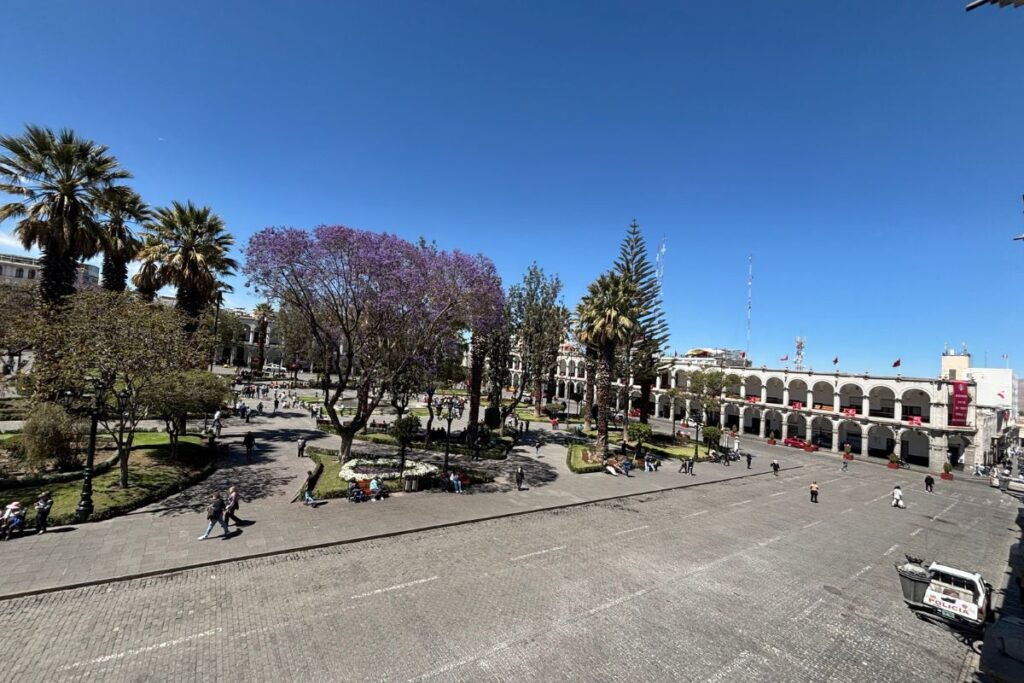
Our view over the Plaza de Armas during our first lunch in Arequipa.
A Rooftop Brunch Overlooking the Plaza de Armas
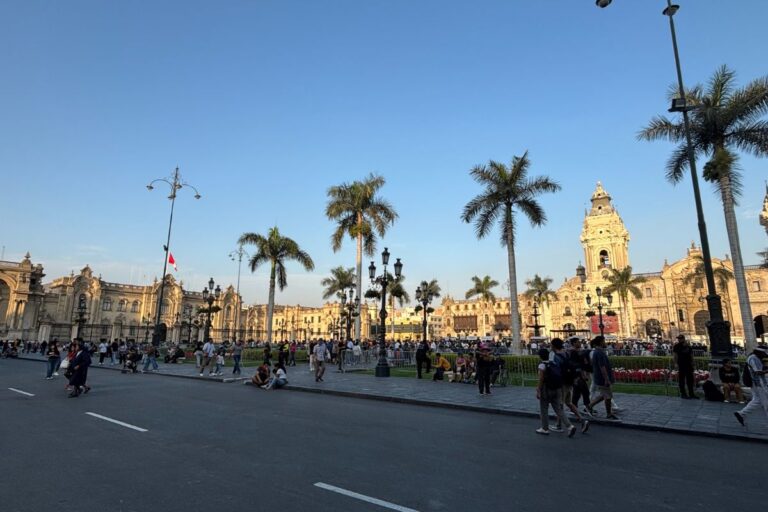
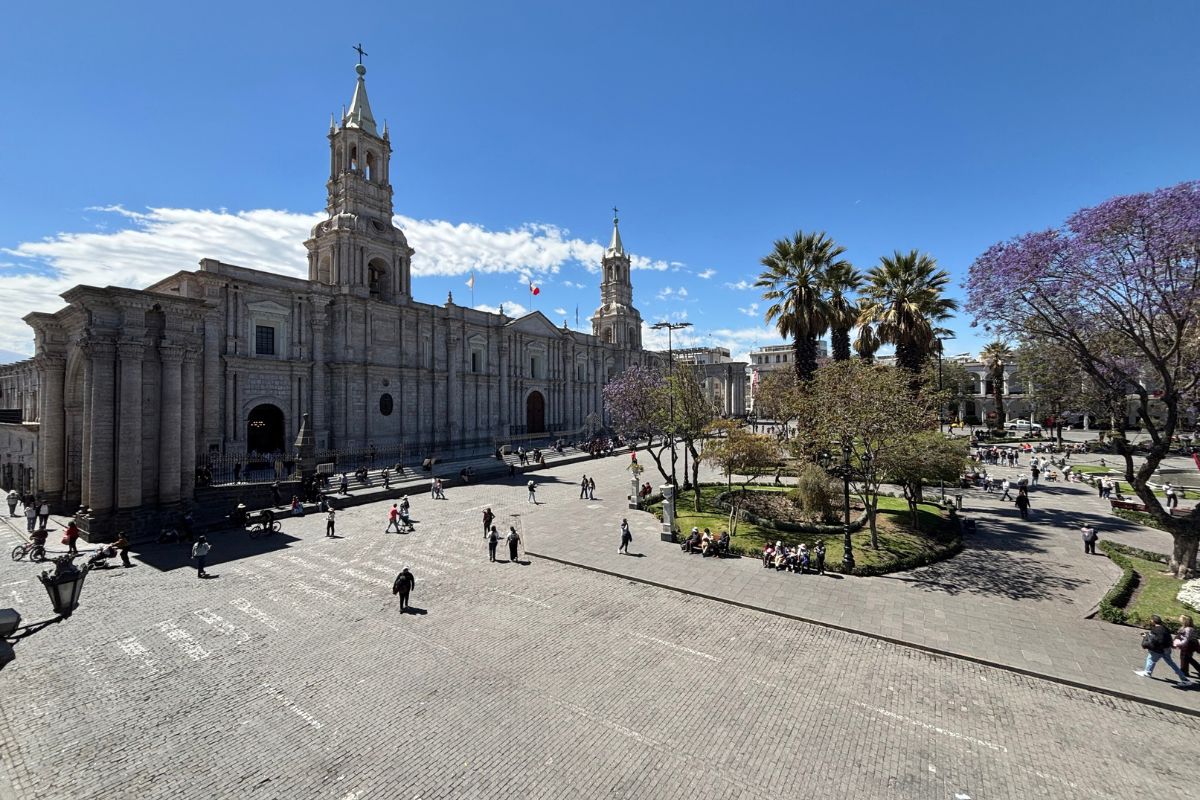
By the time we reached the historic center, we were ready to eat and sit down for a moment. We chose one of the balcony restaurants overlooking the Plaza de Armas, beginning our time in Arequipa with a direct view of the cathedral and the activity below.
We ordered what we expected to be a light brunch, only to receive enough food for all three of us with leftovers to take back to the apartment. It was also where I had my first Arequipeña papaya juice, sweeter and more fragrant than the papaya I was accustomed to and immediately one of my favorite discoveries in the city.
The restaurant was not somewhere I had researched or placed on a must-visit list. We chose it for the balcony, stayed because we enjoyed the atmosphere and food, and ultimately returned for our final lunch before leaving Arequipa.
For our first stop, that relaxed meal was exactly what we needed. We could look over the Plaza, take in the cathedral and surrounding sillar architecture, and ease into exploring without immediately committing to a tour or structured schedule.
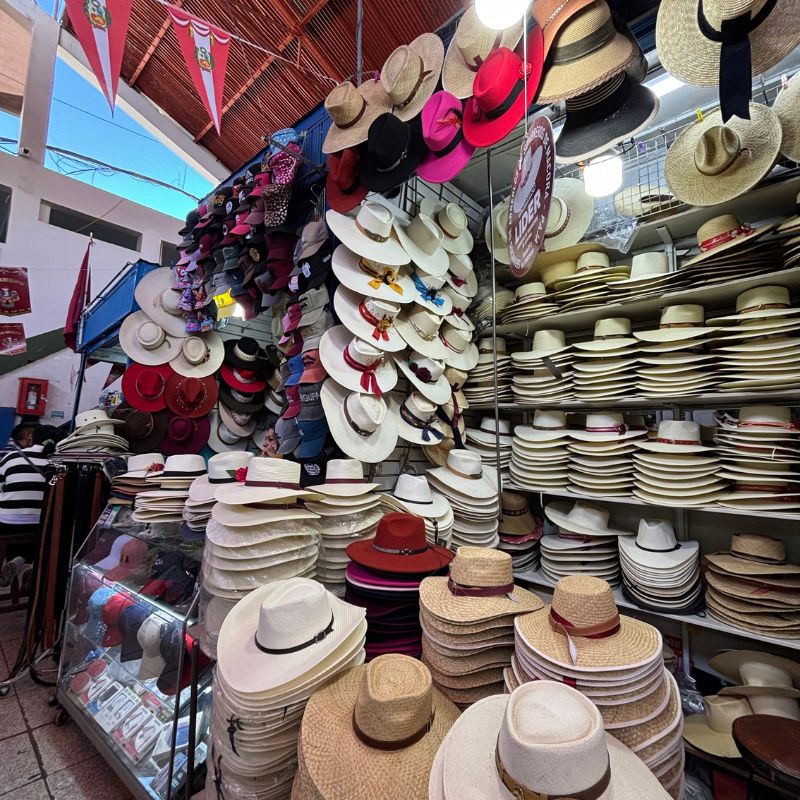
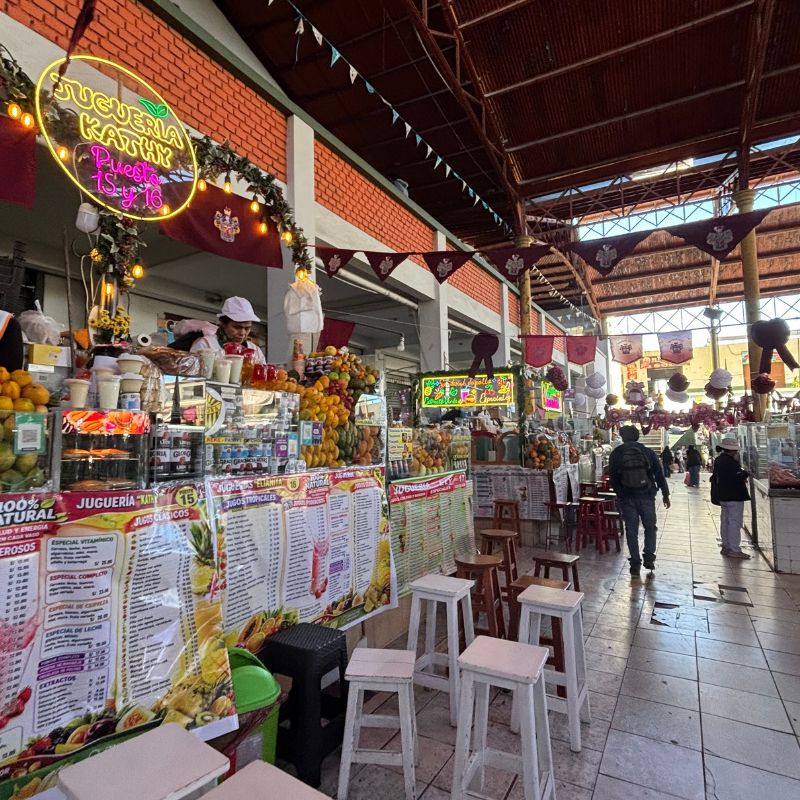
Hats, fresh juice, and everyday market stalls inside Mercado San Camilo.
Exploring Mercado San Camilo
From the Plaza de Armas, we walked to Mercado San Camilo, one of Arequipa’s main traditional markets and a working center of everyday commerce.
This is not a market designed primarily for tourists. Its large interior is divided into sections for fruit, vegetables, meat, herbs, bread, cheese, textiles, prepared food, and other daily necessities. Souvenir vendors appear throughout, but they are secondary to the market’s primary purpose.
We stopped for another fresh Arequipeña papaya juice and browsed some of the smaller souvenirs, hats, and textiles tucked between the food stalls. There was far more to see than we expected, and our first walk-through became an introduction rather than a complete visit.
San Camilo ultimately became part of our daily rhythm in Arequipa. We returned for purchases and breakfast supplies, while my dad, our group’s early riser, went back in the mornings for fresh bread, juice, and local cheese.
For more on what you can eat and buy there, see my complete guide to Arequipa’s markets, local food, and souvenirs.
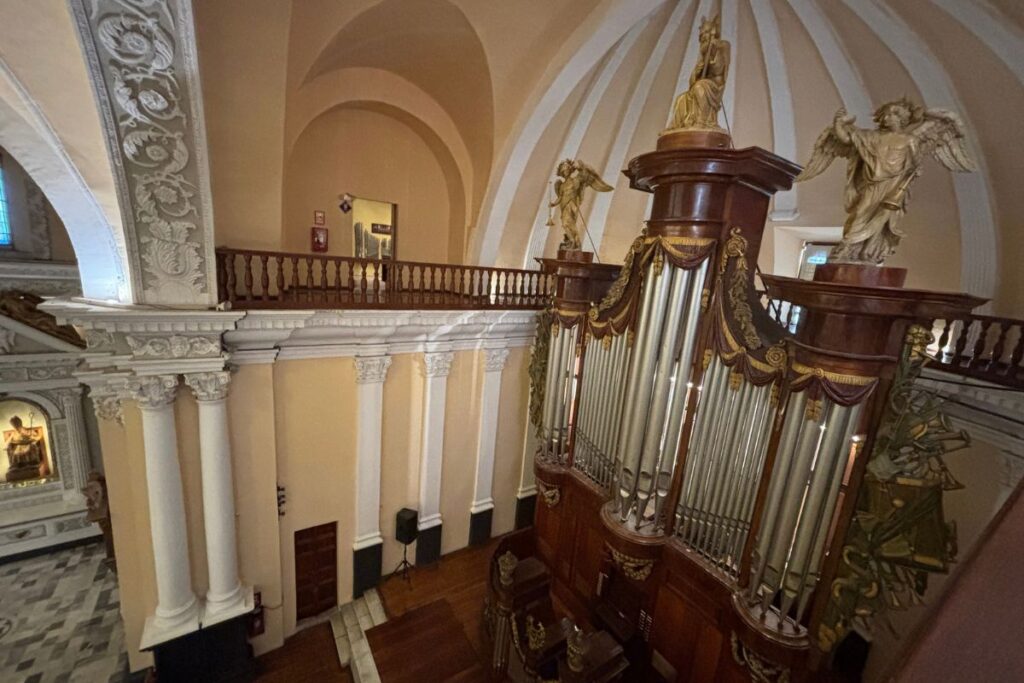
Inside Arequipa’s cathedral during our visit to the Cathedral Museum.
Touring the Cathedral Museum and Rooftop
After leaving the market, we returned toward the Plaza de Armas intending to visit the cathedral. We entered what we thought was the regular cathedral entrance, only to realize we had arrived at its museum instead.
We decided to continue with the visit, which took approximately one hour and included access to areas we would not have seen by simply walking into the main sanctuary.
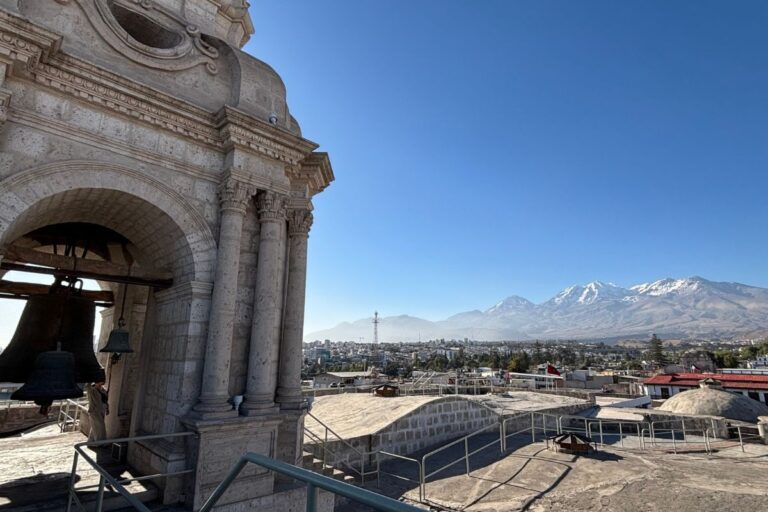
The interior was not necessarily grander than other cathedrals we had visited in Peru, but the rooftop made the ticket worthwhile. From the upper terraces, we could look across the Plaza, see the cathedral’s towers up close, and watch Arequipa’s volcanoes rise beyond the historic center.
After seeing the volcanoes from the airport, this was our first elevated view from within the city itself. From the rooftop, we could see how naturally they fit into Arequipa’s architecture, appearing behind domes, bell towers, and rows of pale sillar buildings.
If you are deciding whether to pay for the museum or visit only the cathedral’s public interior, I would choose the museum primarily for the rooftop access and the perspective it provides over the Plaza.
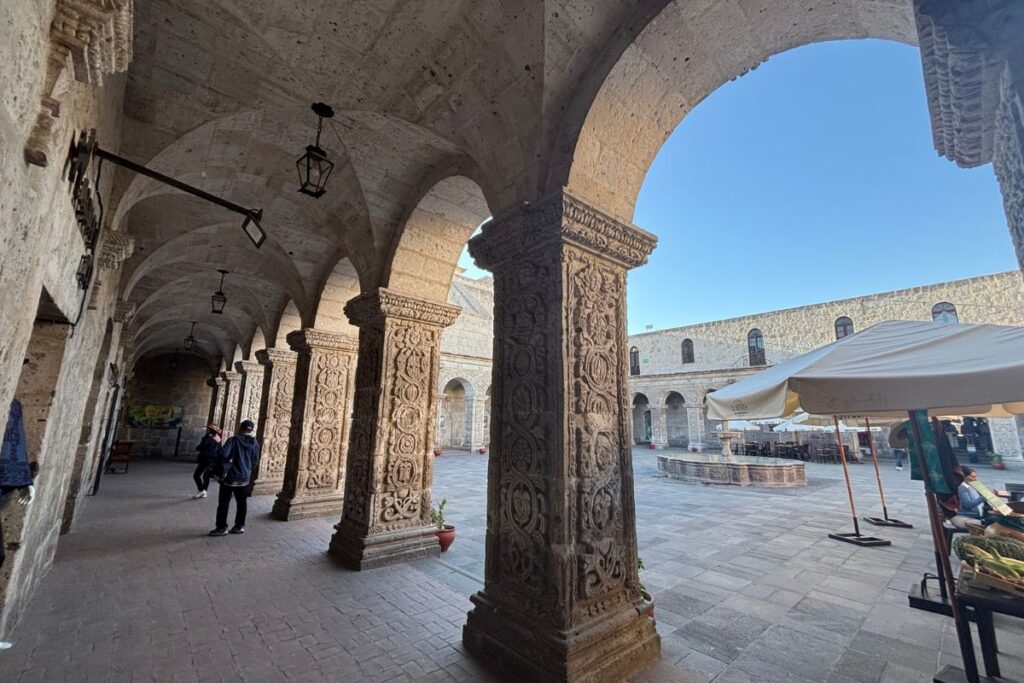
The carved sillar archways surrounding the courtyard at the Claustros de la Compañía.
Walking Through the Claustros de la Compañía
Near the Plaza, we also stopped at the Claustros de la Compañía, a small complex of sillar archways and courtyards beside the Church of the Company of Jesus.
The appeal is the space itself rather than a museum or formal attraction. Carved stone columns and arches surround a quiet courtyard, with small shops selling jewelry, textiles, and familiar Peruvian souvenirs.
We browsed briefly, admired the architecture, and continued with our afternoon. About 15 to 20 minutes was enough for us, making this an easy stop to add while already exploring the historic center.
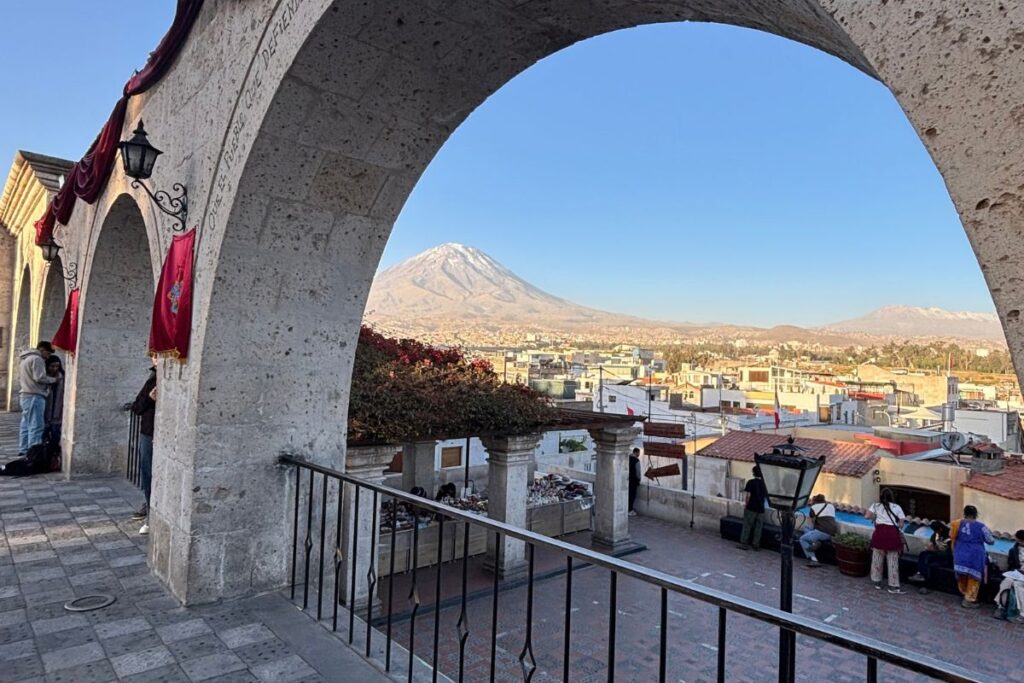
The classic Arequipa view: Misti framed by the sillar arches at Mirador de Yanahuara.
Sunset at Mirador de Yanahuara
For our final major stop of the afternoon, we left the historic center and headed to Mirador de Yanahuara.
This is Arequipa’s most famous viewpoint, known for its row of sillar arches framing Misti. The arches are carved with quotations and poetic fragments from prominent Arequipeño writers, including the wonderfully fitting declaration: “No se nace en vano al pie de un volcán”—you are not born at the foot of a volcano in vain.
We arrived shortly before sunset, along with seemingly everyone else. Visitors moved continually between the arches posing for photographs, while professional photographers set up cameras and tripods to capture the changing light.
If you want a clear photograph beneath one of the arches, patience is required. The viewpoint is free, however, making it easy to return at another time of day if the sunset crowd is too heavy.
Even with the crowds, Yanahuara delivered the classic Arequipa image we had come to see: Misti rising behind the city, perfectly framed in pale volcanic stone.
For comparisons with Carmen Alto, Mirador Arequipa, and Sachaca, see my guide to the best viewpoints in Arequipa for volcano views.
After sunset, we returned to the historic center for dinner and a walk around the Plaza before heading back to our apartment.
Day Two: Santa Catalina, Arequipeño Food and Volcano Views
Our second day combined Arequipa’s most important historical attraction with more market browsing, one intentional regional meal, and two very different volcano viewpoints.
We did not begin especially early or try to pack every possible attraction into the schedule. The day moved comfortably from the historic center to the outskirts of the city before ending back at the illuminated Plaza de Armas.
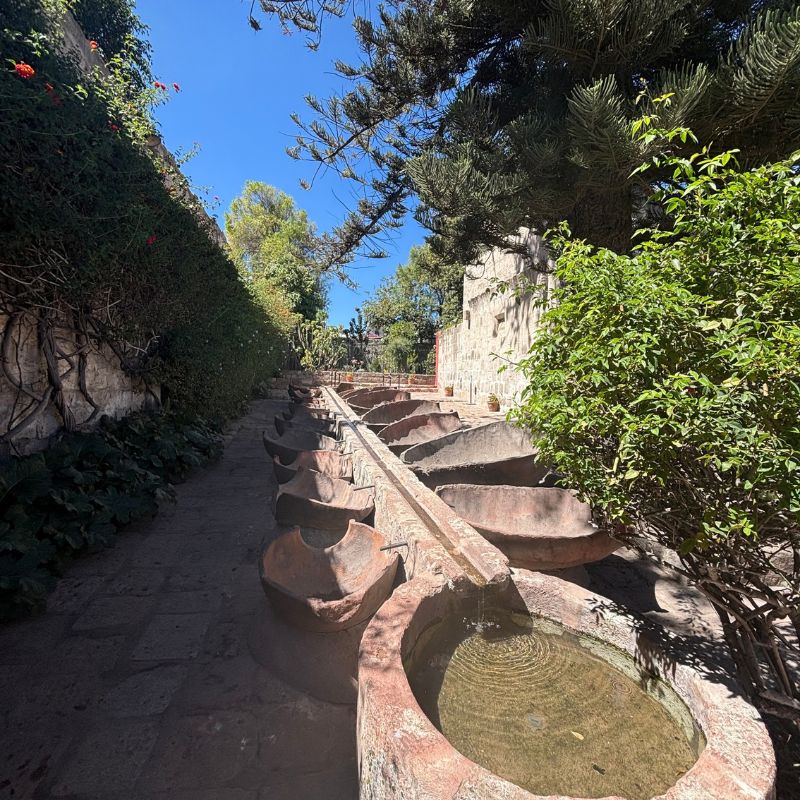
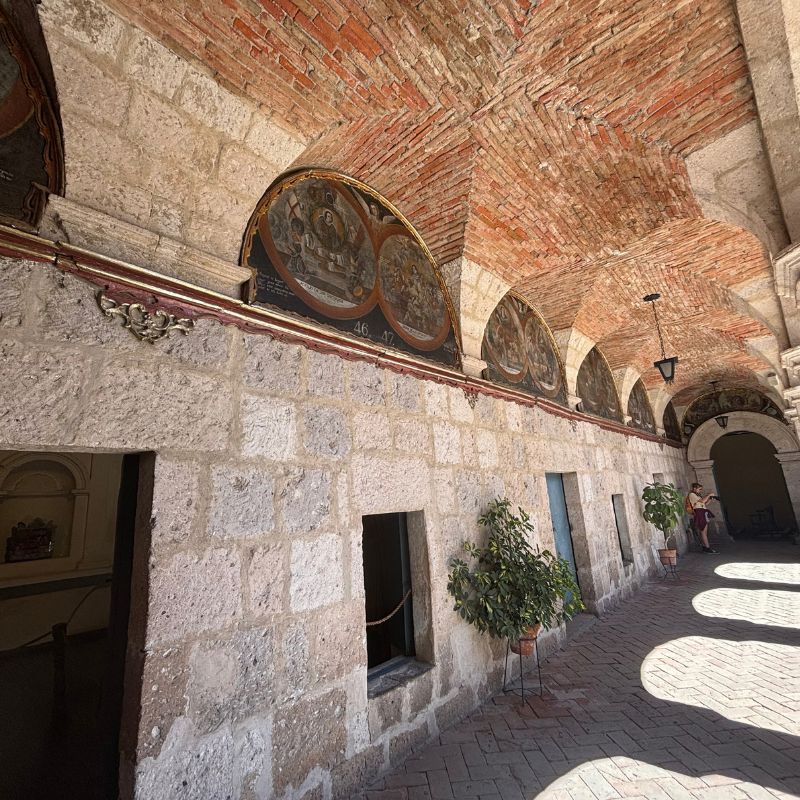
Exploring the courtyards, passageways, and everyday spaces inside Santa Catalina Monastery.
Touring Santa Catalina Monastery With a Guide
Santa Catalina Monastery was the historical highlight of our time in Arequipa.
Founded in 1579, the enormous complex functioned almost like a small city within the city. Its narrow streets, private living quarters, kitchens, courtyards, religious spaces, and vivid red and blue walls make it visually fascinating even before you understand the community that once existed inside them.
I strongly recommend taking a guided tour.
Our English-language tour lasted approximately one hour and cost S/10 in addition to admission. While we waited, I heard our guide offering tours in Spanish, Italian, and French as well.
You can certainly walk through the monastery independently and appreciate its architecture, but the guide gave meaning to the rooms and explained what life within Santa Catalina represented for women at the time.
For daughters of wealthy Spanish families, the expected options were often marriage or religious life, and entering the monastery required the family to provide a substantial dowry. But life inside Santa Catalina also reflected the social hierarchies outside its walls. Wealthier nuns could occupy private quarters and arrive with servants, while orphaned girls and women from less privileged backgrounds might perform domestic work within the complex.
The tour transformed the monastery from a beautiful collection of courtyards into a much more complicated glimpse at gender, wealth, religion, and social class in colonial Arequipa. After the guided hour ended, we were free to continue exploring and return to any spaces we wanted to photograph more slowly.
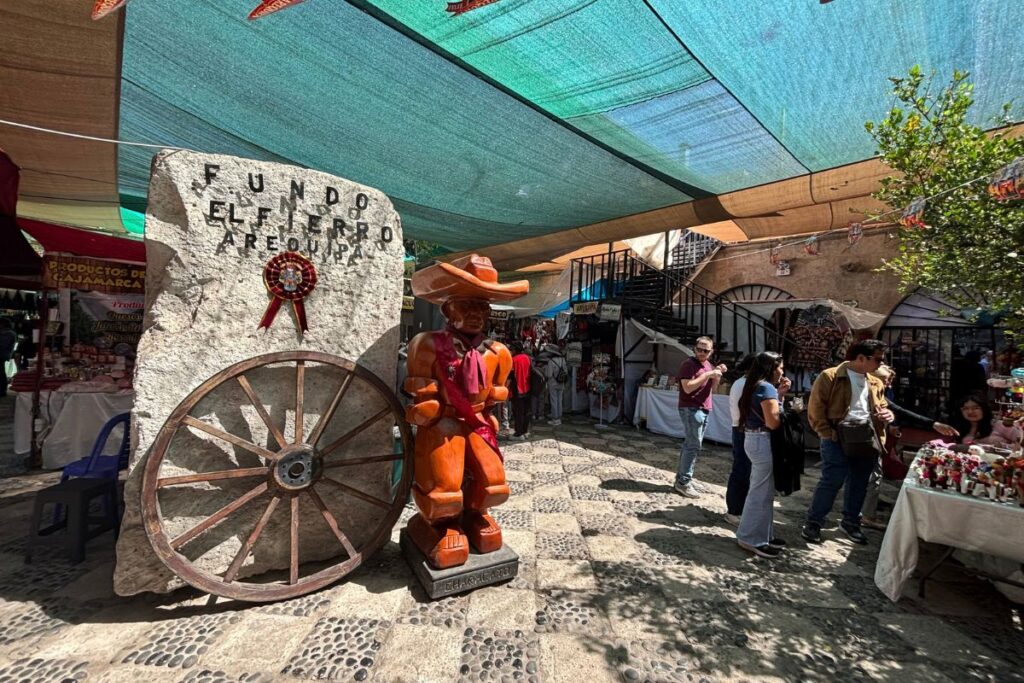
Browsing the artisan stalls at Fundo El Fierro in Arequipa.
Browsing Fundo El Fierro and Returning to San Camilo
After Santa Catalina, we walked to Fundo El Fierro, a small artisan market arranged around an attractive courtyard near the historic center.
Unlike Mercado San Camilo, Fundo El Fierro is focused on crafts and souvenirs, with textiles, bags, clothing, jewelry, and decorative items representing styles from Arequipa and other regions of Peru.
It was calm and easy to browse, but some of the smaller products we had also seen at San Camilo appeared more expensive. We ultimately returned to San Camilo for a few purchases, including the hat my mom had fitted and finished with her choice of decorative ribbon.
The two markets serve different purposes: Fundo El Fierro offers a concentrated artisan-shopping experience, while San Camilo is a working food market where souvenirs appear among everything else.
For a complete comparison, see my guide to Arequipa’s markets, local food, and souvenirs.
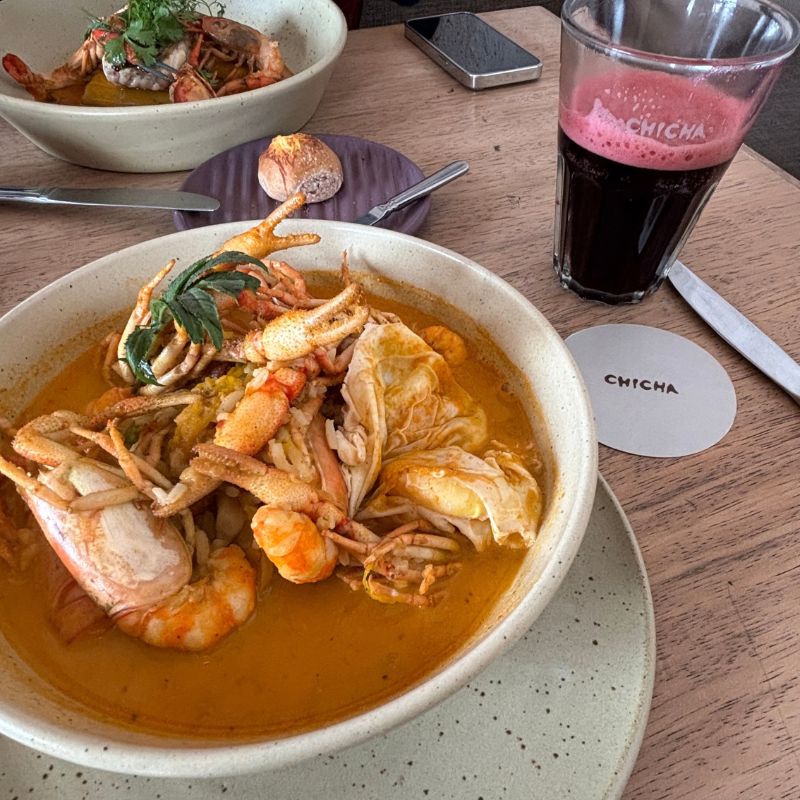
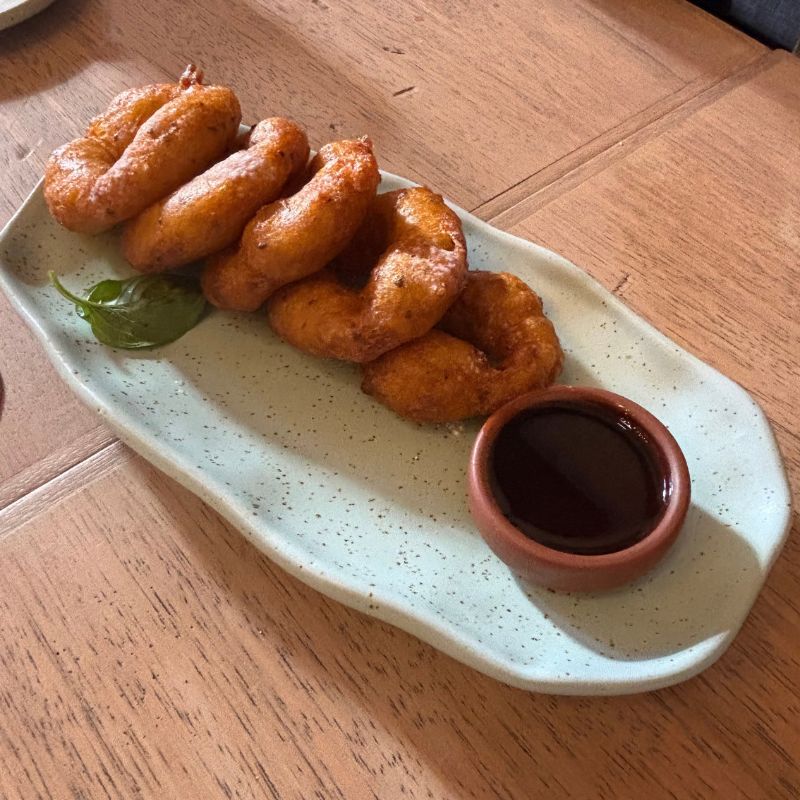
Chupe de camarones and picarones with miel de papaya Arequipeña at Chicha by Gastón Acurio.
Lunch at Chicha by Gastón Acurio
For lunch, we chose Chicha by Gastón Acurio, located near Santa Catalina in the historic center.
I had not yet tried any of Peru’s internationally celebrated chef-led restaurants. Places such as Astrid y Gastón, Central, Kjolle, and Maido felt like experiences I would plan and reserve in advance rather than somewhere I would casually choose for lunch.
Chicha offered a more accessible introduction. Its menu focuses on regional cuisine and local ingredients, but we could order à la carte without committing to a lengthy or expensive tasting menu. Prices were higher than at many other restaurants in Arequipa, but still closer to the cost of an ordinary nice meal once converted into our home currency.
We came specifically wanting to try chupe de camarones, one of Arequipa’s signature dishes. It became the focus of our lunch rather than simply a soup ordered before the main course.
We finished with picarones served with miel de papaya Arequipeña, bringing back the local papaya flavor I had already fallen in love with at Mercado San Camilo.
Chicha did not replace the experience of eating in a traditional picantería, but it gave us a polished introduction to Arequipeño cuisine without building the entire day around a formal dining experience.
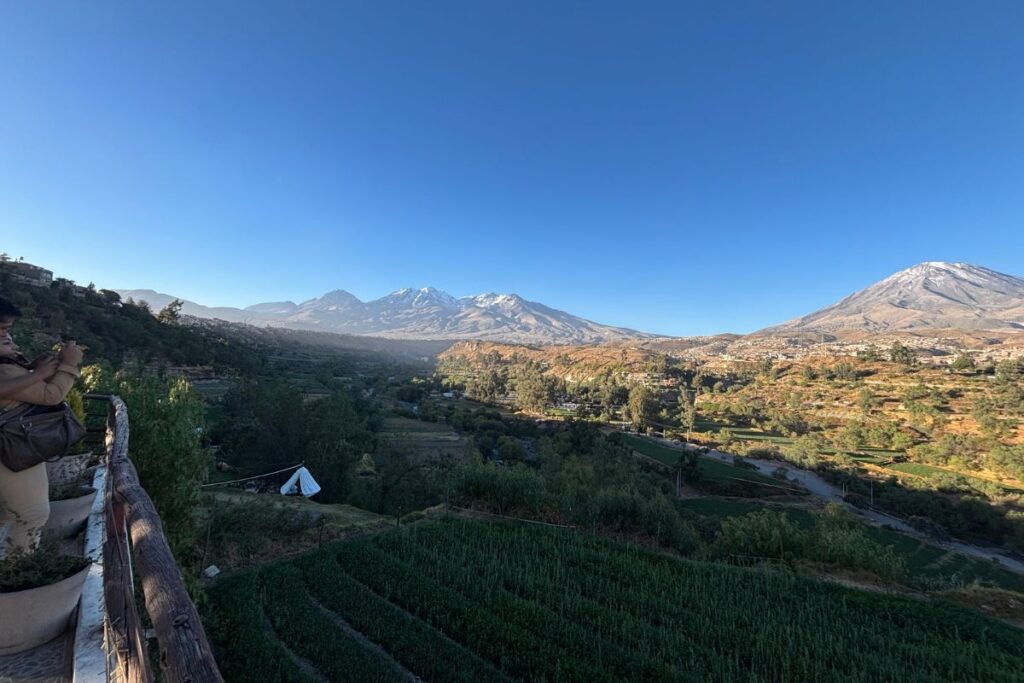
Looking across the green Chilina Valley toward Arequipa’s surrounding volcanoes from Mirador de Carmen Alto.
Seeing the Chilina Valley From Mirador de Carmen Alto
After lunch, we used InDrive to reach Mirador de Carmen Alto.
Where Yanahuara frames Misti through sillar arches, Carmen Alto looks across the green Chilina Valley. Agricultural terraces and fields spread through the foreground, while Misti, Chachani, and Pichu Pichu rise beyond them.
The amount of green was striking after spending most of our time surrounded by Arequipa’s pale stone and arid landscape. From here, we could better understand how the valley, agricultural terraces, city, and volcanoes fit together.
We arrived shortly before the 5:00 p.m. closing time and spent about 15 to 20 minutes enjoying the view. It was considerably quieter than Yanahuara, with a broad overlook that made it easy to take in the landscape without competing for the same photograph.
Carmen Alto is not necessarily where you capture one iconic framed image. Its strength is the complete landscape.
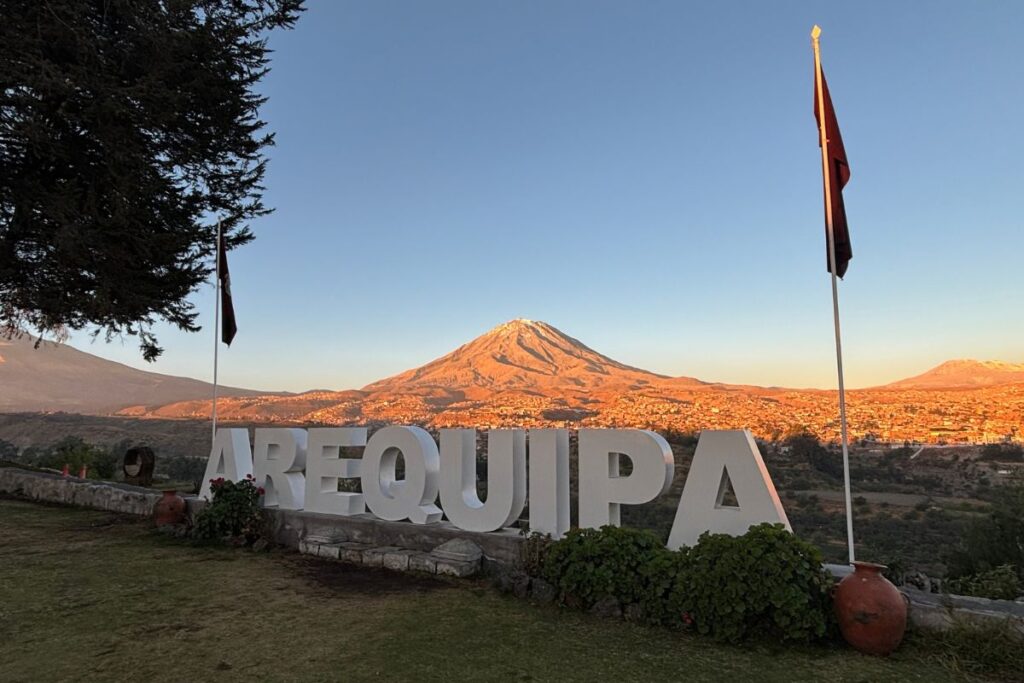
Our clearest view of Misti came from Mirador Arequipa, an unexpected stop just beyond Carmen Alto.
Discovering Mirador Arequipa by Chance
Mirador Arequipa was not part of our original plan.
As we were leaving Carmen Alto, our driver told us about another viewpoint only a few minutes farther uphill. He happened to work there and explained that it had been open for approximately a year.
Both viewpoints normally close at 5:00 p.m., but because our driver worked at Mirador Arequipa, we were able to enter after regular hours. That gave us an unusually quiet visit and our clearest unobstructed view of Misti.
The property includes several photography areas, large colorful AREQUIPA letters, and a small museum covering Peru’s history and the War of the Pacific. We had expected another simple overlook, so the historical component was an unexpected addition.
Unlike Carmen Alto, where the valley defines much of the view, Misti itself dominates the landscape here. It was the closest the trip came to answering the question I had asked upon landing: how do I get closer?
Carmen Alto and Mirador Arequipa make a natural pairing because they are only minutes apart by car. Just begin early enough to visit both before their regular closing time.
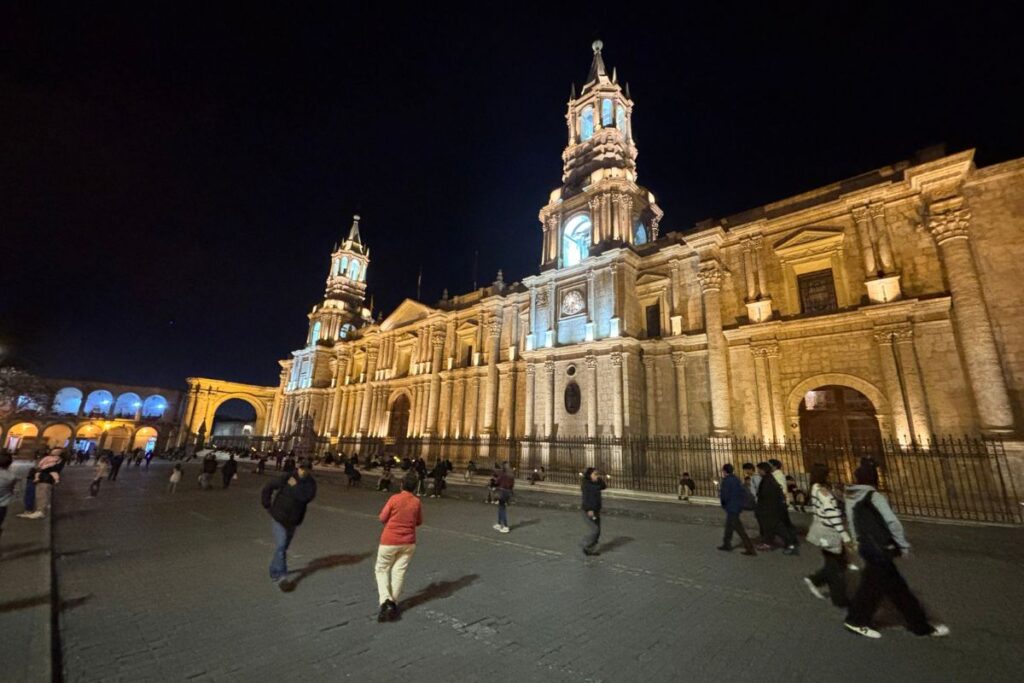
Arequipa’s cathedral and Plaza de Armas illuminated at night.
Ending the Evening at the Plaza de Armas
After the viewpoints, we returned to the historic center and ended the evening around the Plaza de Armas.
The cathedral and surrounding buildings were illuminated, the walkways were lively, and people gathered around the gardens and fountain. We browsed a few souvenir shops, walked beneath the colonnades, and took yet another round of photographs.
The Plaza was beautiful during the day, but it felt different after dark. The lighting emphasized the pale sillar architecture, while the restaurants and balconies above the square created a warm evening atmosphere.
After a full day of history, food, markets, and volcano views, simply walking around the Plaza felt like the right ending.
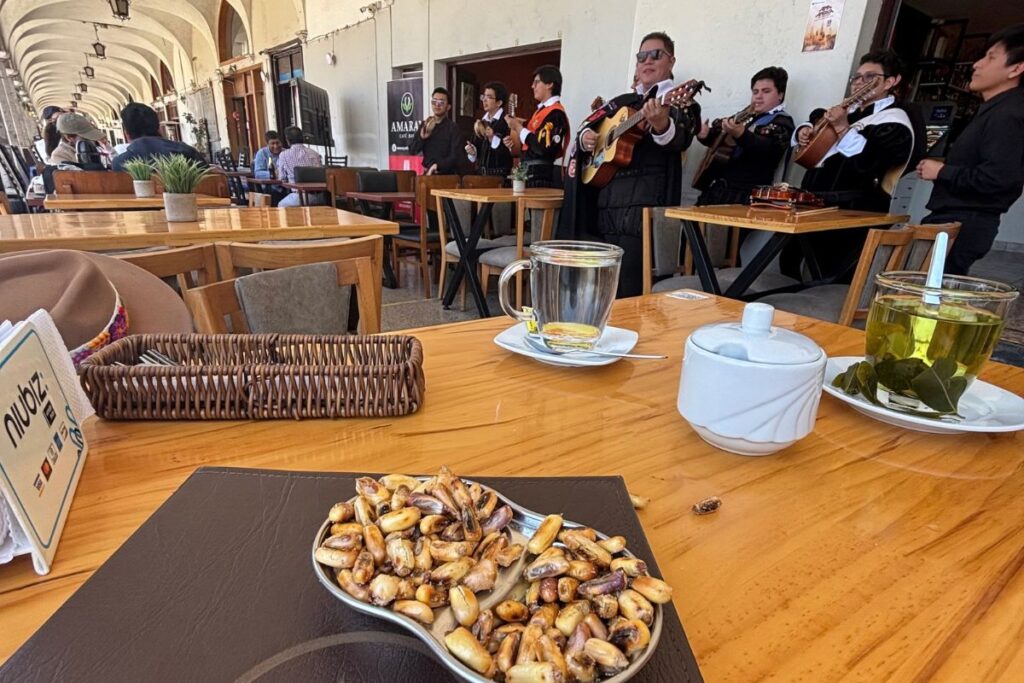
A tuna universitaria from Trujillo performing during our final lunch in Arequipa.
Our Final Morning: Museo Santuarios Andinos
Our flight did not depart until later in the afternoon, leaving us enough time for one final museum and lunch near the Plaza before collecting our bags and heading to the airport.
Rather than trying to squeeze in another distant viewpoint or activity, we stayed within the historic center and chose Museo Santuarios Andinos for our final morning.
Learning About Juanita at Museo Santuarios Andinos
Museo Santuarios Andinos is best known as the home of Juanita, also called the Lady of Ampato or the Inca Ice Maiden.
Her remarkably well-preserved frozen remains were discovered on Mount Ampato in 1995. Juanita is believed to have been approximately 12 to 14 years old when she was sacrificed during the Inca capacocha ritual more than 500 years ago.
The museum places her story within the larger religious and political meaning of high-altitude sacrifice. Its rooms contain ceramics, textiles, figurines, and other offerings recovered from sacred mountains and volcanoes throughout southern Peru.
Juanita appears only near the end, after the exhibits explain the journeys and ceremonies surrounding capacocha and provide context for what visitors are about to see.
Because we visited in August, Juanita herself was on display. She is generally exhibited from May through December before being placed into a conservation period during the first months of the year.
The museum added another dimension to what we had already learned about Arequipa. Santa Catalina had shown us the lives available to women during the colonial era; Museo Santuarios Andinos took us farther back into the religious beliefs, political power, and human cost of the Inca Empire.
Our visit lasted approximately one hour, making it a manageable final activity without creating stress before our flight.
One Last Lunch Overlooking the Plaza de Armas
For lunch, we returned to the very first restaurant we had tried after arriving in Arequipa.
We had originally chosen it for its balcony overlooking the Plaza de Armas, but we enjoyed the atmosphere, view, and food enough to come back on our final day. There was something satisfying about finishing the trip in the same place where we had begun exploring the city.
This time, we ordered rocoto relleno and anticuchos, giving us one more opportunity to try an Arequipeño specialty alongside one of Peru’s most popular dishes.
Both times we visited, musicians stopped to perform a few songs before continuing to the next restaurant. During our final lunch, an entire tuna universitaria arrived and introduced themselves as being from Trujillo.
A tuna (yes, that is what the group is called) is a traditional university musical group with roots in Spain. Dressed in capes, fitted doublets, ribbons, and knee-length trousers, they gave me immediate Shakespearean-theater vibes as they performed with guitars and other stringed instruments.
A few vendors also moved quietly through the restaurant displaying paintings and small souvenirs. They continued walking unless someone expressed interest.
Naturally, I expressed interest.
I purchased a fairly large painting of the arches at Mirador de Yanahuara framing Misti. At close to S/150, I probably paid more than necessary, but it captured one of the defining images from our time in Arequipa.
When we purchase travel souvenirs, we are often thinking more about the memory we are bringing home than the absolute authenticity or objective value of the item itself.
That final meal brought together so much of what we had enjoyed about Arequipa: regional food, the Plaza, live music, local vendors, volcano views, and enough time to sit together without rushing toward one last attraction.
Is Arequipa Worth Visiting?
Arequipa absolutely deserves a place in a Peru itinerary, even if you have no plans to visit Colca Canyon.
The historic center is compact and walkable, but the city offers much more than attractive colonial architecture. Santa Catalina provides a fascinating look into religion, gender, wealth, and class. Mercado San Camilo reveals the everyday commercial life beyond the polished Plaza. Arequipeño cuisine has a strong regional identity, while the surrounding volcanoes appear so frequently that they begin to feel like part of the city rather than distant scenery.
Two sightseeing days gave us enough time to experience Arequipa without turning the visit into a race. We did not need an organized city tour or a tightly scheduled itinerary. We walked through most of the historic center and used InDrive or local taxis when we wanted to venture farther out.
Arequipa also felt different from the other Peruvian cities we had visited. It was calmer than Lima, lower and less intensely tourism-driven than Cusco, and surrounded by a landscape that made me want to see more of the region.
Skipping the major excursions was the right decision for this particular trip, but researching them gave me several reasons to return. Pillones Waterfall, rafting on the Chili River, and a more active experience near the volcanoes would all suit a future visit—perhaps one taken with friends or on my own rather than with my parents.
For help deciding whether to add Colca Canyon, Laguna de Salinas, Ruta del Sillar, rafting, or a volcano trek, see my complete guide to how many days you need in Arequipa and its best day trips.
Our visit was short enough to leave things unfinished but complete enough that I never felt we had missed Arequipa itself.
Sometimes that is exactly how I want to leave a destination: satisfied, but with a reason to come back.
Continue Exploring Peru
- What to Eat and Buy in Arequipa — Add market browsing, regional dishes, and souvenir stops to your visit.
- Best Viewpoints in Arequipa for Volcano Views — Find places to pause and take in the city’s surroundings.
- The Day Cusco Gave Us Back Time (Even When Our Flight Didn’t Go to Plan) — Read how a disrupted travel day became part of our Cusco experience.
- Is Paracas Worth Visiting? — Add a contrasting landscape of coastline, wildlife, and desert to your plans.
More Travel Ideas
- Why I Started Travel Breakdown — If this mix of personal experience and practical planning is how you like to travel, here’s what inspired the site.
- How I Built a Five-Week South America Trip Using Points, Credits, and Cash — Planning several stops like Lima and Arequipa? See how I combined different ways of paying for a longer South America trip.