If I Went Back to Panama, Here’s How I’d Plan My Trip
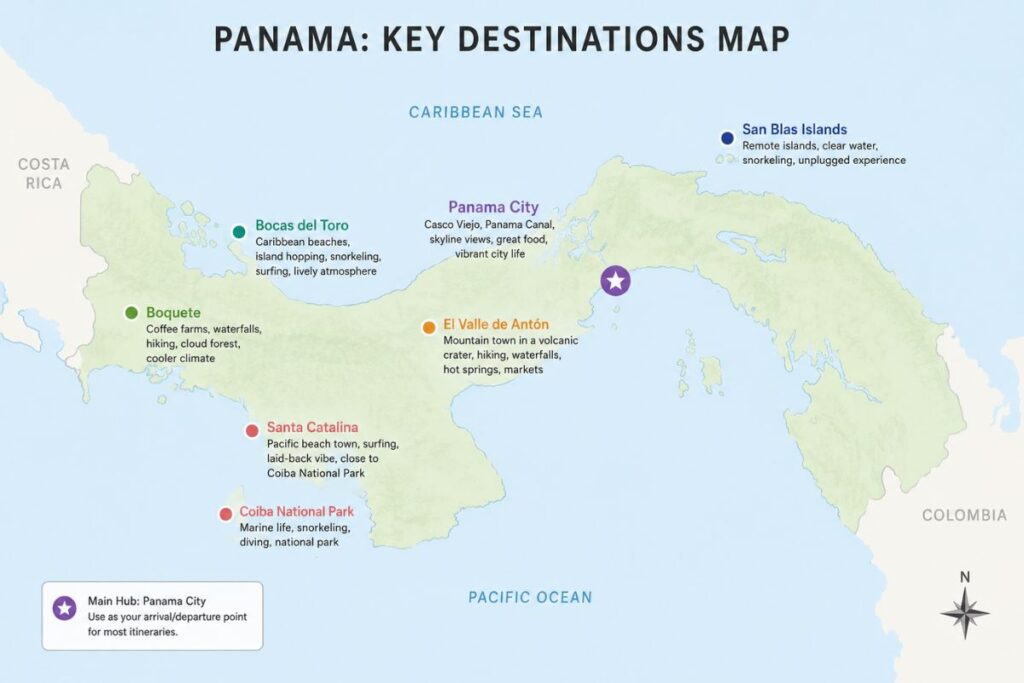
New here? In the previous post, 3 Days in Panama City: The Central American Stopover That Completely Surprised Me, I shared why Panama City ended up being one of the biggest surprises of my Central America trip. This time, I’m taking a step back and looking at how I’d plan a return visit after seeing just how much more the country has to offer.
Three days in Panama City completely changed my opinion of Panama.
I originally thought it was simply the gateway to Costa Rica.
Instead, I left realizing I’d barely scratched the surface.
Between Caribbean islands, cloud forests, coffee farms, beaches on two oceans, and one of Latin America’s most underrated capital cities, Panama deserves to be the destination, not just the stopover.
If I were planning my first trip today, I wouldn’t build it around a strict day-by-day itinerary. I’d treat Panama more like a choose-your-own-adventure destination and decide what kind of trip I wanted: city, islands, mountains, beaches, or a little bit of everything.
Getting to Panama with Points and Miles
This is one of the reasons Panama surprised me before I even arrived.
Flights to Panama City were easier to book than I expected, and it ended up being a great points destination for a Central America trip.
We flew from Philadelphia to Panama City with a quick connection in Miami. Since Panama City is well connected through major U.S. hubs, it can work really well as either a long weekend getaway or the starting point for a longer Central America itinerary.
I’d check Alaska miles, American Airlines, and flexible points currencies like Chase Ultimate Rewards when pricing out flights.
For hotels, Panama City also gave us good value. We stayed at the Hyatt Regency Panama City using a mix of Hyatt points, a Hyatt Free Night Award, and Chase points from my friend.
That combination helped keep our out-of-pocket cost low, which made Panama feel even more approachable.
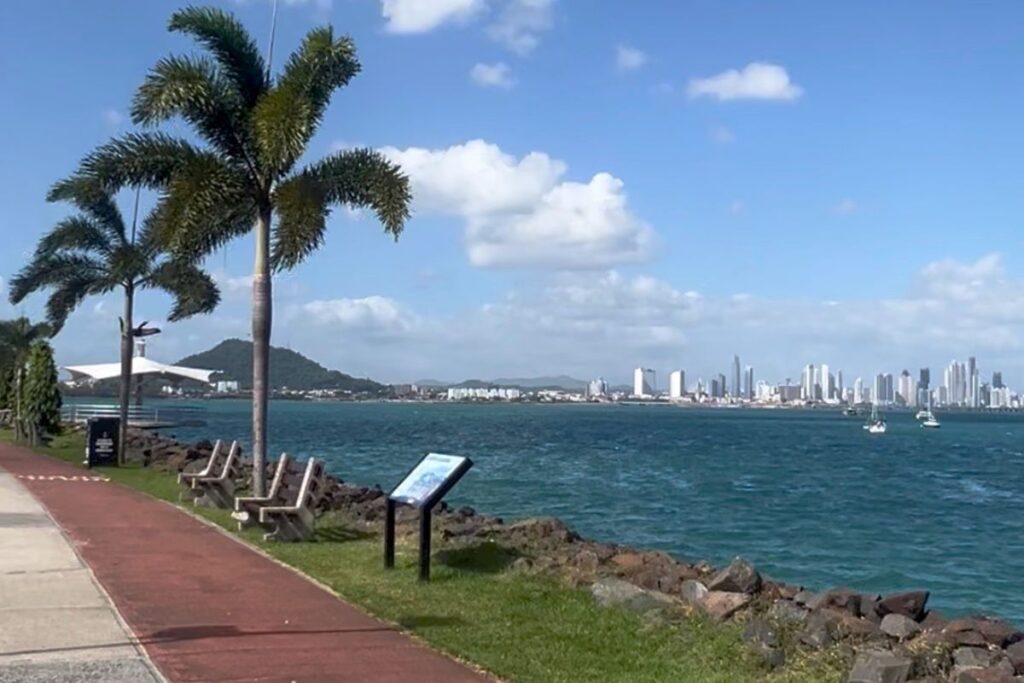
Panama City’s skyline is one of the country’s defining sights, but for me it was only the beginning. The capital is the perfect starting point for exploring the rest of Panama, not the entire destination itself.
Panama City
Panama City would still be the anchor of every itinerary I recommend.
It gives you the easiest arrival, the best transportation options, and enough variety to fill several days without feeling repetitive.
Casco Viejo is where I’d start. The historic center is compact, colorful, and easy to explore on foot. I’d do a walking tour again, see landmarks like Plaza de Francia, Iglesia San José, and the old city walls, then stay for a rooftop drink at sunset.
The Panama Canal is also worth visiting, especially if you time your visit around the ship crossings at the Miraflores Locks. Even if you miss the busiest transit windows like we did, the visitor center helps explain why the canal shaped Panama’s history, economy, and place in the world.
I’d also make time for the Amador Causeway. It gives you beautiful views back toward the skyline, and renting one of the covered pedal bikes ended up being one of the most unexpectedly fun things we did.
For food, I’d absolutely go back to the seafood market. Panama was where I started my week-long obsession with fresh fish, rice, and black beans, but I quickly realized the city offers far more than that. From casual neighborhood eateries to some of Latin America’s best restaurants, Panama City has one of the most diverse dining scenes I experienced in Central America.
And if the timing works, I’d end one evening with a sunset boat ride. Seeing Panama City from the water made me appreciate just how beautiful and modern the skyline really is.
Panama City is the part of the trip that feels easiest. You can use Uber, stay in a modern hotel, eat well, and still get history, skyline views, water, and a little bit of nature.
San Blas Islands
San Blas is the part of Panama I most regret skipping.
We considered doing it as a day trip, but the logistics felt like too much at the beginning of a longer trip. Most tours leave very early from Panama City, involve a few hours by road, and then require a boat transfer to the islands.
At the time, that felt exhausting.
Looking back, I think the real mistake was trying to treat San Blas as a day trip.
Next time, I’d stay overnight.
San Blas is known for clear Caribbean water, small islands, snorkeling, and a more unplugged experience. It is not the place I’d go expecting a luxury resort. I’d go for simple lodging, beautiful water, and the feeling of being somewhere completely different from Panama City.
This would be the island escape portion of the trip.
Boquete
If I wanted nature, cooler weather, and a slower pace, I’d add Boquete.
Boquete is Panama’s mountain-town side: coffee farms, waterfalls, hiking, hanging bridges, and cloud forest scenery. It feels like the ideal contrast after a few days in Panama City.
The easiest way to get there would be to fly from Panama City to David, then continue by shuttle or taxi to Boquete. You can also travel overland by bus or car, but I’d only choose that if I had more time or wanted to keep costs lower.
This is where I’d go if I wanted the nature side of Panama without making the entire trip about beaches.
Bocas del Toro
Bocas del Toro would be the more developed Caribbean beach option.
Where San Blas feels more remote and unplugged, Bocas sounds like it has more restaurants, beach hopping, island taxis, snorkeling, surfing, and nightlife if you want it.
I’d consider Bocas if I had closer to two weeks in Panama or if I wanted a beach destination with more infrastructure than San Blas.
It also pairs logically with Boquete. From Boquete, you can travel overland toward Almirante and then take a boat to Bocas del Toro.
That makes it a useful add-on if you’re already going west for the mountain portion of the trip.
Santa Catalina and Coiba National Park
If I were planning a more nature-heavy trip, I’d also look at Santa Catalina and Coiba National Park.
This would be the Pacific coast version of Panama: more remote, more nature-focused, and especially appealing if you’re interested in snorkeling, diving, marine life, and national parks.
I don’t think I’d add this to a first short trip unless Panama was the entire focus and I had enough time to move slowly.
But for a second trip, or for someone who loves wildlife and water-based adventures, this area would absolutely be on my list.
El Valle de Antón
El Valle de Antón also stands out as a good shorter nature escape from Panama City.
It’s a mountain town located inside an extinct volcanic crater, which already makes it sound interesting. I’d consider it for hiking, waterfalls, hot springs, markets, and a slower change of pace without committing to a longer journey across the country.
This feels like the kind of place I’d add if I had a few extra days but didn’t want to deal with flights or complicated transfers.
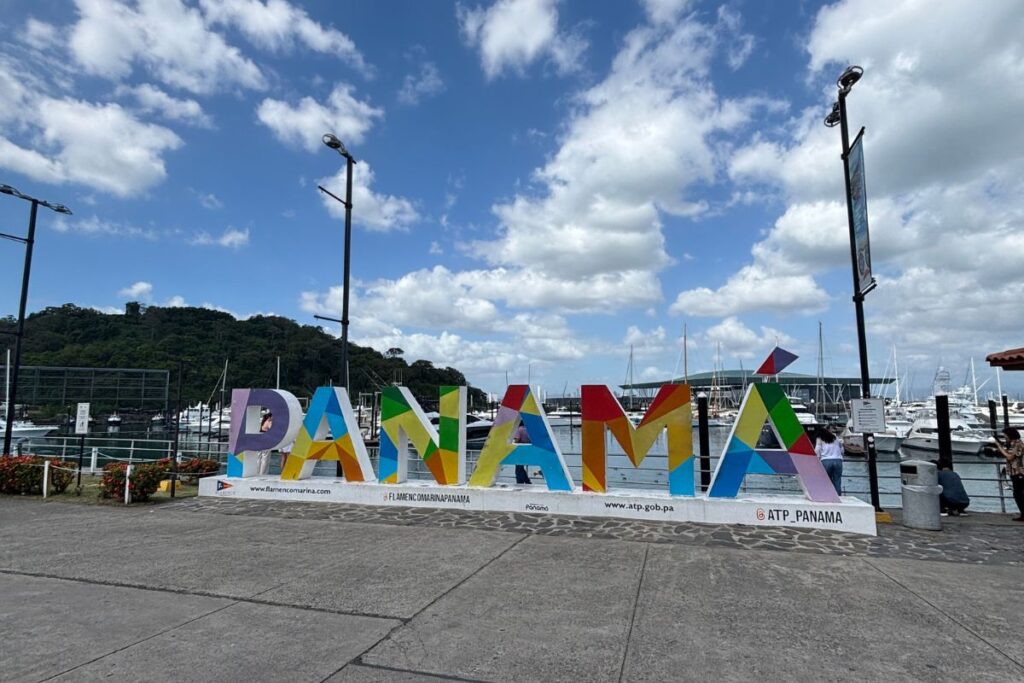
Panama City is the perfect gateway to the rest of the country. Whether you have four days or two weeks, it’s easy to build an itinerary that gradually expands beyond the capital without feeling rushed.
How I’d Spend 4 Days, 1 Week, or 2 Weeks in Panama
4 Days: Panama City Only
Best for a long weekend. Focus on Casco Viejo, the Panama Canal, Amador Causeway, great food, and a sunset boat ride.
5–6 Days: Panama City + San Blas
Best if you want an island escape without turning the trip into a full countrywide itinerary. I’d stay overnight rather than rushing San Blas as a day trip.
7–8 Days: Panama City + Boquete
Best if you want city, canal history, coffee farms, waterfalls, and cooler mountain weather.
10 Days: My Recommended First Trip
I’d split my time between Panama City, Boquete, and San Blas. It gives you the country’s three biggest contrasts—urban Panama, the mountain highlands, and the Caribbean islands—without making the itinerary feel too complicated.
10 Days: Nature-Focused Alternative
If hiking, wildlife, and outdoor adventures are your priority, I’d swap Boquete and San Blas for El Valle de Antón and Santa Catalina. That version of the trip trades the Caribbean for volcanoes, waterfalls, marine life, and Coiba National Park, and would appeal more to travelers looking to spend most of their time outdoors.
2 Weeks: See It All
If I were planning my next Panama trip, this is what I’d choose. I’d start in Panama City, continue west to Boquete, then on to Bocas del Toro before returning to Panama City for an overnight stay in San Blas. Along the way, I’d consider adding a stop in El Valle de Antón on the drive west or Santa Catalina if marine life and Coiba National Park were higher priorities than spending additional time in Bocas.
Bringing It All Together
Panama surprised me more than almost anywhere else in Central America.
Before visiting, I understood why Costa Rica gets so much attention. After visiting both, I no longer think Panama should be treated as the quieter alternative or the convenient gateway next door.
Panama has its own mix of city energy, canal history, Caribbean islands, Pacific beaches, coffee regions, mountain towns, wildlife, and food. It may not have Costa Rica’s fame, but it absolutely has enough variety to justify its own trip.
If I were planning my next visit, I wouldn’t squeeze Panama into the beginning of another itinerary.
When I first booked this trip, Panama was simply the gateway to Costa Rica. If I were planning it today, I’d reverse that thinking completely. I’d give Panama two weeks of its own, then decide if I even wanted to continue on to another country. That’s how much my opinion changed after just three days.
Up next: Costa Rica was the country I had been looking forward to most before this trip. But after a week of volcanoes, wildlife, waterfalls, and beaches, I came away with a much more nuanced opinion than I expected. In My First Week in Costa Rica: What Lived Up to the Hype (and What Surprised Me), I’ll share what impressed me most—and what I’d do differently if I went back.