What to Do in Buenos Aires: A Realistic First Visit
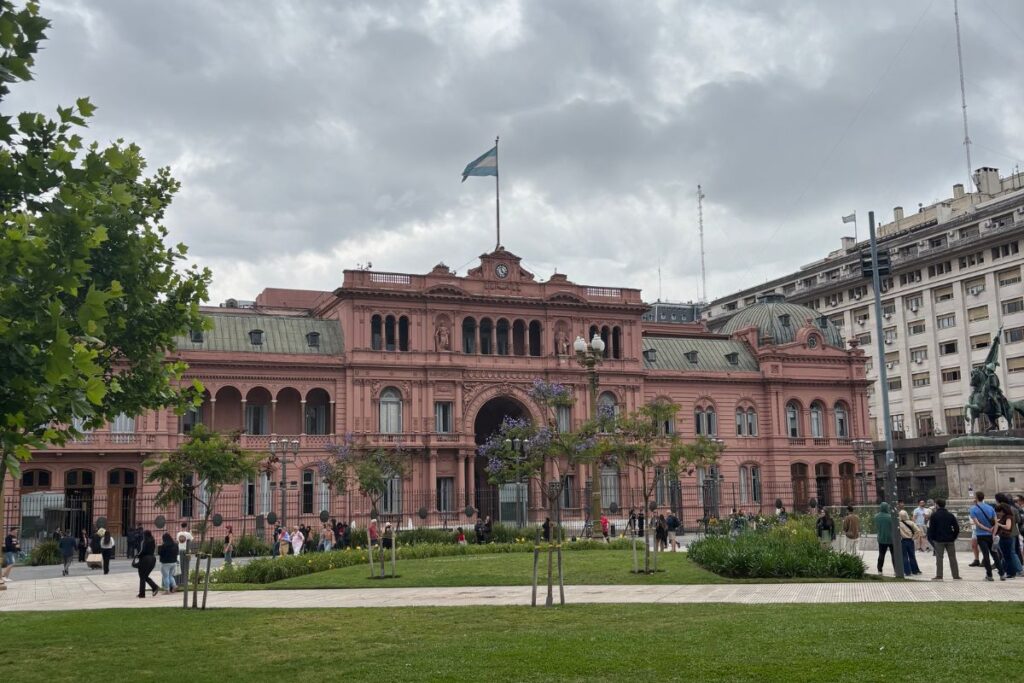
Buenos Aires was the first stop on my five-week trip through Argentina, Uruguay, Chile, Ecuador, and Colombia. I spent several days here, split around a short trip to El Calafate. Here’s what I did, what I’d recommend, and how I’d approach a first visit to Buenos Aires.
Getting to Buenos Aires
Before arriving in Buenos Aires, I had spent months thinking about how to tackle a five-week trip through South America.
At first, I approached it like many people do: I wanted to see as much as possible. With five weeks, it felt like I could check off several countries in one trip.
Argentina became the natural starting point. Buenos Aires had long been on my list, and it also made a convenient gateway for the rest of the journey.
Rather than trying to see everything Argentina had to offer in one visit, I based myself in Buenos Aires, took a short trip to El Calafate, and then returned to the city before continuing on to Uruguay.
I’ll cover exactly how I planned the flights, points, and budget in a separate post about the entire five-week itinerary. For this guide, let’s focus on what to do once you arrive in Buenos Aires.
Where I Stayed
For most of my time in Buenos Aires, I stayed at the Dazzler by Wyndham Maipú in Microcentro. It was within walking distance of Plaza de Mayo, the Obelisk, Teatro Colón, Puerto Madero, and many of the city’s main attractions, making it an excellent base for a first visit.
Since this was the beginning of a five-week trip through South America, I had a budget to stick to and was intentional about where I stayed. That ruled out many of the hotels in Palermo, one of Buenos Aires’ most popular neighborhoods for visitors.
I made time to visit Palermo during my trip, but I never felt like I was missing out by staying elsewhere. If anything, Microcentro felt like the heart of the city, and I appreciated being able to walk to so many of the places I wanted to see.
My time in Buenos Aires was split in two, with a trip to El Calafate in the middle. When I returned, there must have been a major event in the city because hotel availability was extremely limited. I spent one night at the Park Tower, a Luxury Collection Hotel, before moving back to the Dazzler for the remainder of my stay.
Looking back, I’d happily stay in Microcentro again. It struck a great balance between location and value, especially at the beginning of a longer trip.
Explore Dazzler by Wyndham Maipú and check current rates →
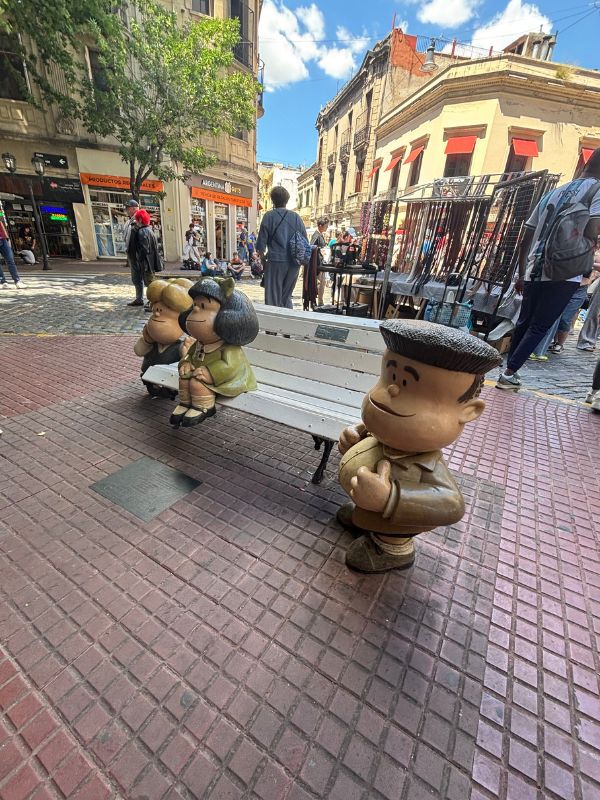
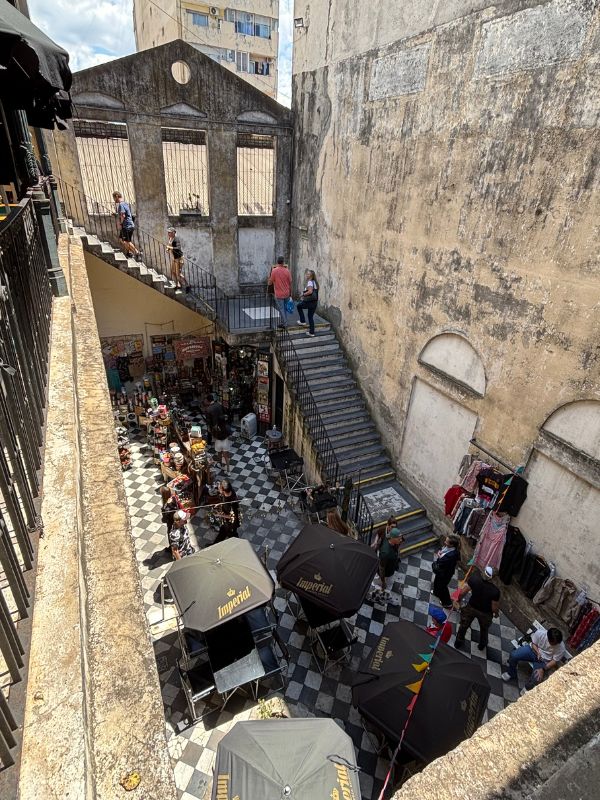
From Plaza Dorrego’s lively atmosphere to hidden courtyards tucked away in San Telmo, a walking tour revealed places I would have easily walked past on my own.
Start with a Walking Tour
If you’ve read a few of my destination guides, this recommendation probably won’t surprise you: start your first day with a walking tour.
I almost always book one when I arrive in a new city. It’s one of the quickest ways to learn the history, understand the layout, and get recommendations from a local guide before exploring on your own.
In Buenos Aires, my walking tour introduced me to many of the city’s most important landmarks, including Plaza de Mayo, the Casa Rosada, the Metropolitan Cathedral, and the surrounding historic center. It also gave me a much better understanding of Argentina’s history than I would have gotten simply wandering past the buildings.
Even if you don’t follow the exact itinerary from this guide, I’d still recommend making a walking tour your first activity. The rest of the city makes a lot more sense once you’ve had that introduction.
Microcentro & Plaza de Mayo
If it’s your first time in Buenos Aires, chances are you’ll spend quite a bit of time in Microcentro. Home to many of the city’s most recognizable landmarks, it’s the historic and political heart of Buenos Aires and an easy place to begin exploring.
Most of my time here was spent on foot after my walking tour. I visited Plaza de Mayo, admired the pink façade of the Casa Rosada, stepped inside the Metropolitan Cathedral, and wandered the surrounding streets filled with historic architecture.
From there, I made my way to the Obelisk, which sits in the middle of Avenida 9 de Julio, one of the widest avenues in the world. Standing in the middle of the crossing really gives you a sense of the city’s scale. Just a few blocks away is Teatro Colón, widely considered one of the world’s finest opera houses.
Even if you aren’t interested in history, this part of the city is worth exploring simply because so many of Buenos Aires’ iconic sights are within walking distance of one another.
Travel Breakdown Tip: Near the Obelisk, there’s a small ticket booth with a short set of stairs. Climb up a few steps and you’ll have one of the best free photo spots, with the Obelisk perfectly framed behind you. It’s an easy place to grab a picture without standing in the middle of Avenida 9 de Julio.
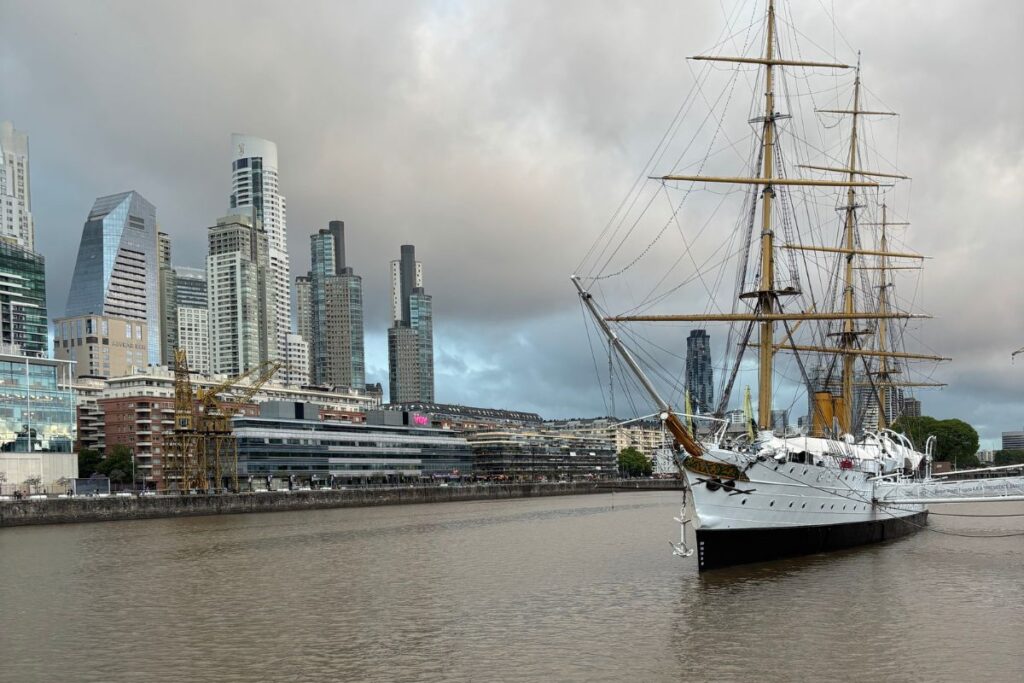
Puerto Madero blends Buenos Aires’ historic waterfront with modern skyscrapers, creating one of the city’s most distinctive neighborhoods.
Puerto Madero
Just east of Microcentro, Puerto Madero feels completely different from the rest of Buenos Aires. Once an abandoned port, it has been transformed into one of the city’s most modern neighborhoods, with waterfront promenades, high-rise buildings, and some of Buenos Aires’ most popular restaurants.
I enjoyed walking along the docks, crossing the Puente de la Mujer, and taking in a different side of the city. After spending time among the historic buildings of Microcentro, Puerto Madero felt more open and contemporary.
While there aren’t as many major attractions here as in some of Buenos Aires’ other neighborhoods, it’s a great place to slow down, enjoy the waterfront, and grab a meal or a drink.
Travel Breakdown Tip: If you’re already visiting Plaza de Mayo or the Casa Rosada, don’t call an Uber. Puerto Madero is only about a 10–15 minute walk away, making it easy to combine both neighborhoods into the same afternoon.
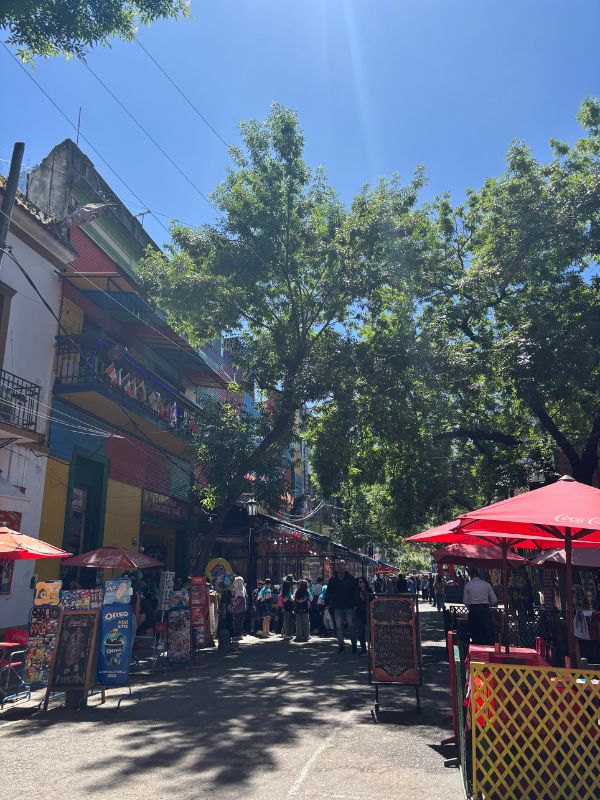
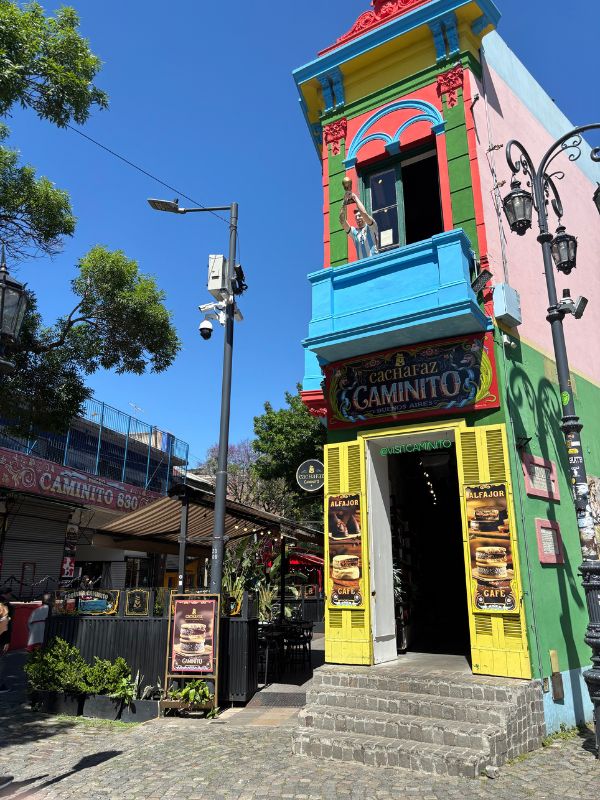
La Boca’s colorful streets and lively atmosphere make it one of Buenos Aires’ most recognizable neighborhoods, even if a visit only lasts a couple of hours.
La Boca
No first trip to Buenos Aires feels complete without a visit to La Boca. Best known for its brightly painted buildings, tango performances, and deep soccer culture, it’s one of the city’s most recognizable neighborhoods. It’s also home to La Bombonera, the legendary stadium of Boca Juniors, making it a must-visit for football fans.
The heart of La Boca is Caminito, a colorful pedestrian street lined with murals, local artists, souvenir shops, and restaurants. While it’s one of the city’s biggest tourist attractions, I still found it well worth visiting. The vibrant buildings and lively atmosphere make it unlike anywhere else in Buenos Aires.
I also enjoyed stopping by Fundación Proa, a contemporary art museum overlooking the old port. Looking back, though, I wish I had explored Caminito first. By the time I came back outside, the narrow streets were packed with people, making it much harder to enjoy the colorful facades and take photos. If I were doing it again, I’d arrive early, walk through Caminito first, and save the museum for later in the morning.
Travel Breakdown Tip: Plan to visit during the day and take an Uber there and back. Most visitors stick to the Caminito area rather than wandering farther into the surrounding neighborhood.
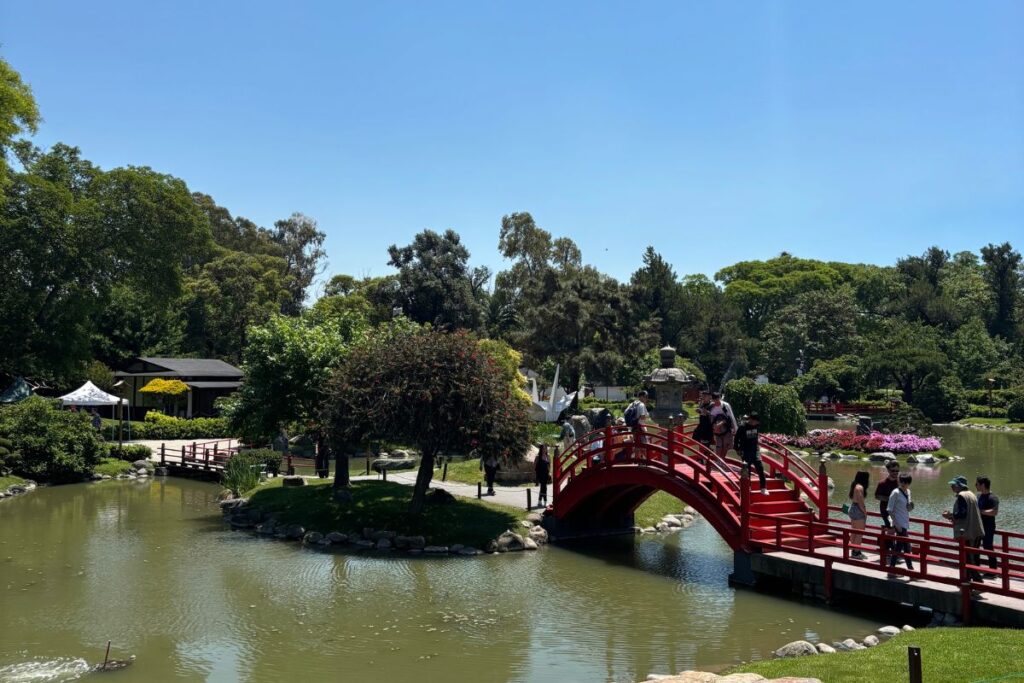
The Japanese Garden offered a peaceful escape from Buenos Aires’ busy streets and showed me a quieter side of Palermo beyond its cafés and nightlife.
Palermo
After visiting Buenos Aires’ historic neighborhoods, Palermo offered a completely different side of the city. Known for its leafy streets, cafés, boutiques, and expansive parks, it’s the kind of neighborhood where you can slow down and simply enjoy wandering.
I started my visit at the Japanese Garden, one of the most peaceful spots in the city. The meticulously landscaped gardens, koi ponds, bridges, and traditional architecture make it an easy place to spend an hour or two away from the bustle of downtown. It’s one of Buenos Aires’ most popular green spaces and is open daily.
From there, I planned to visit MALBA (Museum of Latin American Art of Buenos Aires), but I made one classic travel mistake, I never checked the opening hours before heading over. Unfortunately, I visited on the museum’s weekly closing day, so I never made it inside. It’s definitely something I’d prioritize on a future trip.
Even without the museum, I enjoyed spending the rest of the afternoon exploring Palermo. The neighborhood is full of tree-lined streets, cafés, boutiques, and public parks, and it’s easy to see why so many visitors choose to stay here. If you have extra time, nearby attractions like El Rosedal, the Bosques de Palermo, and Palermo Soho are all worth adding to your itinerary and are easy to combine into the same visit.
Travel Breakdown Tip: Double-check museum opening days before you go. If you’re visiting this part of the city, it’s easy to combine the Japanese Garden, MALBA, El Rosedal, and Palermo Soho into one relaxed afternoon.
How Many Days Do You Need in Buenos Aires?
I spent several days in Buenos Aires, split around a trip to El Calafate, which gave me enough time to experience the city’s major neighborhoods without feeling rushed.
For most first-time visitors, I’d recommend spending three to four full days in Buenos Aires. That gives you enough time to explore the historic center, visit La Boca, wander through Palermo, enjoy the waterfront in Puerto Madero, and still leave room for a walking tour, a museum, or a long dinner at one of the city’s many restaurants.
If you have more time, Buenos Aires is an easy city to settle into. Beyond the main attractions, it’s the kind of place where some of the best moments come from lingering in a neighborhood café, strolling through a park, or discovering a street you hadn’t planned to visit.
If you’re traveling around Argentina, I also found Buenos Aires worked well as both a starting point and a place to return to before flying home. Splitting my stay around El Calafate gave me a chance to experience different parts of the city without trying to fit everything into one visit.
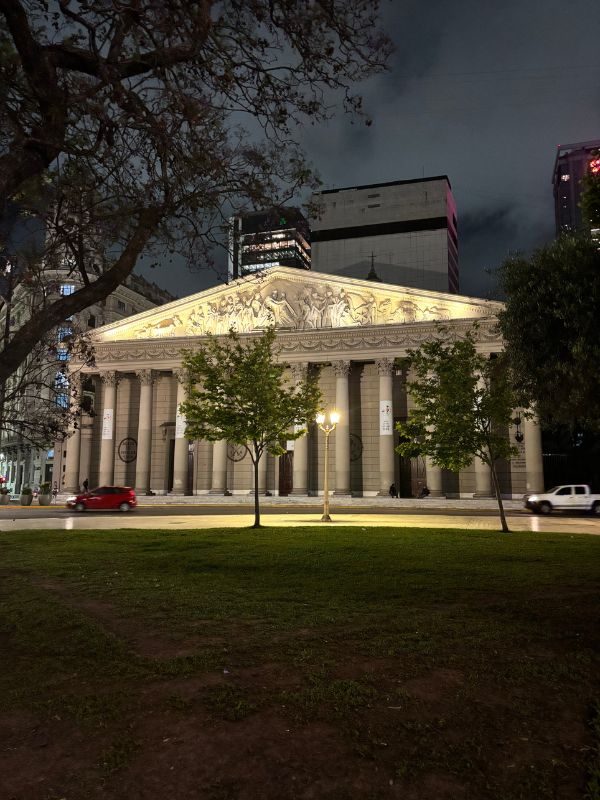
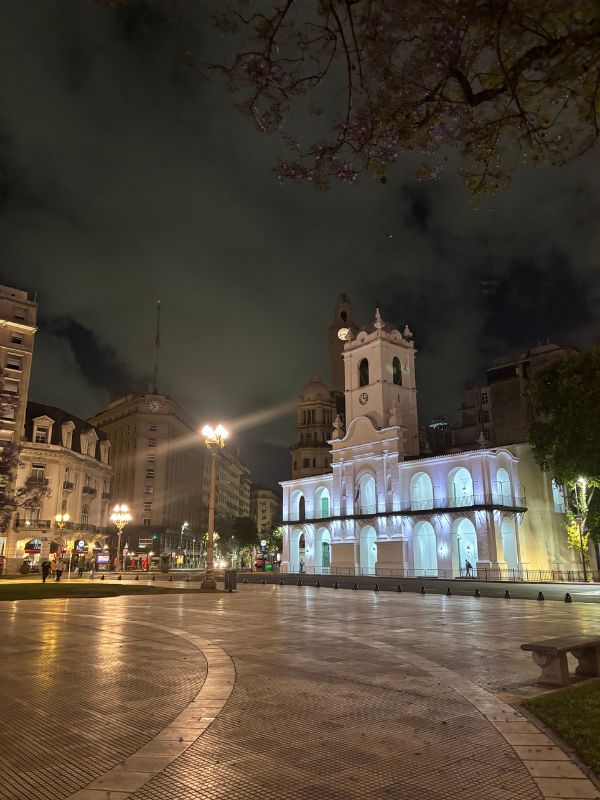
Exploring Plaza de Mayo in the evening offered a quieter perspective on one of Buenos Aires’ most historic and recognizable public squares.
Final Thoughts
Buenos Aires quickly became one of my favorite cities in South America. It has a little bit of everything, historic landmarks, colorful neighborhoods, beautiful parks, excellent food, and a culture that encourages you to slow down and enjoy the city rather than rush from one attraction to the next.
What I appreciated most was how different each neighborhood felt. Walking through the historic streets of Microcentro, exploring the colorful buildings of La Boca, relaxing in Palermo, and ending the day along the waterfront in Puerto Madero made it feel like I had visited several cities in one.
If I returned, I’d spend less time trying to see more attractions and more time simply enjoying the neighborhoods. I’d also finally make it inside MALBA after remembering to check that it’s not closed on Mondays.
For a first trip to Argentina, I think Buenos Aires is the perfect place to begin. It’s a city that’s easy to navigate, rewarding to explore on foot, and one I’d happily return to on a future trip.
Next Up: Day Trips from Buenos Aires Worth Adding to Your Itinerary
Buenos Aires is an incredible city on its own, but it also makes the perfect base for exploring beyond the capital. Next, I’ll share the day trips I’d consider adding to your itinerary.
Continue Exploring
- Day Trips from Buenos Aires Worth Adding to Your Itinerary — See what you can explore beyond Buenos Aires without changing hotels, from easy escapes across Argentina to a quick trip into Uruguay.
- Argentina Beyond Buenos Aires: My Shortlist for Next Time — If Buenos Aires is only the beginning, explore the Argentine destinations I’m considering for a future trip and how they could fit into a larger itinerary.
- El Calafate Was My Introduction to Patagonia—Now I Want More — Head south to Patagonia and see why El Calafate and Perito Moreno Glacier completely changed how I thought about this part of Argentina.
- I Added Uruguay Because It Was So Easy From Buenos Aires — If you’re already visiting Buenos Aires, see why the easy ferry connection convinced me to add a few days in Uruguay to the same trip.