Barranco: The Lima Neighborhood I Want to Stay in Next Time
If Miraflores is where I’d tell most first-time visitors to Lima to stay, Barranco is where I want to stay next time.
Every time I visit, I leave feeling like I haven’t spent enough time here. There’s the Barranco everyone comes to see—the Bridge of Sighs, colorful streets, murals, restaurants and bars—but it’s the idea of experiencing the neighborhood outside of sightseeing hours that has me curious now.
I want to find one of Barranco’s boutique hotels. I want to wake up here, grab a coffee and walk down the Bajada de Baños toward the ocean in the morning. I want to see what these streets feel like before everyone else arrives.
Because Barranco isn’t popular only with tourists. Limeños come here too, and that’s part of what makes it feel so different from Miraflores.
Barranco at a Glance
- Why visit: Historic homes, colorful murals, cafés, and streets that reward wandering without a packed itinerary.
- Where to start: Plaza de Barranco, then explore Puente de los Suspiros, La Ermita, and the surrounding streets.
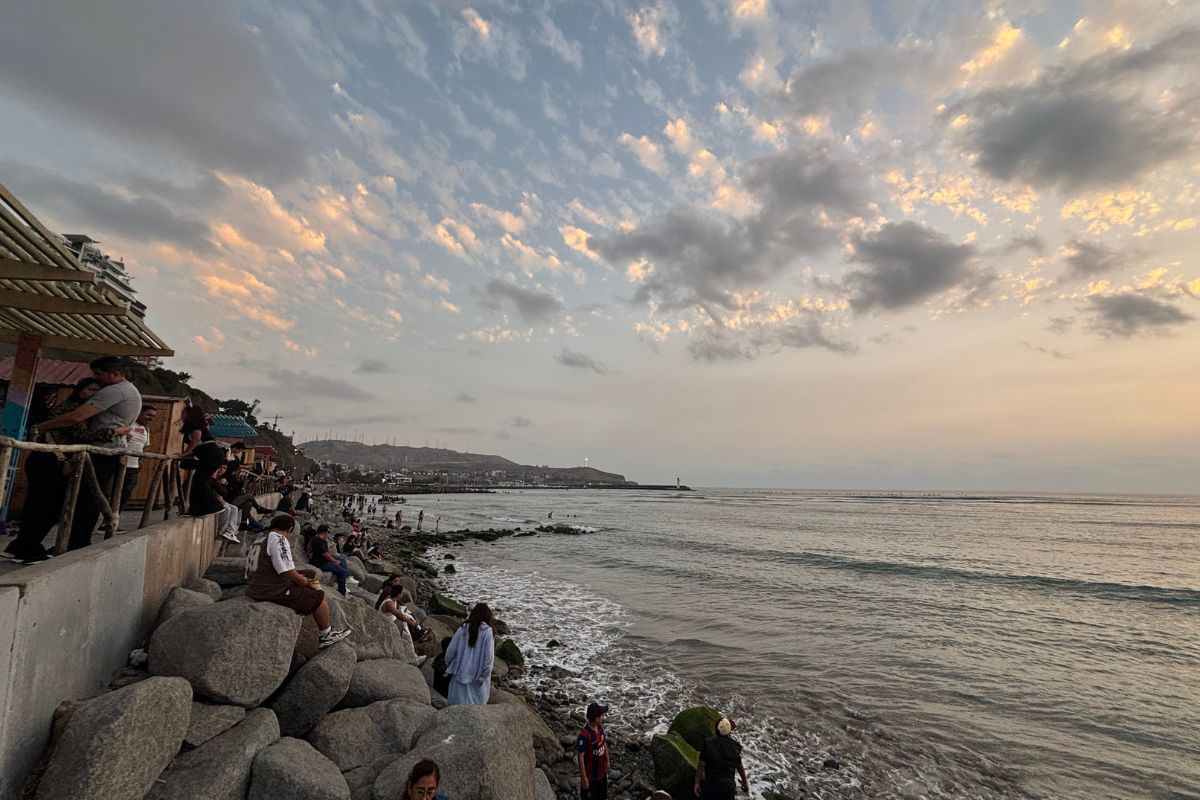
- The walk I’d make time for: Follow Bajada de Baños beneath the bridge and downhill toward the Pacific.
- How long to allow: A couple of hours for the main landmarks; at least half a day to wander, stop for coffee, and enjoy a meal.
- Getting here: From Miraflores, take a taxi or rideshare if you’d rather save your walking energy for Barranco itself.
- Would I stay here? Yes—next time. I’ve visited repeatedly, but I want to experience its quieter mornings and make the neighborhood part of my stay.
Getting to Barranco
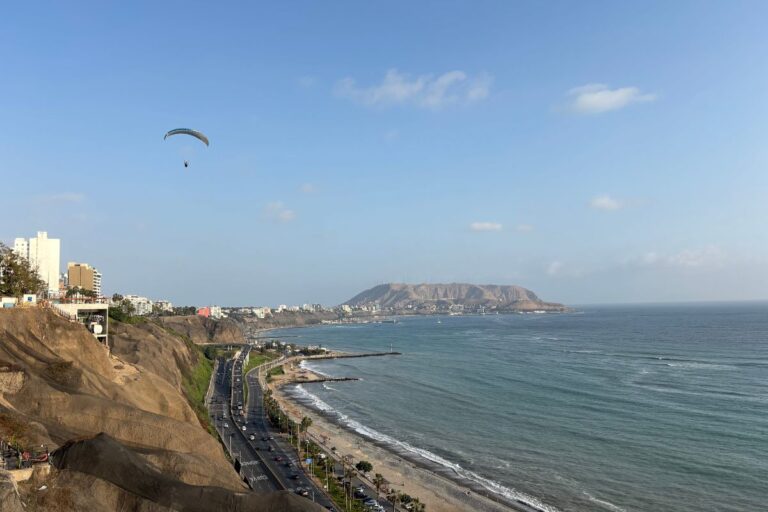
If you’re staying in Miraflores, getting to Barranco is easy. From around Larcomar, you’re looking at roughly a 30-minute walk to central Barranco.
You absolutely can walk it. We didn’t.
After already spending about an hour walking the Malecón, stopping for photos, water and ice cream along the way, we decided to grab a ride instead. And I don’t feel like we missed anything by doing that. The walk between the two neighborhoods isn’t the attraction. I’d rather save my walking energy for Barranco itself.
Use Uber, InDrive or grab a taxi to get yourself into the heart of Barranco, and then walk. Once you’re here, this is absolutely a neighborhood you want to experience on foot.
I’ve felt comfortable walking around the central areas we’ve explored, but the same common-sense precautions I’d use elsewhere in Lima still apply: keep your belongings secure and be mindful when using your phone on the street.
Why Barranco Feels So Different From Miraflores
Miraflores and Barranco border one another, but they don’t feel interchangeable. Miraflores is modern, polished and increasingly vertical. Barranco still feels much more intimate and low-rise.
Some of that difference is historical. Barranco developed as a seaside retreat in the 19th century, eventually filling with ranchos, casonas and other homes that helped establish the neighborhood’s architectural character. Today, much of its historic core is protected as a Monumental Zone, with building-height and preservation rules designed to maintain that older streetscape.
That helps explain what you’re seeing as you walk around. Historic buildings sit alongside murals, restaurants, bars and independent businesses rather than disappearing completely beneath towers. One street can feel quiet and residential while another is filled with people eating, drinking or listening to music.
It’s the kind of neighborhood where wandering without much of an itinerary becomes part of the attraction. On previous trips, Barranco has always been somewhere we went. Next time, I want it to be somewhere I stay.
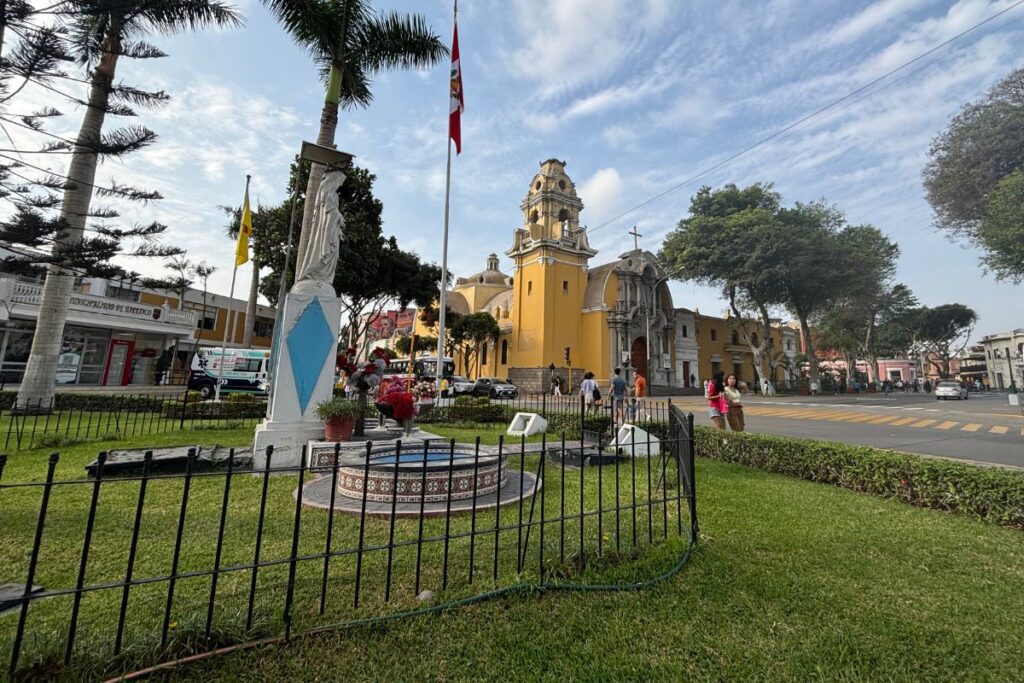
Plaza de Barranco and Iglesia Santísima Cruz make an easy starting point for exploring the heart of the neighborhood.
Walking Through the Heart of Barranco
For a first visit, Plaza de Barranco is an easy place to start, but don’t think of this as a strict walking route. Iglesia Santísima Cruz sits along the plaza, while restaurants, cafés and some of Barranco’s most visited streets are within a short walk.
More importantly, Barranco rewards detours. Don’t spend your entire visit moving directly between pins on Google Maps. This is one of those neighborhoods where the streets between the attractions are part of what you came to see.
Puente de los Suspiros
Yes, the Bridge of Sighs is touristy. And yes, you should still go.
Puente de los Suspiros is one of Barranco’s signature landmarks, but it wasn’t originally built as a romantic tourist attraction. The wooden bridge dates to 1876 and was constructed to connect the two sides of the ravine running through Barranco. It was damaged during the War of the Pacific and rebuilt afterward, with additional repairs and restorations taking place over the years.
And I happened to visit during one of them.
When I first visited Barranco during this trip, Puente de los Suspiros was still closed for restoration. You could explore the surrounding area and Bajada de Baños, but the bridge itself was blocked off.
I already wanted to return to Barranco before leaving Lima. Our first visit had been later in the day, and I wanted to come back specifically to see—and photograph—the neighborhood during daylight. Then, just before I went back, I heard the bridge had reopened.
Perfect timing.
Puente de los Suspiros reopened in August 2026 after approximately six months of restoration work that included replacing deteriorated wooden elements, reinforcing the structure and installing new lighting. Within the same trip, I managed to see Barranco with its most famous landmark closed and then return just after it reopened.
There’s also a tradition worth knowing before your first crossing: make a wish, take a breath and try to walk from one end of the bridge to the other without breathing. If you make it across, your wish is supposed to come true.
The bridge has been part of Barranco for 150 years and has become part of Peru’s cultural identity, including through the music of Peruvian composer Chabuca Granda. So yes, you’ll probably find plenty of other visitors taking photos here. But this isn’t a tourist attraction that was built for tourists.
And if it’s your first visit? Hold your breath. You might as well make the wish.
La Ermita: The Church Connected to Barranco’s Origin Story
Right beside Puente de los Suspiros sits La Ermita, one of the neighborhood’s most historically important buildings—and, according to local legend, part of Barranco’s origin story.
The story dates to the 18th century, when fishermen working off the coast became disoriented in Lima’s heavy fog. They supposedly spotted a bright light coming from a cross and followed it safely back to shore. The site became somewhere fishermen went to pray for protection before heading to sea.
Later, a baker named Caicedo and his seriously ill wife are said to have prayed at the same spot. When she recovered, he built a small chapel there in gratitude. Over time, a community developed around it—the community that eventually became Barranco.
La Ermita has survived plenty since then. It was damaged during the War of the Pacific and again during Lima’s 1940 earthquake. When I visited in 2026, the church was undergoing another major restoration, so this is one place where I’d check the current status before your visit.
It’s worth seeing regardless. La Ermita, Puente de los Suspiros and Bajada de Baños are so intertwined with Barranco’s history that this entire little pocket of the neighborhood makes more sense once you understand how they connect.
Bajada de Baños: Follow the Old Ravine Toward the Pacific
Directly underneath Puente de los Suspiros is Bajada de Baños, and this isn’t simply a pretty pedestrian path that happens to lead downhill.
The route follows what was originally a natural ravine used by fishermen traveling toward Barranco’s beaches. Over time, buildings developed alongside it and the ravine evolved into the pedestrian route you see today. Even the name is wonderfully literal: Bajada de Baños essentially means the descent to the baths, reflecting the route’s historic connection to the old baths and the Pacific.
Today, you can follow it downhill toward the Costa Verde and beach level. And this is one of the biggest reasons I want to actually stay in Barranco rather than simply visit it again.
I’ve seen Barranco when it’s lively, with tourists and locals filling the streets, restaurants open and people stopping for photos around the bridge. Next time, I want to see this part of the neighborhood early.
I want to wake up at a boutique hotel, grab a coffee and follow Bajada de Baños toward the Pacific before Barranco really gets going for the day.
The route itself isn’t some enormous hike that requires half your morning. That’s exactly the appeal. It’s simply a historic pedestrian path connecting the heart of Barranco with the coast—the kind of neighborhood walk that’s much easier to appreciate when you aren’t arriving with a sightseeing checklist and watching the clock.
That’s the Barranco experience I feel like I haven’t had yet.
Street Art, Architecture & Wandering Barranco
Some neighborhoods are easier to explore as a list of attractions. Barranco isn’t one of them.
Yes, there are things you should see, but so much of the neighborhood’s appeal comes from what happens between those places: murals, colorful buildings, historic homes, restaurants, tiny businesses and streets you weren’t necessarily planning to walk down.
The street art isn’t entirely accidental, either. Barranco has a long-established artistic identity, with galleries, artists and workshops woven into the neighborhood, while Lima’s modern mural movement has increasingly treated the street itself as a public gallery and a place for artists to communicate with the people walking past. Barranco feels like a natural home for that kind of art.
And that makes wandering part of the experience. You don’t need every mural marked on Google Maps before you arrive, and you don’t need to know exactly where every interesting building is.
Part of the fun is finding them.
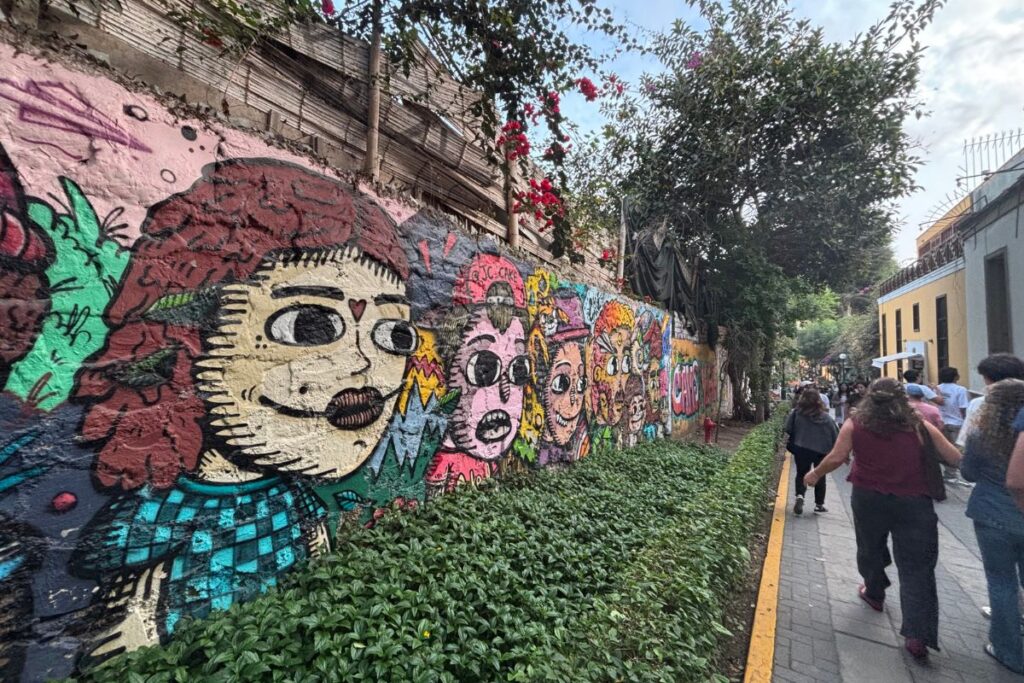
Murals appear throughout Barranco, turning an ordinary walk through the neighborhood into part of the sightseeing.
Shopping & La Feria Unión de Barranco
Barranco has galleries, boutiques, markets and independent businesses scattered throughout the neighborhood. I didn’t spend this trip deliberately seeking out Peruvian fashion or design stores, so I’m not going to give you a list of shops I haven’t actually visited.
Instead, I’d approach shopping here the same way I’d approach Barranco generally: see what you stumble across.
One place we did visit was La Feria Unión de Barranco. This was my first time here, and while I wouldn’t arrive expecting a huge traditional artisan market filled exclusively with handmade Peruvian goods, it was still a fun stop.
It’s relatively small, with a mixture of vendors and food, and there was even live music when we visited. And did the food smell delicious. If we hadn’t just come from dinner, I absolutely would have tried some of it.
I’d think of La Feria as somewhere to pop into while you’re already wandering Barranco rather than an attraction I’d cross Lima specifically to visit.
That’s also what I like about it. It can simply become part of your evening.
How Much Time Do You Need in Barranco?
You can see Barranco’s biggest landmarks in a couple of hours. Start around Plaza de Barranco, walk across Puente de los Suspiros, see La Ermita and follow Bajada de Baños before wandering some of the surrounding streets.
But if you have the time, I’d give Barranco at least half a day. That gives you enough room to see the main sights, look for street art, stop for coffee or drinks, visit La Feria if it’s open and have a meal without constantly checking the clock.
A full day lets you slow down even more. Start while there’s plenty of daylight, wander toward the coast, stop when something catches your attention and stay into the evening.
Barranco doesn’t need a packed attraction-by-attraction itinerary to fill your time.
That’s kind of the point.
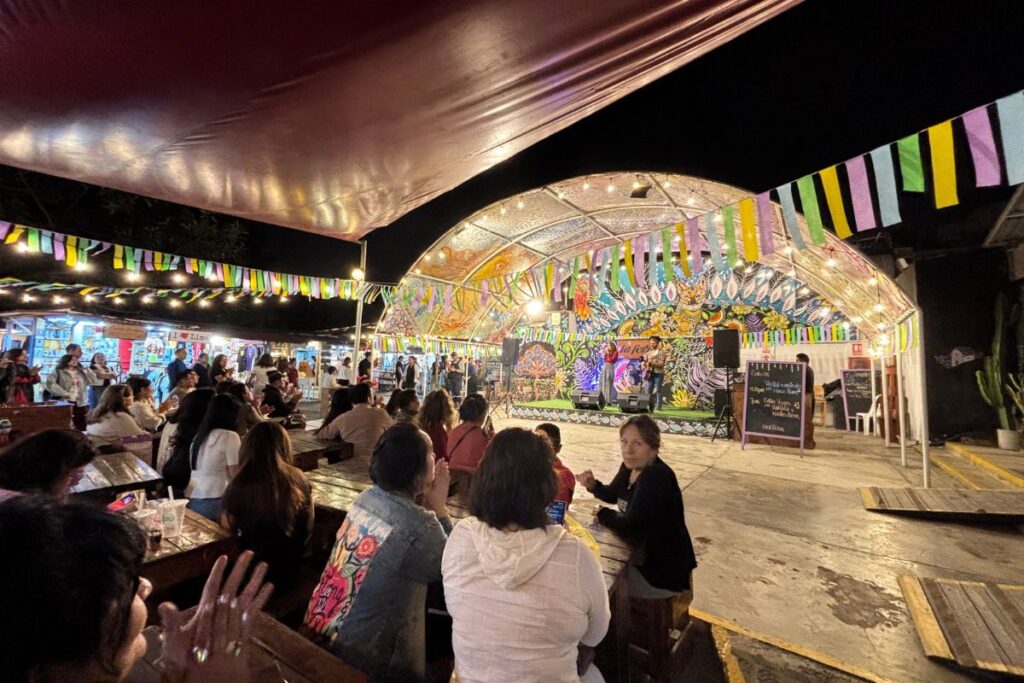
La Feria Unión de Barranco shows a livelier side of the neighborhood after dark, with food, shopping and live entertainment in one space.
Should You Stay in Barranco or Miraflores?
For a first trip to Lima, I still think Miraflores is the easier home base. You’ll have international hotel chains, more opportunities to use points, familiar amenities and a neighborhood that makes getting settled into Lima relatively simple.
But if you’re coming back to Lima—or spending enough time here that you want your neighborhood itself to become part of the experience—I’d seriously consider Barranco.
That’s where my own thinking has changed.
I’ve already visited Barranco. I’ve seen the bridge, walked its streets, photographed the murals and come back at different times of day. What I haven’t done is experience the neighborhood without feeling like I’ve come to Barranco for the day.
I want the quiet morning walk toward the ocean. I want to find the boutique hotel I’d recommend to someone coming back to Lima. I want more meals chosen because something smelled too good to walk past. And I want enough time that wandering down the wrong street doesn’t feel like I’m getting behind schedule.
Miraflores is where I’d send you on your first trip. Barranco is where I want to unpack my suitcase next time.
Continue Exploring Peru
- Where to Stay in Barranco — Prefer the idea of waking up in Barranco? These are the hotels I’d consider for experiencing the neighborhood beyond a day visit.
- Why I Stopped Rushing Through Lima — Read why I’ve come to appreciate giving the capital more breathing room.
- Cusco Is Not Just a Base for Machu Picchu — Discover why Cusco also deserves attention as a destination of its own.
- What to Eat and Buy in Arequipa — Continue exploring Peru through markets, regional food, and souvenirs.