Santiago Was Just the Beginning of My Chile Trip
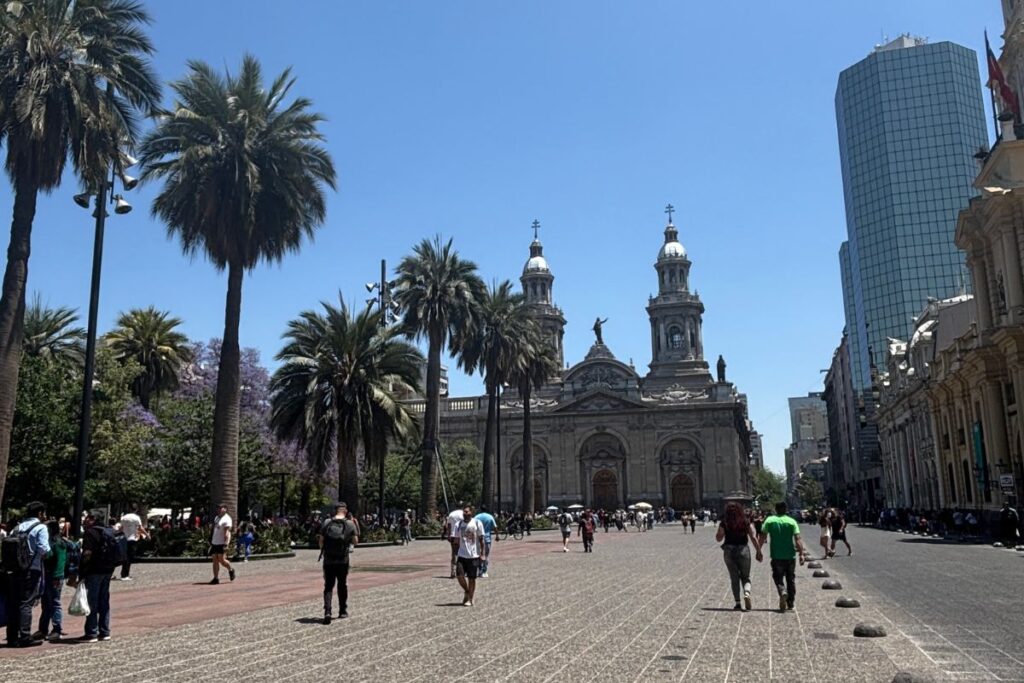
In 5 Day Trips to Add to Your Montevideo Itinerary, I shared how Uruguay’s capital served as an excellent base for exploring beyond the city itself. Santiago offered that same flexibility, but before venturing to Chile’s coast or the Andes, I discovered a capital city that deserved far more of my time than I had originally planned.
Before I booked a single hotel, the map told me everything I needed to know. Chile stretches for nearly 2,650 miles from north to south, about the same distance as traveling from San Francisco to New York City. There was no chance I was going to “see Chile” in one week.
Patagonia, the Atacama Desert, wine country, the Lake District, and Easter Island all deserved trips of their own. Rather than trying to see everything, I spent six days using Santiago as my base, adding two day trips and treating this as my introduction to Chile.
Ironically, the part of Chile I expected to be little more than a starting point became one of my favorite capital cities in South America.
Why Santiago Immediately Felt Different
Before my walking tour even began, Santiago had already made an impression.
Making my way to the meeting point that morning, I crossed one of the city’s major avenues alongside what felt like hundreds of commuters. Traffic filled the streets, people hurried across the crosswalks in every direction, and once I reached the other side, I found myself on a busy pedestrian street lined with banks, cafés, pharmacies, and local businesses. It wasn’t a scene designed for visitors, it was simply a normal weekday morning in downtown Santiago.
That first walk shaped the way I experienced the rest of the city. While Santiago has no shortage of attractions, they never felt separated from everyday life. Office workers, students, shoppers, and tourists all seemed to share the same spaces, giving the city an energy that felt authentic rather than curated.
I didn’t feel like I had arrived in a historic district that existed primarily for sightseeing. Instead, I felt like I had stepped into a city that happened to have incredible museums, viewpoints, parks, and neighborhoods woven into the routines of the people who live there.
By the end of my trip, I realized that was what I appreciated most about Santiago. It was welcoming and easy to explore, but it never felt like it was performing for visitors. Instead of spending six days moving from one attraction to the next, I felt like I was experiencing a capital city exactly as it was meant to be experienced.
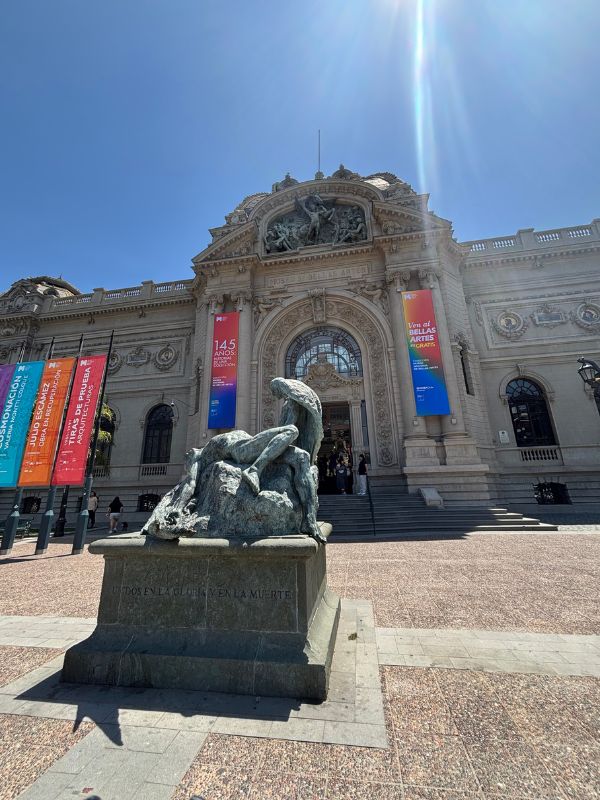
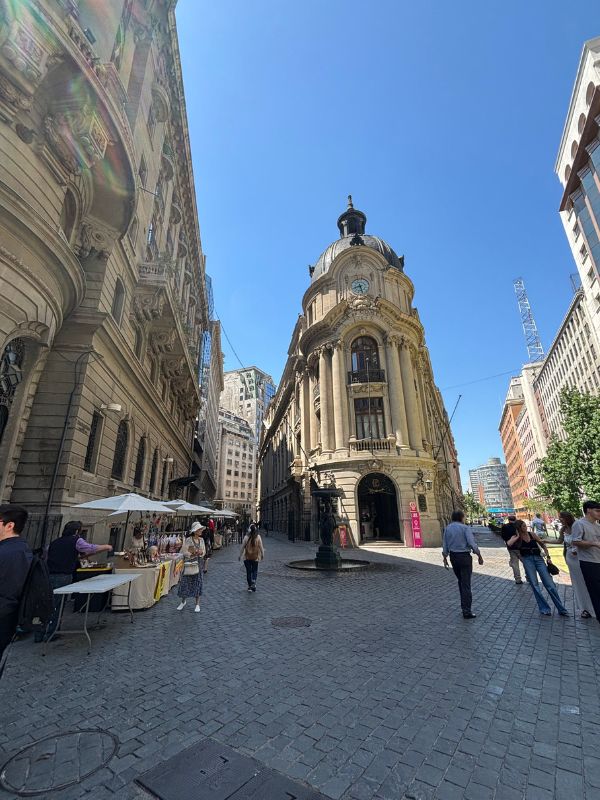
Beginning with a walking tour helped connect Santiago’s grand architecture, lively plazas, and historic streets into a city that offered far more than just a stop on the way to the rest of Chile.
My First Day Exploring Santiago
There’s no better introduction to Santiago than exploring it on foot, and that’s exactly how I spent my first full day. I joined a free walking tour that began in the heart of downtown before weaving through many of the city’s most important landmarks.
From the meeting point, we made our way toward Plaza de Armas, the historic center of Santiago. Along the way, our guide pointed out details I almost certainly would have walked past on my own, adding historical context that transformed ordinary buildings into stories about Chile’s past. The route took us through Paseo Ahumada, one of Santiago’s busiest pedestrian streets, before arriving at the plaza, where the Metropolitan Cathedral and surrounding colonial architecture have stood for centuries.
From there, we continued south toward La Moneda Palace, following sections of Avenida Libertador Bernardo O’Higgins, better known locally as La Alameda. Today, the palace serves as Chile’s presidential offices, but it is also one of the country’s most historically significant buildings. Hearing its history while standing outside gave me a much deeper appreciation than simply reading an information plaque on my own.
What I appreciated most about the tour was that it struck the right balance between history and exploration. Rather than memorizing dates or names, I came away with a better understanding of how Santiago had developed over the centuries and enough context to confidently continue exploring on my own.
After the tour ended, I wasn’t quite ready to call it a day. Instead, I made my way toward Cerro San Cristóbal, one of Santiago’s most recognizable landmarks. I expected to spend an hour or two enjoying the views before heading back to my hotel. As it turned out, the hill had much more to offer than I anticipated.
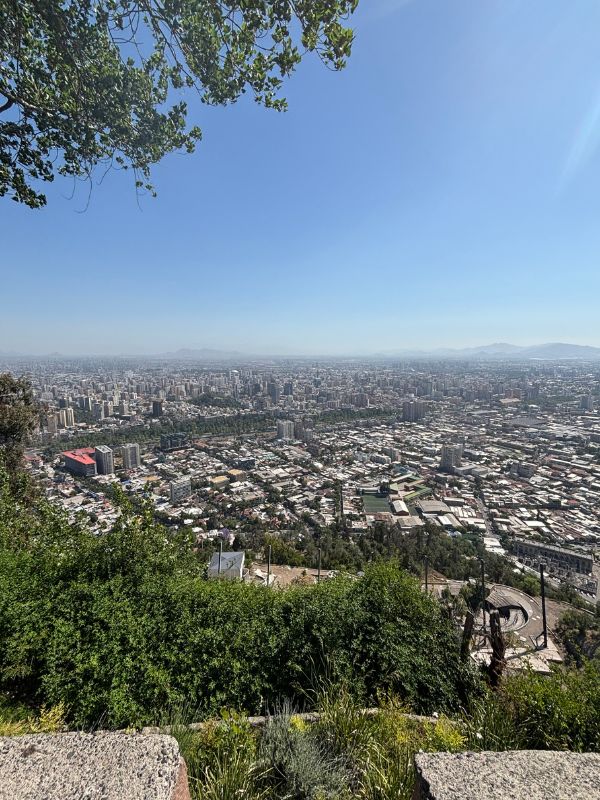
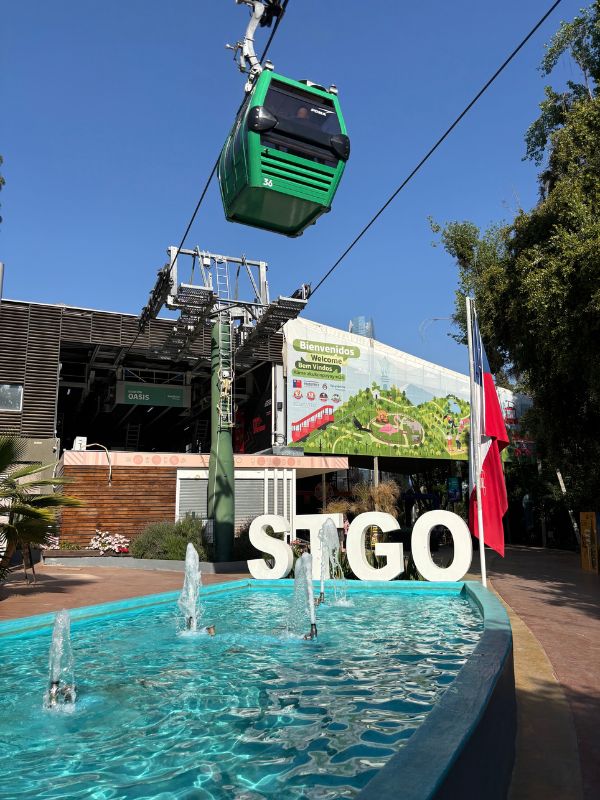
From the panoramic views atop Cerro San Cristóbal to the iconic funicular and cable car, Santiago’s hills quickly became one of my favorite ways to experience the city beyond its streets.
Seeing Santiago from Above
Santiago is a city best appreciated from above, and its two most famous hills offer completely different experiences.
Cerro San Cristóbal is the larger and more famous of the two. Before my trip, I assumed it was simply one of Santiago’s best viewpoints. What I didn’t realize was that the summit is just one part of Parque Metropolitano de Santiago, one of the largest urban parks in Latin America.
The most iconic way to reach the top is aboard the historic Funicular de Santiago, which has been carrying visitors up the hillside for nearly a century. At the summit, panoramic views stretch across Santiago toward the Andes, with the Statue of the Immaculate Conception overlooking the city below.
What surprised me most wasn’t the view, it was the park itself. Beyond the summit, Parque Metropolitano offers miles of walking and cycling paths, gardens, attractions, and green spaces that make it easy to spend half a day exploring. If you enjoy being active while traveling, budget far more time here than I initially did.
Cerro Santa Lucía offers a completely different experience. Considered the birthplace of Santiago, it was here that Pedro de Valdivia founded the city in 1541 before the hill was transformed into the landscaped park visitors enjoy today.
Winding stone staircases pass terraces, fountains, gardens, and historic fortifications, making the climb feel as much like exploring a historic monument as a city park. While the viewpoints aren’t as expansive as those from Cerro San Cristóbal, the combination of history, architecture, and beautifully preserved public spaces makes Cerro Santa Lucía equally worthwhile.
Together, the two hills showcase different sides of Santiago: Cerro San Cristóbal highlights the city’s scale and its dramatic Andean setting, while Cerro Santa Lucía tells the story of where Santiago began. If your itinerary allows, I’d make time for both.
Travel Breakdown Tip: Don’t treat Cerro San Cristóbal as a quick viewpoint. Between the historic funicular and everything Parque Metropolitano has to offer, it’s easy to spend half a day exploring.
Choosing Where to Stay in Santiago
When I first started researching where to stay in Santiago, I was surprised by how expansive the city is. I’m used to destinations where two or three neighborhoods dominate every hotel recommendation, but Santiago has several areas that consistently appear as great options for visitors.
For my trip, I split my stay between two hotels. I found excellent award availability at the Hyatt Place Santiago/Vitacura, although I didn’t have quite enough Hyatt points to cover my entire stay. Similar to what I did in Montevideo, I decided to switch hotels partway through my visit, which gave me the opportunity to experience two different parts of the city.
Located in Vitacura, the Hyatt sits in one of Santiago’s most upscale neighborhoods. The area is known for its wide avenues, modern office buildings, shopping centers, and newer hotels, making it a popular choice for both business and leisure travelers. I found it to be clean, safe, and comfortable, but it also felt a little disconnected from the parts of Santiago I enjoyed exploring most.
Explore Hyatt Place Santiago/Vitacura and check current rates →
My second hotel, the Four Points by Sheraton Santiago, is located in Providencia, a more established neighborhood that’s closer to the historic center while still offering excellent restaurants, shops, and Metro access. The hotel itself didn’t have quite the same modern feel as the Hyatt, with its high-rise tower and large windows, but I’d prioritize location here. Looking back, Providencia is probably where I’d stay again. It felt more connected to the city without sacrificing convenience, and I enjoyed the atmosphere far more than I expected.
That said, Santiago’s Metro system made getting around remarkably easy regardless of where I stayed. As long as your hotel is within walking distance of a Metro station, I don’t think you’ll have much trouble reaching the city’s major attractions.
Explore Four Points by Sheraton Santiago and check current rates →
Travel Breakdown Tip: Don’t get too caught up in finding the “perfect” neighborhood. Santiago is a large city, but its excellent Metro system makes it easy to explore from almost anywhere. I’d prioritize a hotel near public transportation over trying to stay within walking distance of every attraction.
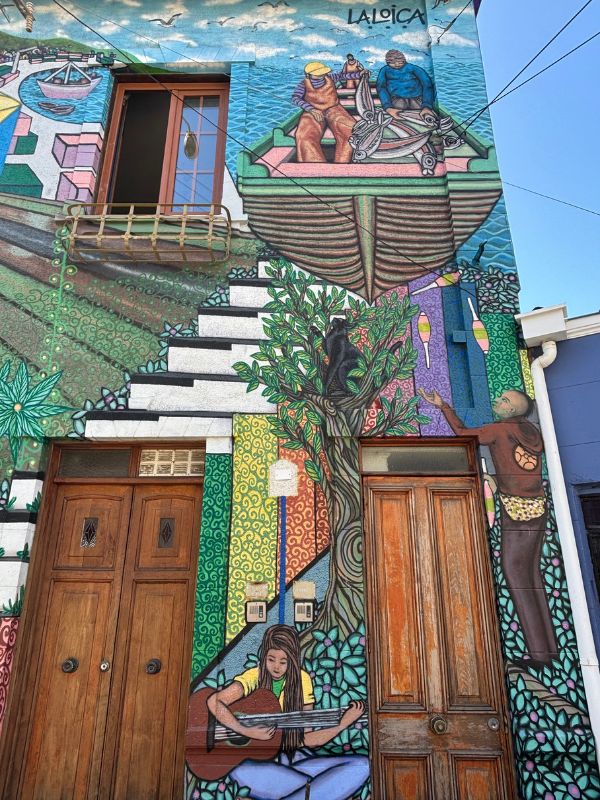
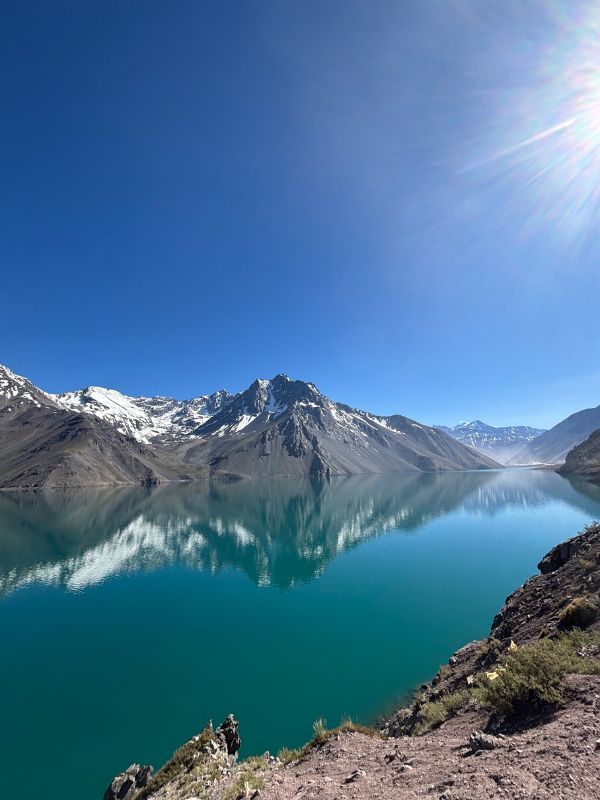
Santiago made it easy to experience both city life and the landscapes beyond it, with colorful Valparaíso, the Pacific coast, and the Andes all close enough to become memorable day trips.
Beyond the Capital
While Santiago easily filled several days of my itinerary, I also wanted to experience a little more of central Chile before continuing south. Rather than renting a car or piecing together public transportation, I booked two guided day trips. For a shorter itinerary like mine, they were affordable, easy to arrange, and let me focus on enjoying the Santiago made it easy to experience both city life and the landscapes beyond it, with colorful Valparaíso, the Pacific coast, and the Andes all close enough to become memorable day trips. destinations instead of worrying about logistics.
My first excursion took me to Valparaíso and Viña del Mar along Chile’s Pacific coast. Although the two cities sit side by side, they couldn’t feel more different. Valparaíso is famous for its colorful hillsides, vibrant street art, and maze of steep staircases, while Viña del Mar offers a more polished atmosphere with oceanfront parks, beaches, and wide coastal boulevards. What made the experience especially memorable was having a guide explain Valparaíso’s history as one of South America’s most important port cities, giving me a much deeper appreciation for the neighborhoods I was walking through than I would have had exploring on my own.
A few days later, I traded the Pacific coastline for the Andes on a tour to Cajón del Maipo and Embalse El Yeso. The drive itself was part of the experience, winding through mountain valleys before opening up to the brilliant turquoise waters of the reservoir surrounded by snow-capped peaks. Before returning to Santiago, our group enjoyed a riverside picnic with local Chilean wine, making it one of the most relaxing afternoons of my entire trip.
Those two excursions couldn’t have been more different, yet together they reinforced why Santiago is such an excellent base for exploring central Chile. In just two day trips, I experienced colorful port cities on the Pacific and dramatic mountain scenery in the Andes, without ever changing hotels. If your itinerary allows, I’d strongly recommend setting aside at least one day to venture beyond the capital.
Travel Breakdown Tip: Guided day tours are an excellent option if you’re visiting Santiago for less than a week. They’re reasonably priced, eliminate the hassle of transportation, and make it easy to experience a completely different side of Chile without changing hotels.
Final Thoughts
Before arriving in Chile, I viewed Santiago as the starting point for a much bigger adventure. After six days exploring the city, riding the funicular up Cerro San Cristóbal, wandering Cerro Santa Lucía, and taking two unforgettable excursions beyond the capital, I left realizing Santiago had become a destination in its own right.
At the same time, my visit reinforced what I had suspected from the very beginning: there is simply too much to experience in Chile to fit into a single trip. Patagonia, the Atacama Desert, the Lake District, and Easter Island still remain on my list, and I have no doubt I’ll be back to explore them someday.
If you’re planning your first trip to Chile, don’t make the mistake of treating Santiago as nothing more than a gateway. Give yourself enough time to enjoy the city, venture beyond the capital, and let it become the introduction to a country that will almost certainly leave you wanting more.
Next Up: The Best Day Trips from Santiago, Chile
Santiago makes an excellent base for exploring central Chile, but deciding where to spend your limited time isn’t always easy. In the next post, I’ll compare the best day trips from Santiago—including Valparaíso, Viña del Mar, Cajón del Maipo, and more—to help you choose the right excursion for your itinerary.
Continue Exploring
- The Best Day Trips from Santiago, Chile — Use Santiago as a base to explore beyond the capital, from the colorful streets of Valparaíso to the vineyards of the Maipo Valley.
- Where to Go in Chile: The Best Regions for Your Trip — Look beyond Santiago and compare the different regions of Chile, from the Atacama Desert to Patagonia.
- El Calafate Was My Introduction to Patagonia—Now I Want More — Cross into Argentine Patagonia and see why Perito Moreno Glacier left me wanting to explore much more of the region.