How Many Days Do You Need on the Amalfi Coast?
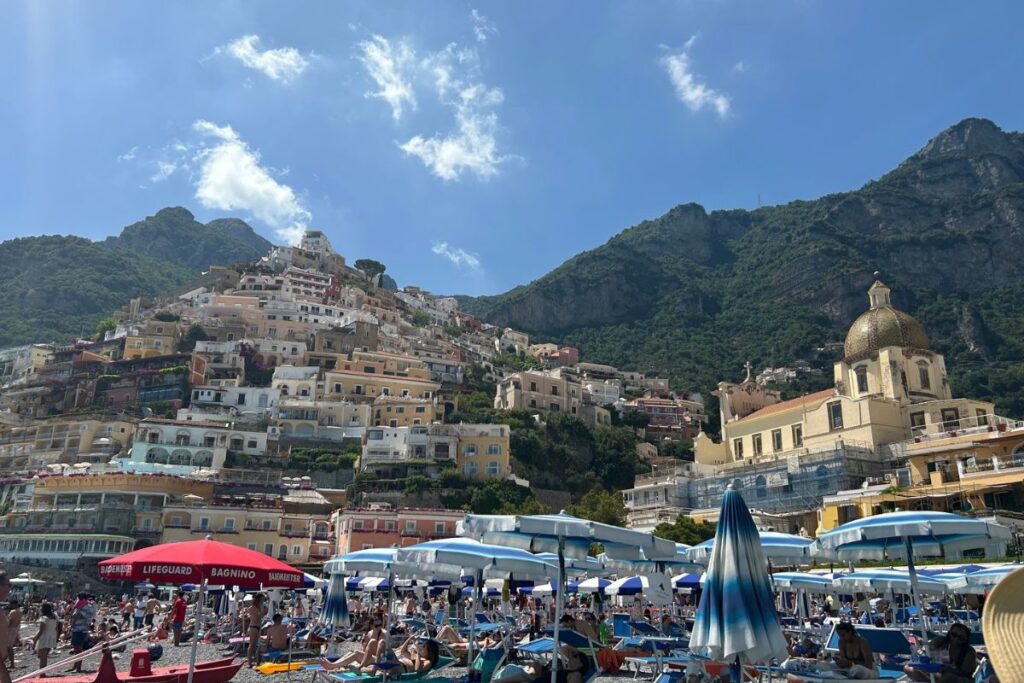
Positano is one of the Amalfi Coast towns I’d give a full day, especially if you want time for both the beach and exploring.
The Amalfi Coast wasn’t completely new to me when I started planning this trip. I first visited while studying abroad in Rome during college, when my program took us south for a trip that included Sorrento, Pompeii, and Capri. Technically, that’s not all the Amalfi Coast, but after returning years later to plan a full trip for my family, I understood why these destinations are so often grouped together when travelers plan this part of Italy.
The Amalfi Coast itself looks deceptively compact on a map. Towns sit only a few miles apart, making it easy to assume you can hop between several of them in a single day. In reality, winding coastal roads, ferry schedules, stairs, crowds, and transportation delays can make getting around much slower than those distances suggest.
On this trip, we spent six nights based in Maiori, using it to explore the coast and several surrounding destinations. That experience completely changed how I think about how much time you actually need here.
Rather than giving you another rigid day-by-day itinerary, I’m breaking down how much time I’d actually give the towns and day trips we experienced and what I’d keep in mind when deciding which ones deserve a place in your trip.
My quick answer: Plan at least 4 full days for your first Amalfi Coast trip. 5–6 days is better if you want to add Capri or Pompeii and still have time to slow down. With only 2–3 days, choose one home base and focus on a few coastal towns rather than trying to see everything.
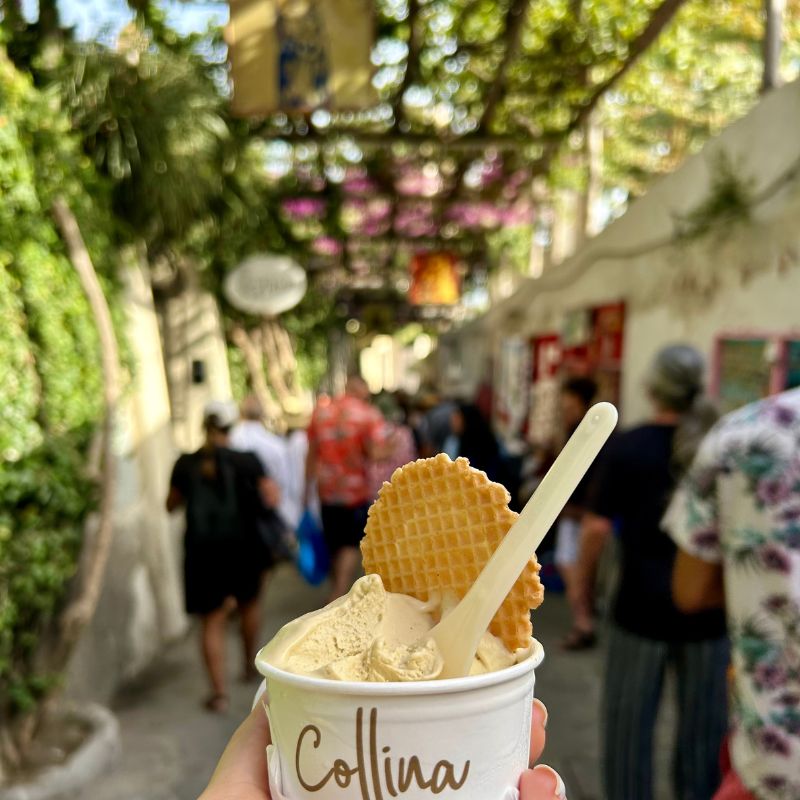
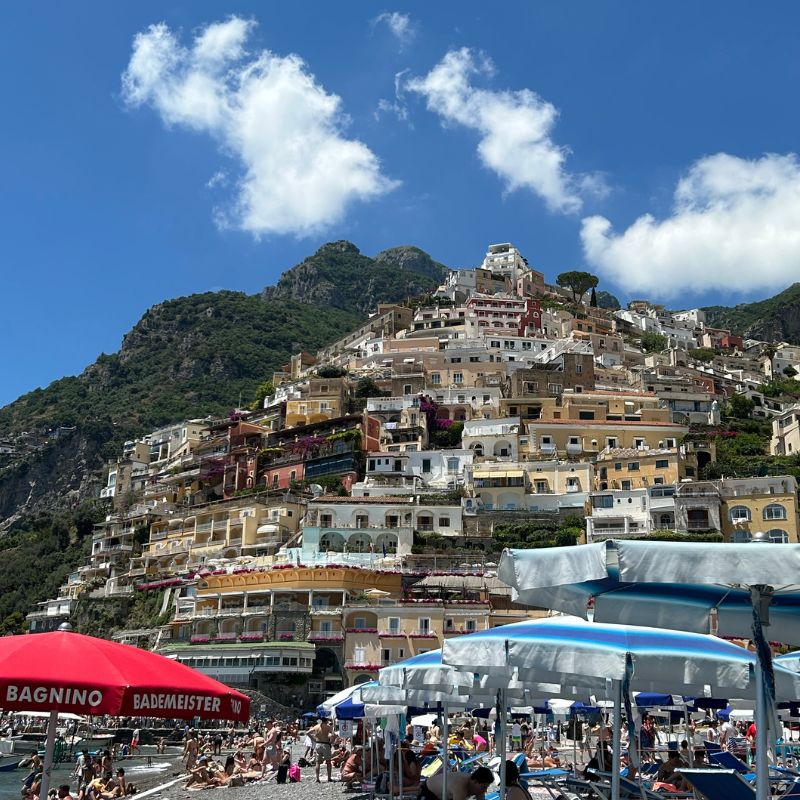
Positano can easily fill an entire day. We split our time between the beach, wandering the streets, shopping, and stopping for plenty of food along the way.
Positano: Give It a Full Day and You Still Won’t See Everything
Positano is the iconic Amalfi Coast town, and if you’re not staying overnight, I would give it an entire day. Even that may not feel like enough time.
I absolutely loved arriving in Positano by ferry. You get that classic view of the colorful buildings climbing up the hillside before you’ve even stepped off the boat, and some of my favorite photographs came from seeing Positano from the water. But when you’re visiting for the day, transportation dictates how much time you actually have. Check the ferry schedule when you buy your tickets and know when the last one leaves. You do not want to find yourself stranded after the final departure.
It also helps to know what you actually want from Positano before you arrive. Do you want to wander the streets, shop, stop for lunch, and see as much of the town as possible? Or is part of the dream spending several hours looking back at Positano from a beach chair? Both are great ways to spend the day, but fitting everything into one visit is harder than it sounds.
Our own day got off to a rocky start. A bus delay disrupted our plans, and we didn’t arrive until closer to lunchtime. Positano was my sister’s one bucket-list destination for our family trip, and what she really wanted was time to relax on the beach with that famous view in front of us.
Even that requires some planning. There are several beach clubs around Positano, from options along Spiaggia Grande to more secluded clubs that require a boat ride. It’s worth comparing prices and deciding what kind of experience you want before committing. I don’t remember our exact cost, but we spent upwards of $150 for four beach chairs, and I don’t even remember whether food was included.
When you’re spending that much for a few hours on the beach, naturally you want to enjoy every minute of it. And we did. After a few hours of sipping Aperol spritzes and eating pizza beside Spiaggia Grande, we finally decided we should probably do a little exploring.
From the beach, Santa Maria Assunta and its colorful tiled dome are right there, but much of Positano stretches uphill behind it. We wandered away from the waterfront through narrow pedestrian lanes and stairways lined with boutiques, ceramics, linen shops, and restaurants.
We were visiting right at the beginning of summer, and Positano was already crowded. We moved slowly, partly because that’s simply how you move through Positano when its narrow pathways are packed. We browsed the shops and gradually worked our way uphill, but never made it particularly high into town.
There was also plenty we didn’t get to. We didn’t visit MAR Positano, the archaeological museum beneath Santa Maria Assunta, or make our way to Fornillo Beach, the smaller beach around the coast from Spiaggia Grande. By then, the last ferry back to Maiori was already in the back of my mind. We could have kept exploring, but I didn’t want our day to end with a rushed scramble back to the waterfront. Eventually, we turned around and headed toward the ferry.
If you’re looking for a more active day in Positano, you may have come across the Path of the Gods. This isn’t a quick hike you squeeze in between shopping and the beach. The classic route is roughly 4.8 miles and takes around three to four hours, beginning in Bomerano in Agerola and ending in Nocelle, high above Positano. From there, you still have to make your way down toward town.
We didn’t hike the Path of the Gods, but it’s another good example of why deciding what you want from Positano matters. If the hike is high on your list, I’d build a substantial part of the day around it. I wouldn’t expect to hike the Path of the Gods and have the leisurely beach-club day we chose without feeling rushed.
If I were going back, I wouldn’t skip the beach club. I loved having that time. But I would arrive as early as possible and give Positano the entire day. Can you see Positano in half a day? Sure. But if you want beach time, a leisurely meal, shopping, wandering farther uphill, and sights like Santa Maria Assunta or MAR Positano, you’re going to have to make choices. We gave Positano most of a day and still left plenty unseen.
How much time I’d give Positano: One full day if you’re visiting from another Amalfi Coast town. Arrive as early as your transportation allows, decide whether beach time, hiking, or exploring is your biggest priority, and work backward from the last ferry or bus home. If Positano is one of the main reasons you’re coming to the Amalfi Coast, I’d seriously consider staying overnight so your entire day isn’t dictated by the trip back.
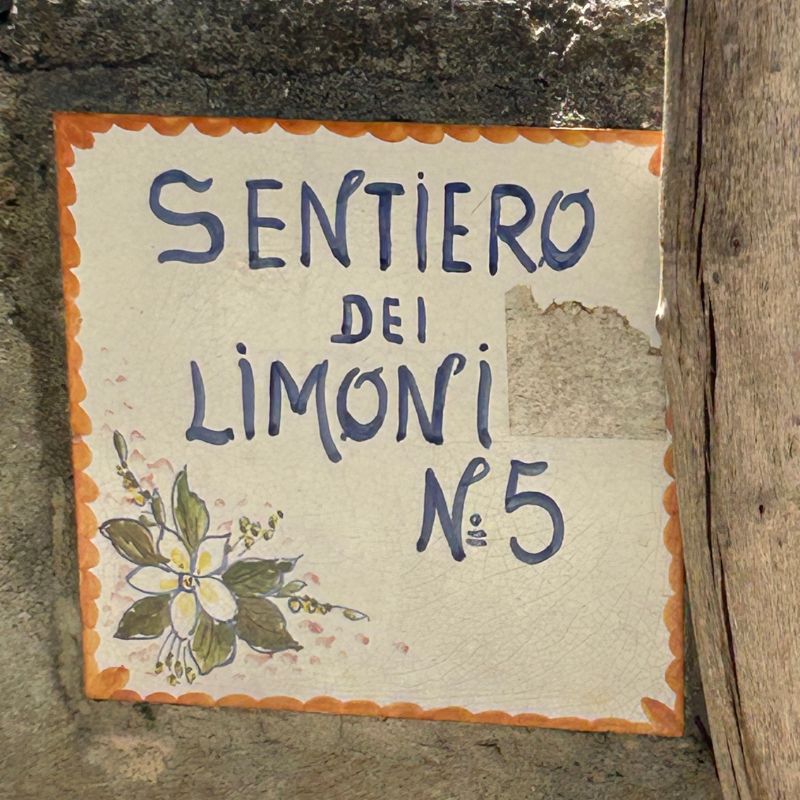

We followed the Path of the Lemons from Maiori through Minori before continuing uphill toward Ravello.
Ravello: Give It at Least Half a Day, Longer If You’re Walking There
Ravello feels different from many of the towns people picture when they think of the Amalfi Coast. Rather than sitting directly along the water, it’s perched roughly 1,200 feet above the Mediterranean. That gives Ravello some of the incredible views it’s known for, but it also means you have to get up there.
The easiest option is the bus, particularly if you’re coming from Amalfi. But if you’re looking for something more active, you can do what we did and turn getting to Ravello into part of the experience.
We set out from Maiori on the Path of the Lemons, a walking trail that winds through the hills and lemon groves between Maiori and Minori. The traditional route ends in Minori, but you can continue from there and climb toward Ravello. Don’t make the same mistake we did and set out late in the morning with the sun already beating down overhead. The Maiori-to-Minori portion isn’t especially technical, but there are plenty of inclines and steps, and continuing uphill toward Ravello makes it considerably more strenuous.
By the time we reached Ravello, sightseeing at full speed was the last thing any of us wanted to do.
Fortunately, Ravello is well suited to slowing down. It felt noticeably quieter than Positano and some of the busier towns along the water. We found somewhere for a long lunch, cooled down with gelato, browsed some shops, and spent the afternoon wandering without much of an agenda.
There is plenty to see if you arrive with more energy than we did. Villa Rufolo sits just off Piazza Duomo and is known for its gardens and coastal views, while Villa Cimbrone has extensive gardens and the famous Terrace of Infinity overlooking the Mediterranean. You can also visit the Duomo di Ravello on the main square. The two villas alone can easily fill several hours if gardens, architecture, and viewpoints are priorities for you.
We didn’t try to cram all of that into the afternoon, and I don’t regret it. After the heat and effort of getting there, a leisurely afternoon in Ravello was exactly what we needed.
If I were planning the day again, I’d either start the walk much earlier or reverse the day entirely. Take the bus up to Ravello, explore while you’re fresh, and then walk downhill toward Minori and Maiori. You’ll still encounter plenty of steps, but you won’t finish a long uphill walk at the exact moment you’re supposed to start sightseeing.
How much time I’d give Ravello: At least half a day if you’re arriving by bus and primarily want to see the town and one of the villas. If you want to visit both Villa Rufolo and Villa Cimbrone, have a leisurely meal, and enjoy Ravello’s slower atmosphere, I’d give it most of the day. If you’re incorporating the Path of the Lemons and the walk from Minori to Ravello, treat the walk as part of the day’s experience, not just transportation between towns.
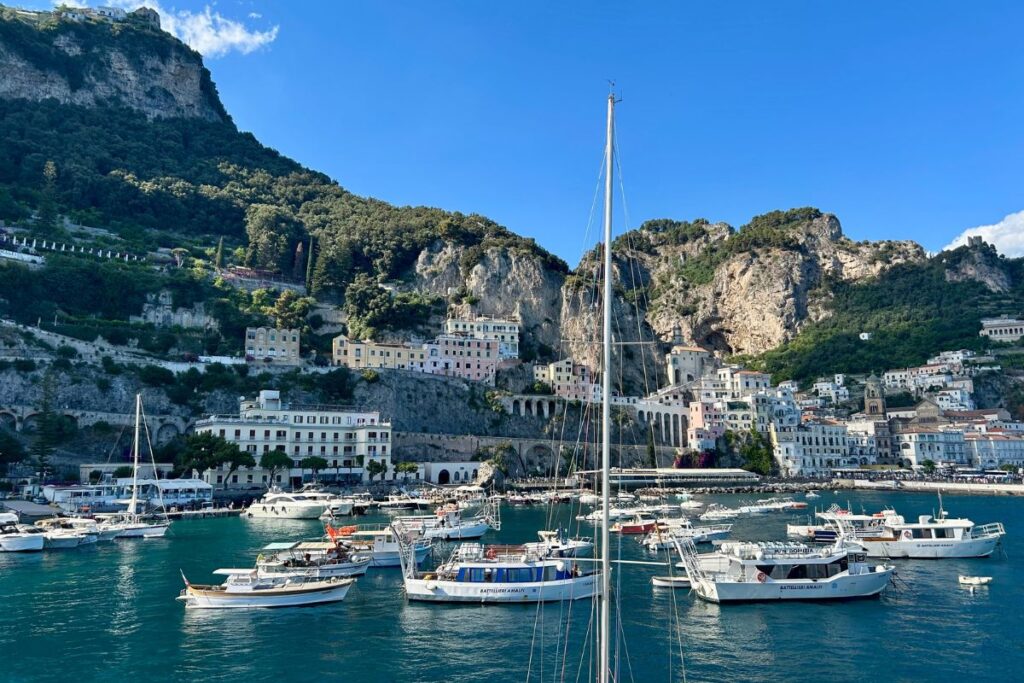
Amalfi: Easy to Visit, Easy to Return To
Where you base yourself on the Amalfi Coast will make some towns much easier to visit than others. For us, that was Amalfi. With Maiori just a short distance down the coast, we could easily take the bus over without feeling like we had to fit everything into one carefully planned visit.
The distance between Maiori and Amalfi is almost comically short on a map, but it’s a perfect example of why mileage doesn’t mean much here. The bus follows the narrow, winding coastal road, and traffic can seemingly come to a standstill when two buses or larger vehicles need to maneuver around each other. It’s another reason I wouldn’t build an itinerary around overly precise travel times.
Amalfi itself is easy to enjoy without a complicated plan. Piazza Duomo is the heart of town, dominated by the dramatic staircase leading up to the Duomo di Sant’Andrea, or Amalfi Cathedral. You can visit the cathedral and its Cloister of Paradise, wander the narrow streets branching away from the piazza, browse the shops, walk along the waterfront, or visit the Museo della Carta to learn about Amalfi’s centuries-old papermaking tradition.
On our first visit, we kept things much simpler. We wandered through town, did some souvenir shopping, and eventually sat down for a long meal at the foot of the cathedral in Piazza Duomo. Amalfi is well suited to that kind of visit. You don’t need a packed sightseeing itinerary to feel like you’ve experienced the town.
And because it was so easy for us to return, Amalfi never had the same this is our one shot feeling as Positano. If we wanted to pass through again or spend another couple of hours there, we could.
That’s why your home base matters when deciding how many days you need on the Amalfi Coast. A town that’s 20 or 30 minutes away doesn’t necessarily need its own dedicated day. Some places naturally become part of several days simply because of where you’re staying.
How much time I’d give Amalfi: About half a day for the town itself. That’s enough time to see the cathedral, wander the historic center, shop, have a meal, and enjoy the waterfront without rushing. If Amalfi is your home base or you’re staying nearby, you may find yourself here more than once anyway, so I wouldn’t feel pressure to fit everything into a single visit.
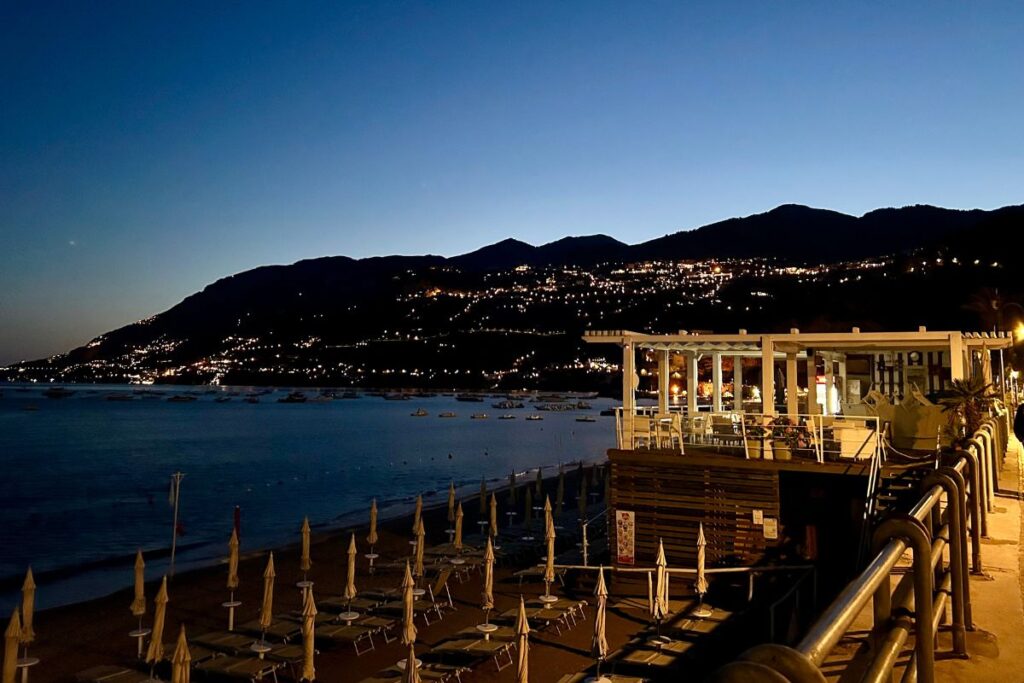
Evenings in Maiori were one of the reasons I loved using it as our home base. After busy days exploring the coast, we could slow down and enjoy the quieter waterfront.
Maiori & Minori: Worth It When You Want to Slow Down
Unless you’re staying in Maiori or Minori, you may not even think about adding these smaller Amalfi Coast towns to your itinerary. And if you only have a few days, I understand why. I wouldn’t skip Positano or Ravello on a first trip just to say you also made it to Maiori and Minori.
But if you have more time or you’re looking for a quieter side of the Amalfi Coast, I wouldn’t overlook them.
We chose Maiori as our home base for six nights because we could get much more for our money than in some of the more famous towns. Just as importantly, we could afford a hotel in the kind of location we wanted. I wasn’t interested in saving money only to climb a hillside every time we came home. In Maiori, we stayed right in town, close to the waterfront, restaurants, and transportation, with a pool at our hotel.
We really enjoyed the slower pace. Maiori has plenty of restaurants and cafés, a long waterfront promenade, and one of the longest beaches on the Amalfi Coast. It doesn’t have the same dramatic vertical scenery as Positano, but that was part of the appeal. We could come back from a busy day elsewhere, have dinner, wander around town, or spend a few hours relaxing without another sightseeing plan.
Minori is even smaller, and we experienced it differently. On our walk from Maiori toward Ravello, we passed through Minori and turned it into a snack stop. We sat down in the piazza for a delizia al limone, one of the lemon desserts this part of the coast is known for, before continuing uphill.
That little stop probably captures how I’d approach Minori. You don’t need to arrive with a list of attractions. Stop for a pastry, wander through town, spend some time near the water, and enjoy being on the Amalfi Coast without fighting through crowds to reach the next must-see sight.
If your Amalfi Coast trip is only three or four days, Maiori and Minori probably aren’t where I’d devote one of those full days unless you’re staying here. But once you get into the five- or six-day range, towns like these are part of the reason the extra time is worthwhile. Not every day needs to be Positano.
How much time I’d give Maiori and Minori: A few hours is enough to get a feel for either town if you’re passing through, and they pair naturally because they’re so close together. But their real value comes from staying nearby or having enough time in your itinerary that every stop doesn’t need to be a major sightseeing day.
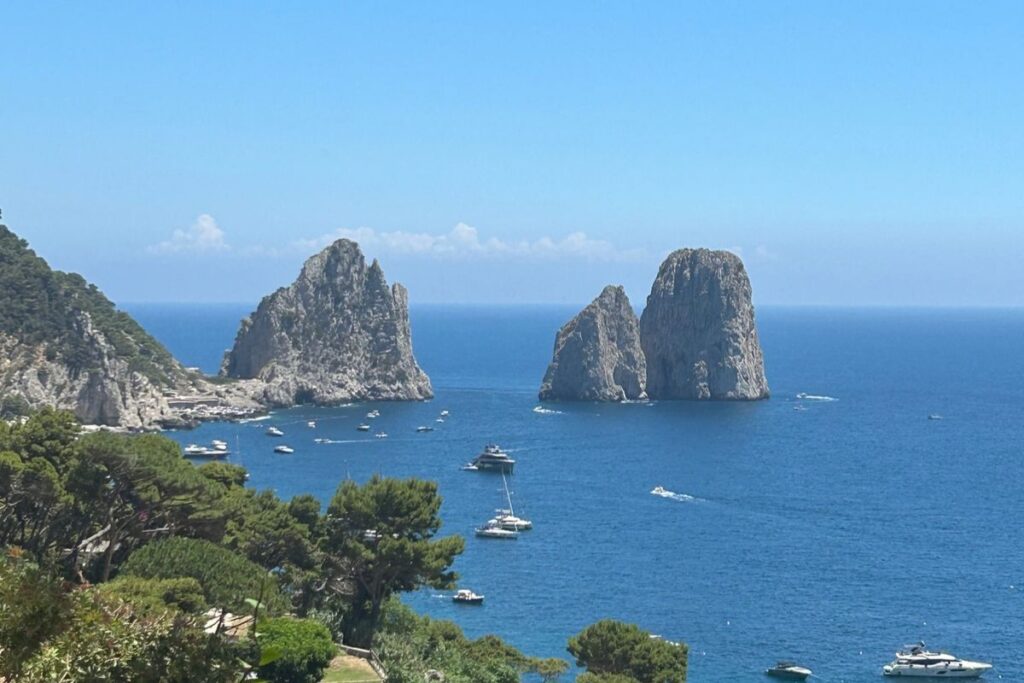
Capri deserves a full day of its own. Some of my favorite moments came from wandering beyond the busy center and finding views like this over the Faraglioni.
Capri: Give It the Entire Day
Of all the places we visited from Maiori, Capri took the longest to reach, and that alone is worth considering when deciding how many days you need on the Amalfi Coast. Capri looks close on a map, but once you account for ferry schedules and travel time in both directions, this isn’t somewhere I’d squeeze into a few spare hours.
There’s also much more to do on Capri than I appreciated before we went. Most ferries arrive at Marina Grande, but that’s really just your starting point. From there, you can take the funicular up to Capri town, where you’ll find the famous Piazzetta, restaurants, cafés, designer stores, and plenty of window shopping.
Some of my favorite parts of Capri came when we wandered away from those main shopping areas. The pathways became quieter, the crowds thinned out, and we saw more of the island beyond the busy center. We eventually made our way toward viewpoints overlooking the Faraglioni, the three dramatic rock formations rising out of the Mediterranean.
And that’s without some of Capri’s other major attractions. You could take a boat tour around the island, visit the Blue Grotto, head to Anacapri, ride the chairlift up Monte Solaro, or visit the Gardens of Augustus. You can build a very different day depending on what interests you most.
Our mistake was thinking Capri didn’t need the entire day. We originally planned to combine it with Sorrento, which sounded perfectly reasonable when I was looking at maps and ferry schedules from home. In reality, adding another destination only put a clock on our time in Capri.
By the time we made our way back down to Marina Grande, we’d had enough rushing around. We found a restaurant near the port, sat down for a delicious meal, and enjoyed the time before our ferry rather than trying to squeeze in one more stop. Looking back, that’s how I would plan Capri from the beginning: as the destination for the day, not one half of a two-stop itinerary.
If Anacapri, Monte Solaro, a boat tour, or the Blue Grotto are high on your list, you could easily justify spending even more time here. But for a first visit from the Amalfi Coast, I’d protect one full day for Capri rather than pairing it with somewhere else.
How much time I’d give Capri: One full day, including transportation to and from the island. Take an early ferry if you can and decide ahead of time which parts of Capri matter most to you. There’s more than enough here to fill the day without tacking Sorrento onto it.
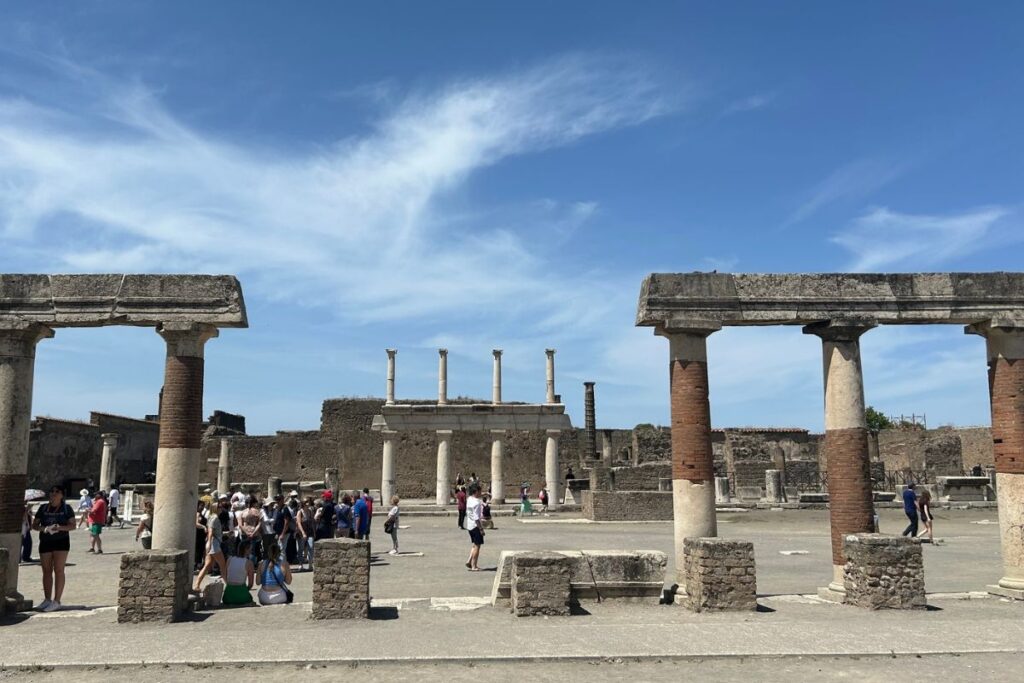
Pompeii can take up most of a day once you factor in transportation and time exploring the archaeological site, so I’d save it for a longer Amalfi Coast trip.
Pompeii: Add a Day Only If You Have the Time
Pompeii isn’t part of the Amalfi Coast, but it makes for a feasible day trip if you’re spending longer in the area. That’s how we chose to visit it, although if there’s one thing this trip taught me, it’s to be prepared for transportation plans to change.
A train strike threw off our plans that morning and forced us to find another way to Pompeii. One very expensive taxi ride later, we finally arrived and had a wonderful day exploring the archaeological site. It was a good reminder that even when something looks straightforward on an itinerary, transportation in this part of Italy can quickly add time and quite a bit of money to your day.
Pompeii was already a bit of a splurge for us because I had booked a Spanish-speaking private guide for my family. Between the guide and our unexpected taxi ride, it became a considerably more expensive day trip than I’d planned. But I’m glad we had the guide. Pompeii is enormous, and having someone explain what we were looking at gave us much more context than I think we would have gotten wandering around on our own.
Pompeii can also take up most of your day. This isn’t somewhere I’d rush through for an hour or two just to say you’ve been. Between getting there, touring the ruins, stopping for lunch, and making your way back to the coast, I’d treat it as the day’s main event.
That said, I wouldn’t automatically add Pompeii to a short Amalfi Coast trip. If you only have three or four days, I’d rather spend that time experiencing the coast. Pompeii makes more sense once you have five or six days and can devote one of them to leaving the coast without sacrificing Positano, Ravello, or some much-needed downtime.
Another option is to visit Pompeii at the beginning or end of your Amalfi Coast stay instead of as a round-trip day trip. Pompeii is much closer to the rail connections around Naples, so depending on the rest of your Italy itinerary, you may be able to visit while traveling between Naples or Rome and the coast. That can be much more efficient than traveling out from the Amalfi Coast and retracing your route later.
How much time I’d give Pompeii: Most of one day if you’re visiting from the Amalfi Coast. But look at the rest of your Italy itinerary before automatically adding another night for it. Pompeii may make more sense on your way to or from the coast, and if your Amalfi trip is already short, I wouldn’t sacrifice one of your limited coastal days.
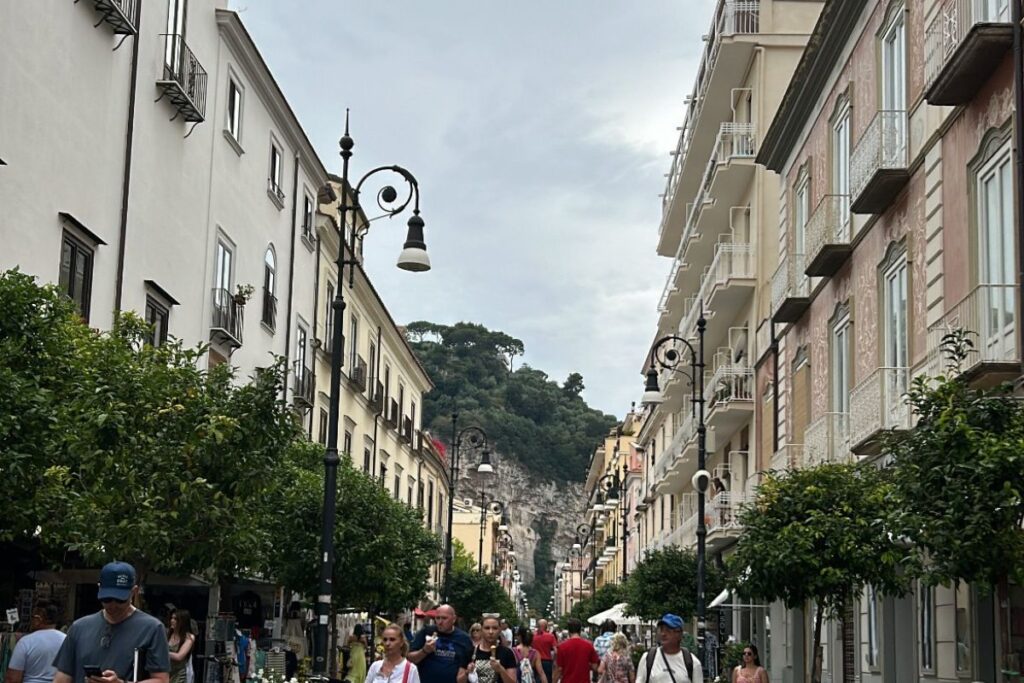
Sorrento deserves more than the rushed visit we gave it. I’d plan at least half a day to explore the historic center, waterfront, shops, and cafés.
What About Sorrento and Naples?
Sorrento and Naples are both on the Bay of Naples rather than the Amalfi Coast, but they’re commonly grouped into the same trip. Just remember that every destination you add means more transportation time. At some point, you’re no longer planning a few days on the Amalfi Coast. You’re planning a broader trip around this part of Italy.
We learned that lesson with Sorrento. We tried to combine it with Capri, and while the plan looked reasonable from home, it was simply too rushed. Sorrento is much larger and busier than many of the smaller Amalfi Coast towns and deserves more than whatever time is left before your ferry home.
The historic center sits high above the water, with Piazza Tasso, Corso Italia, and the narrow lanes of the old town offering plenty of restaurants, cafés, and shopping. Down below is Marina Piccola, where many ferries arrive and depart. An elevator connects the waterfront with the upper part of town, making it much easier to move between the two without tackling the climb on foot.
You’ll also find Sorrento’s version of a beach day along the waterfront. Rather than a classic stretch of sand, several beach clubs have wooden decks extending over the water, lined with loungers and umbrellas. It’s another reason Sorrento could easily fill more time than we gave it.
We explored what we could, but our return transportation was always in the back of my mind. If I were doing it again, Capri gets its own day and Sorrento gets separate time.
Naples, on the other hand, worked really well as part of our travel day. We stopped for a few hours as we left the Amalfi Coast and made our way back to Rome. We dropped our bags at luggage storage near the Naples train station, explored the city, and then continued our journey without sacrificing another day on the coast.
A few hours certainly isn’t enough to properly experience Naples, but it gave us a taste of the city. If your Italy itinerary already takes you through Naples, I’d consider doing something similar. If Naples itself is a priority, give it a dedicated day or overnight rather than treating it like another Amalfi Coast town to check off.
How much time I’d give Sorrento and Naples: At least half a day for Sorrento, although a full day gives you much more freedom to explore without watching the clock. For Naples, either give it a dedicated day or use a few hours on your arrival or departure day to get a first taste of the city.
So, How Many Days Do You Really Need on the Amalfi Coast?
After spending six nights on the Amalfi Coast, I think four full days is the minimum I’d recommend for a first trip, while five to six days gives you a much better balance between sightseeing and actually enjoying where you are.
2–3 days: Enough for a taste of the Amalfi Coast. Choose one home base and prioritize the towns you most want to experience rather than rushing to see them all. I’d focus on the coast itself and save places like Capri or Pompeii for a longer trip.
4 days: My minimum recommendation for a first trip. You have enough time to experience several coastal towns without every day becoming a transportation puzzle, although you’ll still need to prioritize.
5–6 days: The sweet spot for me. You’ll have time for the coast itself, room for a bigger day trip like Capri or Pompeii, and, just as importantly, some actual downtime.
7+ days: Worth it if you want beach or pool time, slower mornings, multiple day trips, or simply don’t want sightseeing to dominate every day. You can also start adding places like Sorrento without constantly feeling like you’re giving something else up.
We spent six nights on the Amalfi Coast, and I wouldn’t shorten it.
Not because you need six days to check off a list of attractions. You don’t. Some of my favorite parts of the trip happened when we weren’t trying to accomplish much at all.
It was spending a few hours by the pool in Maiori after coming back from somewhere else. Sitting down for a long meal without immediately checking when the next ferry left. Wandering around town in the evening after most of the day’s visitors had disappeared. Spending half a day on a beach chair in Positano even though it meant we wouldn’t see everything else.
Those slower moments were as much a part of our Amalfi Coast trip as Capri, Ravello, Positano, or Pompeii.
So if you’re trying to decide how many days to spend on the Amalfi Coast, don’t just count how many places you want to see. Think about how you want the trip to feel. You can see a surprising amount in three or four days. But if you want time to enjoy the Amalfi Coast rather than simply move through it, I’d give yourself five or six.
More From My Amalfi Coast Series
- Where to Stay on the Amalfi Coast: Why We Chose Maiori — Why Maiori worked so well as our home base, plus what to consider when choosing where to stay along the coast.
- Best Day Trips From the Amalfi Coast: What We Learned From Maiori — The places we visited from Maiori, what worked, and which day trips I’d prioritize next time.
- Planning an Amalfi Coast Trip? 7 Things I’d Do Differently — What I learned about ferries, buses, transportation, pacing, and planning a realistic itinerary.
- Is the Amalfi Coast Worth It? An Honest Review After One Week — The beautiful parts, the frustrating parts, and whether I think the Amalfi Coast lives up to the hype.
- What the Amalfi Coast Taught Me About Traveling With Family — What traveling the coast together taught me about pacing, different travel styles, and making a family trip work for everyone.
- Where to Stay on the Amalfi Coast: Best Towns & Hotels — A town-by-town guide to choosing the right Amalfi Coast base, plus hotels worth considering in each.