Exploring Lima’s Neighborhoods: Miraflores for First-Time Visitors
Miraflores is probably exactly what most first-time visitors to Lima need.
It’s familiar, easy to navigate, and packed with hotels, restaurants, and cafés. You can walk along the Pacific, grab an Uber almost anywhere, and stay in a neighborhood accustomed to welcoming visitors.
But dare I say it? Miraflores can feel a little too easy.
It’s polished and familiar, and yes, places like Larcomar can make parts of the neighborhood feel more like somewhere you already know than somewhere you’ve traveled thousands of miles to visit. But Miraflores is also much more than Larcomar.
Spend some time exploring and you’ll find an ancient archaeological site surrounded by modern apartment buildings, parks filled with cats, paths winding along the cliffs above the Pacific, and plenty of little reasons to wander away from whatever route you originally planned.
After spending more time exploring the city, I’ve realized that Miraflores is still the neighborhood I’d recommend most often to someone visiting Lima for the first time, even if I might be tempted to try somewhere different on a future trip. And I think that distinction matters.
Miraflores makes Lima easy.
If you’re arriving in Peru for the first time, perhaps spending a couple of days here before continuing to Cusco, Arequipa, or elsewhere in the country, that convenience can be exactly what you need.
Miraflores at a Glance
- Why I recommend it: A convenient first-trip base with plenty of hotels, restaurants, cafés, and easy coastal walks.
- My can’t-miss experience: Walk the Malecón, stopping at its parks and viewpoints before continuing toward Parque del Amor and Larcomar.
- For a different side of Lima: Visit Huaca Pucllana, an ancient adobe complex surrounded by the modern city.
- For everyday wandering: Explore Parque Kennedy, watch the resident cats, and browse the surrounding streets.
- For souvenirs: Try the artisan markets along Avenida Petit Thouars—or a supermarket for Peruvian sweets and snacks.
- How much time to allow: A few hours for a coastal introduction; a full day to include Huaca Pucllana and central Miraflores. If you’re staying here, spread the exploring across your trip.
Why Miraflores Makes Such a Good First-Time Base in Lima
Miraflores sits along Lima’s Pacific coastline, south of the Historic Center and directly beside Barranco, putting you close to several of the areas first-time visitors are most likely to explore.
There’s a reason so many searches for hotels in Lima lead you straight here. The neighborhood has a huge concentration of hotels, restaurants, cafés, shops, and services, with plenty of people accustomed to interacting with tourists.
You don’t necessarily need your home base to be the most interesting neighborhood in the city. Sometimes you just need it to make exploring everywhere else easier. And Miraflores does that exceptionally well.
Looking for a hotel? I’ve put together a separate guide to where to stay in Miraflores, including options for using hotel points, splurging for an oceanfront location, and finding something with a little more personality.
Getting Around Miraflores
Miraflores is easy to explore on foot, particularly around Parque Kennedy, the surrounding streets, and the Malecón. Once you’re heading farther across Lima, however, rideshare apps are usually the easiest option.
We used both Uber and InDrive. InDrive was often slightly cheaper, but the electronic payment options available to us relied on local services such as Yape, so as international visitors we paid our drivers in efectivo—cash, in Peruvian soles. My dad had no problem using the app; I got stuck in an endless verification loop and eventually decided I wasn’t spending my vacation trying to solve it.
Uber it was.
Whichever you use, don’t underestimate the traffic. Distances that look short on a map can take considerably longer than expected, so leave yourself extra time for reservations, tours, and especially flights. Lima traffic does not care about your itinerary.
Miraflores generally feels comfortable to walk around, but use the same common-sense precautions you would in any major city: keep valuables secure, pay attention when using your phone on the street, and be aware of your surroundings in crowded areas.
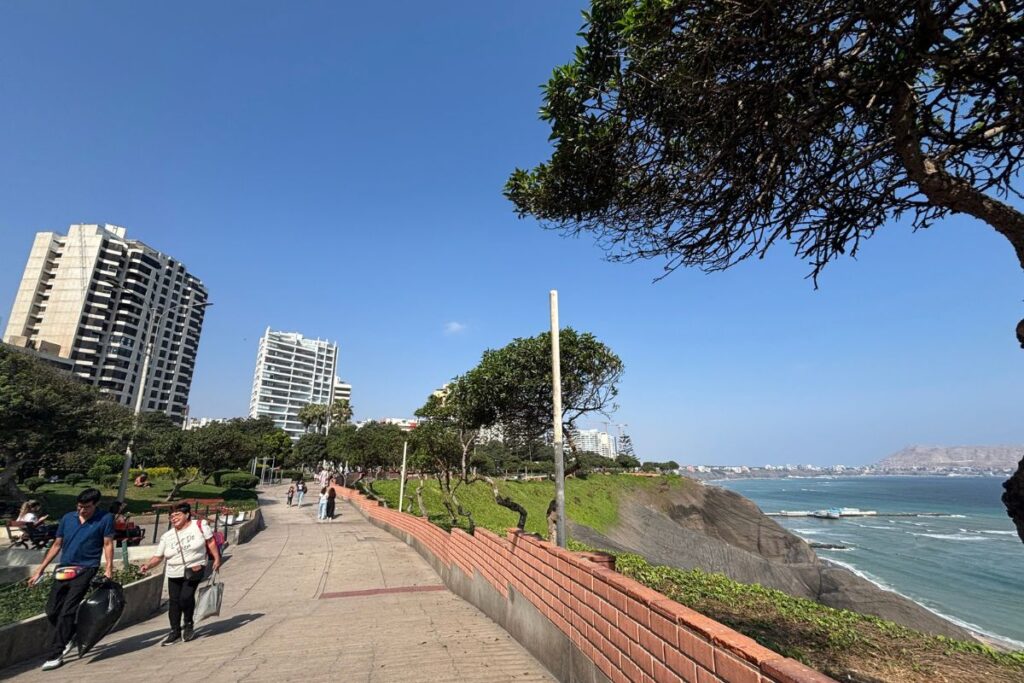
Miraflores is easy to explore on foot, especially along the parks and paths of the Malecón.
You Don’t Have to Plan Every Lima Tour Before You Arrive
Around central Miraflores and the busier stretches of the Malecón, you’ll find tour vendors offering everything from Lima sightseeing tours to half- and full-day excursions to places like Pachacamac.
That’s useful to know if Lima is one stop on a larger Peru trip. You may have spent weeks figuring out Machu Picchu tickets, train schedules, and Cusco logistics, but Lima doesn’t necessarily require that same level of advance planning.
That doesn’t mean I’d leave every ticket or reservation until the last minute. But you don’t need every hour of your Lima stay locked down before you arrive. Leave yourself some open time and you’ll still have options: see what’s being offered, talk to local tour operators, and decide whether you actually want to add something to your itinerary.
Parque Kennedy & Central Miraflores
If the Malecón is the part of Miraflores you deliberately set out to explore, Parque Kennedy is the part you may find yourself passing through without even trying. Together with neighboring Parque Central, it sits at the heart of Miraflores, surrounded by restaurants, cafés, shops and Iglesia Virgen Milagrosa.
And then there are the cats. Lots of cats.
Parque Kennedy has become famous for the cats that live around the park, and you’ll see them lounging in the grass, sleeping beneath trees and wandering around as though they own the place. Local volunteers help care for them, including feeding them, providing veterinary care and arranging adoptions.
But I wouldn’t come here with a checklist. Walk through the parks, stop to watch the cats, browse the surrounding streets, grab something to eat or sit somewhere with a coffee. Depending on when you visit, you may also find vendors, artists or other activity around the park.
That’s really the appeal of central Miraflores. Part of visiting the neighborhood is simply spending time in it. Not every park, church or street needs to become another attraction on your itinerary.
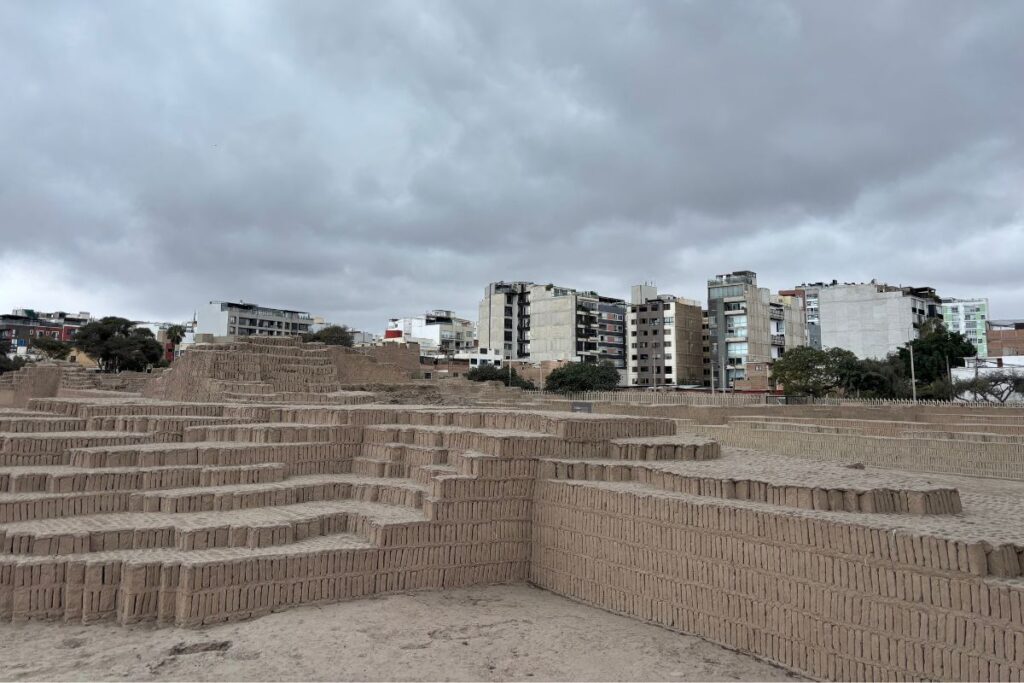
Huaca Pucllana’s location in the middle of modern Miraflores is what makes the archaeological site so striking.
Huaca Pucllana: An Ancient Pyramid in the Middle of Miraflores
Huaca Pucllana was one of the Miraflores attractions that surprised me most. Not because it’s enormous—it isn’t—but because of the contrast. You’re standing on an archaeological site that dates back well over a thousand years, surrounded in practically every direction by modern Lima.
Apartment buildings. Streets. Cars. A city that has grown completely around it.
Huaca Pucllana was an important ceremonial and administrative center associated with the Lima culture, built primarily from millions of small adobe bricks. Later cultures also used the complex, leaving evidence from the Lima, Wari, and Ychsma periods.
Visiting Huaca Pucllana on Your Own
You don’t need an organized Lima tour to visit Huaca Pucllana. We simply took a rideshare there, bought our tickets, and joined one of the guided visits required to explore the archaeological site.
We did have to wait about 30–45 minutes for the next group, which was roughly as long as the tour itself. As of 2026, daytime visits are offered 9 a.m. to 5 p.m., Wednesday through Monday, with night visits available on select evenings. I’d check the current schedule before you go, especially for a night or holiday visit.
What You’ll See
Huaca Pucllana isn’t enormous, but the guided visit gives you the context to understand who used the complex, how it was built, and what archaeologists have discovered here.
Eventually, you’ll make your way onto the pyramid itself. What fascinated me wasn’t the height or the view, it was standing on an ancient adobe structure while looking out at a completely modern city.
Miraflores simply grew around it.
It’s one of those places that makes Lima’s enormous timeline easier to comprehend. People were building major ceremonial complexes here centuries before the Inca or the arrival of the Spanish.
How Much Time Should You Allow?
I’d allow a couple of hours for Huaca Pucllana. The guided visit isn’t particularly long, but you may have to wait for the next available group, as we did.
If you walk straight into a tour, great. But don’t squeeze this into a 45-minute opening in your itinerary. Give yourself enough time that a wait doesn’t derail the rest of your day.
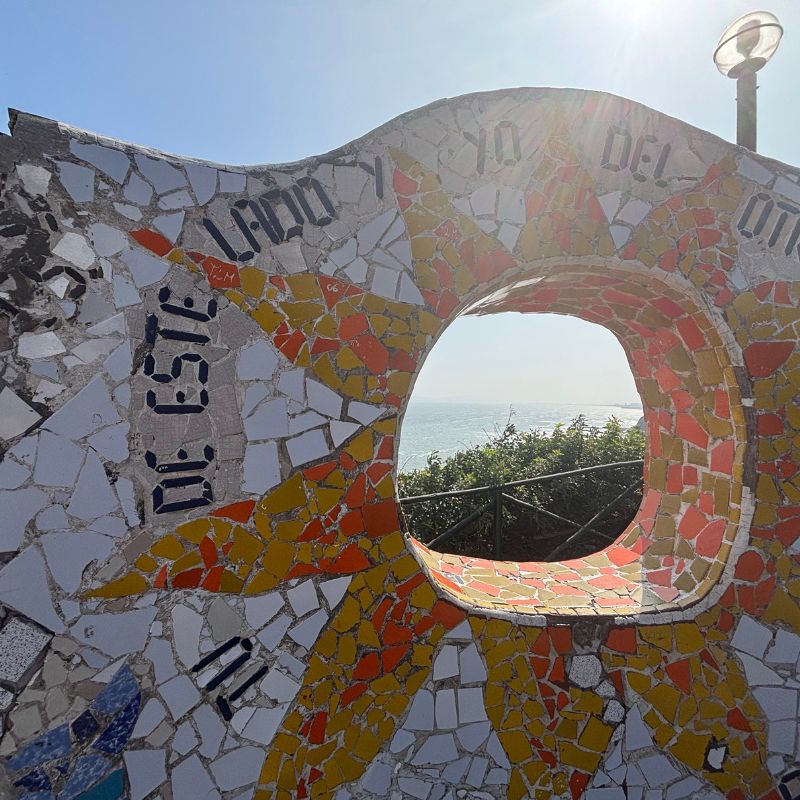
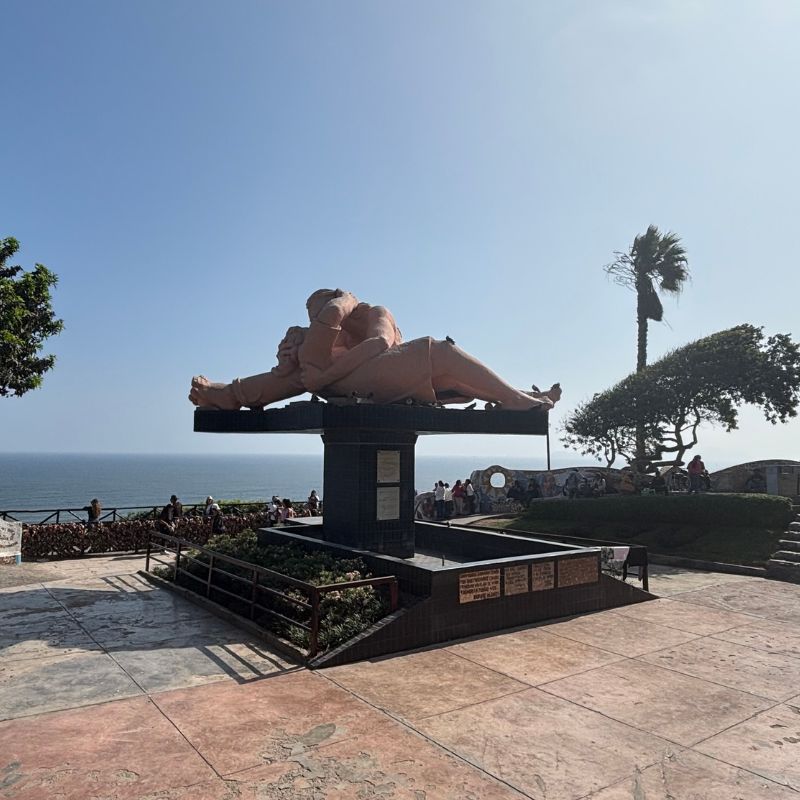
Colorful mosaics, ocean views, and Parque del Amor are some of the highlights along Miraflores’ Malecón.
Walking Miraflores’ Malecón
One of the things I absolutely recommend making time for in Miraflores is a long walk along the Malecón. We started near the Hachiko statue by Faro de la Marina and walked down the coast toward Larcomar. At a casual pace, stopping for photos and buying water and ice cream from vendors along the way, the walk itself took us about an hour.
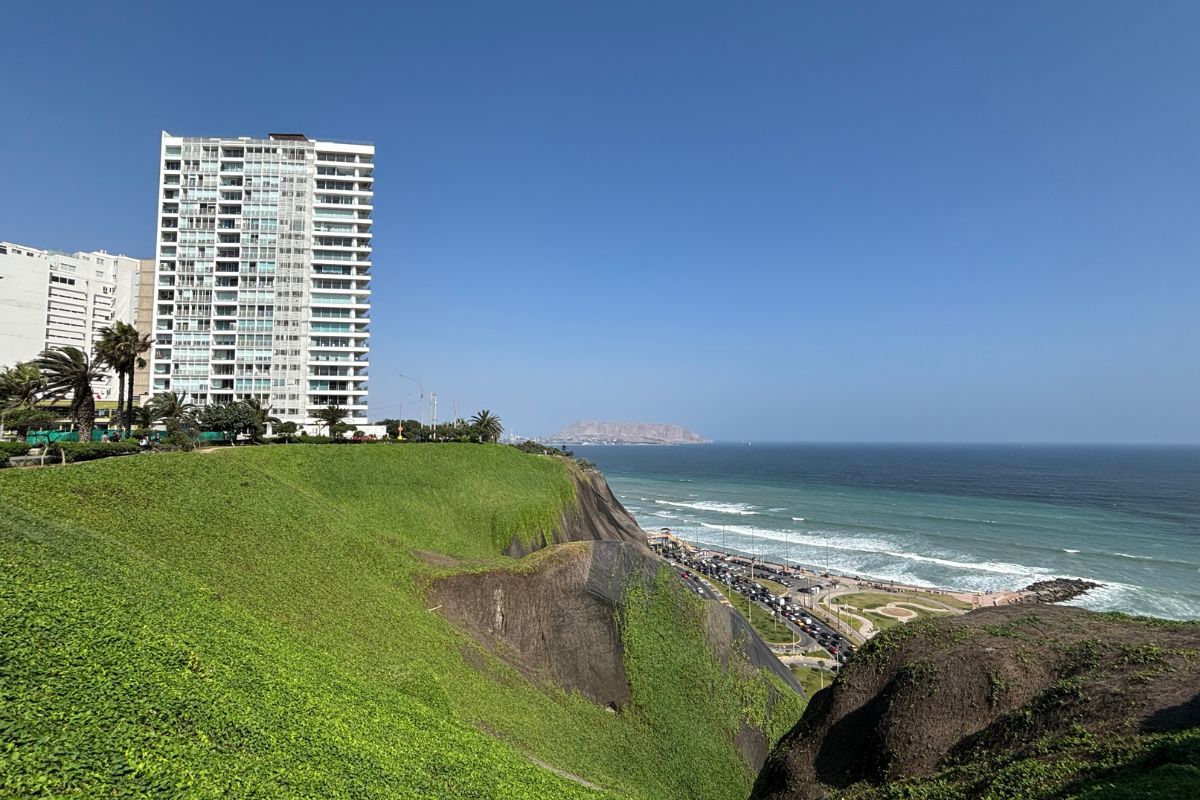
But you could easily spend a few hours out here. The Malecón isn’t one attraction or even one continuous park. It’s a series of parks, viewpoints and paths running along the cliffs above the Pacific, and part of the fun is wandering away from the main path when something catches your attention. Follow a path toward the edge of the cliffs, stop at a viewpoint, explore one of the parks, sit for a while and watch the paragliders, or simply take in the coastline.
There’s no reason to rush through it. Walk a portion in the morning, make it an afternoon activity like we did, or head out around sunset. You’ll almost always find other people along the route—walking dogs, exercising, sitting in the parks or simply enjoying the coast—and the more stops you make, the less this feels like a walk from Point A to Point B.
Faro de la Marina & Parque Chino
Faro de la Marina is one of Miraflores’ most recognizable coastal landmarks, and nearby you’ll find the Hachiko statue where we started our walk toward Larcomar.
Also along Malecón Cisneros is Parque Chino de Miraflores, a small park commemorating the long history of Chinese immigration to Peru. You’ll find a Chinese-style pavilion overlooking the Pacific, guardian lions, gardens, a small bridge and an artificial pond.
It’s an interesting little stop, particularly if you’ve already visited Barrio Chino in Lima’s Historic Center. Chinese influence in Peru certainly isn’t confined to one part of the city—or just to chifa.
Parque Antonio Raimondi & Paragliding Over Miraflores
Continue along the Malecón and there’s a good chance you’ll find yourself watching paragliders floating alongside Lima’s cliffs. Even if you have absolutely no intention of doing it yourself, they’re such a familiar part of the Miraflores coastline that it’s hard not to stop and watch.
I, however, have actually tried. On a previous trip, I decided I was finally going paragliding over Lima, only to discover the winds weren’t cooperating. Instead, they were offering paratrike flights, which combine a powered paraglider with a small wheeled frame. Reflecting on the experience now, it’s probably best that I didn’t ask too many questions about exactly how the thing worked.
We just went for it. They drove us toward the coast, strapped us in, and suddenly we were soaring alongside Lima’s cliffs and out over the Pacific. I wouldn’t necessarily say I’m afraid of heights, but once we were over the ocean, I made a point of not looking directly down at the water too many times. Looking toward the horizon worked just fine.
Years later, it’s still one of the most memorable experiences I’ve had in Lima. If you’re interested in doing something similar, check what’s operating rather than building your day around one specific type of flight, wind and weather conditions can change what’s available.
And bring a layer. It gets surprisingly chilly once you’re airborne.
Parque del Amor
Continue south toward Parque del Amor, one of the most recognizable stops along the coastline. Its centerpiece is El Beso, the large sculpture by Peruvian artist Víctor Delfín depicting a couple embracing, surrounded by colorful mosaic walls.
This is somewhere I’d actually stop for a little while rather than just taking a photo and moving on. You’re right on the cliffs overlooking the Pacific, with plenty of places to sit and take in the view before continuing toward Larcomar.
Larcomar: Worth Visiting, But Don’t Plan Your Day Around It
I have such a different reaction to Larcomar now than I did the first time I visited Lima as a child. Back then it was: Wow. An open-air shopping mall built into a cliff overlooking the Pacific! And to be fair, it is a pretty incredible setting for a mall.
But after visiting it on practically every trip to Lima? It’s a mall.
You’ll find plenty of familiar international brands, including H&M, Adidas and Nike, so unless you’re specifically coming to shop or eat, I wouldn’t dedicate a huge chunk of your itinerary to Larcomar. Stop for the view, take some photos, use the bathroom, grab a snack or drink, browse a few stores, and keep going.
Look for the Peruvian options too. Don’t overlook Wong downstairs—yes, I’m recommending that you visit a supermarket. It’s incredibly convenient for drinks, snacks, or Peruvian candy and packaged foods to bring home.
If you’re hungry, you’ll also find Peruvian options including Pardos Chicken and Tanta. Would I tell you to skip one of Lima’s incredible independent restaurants just so you can eat at the mall? No. But if it’s lunchtime and you’re already here, you certainly don’t have to default to something you could just as easily eat back home.
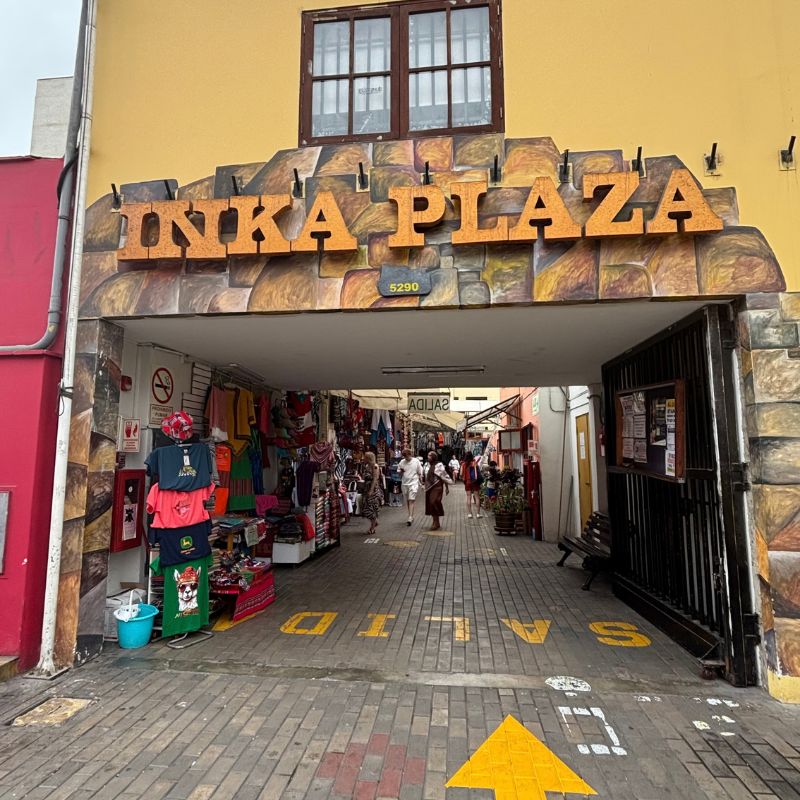
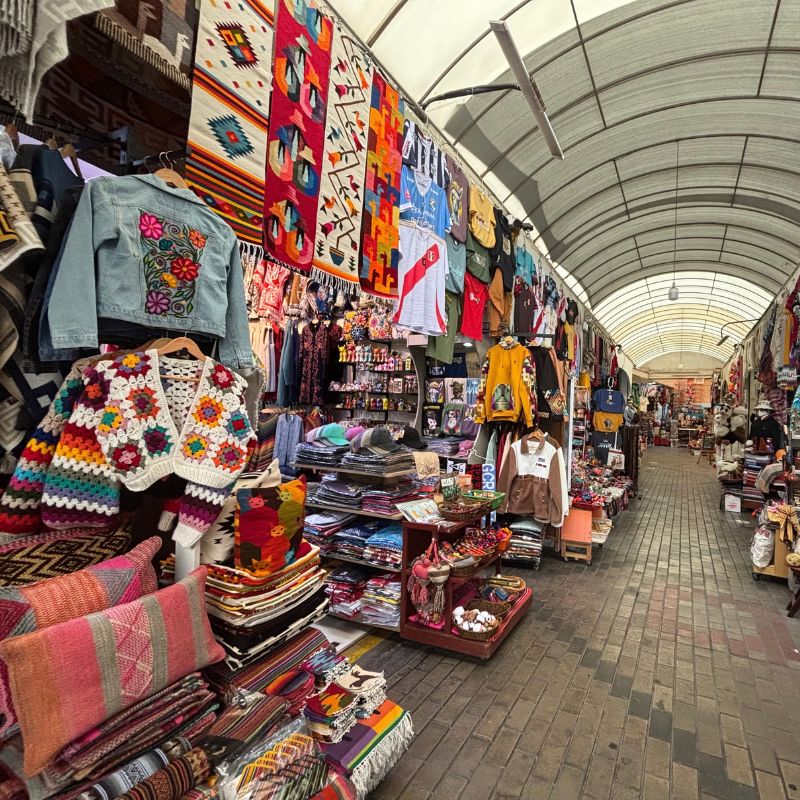
Inka Plaza and the nearby artisan markets are easy places to browse for textiles, crafts, and last-minute souvenirs in Miraflores.
Shopping & Souvenirs in Miraflores
If you left Lima’s Historic Center without buying that magnet, alpaca scarf, or last-minute souvenir, don’t worry. Miraflores gives you another chance.
Inka Plaza & the Artisan Markets
Near Parque Kennedy, you’ll find Inka Plaza and several artisan markets along Avenida Petit Thouars. And if you’re looking for souvenirs, you’ll have lots of options.
Expect magnets, textiles, hats, bags, jewelry, ceramics, paintings, and plenty of llama and alpaca everything. You’ll notice some repetition between stalls, so walk around before buying—you’ll often see similar items more than once.
It’s especially useful near the end of your trip when you suddenly remember the person you somehow forgot to buy something for.
Don’t Overlook the Supermarket for Souvenirs
One of my favorite places for edible souvenirs isn’t a souvenir shop at all. It’s the supermarket.
Wong and Tottus are easy places to pick up Peruvian candy, chocolates, cookies, and other packaged snacks that travel well. From Sublimes and Princesas to Andean potato chips and even store-bought alfajores, you’ll find something you’ll want to take home with you.
Sometimes that’s a lot more fun than bringing home another magnet.
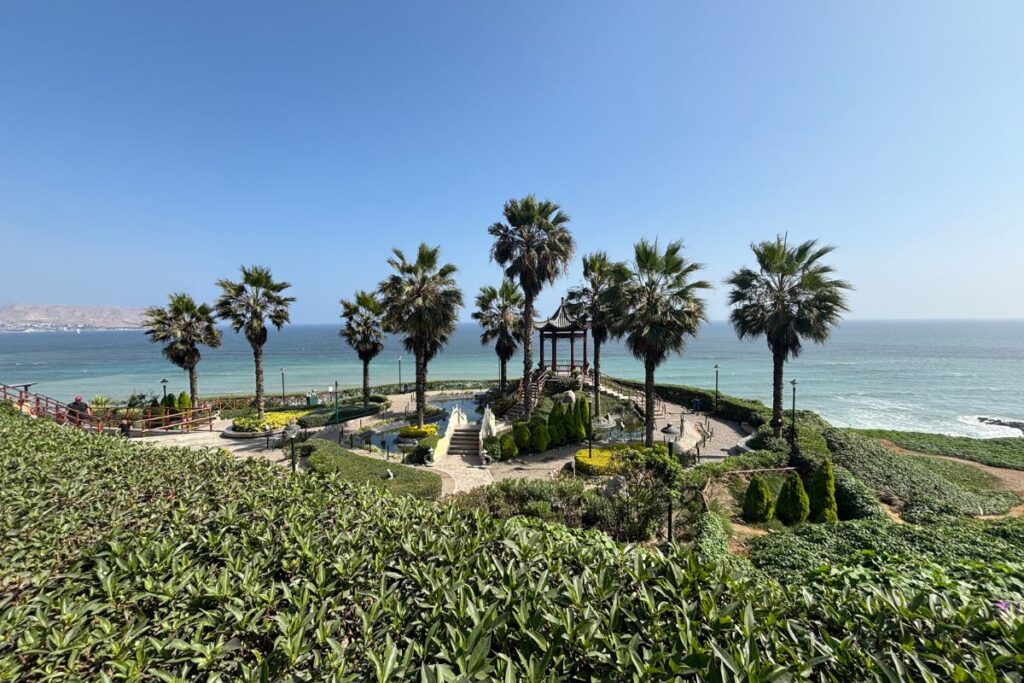
Parque Chino is one of the landscaped parks you’ll pass while exploring Miraflores’ Malecón along the Pacific coast.
How Much Time Do You Need in Miraflores?
If you’re staying in Miraflores, you don’t necessarily need to dedicate an entire day to seeing it. You’ll naturally experience much of the neighborhood simply by coming and going.
With a couple of hours, I’d head to the Malecón for a coastal walk, Parque del Amor, and Larcomar. With half a day, add Parque Kennedy or Huaca Pucllana. And if you want to spend a full day here, you can easily combine Huaca Pucllana, central Miraflores, and a longer walk along the coast.
But if your hotel is here for several nights, I’d rather spread those experiences throughout the trip. Experience Miraflores around the rest of your plans.
Should You Stay in Miraflores?
For a first trip to Lima, Miraflores is still one of the easiest places to recommend. You’ll find hotels at virtually every price point, restaurants everywhere, plenty of familiar amenities, and many of the major international hotel chains if you’re hoping to use points.
Want specific hotel recommendations? See my guide to Where to Stay in Miraflores for the properties I’d consider at different budgets and with hotel points.
Miraflores may not be the Lima neighborhood that excites me most anymore, but after spending more time here, I understand why it works so well for a first trip. It’s a place where you can settle in quickly, explore at your own pace, and use the neighborhood as a comfortable base for discovering the rest of Lima.
It’s polished, modern, familiar, and easy. And sometimes that’s exactly what you need from a home base.
Continue Exploring Peru
- Where to Stay in Miraflores — Compare the hotels I’d consider for different budgets, locations, and hotel points.
- Barranco: The Lima Neighborhood I Want to Stay in Next Time — Already stayed in Miraflores and looking for a different neighborhood experience? Here’s why Barranco is on my list for next time.
- How Many Days Do You Need in Paracas, Ica, and Huacachina? — See how a coastal and desert extension could fit around Lima.
- Cusco Is Not Just a Base for Machu Picchu — Carry your neighborhood exploring into another city worth lingering in.