How I Spent 4 Days in Quito, Ecuador
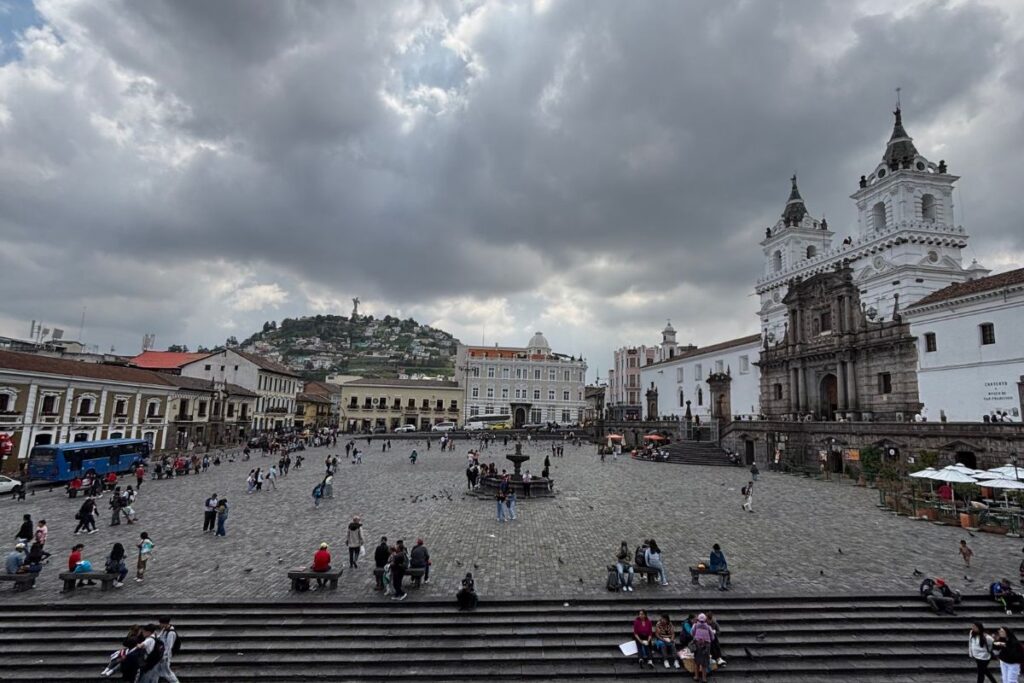
n my previous post, Where to Go in Chile: The Best Regions for Your Trip, I wrapped up my time exploring Chile. Now it’s time to cross the border into Ecuador, starting with one of the cities I was most excited to visit: Quito.
Before arriving in Ecuador, Quito was the city I was most excited to visit because it was the one I could already picture. As I planned my trip, I watched YouTube videos, scrolled through Instagram, and read countless travel guides. More than anywhere else on my itinerary, Quito’s historic center reminded me of Cusco, one of my favorite cities in the world.
That immediately raised my expectations. I love Cusco, not just as the gateway to Machu Picchu, but as a destination in its own right. I’d happily return just to wander its streets again. So by the time I landed in Quito, I already had an image in my mind of what it would be like. Thankfully, it lived up to every expectation.
What I loved most wasn’t a single attraction. It was the historic center itself. The beautifully preserved colonial architecture, grand plazas, colorful streets, and countless churches made simply walking through the city feel like the attraction. Unlike Santiago, where many historic neighborhoods blend naturally into everyday city life, Quito’s Old Town feels more intentionally centered around its history while still remaining an authentic, lived-in part of the city. It’s the kind of place where you can spend hours exploring without ever feeling like you need a checklist.
Where I Stayed
I spent four nights at the NH Collection Quito Royal, a stay I booked primarily because I was able to use my American Express Fine Hotels + Resorts credit. It ended up being an excellent base for exploring the city, with comfortable rooms, a fantastic breakfast, and easy access to restaurants, cafés, and other parts of Quito.
The hotel is located in Quito’s modern business district, near the World Trade Center, where you’ll find plenty of restaurants, bars, and shops within walking distance. It’s roughly a 15-minute Uber ride from the Historic Center, making it easy to spend full days exploring Quito’s colonial heart before returning to a quieter neighborhood each evening.
I originally booked the hotel simply because it was an excellent use of my American Express Fine Hotels + Resorts credit, the neighborhood was almost an afterthought. Fortunately, it turned out to be a great fit. The Historic Center was close enough that getting there was never an inconvenience, while the surrounding area offered plenty of dining options and a more relaxed atmosphere after a full day of sightseeing. For a four-night stay, I actually appreciated the balance between convenience and comfort, and I wouldn’t hesitate to stay there again.
Explore NH Collection Quito Royal and check current rates →
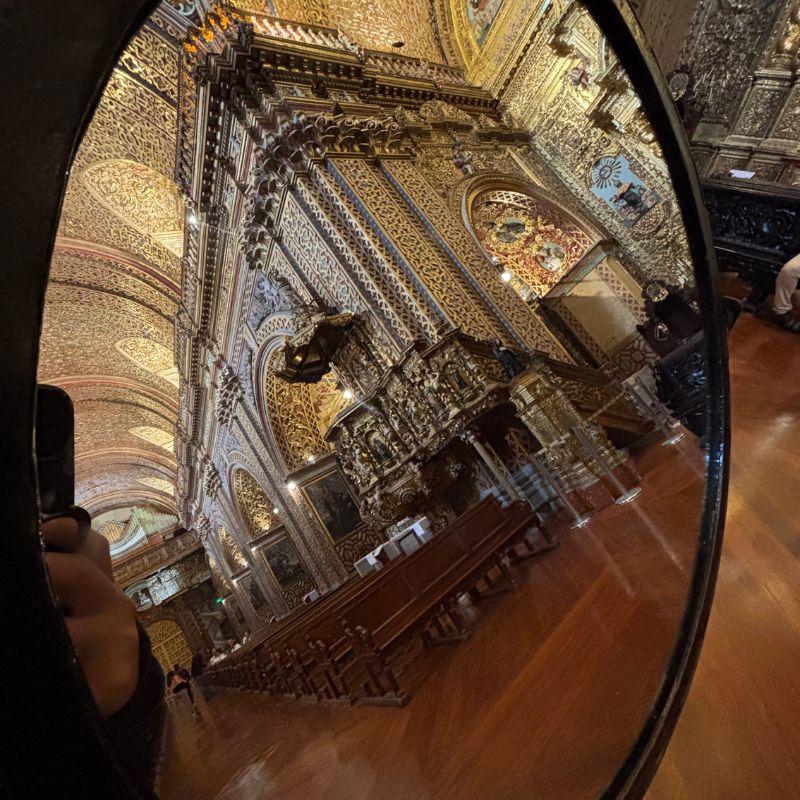
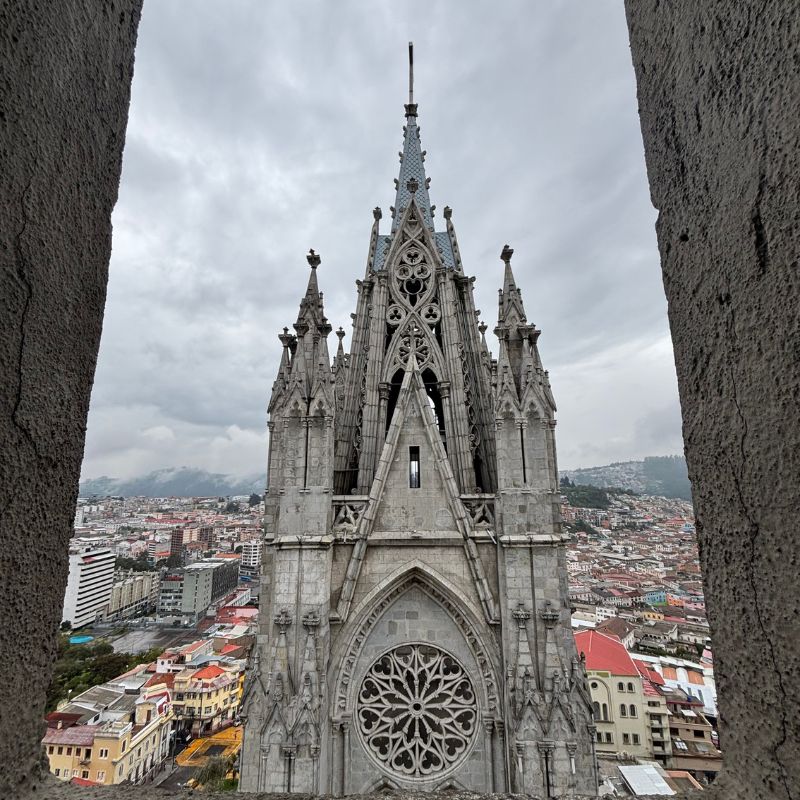
Quito’s churches were among the biggest surprises of my visit. From the breathtaking gold-covered interior of La Compañía de Jesús to the panoramic views from the towers of the Basilica del Voto Nacional, each offered a completely different perspective on the city’s history, architecture, and skyline.
Exploring Quito’s Historic Center
One of the best decisions I made was joining a walking tour on my first full day. There were only three of us plus our guide, making it feel more like exploring with a local than following a large tour group. Rather than simply explaining the landmarks we visited, she introduced us to Ecuador’s history, Indigenous roots, and culture. We learned about the Kichwa language, spoken by many Indigenous communities throughout Ecuador and closely related to the Quechua spoken across much of Peru. Having recently traveled through Peru, I enjoyed seeing those cultural connections continue across another country.
The tour also introduced us to another Ecuadorian specialty: chocolate. Ecuador is one of the world’s leading producers of fine cacao, so we stopped at a local café to sample several varieties while enjoying delicious chocolate-based drinks before continuing through the Historic Center.
Throughout the morning we visited many of Quito’s most famous landmarks, including Plaza Grande, San Francisco Church, Basilica del Voto Nacional, and the breathtaking Church of La Compañía de Jesús. Covered almost entirely in gold leaf, La Compañía quickly became one of the most impressive churches I visited anywhere in South America. I enjoyed it so much that I later returned for the underground crypt tour, which offered another fascinating look at the church’s history.
Shortly after the tour ended, one of the most dramatic thunderstorms I’ve ever experienced rolled over the city. Rather than calling an Uber back to my hotel, I ducked into San Francisco Monastery, where I spent the next hour exploring its museum and beautiful central courtyard while waiting for the rain to pass.
Once the weather cleared, I found a restaurant overlooking Plaza Grande and finally stopped for lunch. I ordered a humita along with one of Ecuador’s traditional soups. Soups are a staple of Ecuadorian cuisine, and it was the perfect meal before spending the rest of the afternoon wandering through the Historic Center on my own.
Over the next couple of days, I found myself returning to several of the churches to explore them in more detail. On my final day, I climbed the towers of Basilica del Voto Nacional, which ended up being one of my favorite experiences in Quito. The final stretch follows a series of narrow staircases along the outside of the church, climbing higher and higher above the city. It’s definitely not for anyone afraid of heights, but the panoramic views over Quito’s rooftops made every step worthwhile.
More than any individual attraction, that’s what I remember most about Quito. I wasn’t trying to see everything in a single afternoon, I kept finding reasons to return to the Historic Center, discovering something new each time I wandered its streets.
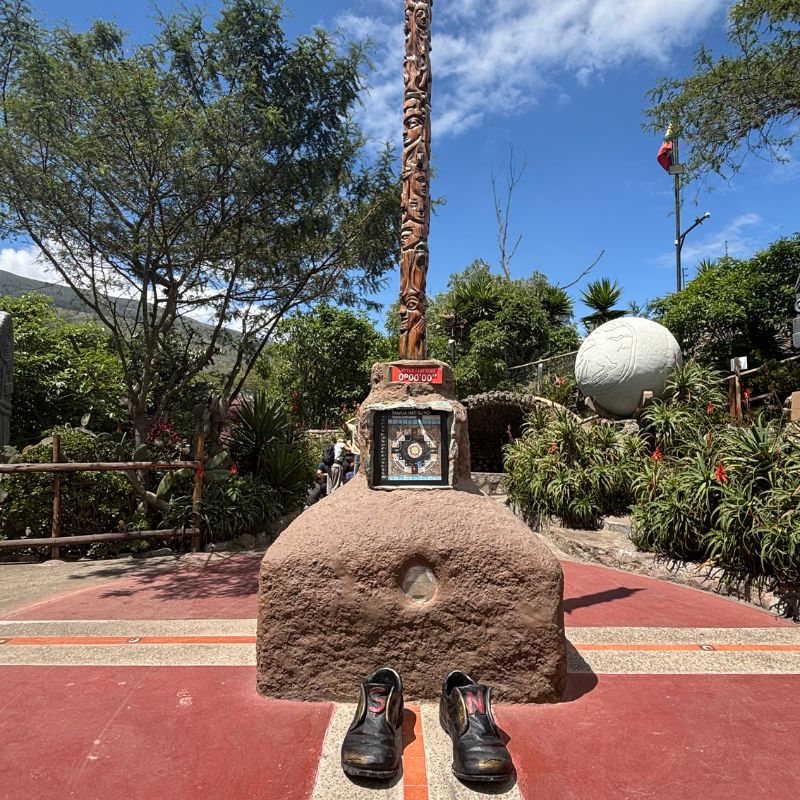
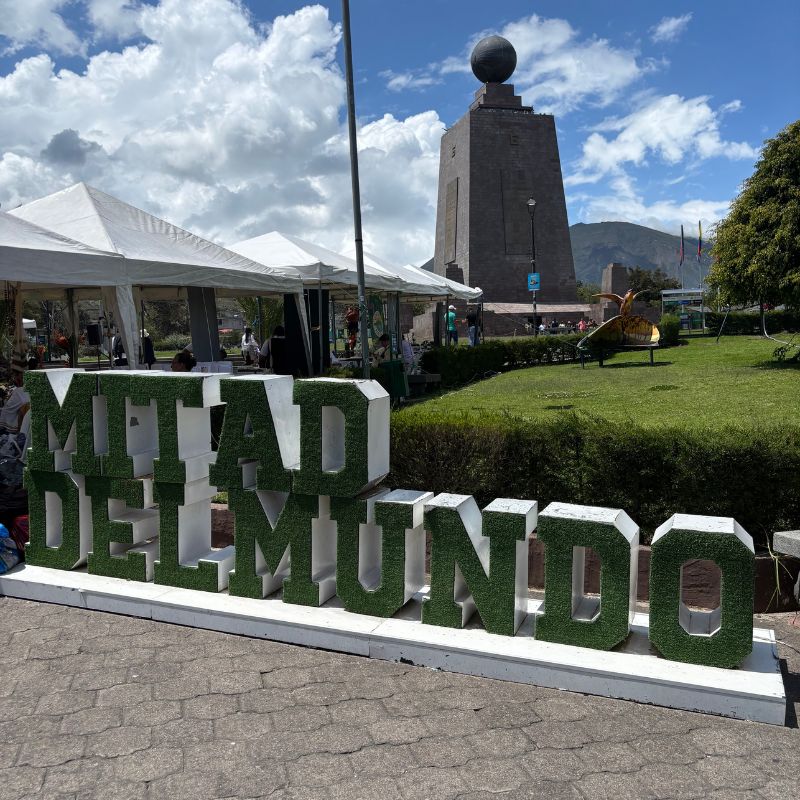
Standing on the equator at Mitad del Mundo was one of the most memorable day trips from Quito. While the exact location of the equator is debated, the complex remains a fun and uniquely Ecuadorian stop that celebrates the country’s place at the center of the world.
Mitad del Mundo
One of the most unique attractions near Quito is Mitad del Mundo, or “Middle of the World.” Located about 45 minutes north of the city, the complex celebrates Ecuador’s position along the equator, the imaginary line dividing the Northern and Southern Hemispheres. In fact, Ecuador’s name comes from the Spanish word for equator, making this one of the country’s most iconic attractions.
Rather than booking a private tour, I opted for one of the sightseeing buses that departs from Quito. It was an inexpensive and hassle-free way to visit without worrying about transportation, and I’d happily recommend it to anyone planning a similar trip.
Although many people refer to the entire area simply as Mitad del Mundo, the visit is actually split between two neighboring attractions.
We started at the Intiñan Solar Museum, where every visit is led by a guide. Rather than simply talking about the equator, the tour blends science, Indigenous culture, and Ecuadorian history through a series of interactive demonstrations. We learned about the country’s geography, the significance of the equator, Indigenous traditions, and the Kichwa people, making it much more educational than I had expected. Whether every demonstration is scientifically accurate has been debated over the years, but it makes for a fun and engaging introduction to the area.
Afterward, I crossed over to the Mitad del Mundo Monument, the iconic stone monument most people associate with Quito. Inside, you can explore exhibits about Ecuador’s geography and history before climbing the monument for views over the surrounding complex.
Outside, there’s much more to explore than just the monument itself. The surrounding complex is filled with restaurants, cafés, artisan shops, cultural performances, and open plazas that give the area an almost festival-like atmosphere. I originally expected to spend an hour there, but it ended up being easy to fill several hours before heading back to Quito.
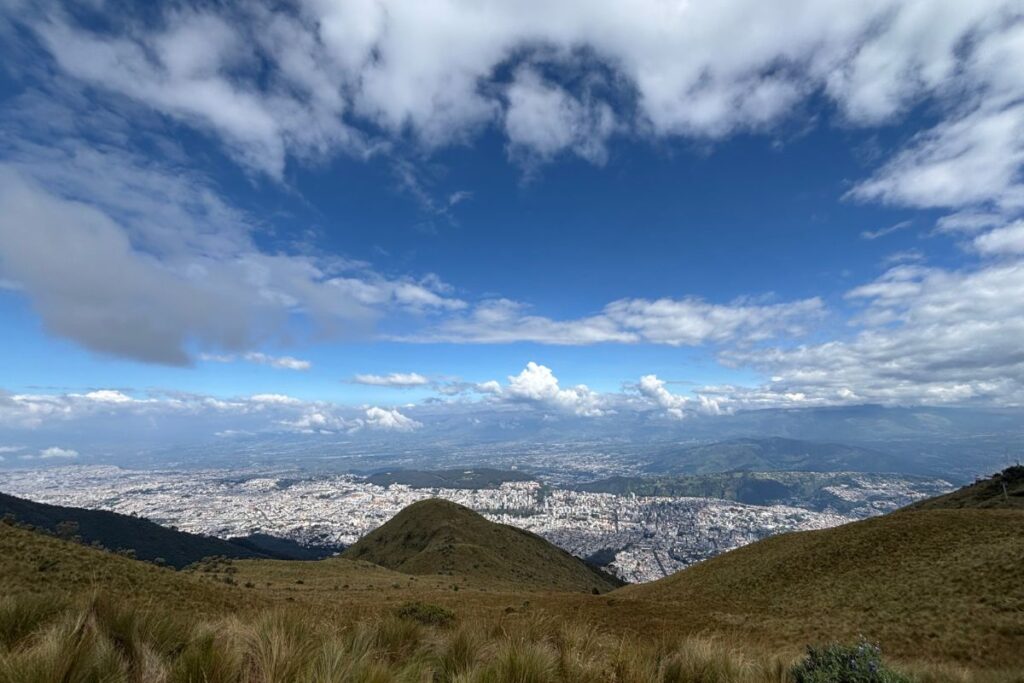
Riding the TelefériQo offered one of the best views in Quito, with the city stretching across the valley below and the Andes surrounding it in every direction. It’s a reminder of just how dramatically Ecuador’s capital is shaped by its mountain setting.
TelefériQo
After finishing at Mitad del Mundo, I decided not to wait for the sightseeing bus to return to Quito. Instead, I called an Uber directly to TelefériQo, which made it easy to combine both attractions into a single day.
One of the highest aerial cable cars in South America, TelefériQo climbs from Quito to Cruz Loma on the slopes of Pichincha Volcano in about 18 minutes. As the gondola steadily climbs nearly 3,000 feet, the views over Quito become more and more impressive, with the city stretching through the valley below and the Andes surrounding it in every direction.
Once you reach the top, the first thing you’ll notice is the altitude. At nearly 13,000 feet (3,950 meters) above sea level, even a gentle uphill walk can leave you short of breath. Fortunately, there are several well-maintained walking paths that lead to scenic overlooks, making it easy to enjoy the views without committing to a strenuous hike.
Most visitors don’t hike all the way to the summit. Instead, they explore the shorter trails near the upper station before turning around at one of the viewpoints. That’s exactly what I did. Beyond those overlooks, the trail continues uphill toward Rucu Pichincha, where the path becomes noticeably steeper and much quieter. I had read beforehand that this section is significantly more challenging and best suited for experienced hikers who are properly acclimatized to the altitude. Since tackling the summit wasn’t part of my plans, I was perfectly happy ending my visit at the overlooks and simply enjoying one of the best panoramic views in Quito.
If you’re looking for incredible views without leaving the city, TelefériQo is well worth adding to your itinerary. Whether you decide to tackle Rucu Pichincha or simply enjoy the viewpoints like I did, it’s one of the best places to appreciate just how dramatically Quito sits within the Andes.
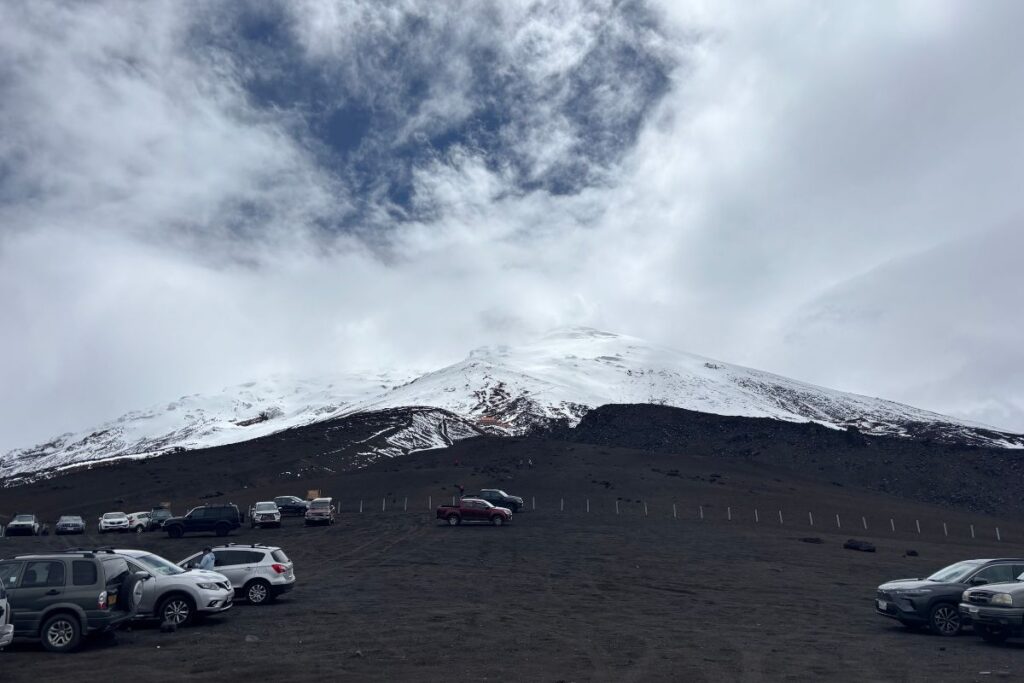
Even before setting foot on the trail, Cotopaxi Volcano was an unforgettable sight. Its snow-covered summit rising above the stark volcanic landscape served as a reminder of Ecuador’s incredible diversity, where glaciers, volcanoes, and cloud forests can all be experienced within a few hours of Quito.
Cotopaxi National Park
If you’re looking to experience the Andes beyond Quito, Cotopaxi National Park is one of Ecuador’s most popular day trips. Home to Cotopaxi Volcano, one of the world’s highest active volcanoes, the park offers everything from scenic drives and wildlife viewing to horseback riding, mountain biking, hiking, and even technical summit climbs for experienced mountaineers.
While it’s possible to rent a car and explore parts of the national park on your own, I chose to book a guided day tour for around $60, which included transportation, breakfast, and a guide throughout the day. Considering the early departure from Quito and the logistics involved, I thought it offered excellent value.
After a short breakfast stop, we continued into the national park. As Cotopaxi gradually came into view, the scenery became more dramatic with every mile. Wide open grasslands stretched toward the volcano, while the massive snow-capped peak dominated the landscape in the distance. It almost felt surreal.
Although many visitors come specifically to hike toward the refuge, there are plenty of other ways to experience the park. Between the scenic drives, hiking trails, mountain biking, horseback riding, and wildlife viewing, it’s the kind of place I could easily see myself returning to explore in a completely different way or another section of the park.
Our main objective was hiking toward the José Ribas Refuge, located high on the slopes of Cotopaxi. This isn’t the summit, that requires technical climbing with specialized equipment, but don’t underestimate the hike. Even though the distance isn’t particularly long, you’re climbing at well over 15,000 feet across loose volcanic gravel where every step feels more difficult than it should.
As I slowly climbed higher, I couldn’t help but think back to my trek up Rainbow Mountain in Peru. Surprisingly, I found Rainbow Mountain more challenging from a breathing and energy standpoint, likely because of its even higher elevation. Cotopaxi certainly had that same thin-air feeling, but here the challenge came from the increasingly steep volcanic slope beneath your feet. Every few steps, I’d stop to catch my breath, look back over the valley below, and appreciate just how incredible the landscape had become.
As we gained elevation, the scenery changed quickly. The clouds drifted across the mountain, visibility came and went, and before long we found ourselves hiking through snow. It seems almost contradictory to see snow falling on an active volcano, but Cotopaxi’s summit rises to nearly 19,350 feet, high enough to support a permanent glacier. The higher you climb, the more likely you are to encounter freezing temperatures, snow, and sleet, regardless of the volcano beneath your feet.
The biggest lesson I learned?
Water-resistant clothing isn’t enough. Bring waterproof gear.
The snow and freezing precipitation quickly soaked through my jacket, leaving me cold for much of the afternoon. Waterproof outer layers, gloves, a scarf, and even a change of clothes for the ride back are all things I’d strongly recommend packing.
Trekking poles are another item I’d seriously consider. The climb is steep, muddy in places, and surprisingly slippery. Going back down is easier, but in some sections it feels more like carefully sliding downhill while trying not to lose your footing.
After returning from the hike, many people in my group chose the optional downhill mountain biking portion of the tour. I decided to skip it. Between the cold, wet clothes and the rough gravel roads, I was perfectly happy enjoying the scenery from the support vehicle instead.
Even without the biking, Cotopaxi was one of the highlights of my time in Ecuador. Standing on the slopes of one of the world’s highest active volcanoes is an experience that’s hard to forget, and it’s a place I would absolutely return to experience from a different perspective.
Explore a Cotopaxi day trip from Quito →
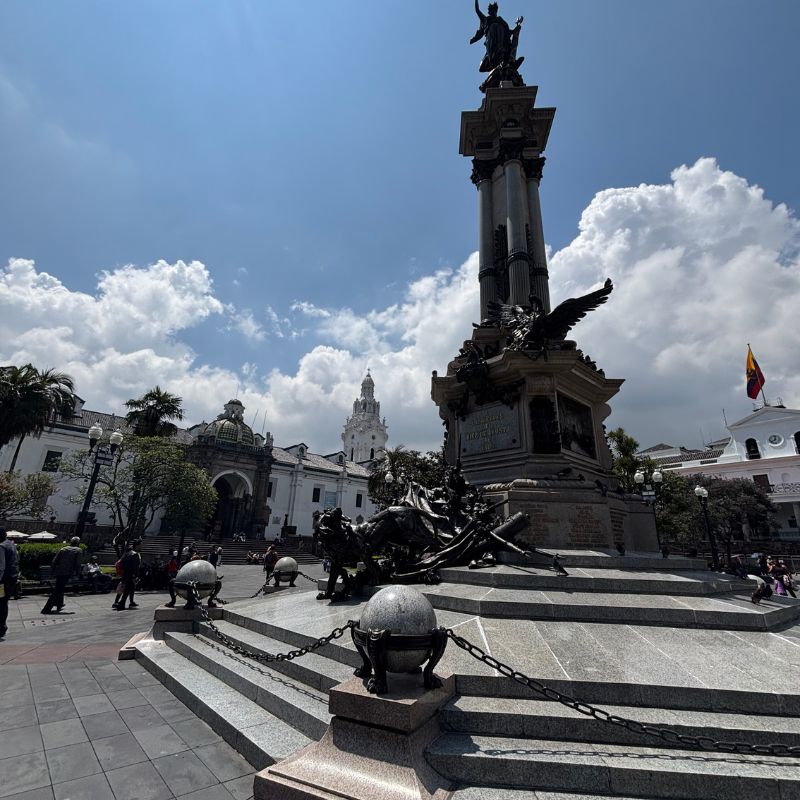
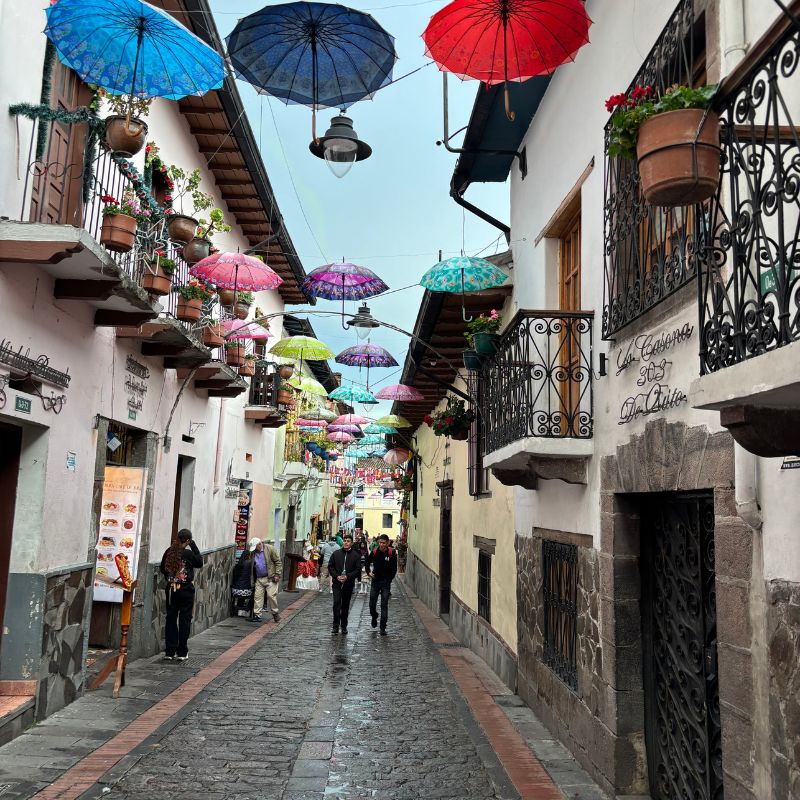
One of the things I appreciated most about Quito was how comfortable I felt exploring on foot during the day. From lively plazas to colorful side streets, I found the Historic Center easy to navigate while using the same common-sense precautions I would in any large city.
Is Quito Safe?
Safety is one of the most common questions people ask about visiting Quito, and it’s something I researched extensively before arriving.
Personally, I never experienced any problems during my stay.
As a solo traveler, I followed the same precautions I use in many large cities. I used Uber for longer distances, stayed within the main tourist areas, avoided neighborhoods locals recommended skipping, and didn’t walk around late at night with valuables on display.
That said, the concerns aren’t entirely unfounded.
During my Cotopaxi tour, another traveler shared that they had been robbed earlier in their trip. Fortunately, they weren’t injured and only lost cash, but it was a reminder that incidents do happen.
For me, the takeaway wasn’t to avoid Quito, it was simply to stay aware of my surroundings, use common sense, and avoid becoming an easy target. Taking those basic precautions allowed me to enjoy the city without ever feeling like safety dominated my experience.
Final Thoughts
Quito turned out to be exactly what I had hoped for, and somehow even better.
I arrived expecting a city that would remind me of Cusco, and while there are certainly similarities, Quito quickly established its own identity. Between its beautifully preserved Historic Center, breathtaking viewpoints from TelefériQo, the unique experience of standing on the equator, and the unforgettable landscapes of Cotopaxi National Park, I found more than enough to fill four memorable days.
What surprised me most, though, wasn’t just how much I enjoyed Quito, it was how naturally it made me curious about the rest of Ecuador. Before this trip, Quito was the destination. By the time I left, it had become my introduction to an entire country I realized I had barely begun to understand. From the Avenue of the Volcanoes and Baños to Cuenca, the Amazon, and eventually the Galápagos, I left with a growing list of places I wanted to experience for myself. That’s probably the highest compliment I can give any destination, it made me excited to come back.
If you’re planning a trip, I’d encourage you not to treat Quito as simply the city you fly into before heading elsewhere. Give it a few days, wander its historic streets, venture into the surrounding Andes, and take advantage of at least one day trip outside the city. I have a feeling that, like me, you’ll leave not only appreciating Quito but already thinking about a return trip to discover even more of Ecuador.
Next Up: The Best Day Trips from Quito
We’ll leave the city behind and explore six incredible day trips that showcase just how much of Ecuador you can experience without changing hotels.
Continue Exploring
- The Best Day Trips from Quito — Explore Cotopaxi, Quilotoa, Otavalo, and other easy escapes while keeping Quito as your base.
- Where to Go in Ecuador: Choosing the Right Region — Compare Ecuador’s major regions and decide where you might want to go next.
- Why I Used a Local Agency for Machu Picchu—Twice — See why I chose local help for two very different Machu Picchu trips and what I learned from both experiences.
- Cusco Is Not Just a Base for Machu Picchu — Spend some time exploring Cusco itself, from its historic center and markets to the experiences that make the city worth more than a quick stop.