We Saw Everything in Cairo, But Barely Experienced Cairo
This post is part of my Egypt & Jordan series, following our family trip from Cairo’s pyramids and museums to Luxor’s temples, the Dead Sea, and Petra. Throughout the series, I share how we planned the trip, where we stayed, how we used points and travel credits, and what I’d do differently next time, including where I wish we’d slowed down. You’ll find more guides in the Continue Exploring Egypt & Jordan section at the end.
Cairo was one of those places I’d wanted to visit for years. The pyramids, the Sphinx, ancient temples and museums, it was a trip built around places I’d seen in books and photos my entire life.
It was also probably the first family trip where I can confidently say we were traveling outside our comfort zone. We’d traveled internationally together plenty of times, but Egypt felt different: more logistics, a language barrier we weren’t used to navigating, and a style of travel less familiar than our trips through Europe or Latin America.
That’s a big reason I relied heavily on guided excursions. I wanted to maximize our time and have someone else handle the logistics, but more importantly, I wanted my parents to experience Egypt’s history in their native language, Spanish. Finding Spanish-speaking guides became one of my priorities when planning the trip.
And in that sense, the plan worked incredibly well.
We explored Giza, Saqqara, Memphis, and Dahshur, visited Cairo’s major museums, wandered through Islamic and Coptic Cairo, and made it to Khan el-Khalili. We saw an incredible amount but by the end of the trip, I realized we’d barely experienced Cairo itself.
That’s not a criticism of the itinerary or something I regret. For a first trip somewhere that felt so unfamiliar, having that structure made sense. But now that I’ve been once, I could absolutely see myself returning to Cairo and approaching the city differently: fewer scheduled stops, more time in individual neighborhoods, longer evenings, cafés, and room to simply wander.
If you’re planning your own first visit, I’ll break down that slower approach in [How Many Days Do You Need in Cairo? A Realistic First-Time Itinerary]. This trip was our introduction to Cairo, and despite how much we saw, it ultimately showed me just how much we’d left to experience.
Our Cairo Trip at a Glance
- Our approach: A family trip built around guided sightseeing, with Spanish-speaking guides so my parents could experience the history in their native language.
- What we covered: Giza, Saqqara, Memphis, Dahshur, three major museums, Coptic and Islamic Cairo, and Khan el-Khalili.
- Standout experiences: Breakfast with pyramid views at Mena House, entering the Red Pyramid, and seeing the Royal Mummies Hall.
- What worked: Having guides handle logistics helped us feel comfortable and make the most of our sightseeing time.
- What I’d change: Two nights at Mena House and more unscheduled time for neighborhoods, cafés, and evenings along the Nile.
Arrival in Cairo
We started our journey at JFK, flying to Cairo with a layover in Rome. Breaking up the trip in Italy made the long journey surprisingly manageable, and by the time we landed in Cairo, we were tired but still excited to finally be there.
One of the first things I had researched was the visa process. U.S. travelers can obtain a visa on arrival for around $25 USD, and that’s exactly how it worked for us. There were a few visa counters open when we landed, but the process moved quickly.
One important detail I didn’t realize beforehand: the visa is per entry, not per trip. Cairo was only the beginning of our itinerary. After exploring Cairo and Luxor, we would fly to Amman for the Jordan portion of our trip, including the Dead Sea and Petra, before returning to Cairo for about a full day ahead of our flight home. There was absolutely no way I was going to plan a tight international connection at the end of a trip like this, so we intentionally built in that buffer.
Because we left Egypt and later re-entered, we had to purchase another visa when we returned to Cairo. It wasn’t a major issue, but it’s something worth knowing if you’re planning an Egypt and Jordan itinerary, or any trip that has you entering Egypt more than once.
Having airport pickup included in our guided package also made arrival significantly easier. Instead of navigating taxi offers and logistics after a long flight, our driver was already waiting curbside.
From there, we made our way directly to our first hotel: the Marriott Mena House, where we’d wake up the next morning to our first real views of the pyramids in the light of day and the realization that we’d finally made it to Egypt.
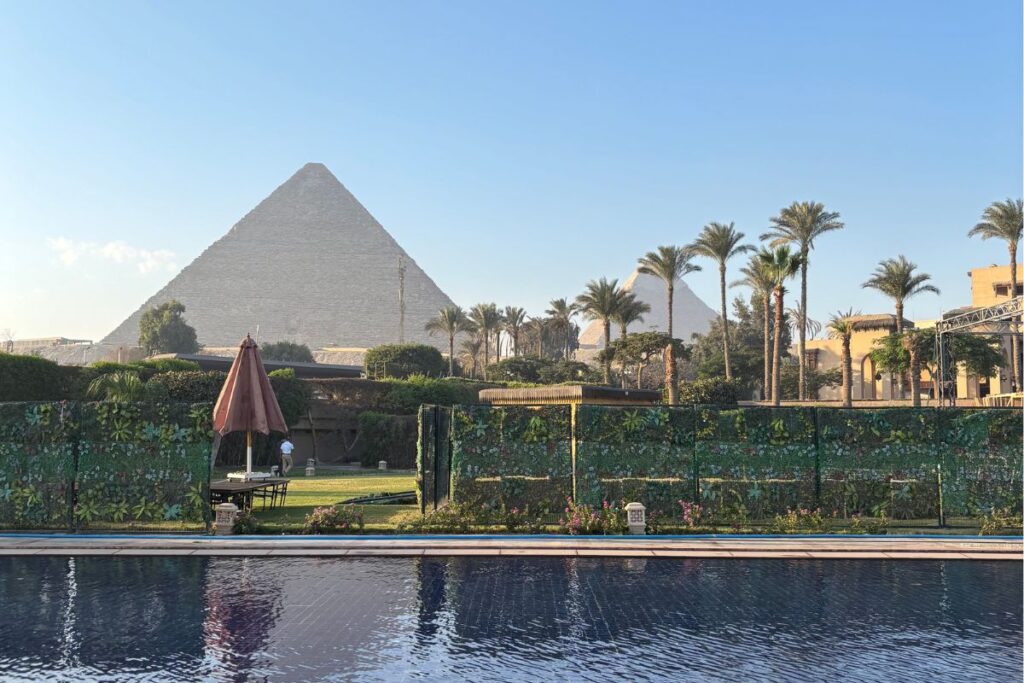
Our first breakfast in Cairo came with a pyramid view, one of those “we’re really in Egypt” moments.
Marriott Mena House
The Marriott Mena House is one of those iconic Cairo stays, booked almost entirely for its location and views of the pyramids.
Even though I’m a Marriott Platinum member, we didn’t receive the pyramid-view upgrade I had quietly hoped for, but the property itself was still beautiful.
We arrived in the evening, and even after a long travel day, we made it a priority to walk around the property before calling it a night. Eventually, we settled in at one of the hotel’s restaurants, where we had dinner and got our first chance to slow down and take in where we were.
The following morning, we returned to the same restaurant for breakfast, this time with those classic pyramid views in front of us. It was one of those surreal moments that made it very clear: we were finally in Egypt.
But shortly after breakfast, we were off for our first full day of sightseeing. And already, a theme of the trip was starting to appear:
We simply didn’t have enough time to actually enjoy the places we were staying.
Mena House is the kind of hotel you book as part of the experience itself: walking the grounds, having breakfast with pyramid views, and actually giving yourself time to slow down. We got a taste of that, but after spending the entire following day away from the property, I realized one night really wasn’t enough.
In hindsight, I would have stayed two nights at Mena House. We still could have followed essentially the same sightseeing itinerary, but having another evening at the hotel would have given us much more time to enjoy a property we’d specifically chosen for the experience.
Explore Marriott Mena House and check current rates →
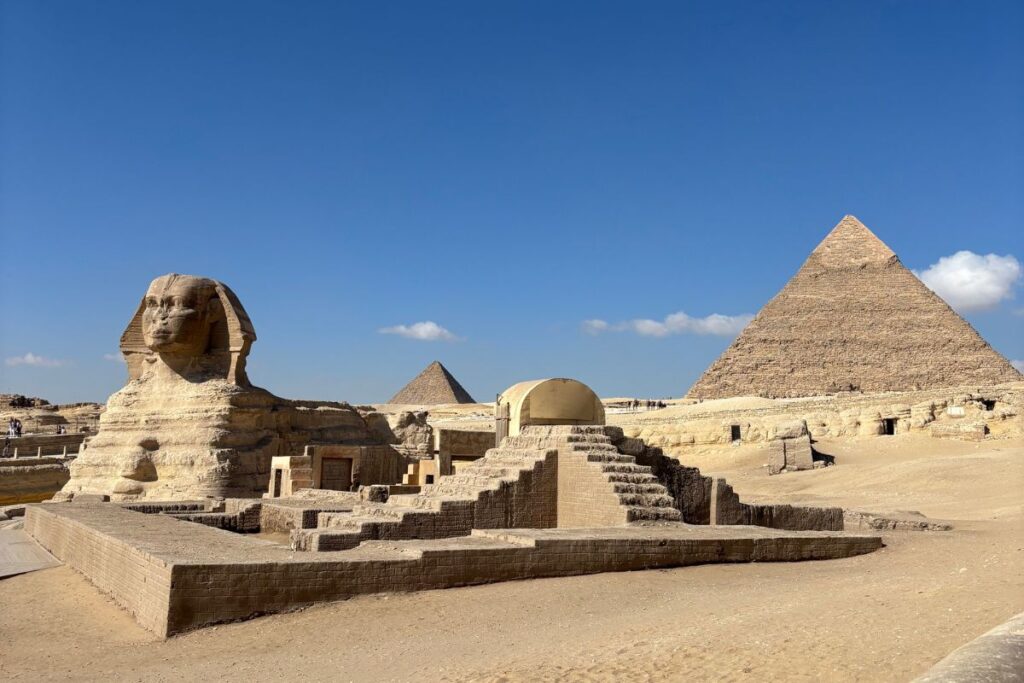
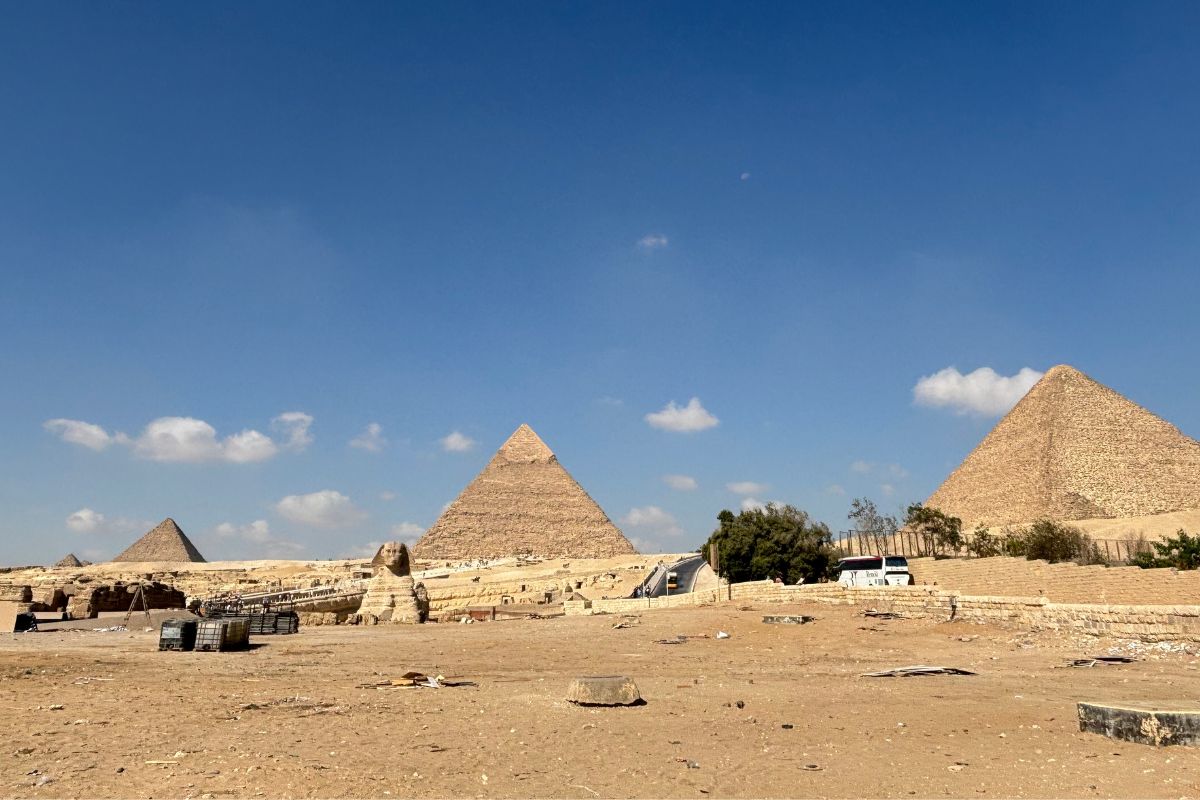
No matter how many times you’ve seen them in photos, nothing quite prepares you for seeing the Pyramids of Giza and the Great Sphinx in person.
Giza Pyramids and the Sphinx
Our first full day of sightseeing started with the Giza Pyramids and the Sphinx.
One of the biggest benefits of having a guide was how seamless everything became. Tickets were handled, entry was streamlined, and we moved efficiently through the complex without worrying about logistics or navigation.
And that mattered more than I expected because the Giza complex is huge. Improvements like ticket kiosks and shuttle buses make visiting independently easier, but I was still especially glad to have someone who knew exactly where we were going.
We covered a lot of ground, moving between the pyramids, viewpoints, the Sphinx, and plenty of photo stops. We never felt rushed, but we were rarely sedentary for very long.
I can easily imagine the same visit taking us most of a day on our own, with more backtracking and time spent figuring out where to go next. Instead, our guide kept us moving efficiently while still giving us time to take everything in.
And then you see the pyramids in person.
They are everything you imagine, and still somehow more overwhelming than expected. Massive, silent, and surreal in scale. Even after seeing them in photos your entire life, standing in front of them feels completely different.
Before the trip, I debated whether we should go inside the Great Pyramid. Most of what I read suggested it was more about the experience than what you actually see, narrow passageways, heat, and very little inside.
We also knew this wouldn’t be our only opportunity to go inside an ancient Egyptian site. Later, we’d be entering the Red Pyramid at Dahshur, and in Luxor, much more of our sightseeing would involve going inside tombs, temples, and other ancient spaces.
Since entering the Great Pyramid required an additional ticket, we decided to skip it. Nothing I’d found in my research made me feel like we’d be missing an essential part of Giza, especially considering everything else we had planned.
After visiting, I still think that was the right choice. The magic of Giza was really the scale and presence of the pyramids themselves.
As we moved through the complex, our guide brought us to different viewpoints until we reached the classic panoramic spots where all three pyramids line up in the background.
And yes, we did the camel ride.
Touristy? Absolutely. Worth it? Also yes.
It was my first time riding a camel, and I was not prepared for how tall they are, or how much movement you feel when they stand up. For a few seconds, I was fully convinced I was about to fall off. Thankfully, everyone stayed on, and we ended up with some of my favorite photos of the trip.
Explore guided visits to the Giza Pyramids and Sphinx →
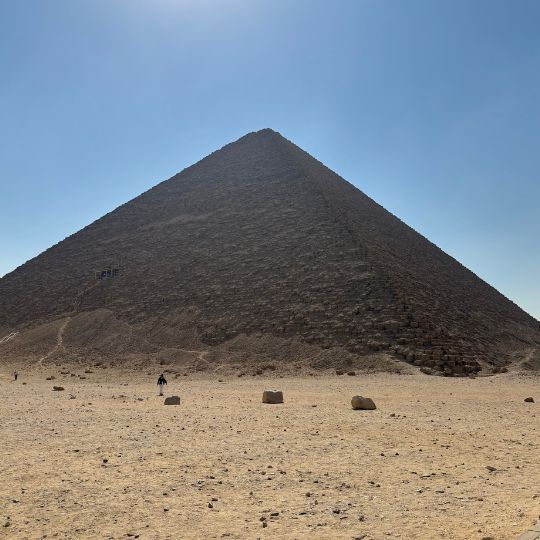
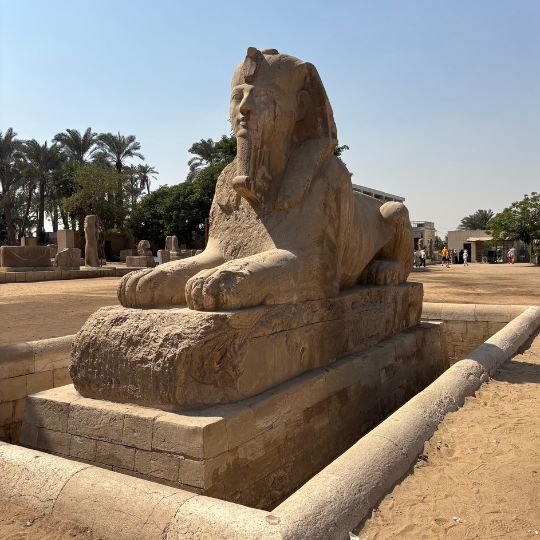
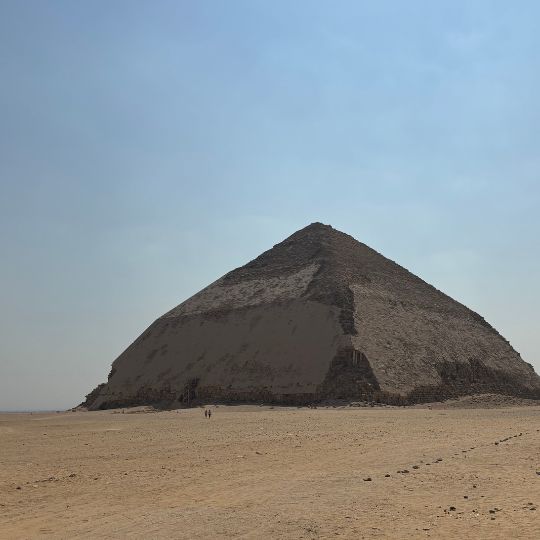
Giza may have the icons, but Saqqara, Memphis, and Dahshur gave us a completely different look at ancient Egypt.
Saqqara, Memphis, and Dahshur
Our second guided day took us beyond Giza to Saqqara, Memphis, and Dahshur, three places that, in all honesty, I barely knew existed until I started researching this trip.
Before planning Egypt, I knew the landmarks most first-time visitors probably know: the Pyramids of Giza, the Sphinx, and the Egyptian Museum. Saqqara, Memphis, and Dahshur weren’t on my radar at all.
And compared to Giza, they still feel surprisingly under-the-radar. The sites were noticeably quieter and more sparsely visited, and because they’re spread out, you’ll spend time driving between them rather than exploring one large complex. If you only have a day or two in Cairo, I can understand why these might not make the cut. But together, they add a lot of context to what you see at Giza.
Saqqara was especially important in the development of ancient Egyptian pyramid building. The Step Pyramid of Djoser predates the famous pyramids at Giza and represents one of the earliest monumental stone structures in Egypt. The surrounding archaeological landscape also includes tombs, smaller pyramids, and excavated structures, giving the area a much more layered and less polished feel than Giza.
Then there’s Memphis, once one of ancient Egypt’s most important cities and an early capital. Today, you’re not walking through anything resembling a preserved ancient city; it’s more of an open-air archaeological site. The standout for us was the enormous statue of Ramses II, which gives you at least some sense of the scale and importance Memphis once had.
But for us, Dahshur was the most memorable stop.
Dahshur helps fill in another piece of the pyramid story. Here you can see the Bent Pyramid, where the changing angle visibly shows how pyramid construction was still evolving, and the nearby Red Pyramid, one of the earliest successful smooth-sided pyramids.
And unlike at Giza, this was the pyramid we chose to go inside.
You descend through a long, narrow, sloped passageway, at times essentially walking backward as you make your way down. It’s dark, warm, physically awkward, and a little disorienting, but incredibly fascinating.
There’s not a spectacular decorated chamber waiting at the bottom. The experience is the act of going inside the pyramid itself, which is exactly why we were comfortable skipping the interior of the Great Pyramid at Giza.
My mom took one look at the entrance and happily opted to wait for us outside in the shade. And after making the climb myself, I can confidently say: if you’re claustrophobic, she probably made the right call.
Compare guided day trips to Saqqara, Memphis, and Dahshur →
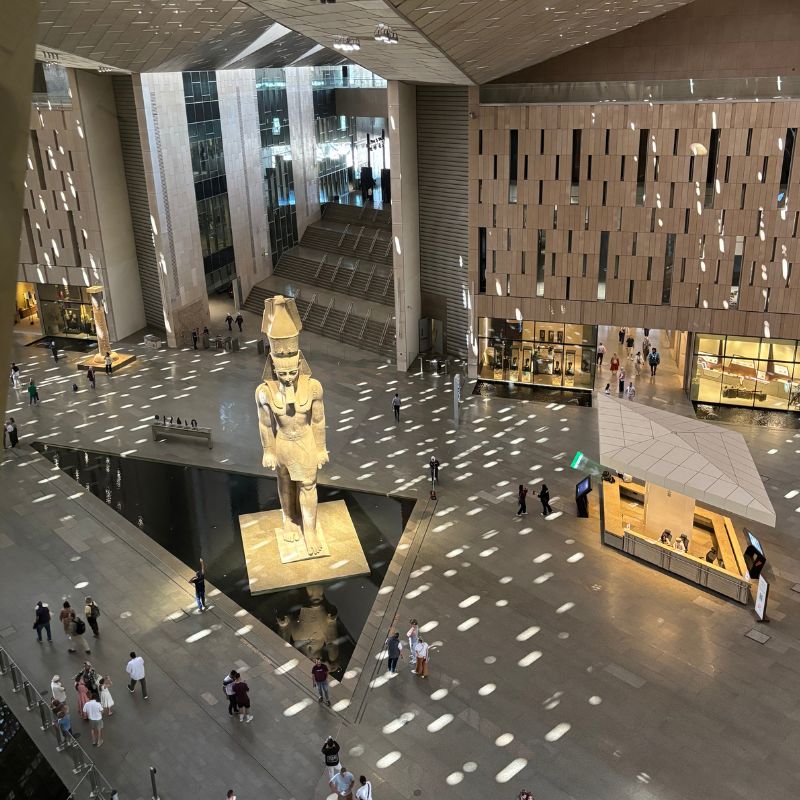
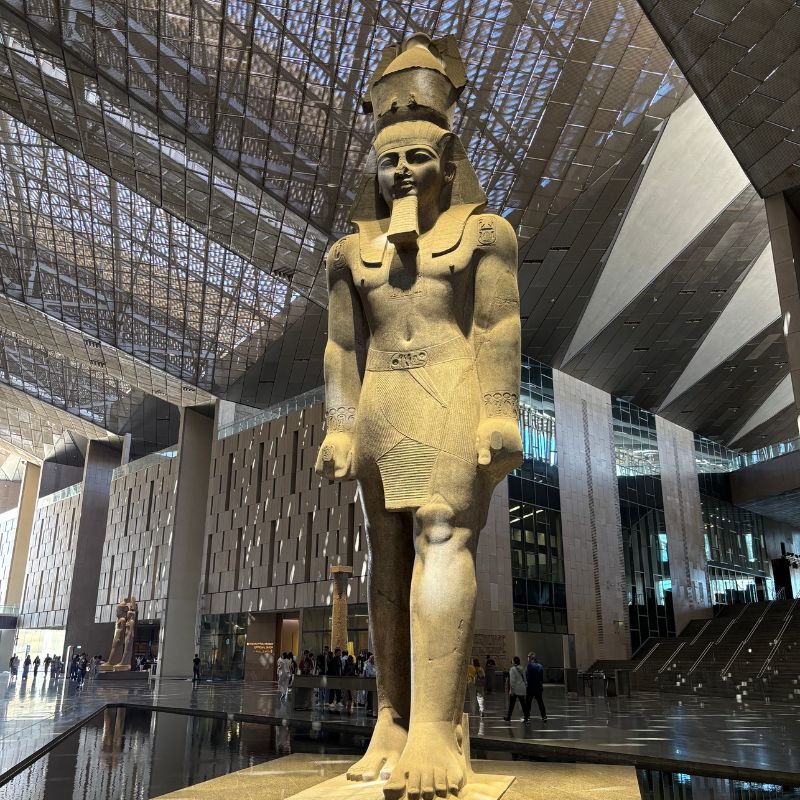
The Grand Egyptian Museum felt massive before we even reached the galleries, with the colossal statue of Ramesses II towering over the Grand Hall.
Three Museums, Three Very Different Experiences
Over the course of our time in Cairo, we visited three major museums, and they ended up feeling surprisingly different from one another.
The Egyptian Museum in Tahrir Square was the version of an Egyptian museum I had pictured before the trip: historic, packed with artifacts, and almost overwhelming in how much there is to look at. There’s something fitting about experiencing Egypt’s ancient history in a museum that feels historic itself.
The Grand Egyptian Museum was the complete opposite. When we visited in October 2025, the museum had not yet celebrated its official grand opening, but much of it was already accessible to the public, including its 12 main galleries, Grand Hall, and Grand Staircase. The major exception was the highly anticipated Tutankhamun Galleries, which remained closed until the official opening the following month.
Even without those galleries, GEM felt enormous, modern, and very intentionally designed. After seeing artifacts in more traditional museum settings, walking through this massive new space offered a completely different way to experience ancient Egyptian history.
Our third museum was the National Museum of Egyptian Civilization, which we visited after returning to Cairo from Jordan. This was actually one of my favorites. It’s smaller and quieter than GEM, and its collection tells a broader story of Egyptian civilization from prehistoric times through more recent history.
But the main reason it stood out was the Royal Mummies Hall. The museum displays 20 royal mummies, including Hatshepsut, Thutmose III, Seti I, and Ramses II, in a space designed to evoke the atmosphere of the Valley of the Kings.
After spending the trip visiting pyramids, temples, tombs, and museums, seeing some of the actual rulers we’d been learning about added a completely different dimension to everything.
And if all those pharaoh names are starting to blur together, just wait until we get to Luxor. There will be a pop quiz on every name you’ve heard in Cairo.
Explore Grand Egyptian Museum tickets and guided tours →
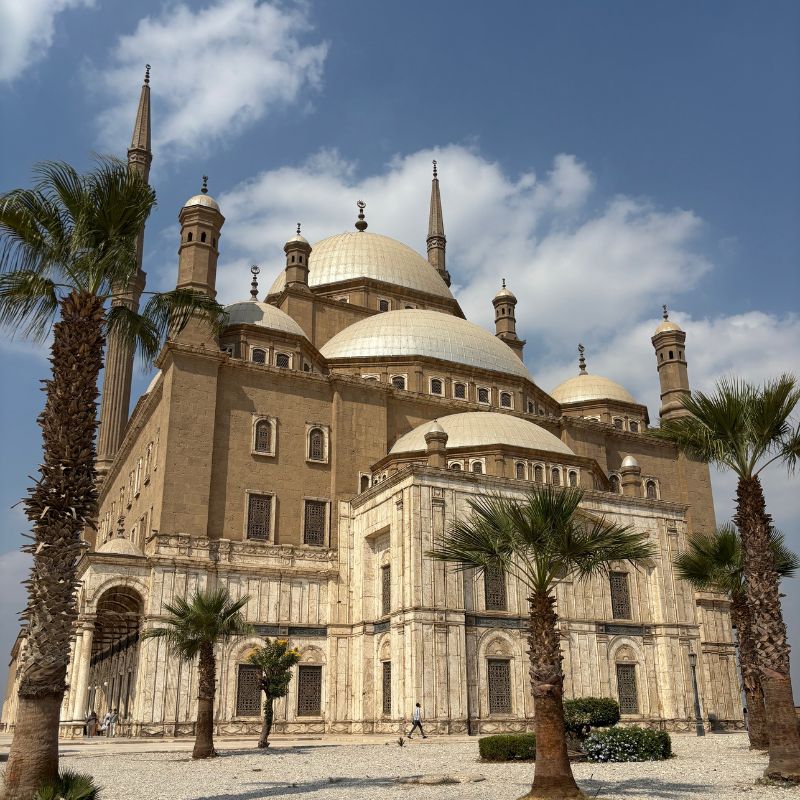
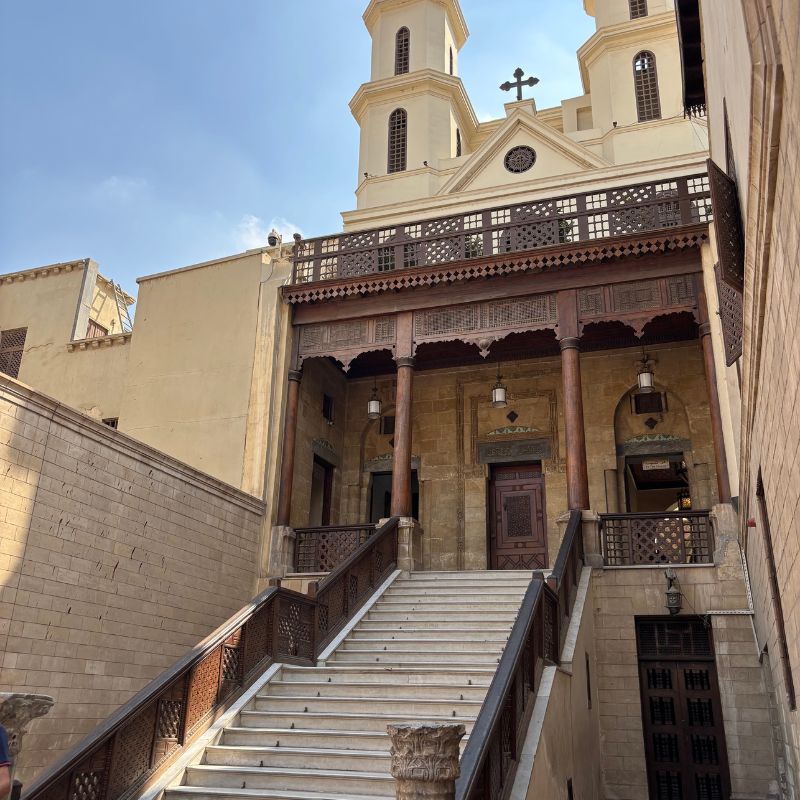
From the mosques of Islamic Cairo to the churches of Coptic Cairo, this part of our itinerary showed us a completely different side of the city.
Experiencing Cairo Beyond the Landmarks
By the time we explored Coptic Cairo, Islamic Cairo, and Khan el-Khalili, the rhythm of our trip was well established: full mornings, guided sightseeing, structured stops, and very little downtime.
And this was where I started wishing we’d built in just a little more of it.
Khan el-Khalili stood out in particular. We walked through the market with our guide, saw the main sections, and kept moving. But we didn’t sit in a café, wander down side streets, or spend an evening getting completely lost in it.
The same was true elsewhere in Cairo. We visited historic churches in Coptic Cairo and mosques and landmarks throughout Islamic Cairo, but most of the time we were experiencing the city through individual stops rather than simply spending time in its neighborhoods.
Explore guided tours of Coptic Cairo, Islamic Cairo, and Khan el-Khalili →
One of the few exceptions came while we were staying at the InterContinental Cairo Semiramis. Its location along the Nile felt much more connected to the city than our stay near the pyramids. One evening, we had dinner overlooking the river and walked across the nearby bridge toward Zamalek with nowhere in particular we needed to be.
It was such a simple part of the trip, but that moment stood out because it was rare.
Most days started with hotel breakfasts and ended with us exhausted after a full day of touring. We saw almost everything we’d come to Cairo to see, but we didn’t have many of those in-between hours when a city starts to feel less like a collection of attractions and more like somewhere people actually live.
Explore InterContinental Cairo Semiramis and check current rates →
What I’d Do Differently on My Next Trip to Cairo
By the end of our time in Cairo, I realized something important: you can absolutely see Cairo in a few packed days, but experiencing it takes something slower.
And I don’t regret the way we planned this trip. The guided excursions helped us navigate a destination that initially felt outside our comfort zone, let my parents experience Egypt’s history in Spanish, and allowed us to cover an incredible amount of ground. For a first visit, that structure worked.
But if I returned, I’d plan differently. I’d still visit the major landmarks, but I’d leave more room for neighborhoods, cafés, evenings along the Nile, and those unplanned hours when you aren’t trying to get anywhere in particular.
Our final night actually brought the trip full circle. After returning from Jordan, we checked into the Le Méridien Cairo Airport because our flight home departed around 4 AM. We dropped off our bags, headed back into Cairo for one last day, and returned that evening completely exhausted.
Explore Le Meridien Cairo Airport and check current rates →
And don’t sleep on the airport hotel. It was much nicer than I expected, and for an early departure, the location is hard to beat. The hotel is directly connected to Terminal 3 by a pedestrian bridge, so we could literally walk to the terminal in the middle of the night.
Bonus points for the breakfast buffet, which we’d enjoyed earlier in the trip upon returning from Luxor, and the Club Lounge. After a big lunch and a full final day of sightseeing, none of us wanted another restaurant meal. The lounge’s evening spread was exactly what we needed: enough for a light dinner before heading upstairs to pack and get a few hours of sleep.
It was a very practical ending to a trip that taught me quite a bit about how I like to travel.
Sometimes the best memories aren’t the landmarks you checked off a list, but the moments you never planned for. And next time I visit Cairo, I want to leave a lot more room for those moments.
For us, though, Cairo was only the beginning.
Continue Exploring Egypt & Jordan
- How Many Days Do You Need in Cairo? — How I’d give the pyramids, museums, and historic neighborhoods more breathing room than we did.
- Where to Stay in Cairo — Choosing between a pyramid-view stay, a central city base, and an airport hotel when your flights call for one.
- Luxor Needed More Downtime Than We Gave It — The temples, balloon ride, and Nile-side afternoons that made me wish we’d stayed longer.
- Petra Was Worth It—But We Planned It Wrong: Where our family trip went after Egypt, and why visiting Petra from the Dead Sea made for a much longer day than expected.