The Travel Gear I Would Replace Tomorrow If I Lost It
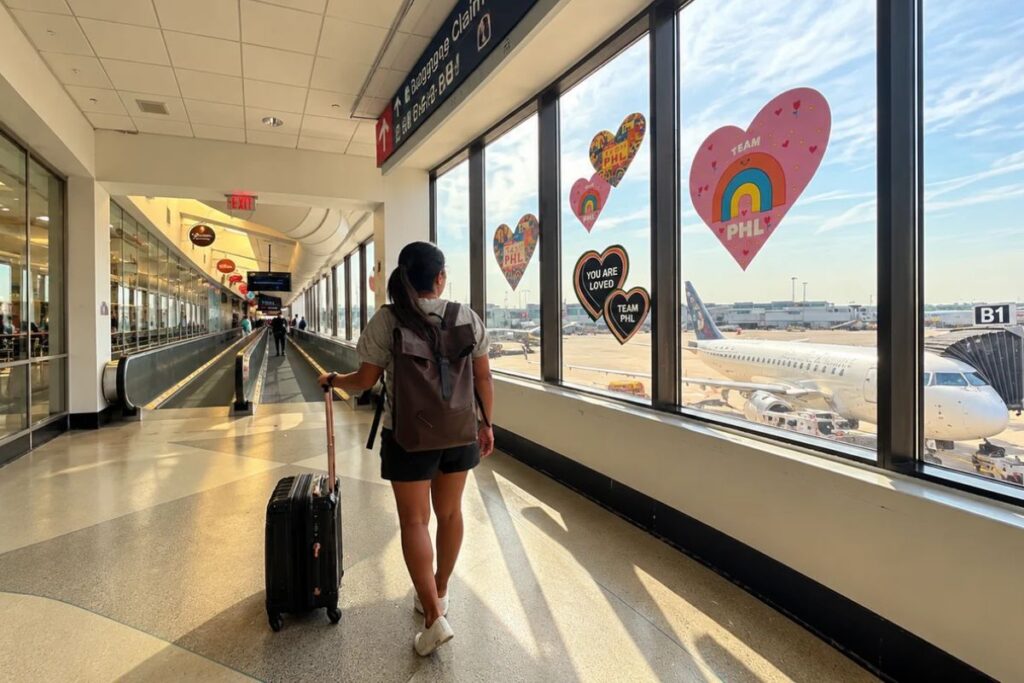
The travel setup I’ve refined over years of international trips: a carry-on suitcase, one backpack, and fewer things that earn their place.
Over the years, I’ve come to appreciate having fewer things that mean more to me. It’s a philosophy that has gradually shaped almost every part of how I travel, from the souvenirs I bring home to the gear I pack in my suitcase.
I used to think traveling meant coming home with souvenirs for everyone, including myself. Every destination needed a keepsake, every market had something I might regret not buying, and I felt an obligation to bring gifts home for friends and family.
These days, I’m much more intentional. Instead of asking whether I have room in my suitcase, I ask whether something will genuinely add value to my life once I get home. Will I actually use it? Will it remind me of a special experience? Or will it simply become one more object that needs a place to live?
Now, I usually bring home a single magnet from each destination. It gives me a small reminder of the places I’ve been without adding clutter to my home. And when I buy gifts for friends or family, it’s because something immediately reminds me of them and I know they’ll enjoy it, not because I feel obligated to bring everyone something back.
That same less-is-more philosophy extends to everything I pack.
Over the last few years, I’ve worked to simplify almost every part of how I travel. Fewer clothes. Fewer gadgets. Fewer just-in-case items. Whenever possible, I look for products that can serve more than one purpose, allowing me to pack less without giving up anything I actually need.
I can now usually pack or unpack my suitcase in about ten minutes, which makes a huge difference when I’m spending weeks abroad and moving between hotels every few days.
And I’m not interested in filling that suitcase with travel gear just because something is popular or promises to make traveling easier. I’d much rather find a handful of products that genuinely improve how I travel and keep using them for years.
So this isn’t a list of every travel product I own. These are the things that have actually earned their place in my suitcase through real trips, mistakes, and countless miles.
PWR Travel Pro Power Bank
If you’ve ever traveled internationally, you know how quickly chargers, cables, adapters, and power banks can take over your bag.
This one device replaces almost all of them.
I originally bought the PWR Travel Pro after seeing it on Instagram, before it was even available on Amazon. My first thought was, How is this not everywhere?
What makes it so useful isn’t just that it’s a portable charger. It’s both my hotel room charging station and my power bank when I’m out exploring.
At the hotel, I plug it directly into the wall using one of its interchangeable international adapters and charge multiple devices overnight. Then, when I’m heading out for the day, I simply unplug it and take it with me. The battery has enough power to keep multiple devices charged without having to hunt down an outlet.
It also has built-in charging cables and wireless charging, so I’m not constantly juggling separate cords and accessories. If I’m traveling without my laptop and don’t need my larger three-prong adapter, this is the only charger I pack.
One device doing the job of several means less to pack, fewer cables to keep track of, and one less thing to think about when I’m moving between hotels.
And I know how much I rely on it because when I accidentally left mine on a train, I didn’t spend weeks researching alternatives. I ordered another one immediately.
I even bought one for my dad as a Christmas gift, and it’s become one of those products I recommend whenever someone asks what travel gear is actually worth buying.
There are very few travel products I’d replace without hesitation. This is one of them.
Check the current price on Amazon →
REI Co-op Stuff Travel Pack – 18 L
Before my five-week South America trip, I knew I’d be leaning into my most outdoorsy self. I bought my first pair of hiking boots and started looking for a backpack that could handle whatever weather came my way. I had my eye on the RAINS backpack, but I wasn’t sure how much hiking I’d actually be doing, and I hesitated to spend over $100 on something I thought might only get used once.
Instead, I went with a less expensive, collapsible REI daypack advertised as weatherproof. At the time, I assumed weatherproof and waterproof were interchangeable. Why spend more when I could get something lighter, cheaper, and easier to pack? Well, Cotopaxi Volcano in Ecuador taught me the difference.
Snow was falling around us, and by the time we made it back down the mountain, every layer I was wearing was soaked. Thankfully, I’d packed a change of clothes for the drive back. Unfortunately, when I opened my backpack, those clothes were completely soaked too. Weatherproof and waterproof are not interchangeable, and I learned that lesson the hard way.
But that doesn’t mean the REI backpack was a bad purchase. It simply wasn’t designed for the conditions I expected it to handle. Since then, I’ve realized it has a completely different role in my travels.
When I travel solo, I usually spend the day exploring with nothing more than my crossbody bag. But when I travel with my parents, it’s a different story. Someone inevitably wants to carry water bottles, a light jacket, sunscreen, hats, snacks, or an extra pair of shoes. That’s where this backpack shines.
It weighs almost nothing, folds down small enough to disappear into my carry-on, and takes up virtually no space until we actually need it. We’ve used it on hot sightseeing days in Egypt and Spain, when carrying a heavier backpack all day would have been miserable. And because it packs away so easily, I don’t mind bringing it along even when I’m not sure we’ll use it.
Would I use it as my primary hiking backpack in unpredictable weather? No. Would I recommend packing one if you’re traveling with family, heading to the beach, or simply want an extra daypack that doesn’t take up valuable suitcase space? Absolutely.
Sometimes the best piece of travel gear isn’t the one you use every day. It’s the one you’re really glad you packed when the situation calls for it.
Check the current price at REI →
RAINS Rolltop Rucksack
After returning home from five weeks in South America, I knew one thing for certain: before my next adventure, I wanted a backpack that could actually stand up to the rain.
With a trip to Central America on the horizon, I started looking for something genuinely waterproof. Ironically, the RAINS backpack was the one I’d been considering before South America, but I’d talked myself out of buying it.
I hesitated because of the price, and I worried it might look too bulky for everyday travel. Then Black Friday rolled around, Nordstrom marked down a brown colorway, and I decided to give it a chance.
It has since become my default travel backpack.
What I love most is its slim, minimalist design. Unlike bulkier travel backpacks, it sits comfortably against my back without feeling oversized, making it easy to carry through airports, cities, and crowded public transportation.
On my Costa Rica trip, I realized just how useful that versatility was. While moving between airports and crossing borders, it held my laptop and everything I wanted to keep close at hand. Once I reached my destination, I could empty out what I didn’t need and use the same backpack as my daypack for sightseeing.
One backpack doing two different jobs, without having to pack a separate bag for each. That’s exactly the kind of travel gear I appreciate, especially when I’m trying to fit everything into a carry-on.
It also has a separate laptop compartment with its own zipper, which is one of my favorite features. I can quickly pull out my laptop without opening the main compartment or digging through everything else I’ve packed.
And, of course, there’s the reason I bought it in the first place: the waterproof material. After my experience on Cotopaxi, having a backpack designed to keep my belongings dry in wet weather was no longer something I was willing to compromise on.
There are a couple of trade-offs worth knowing. The RAINS backpack doesn’t have a suitcase pass-through, so I carry it on my back rather than sliding it over my carry-on handle. It’s also relatively small. The slim design is exactly why I like it, but don’t expect to pack several days’ worth of clothes inside.
For me, that’s perfectly fine. I typically travel with a carry-on suitcase and a backpack, and the RAINS gives me enough space for my laptop, electronics, and the essentials I want accessible while traveling.
It’s one of those purchases that reminded me buying the right thing once is often cheaper than buying the wrong thing first.
Since that first Central America trip, I’ve taken it through Europe, on family trips through Spain, and on everything from longer international adventures to quick weekend getaways. I haven’t felt the need to look for something better.
It’s not the backpack I’d choose if I needed to carry everything for a multi-day trip. But for the way I actually travel, with a carry-on suitcase and a smaller backpack that can move from travel day to sightseeing day, it’s exactly what I was looking for.
Check the current price on Amazon →
TUMI Just In Case Backpack
Before I started traveling with a laptop, this was my international travel backpack.
I didn’t need anything particularly large. I just wanted something that looked a little more polished than a traditional hiking backpack. When I’m wandering through European cities all day, I personally prefer a bag that blends in a bit more than one that immediately says, “tourist.”
You might be wondering why I was willing to buy a TUMI backpack but hesitated to spend over $100 on a hiking backpack.
Simple.
I didn’t pay anywhere close to full price.
One of my favorite parts of the points and miles hobby is learning how to maximize the benefits that come with the cards I already have. At the time, the Amex Platinum offered a Saks Fifth Avenue statement credit, which I combined with a Black Friday sale. Suddenly, a backpack that normally felt out of reach became a much easier purchase to justify.
Credit card benefits change, though. American Express discontinued the Platinum Card’s Saks Fifth Avenue credit on July 1, 2026, so this particular combination of savings is no longer available. But the lesson still applies. Before making a bigger purchase, I always check my current card benefits, available offers, and upcoming sales to see whether there’s a smarter way to buy something I already want.
For years, this was my go-to backpack on international trips. It fit everything I needed for a day of sightseeing without feeling oversized, and it packed down small enough that it never became a burden.
These days, my RAINS backpack has replaced it whenever I’m traveling with my laptop, but the TUMI definitely hasn’t been retired.
I live in Philadelphia without a car, so whenever I’m heading to the grocery store, walking across the city, or spending a day running errands, this is still the backpack I reach for. It’s lightweight, understated, and has already proven itself over years of travel.
Some travel gear only serves one purpose.
The best pieces continue earning their place long after the trip is over.
Check the current price on Amazon →
Lululemon Small Slouchy Sling Bag
This is another item that probably never would have entered my closet if it weren’t for a credit card benefit.
I’ve never really been a Lululemon shopper. My activewear has almost always come from Athleta, and I’ve struggled to justify Lululemon’s prices.
But when the Amex Platinum introduced a $75 quarterly Lululemon credit, I figured I might as well put it toward something practical.
Instead of buying another workout top I didn’t need, I started browsing their bags.
I’ll be honest.
Is this the cutest purse I own? Probably not.
Is it the most practical? Without question.
The amount I can fit inside still surprises me. A water bottle, mini umbrella, sunglasses, wallet, passport, portable charger, and all those little things that usually force me to carry a much larger bag somehow fit without making it feel like I’m lugging around an oversized purse.
And that’s exactly why it’s earned a place in my travel wardrobe.
For shorter weekend trips, I still enjoy carrying a smaller crossbody that complements my outfits. But once a trip stretches beyond a week, practicality starts winning over fashion. I don’t want to spend every morning deciding which essentials I can leave behind just to make everything fit into a tiny purse.
I’d rather carry one comfortable bag that holds everything I actually need.
This has quietly become my go-to everyday bag for longer trips. It’s roomy enough for full days of sightseeing without requiring me to carry a backpack, while still keeping everything I need within easy reach.
In fact, I liked it enough that I used my next quarterly Amex credit to buy my mom the black version.
Now I’m half tempted to borrow hers on my next trip because, as practical as my bag is, black goes with just about everything.
It’s funny how often the travel gear I end up using the most isn’t something I spent months researching. Sometimes I stumble across something almost by accident, start using it on trip after trip, and realize it has quietly become something I wouldn’t want to travel without.
Check the current price on Lululemon→
Less Is More: My Approach to Travel Gear
Over the years, my suitcase hasn’t gotten bigger. If anything, it’s gotten simpler.
And the products on this list are a pretty good reflection of why. I’m always looking for things that can serve more than one purpose. A backpack that works for airport travel and sightseeing. A charger that doubles as an international adapter. A bag that holds everything I need without forcing me to carry something larger.
The more jobs one item can do, the less I need to pack.
That’s also why you probably won’t find endless travel gear recommendations from me. I’m not constantly searching for the next gadget or accessory to add to my suitcase. Most of the time, I’m trying to figure out what I can leave behind.
Every item has to earn its place. If something goes an entire trip without being used, I seriously question whether it deserves to come on the next one.
And as this list probably makes clear, sometimes figuring out what works means getting it wrong first. I bought a weatherproof backpack when what I really needed was waterproof. I’ve replaced bags as the way I travel has changed. And some of the products I now rely on most are ones I never expected to buy in the first place.
That’s part of figuring out what actually works for you.
I don’t think traveling well is about owning more gear. It’s about owning the right gear.
These are the pieces that have earned a permanent place in my suitcase through real trips, mistakes, and countless miles. And unless something genuinely better comes along, I have a feeling most of them will still be there years from now.
Where This Travel Gear Has Taken Me
Want to see some of this gear in action? These are a few of the trips and destinations that have shaped how I travel, what I pack, and what ultimately earns a permanent place in my suitcase.
- Spain: Why Madrid Surprised Me — Madrid ended up being one of the biggest surprises of our Spain trip. Start here for the story of what made the city stand out and more from our travels through Spain.
- Central America: Why I’ll Stop Saving Central America for “Someday” — From Costa Rica and Panama to Nicaragua and El Salvador, traveling through Central America changed the way I think about the region and left me wanting much more of it.
- Ecuador: How I Spent 4 Days in Quito, Ecuador — Quito was the base for one of the trips that taught me the most about packing for unpredictable conditions, including the very wet day on Cotopaxi that changed what I look for in a travel backpack.
- Peru: Cusco Is Not Just a Base for Machu Picchu — Machu Picchu may bring most travelers to this part of Peru, but Cusco gave me plenty of reasons to slow down and spend more time exploring the city itself.
- Amsterdam: Planning a 6-Day Amsterdam Trip (And Why We Chose Slow Travel) — Six days in Amsterdam gave us enough time to explore the city, take day trips, and experience what travel feels like when you stop trying to squeeze everything into a few packed days.