What to Eat in Peru: Dishes, Desserts, Drinks & Snacks to Try
Peruvian food is personal for me. It’s the food I grew up with, so I’m obviously biased when I tell you it’s one of the best cuisines in the world. Fortunately, I’m not exactly alone in that opinion.
Lima has become one of the world’s major food destinations, with internationally famous restaurants and elaborate tasting menus that people plan entire trips around. If that’s on your bucket list, absolutely do it. But you don’t need a reservation at one of those restaurants—or a huge food budget—to eat incredibly well in Peru.
Some of my favorite meals have been much simpler: neighborhood restaurants, casual chains, markets, bakeries, and places we chose because whatever was coming out of the kitchen smelled too good to ignore. You can eat overlooking a Plaza de Armas in Cusco or Arequipa, walk a couple of blocks away and spend considerably less, or wander into a supermarket and leave with half the candy aisle in your cart.
And then there’s the sheer variety. What you should look for in Lima isn’t necessarily what you should order in Arequipa or Cusco, and cuisines like Chifa and Nikkei add another layer entirely.
So rather than tell you where you need to spend hundreds of dollars on dinner, this is about what to eat in Peru: the classic dishes worth trying, the sweets and drinks to look for, and a few things worth making room for in your suitcase.
What to Eat in Peru at a Glance
Start with the classics. Share a ceviche in Lima, order lomo saltado with both fries and rice, and try anticuchos if you spot them on the menu. They’re the dish that takes me straight back to family gatherings.
Make time for Chifa and Nikkei. Head to Lima’s Barrio Chino for arroz chaufa and tallarín saltado. For Nikkei, try tiradito or order a few dishes to share, like we did at Osaka.
Save room for something sweet. Eat picarones warm with chancaca syrup, then pick up a box of alfajores filled with manjar blanco to bring home. Mine survived the trip to Philadelphia in my backpack.
Order a local drink. Try a pisco sour, order chicha morada with lunch, or see what you make of Inca Kola. In Arequipa, I’d look for fresh papaya juice at Mercado San Camilo.
Buy edible souvenirs at the supermarket. Look for Sublime, Princesa, and Triángulo chocolates, native potato chips, and King Kong from northern Peru. This is how I ended up bringing home half the snack aisle.
Why Peruvian Food Is So Diverse
There really isn’t one type of “Peruvian food,” and geography is a big reason why. Peru stretches from the Pacific coast through the Andes and into the Amazon, giving different regions access to completely different ingredients and creating distinct regional cuisines along the way. Travel from Lima to Cusco or Arequipa and suddenly there’s an entirely new collection of dishes you should be looking for.
Then layer centuries of cultural influences on top of that. Indigenous ingredients and cooking traditions mixed with Spanish influences following colonization, while later waves of immigration brought additional culinary traditions, particularly from China and Japan, that eventually developed into distinctly Peruvian cuisines of their own.
That’s how ceviche, lomo saltado, Chifa, Nikkei, and an enormous collection of regional specialties can all comfortably fall under the umbrella of Peruvian food. And honestly, that variety is a big part of what makes eating your way through Peru so much fun.
Classic Peruvian Dishes to Try
There are far too many Peruvian dishes for this to be an exhaustive list, but these are a few classics you’ll see again and again, and that are particularly worth making room for.
Ceviche is probably the dish most international visitors already associate with Peru: fresh fish with lime, onion, and ají, usually accompanied by sweet potato and corn. With Peru’s extensive Pacific coastline, seafood is a major part of eating your way through coastal Peru, and Lima is an easy place to start. A good ceviche is light, zesty, and incredibly refreshing, and because it’s easy to share, we often add one to the table even when something else has caught our eye for the main dish.
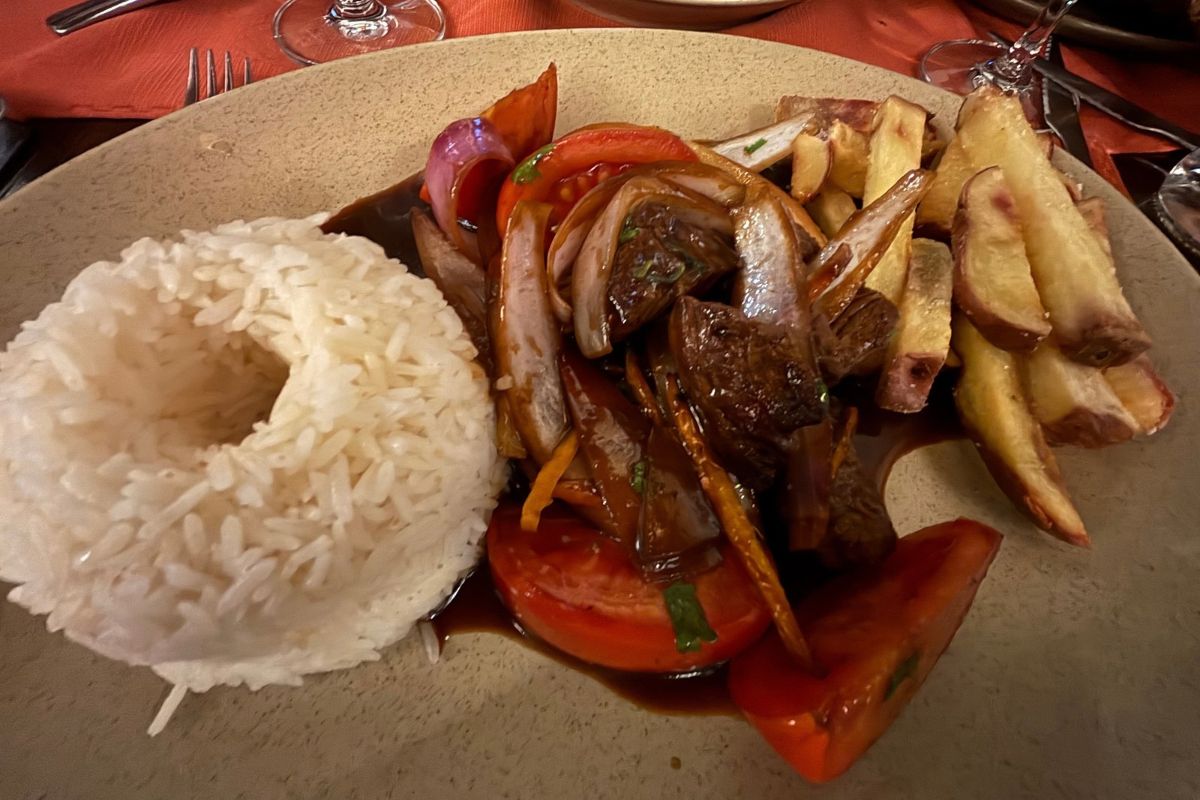
For me, that something else is often lomo saltado. It’s the dish I sometimes feel guilty ordering because there are so many other things I could be trying and then I order it anyway. It’s comfort food: beef stir-fried with onions and tomatoes in a soy-based sauce and served with French fries and rice.
Yes, French fries and rice. Just go with it. Peru is known for its potatoes—more than 4,000 varieties, to be exact—so some form of potato showing up alongside your meal is practically a given. Lomo saltado’s stir-frying technique and soy sauce also reflect the Chinese influence on Peruvian cuisine, something we’ll come back to with Chifa.
Ají de gallina is another classic: shredded chicken in a rich, creamy sauce flavored with ají amarillo, Peru’s distinctive yellow chili pepper, generally accompanied by potatoes and rice. Have you noticed the pattern yet? Peruvians are not making you choose between the two.
Then there are anticuchos, traditionally made from beef heart and a family favorite for me. I have fond memories of them being grilled at family gatherings, where there was one important rule: once the anticuchos were gone, they were gone. The meat marinates for hours before being skewered and grilled, so there was no quickly throwing together another batch. Once they started coming off the grill, it was basically a race to get yours.
If beef heart makes you hesitate, try not to think too hard about the ingredient before giving it a chance. The marinade and grilling give anticuchos so much flavor, and for me they’re as tied to memories of family gatherings as they are to Peru itself.
Finally, there’s pollo a la brasa, Peru’s enormously popular rotisserie chicken, typically served with fries and plenty of sauces. You’ll see neighborhood pollerías everywhere alongside Peruvian chains such as Pardos Chicken. This is everyday food rather than destination dining, and that’s exactly why it belongs here. Sometimes after a full day of sightseeing, you just want really good chicken and fries.
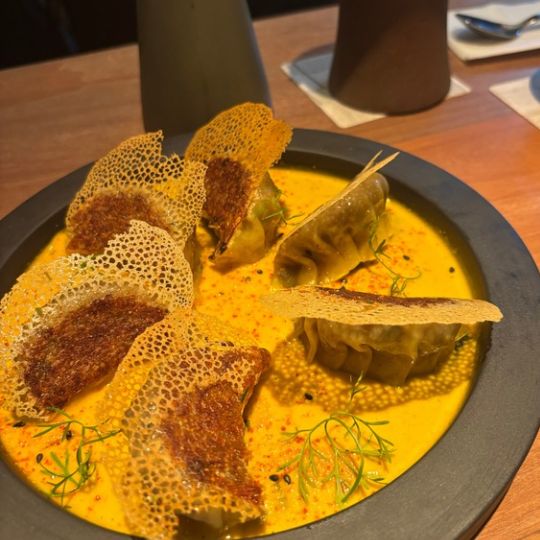
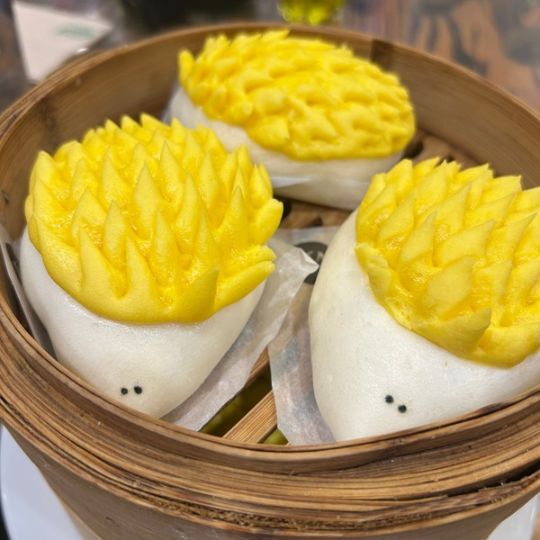
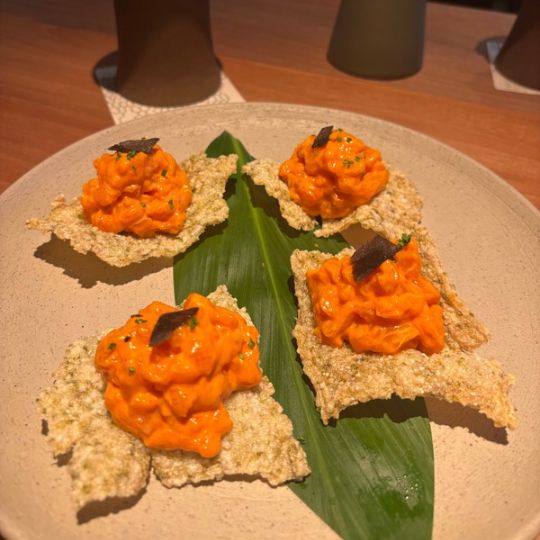
Inca Gyoza and Crispy Rice from our Nikkei dinner at Osaka, plus lúcuma-filled bao from Master Kong Paruro in Lima’s Barrio Chino.
Chifa and Nikkei: Two Cuisines That Are Completely Peruvian
Two of the most interesting parts of Peru’s food culture developed through immigration, and both show just how difficult it is to define Peruvian food as any one thing.
Nikkei cuisine grew from Japanese immigration to Peru, combining Japanese techniques with Peruvian ingredients and flavors. Seafood, citrus, soy, and ají come together in a cuisine with an identity entirely its own—and it isn’t something you need to save for an elaborate dinner in Lima. We found delicious Nikkei restaurants in Cusco too.
You’ll also see tiradito on menus throughout Peru, often right alongside ceviche. Made with thinly sliced raw fish and typically served with a flavorful sauce added just before eating, it’s worth trying even when you’re not specifically at a Nikkei restaurant.
We chose Nikkei for our final proper dinner of the trip at Osaka in Lima, ordering several dishes to share, including sushi, tiradito, Crispy Rice, and Inca Gyoza. Somewhat unexpectedly, my favorite bite was the amuse-bouche—a small, causa-like creation we hadn’t even ordered. Causa is a traditional Peruvian dish made from seasoned yellow potato, typically layered with fillings such as chicken, tuna, seafood, or avocado and served cold. Osaka’s little Nikkei interpretation was delicious, while the Crispy Rice and Inca Gyoza were the other standouts I’d happily order again.
Then there’s Chifa, the Chinese-Peruvian cuisine that developed largely through Cantonese immigration and today feels completely woven into everyday life. Chifa restaurants are everywhere, particularly in Lima, and dishes like arroz chaufa and tallarín saltado show just how thoroughly Chinese cooking traditions have become part of Peruvian food.
One of the best places to experience it is Lima’s Barrio Chino, next to the Historic Center. We ate at Master Kong Paruro, waited close to an hour for a table, and loved the meal enough that I’d happily go back. We ordered what I believe was tallarín saltado and arroz chaufa con camarones, followed by adorable little bao filled with lúcuma for dessert.
When we returned to Barrio Chino on a Saturday, seemingly every restaurant had a line out the door, so I wouldn’t get too attached to one particular Chifa. Save a few options, see what the lines look like, and come hungry.
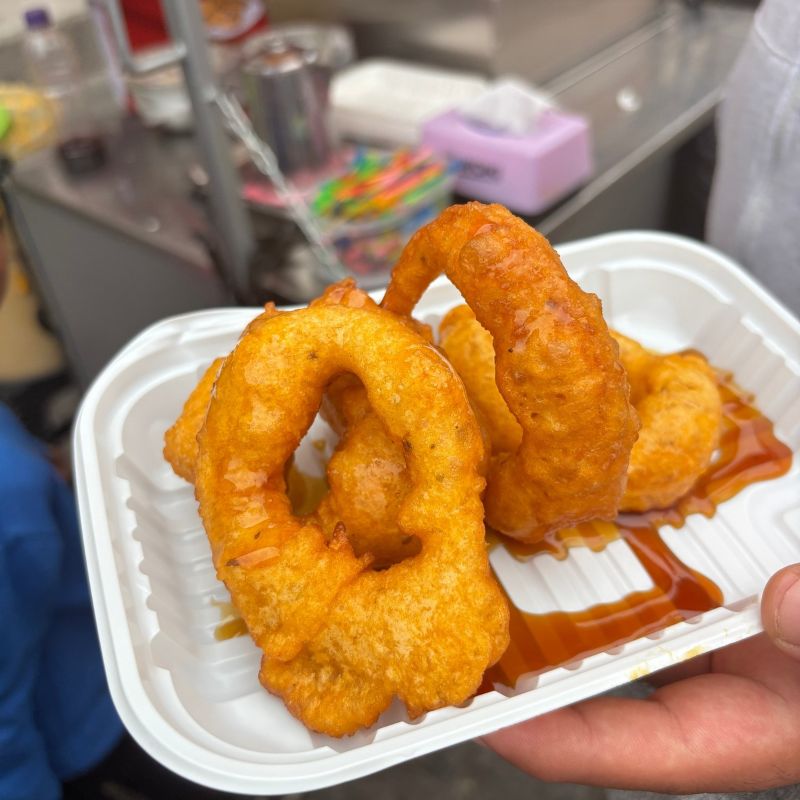
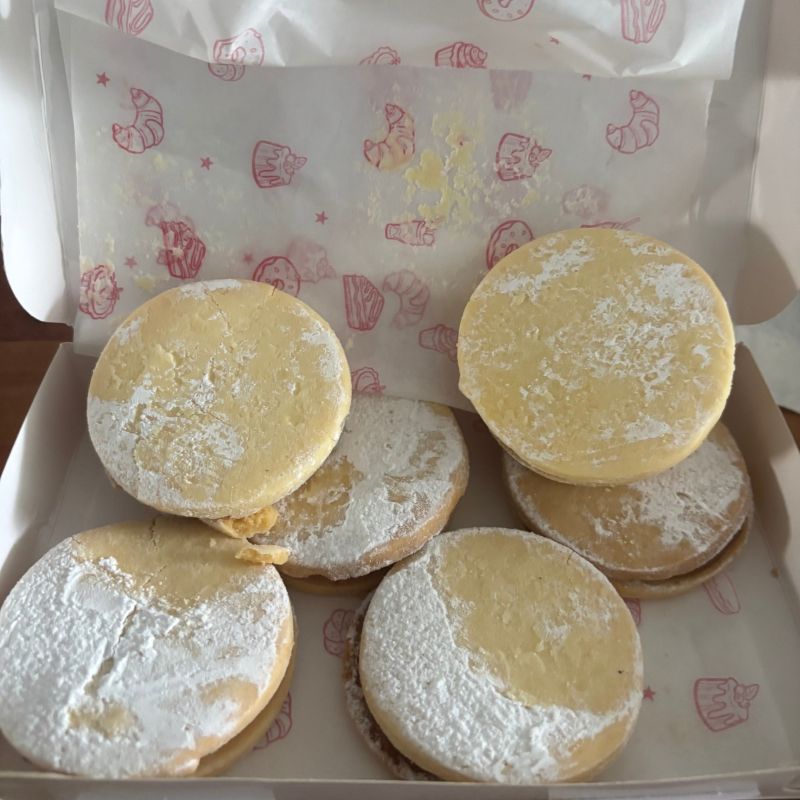
Two Peruvian sweets worth trying: freshly fried picarones with chancaca syrup and delicate alfajores filled with manjar blanco.
Peruvian Desserts and Traditional Sweets
There’s an entire other side of eating your way through Peru once you get past the main dishes. Some sweets are best eaten on the spot, while others make excellent edible souvenirs.
Alfajores are an easy place to start. The classic Peruvian version sandwiches manjar blanco, a thick milk-based caramel filling, between two delicate, pale cookies. They’re incredibly tender and crumbly, which presented a slight problem when I decided a box needed to survive the journey from Lima to Panama, Miami, and finally Philadelphia.
I carried mine in my backpack rather than trusting them to my checked suitcase, and somehow they actually made it home in one piece. This is also the alfajor I grew up knowing, which is why I was surprised the first time I bought one in Argentina and unwrapped something resembling a chocolate-covered snack cake. Delicious? Yes. What I thought I was buying? Absolutely not. Alfajores simply evolved differently across Latin America, but the delicate Peruvian version will always be the one I picture first.
Another sweet worth knowing is turrón de Doña Pepa. Unlike the almond-and-honey nougat you may associate with Spanish turrón, the Peruvian version layers long, crumbly, traditionally anise-flavored cookie sticks with a thick fruit-based syrup and a wonderfully excessive amount of colorful sprinkles and candies. Doña Pepa and San José are two well-known brands you’re likely to come across.
Turrón is especially associated with Lima and the Señor de los Milagros celebrations in October, although packaged versions are available throughout the year. And fair warning: it’s sweet. Very sweet. My parents remembered to buy some earlier in our trip; I did not. Fortunately, I found San José turrón at Lima airport, although I had to ask where the Peruvian candy section was because it was surprisingly tucked away.
For something best eaten immediately, look for picarones. These ring-shaped fritters are traditionally made with squash and sweet potato, fried until crisp, and served with a dark syrup called chancaca. They’re a popular street-vendor food and something I found much easier to come across in the evenings, especially around Lima’s Historic Center and near parks. Grab a serving while they’re warm and eat them as you stroll.
Then there’s suspiro a la limeña, a Lima classic combining a rich manjar blanco-style base with a light meringue topping, traditionally flavored with port and finished with cinnamon. It’s rich, creamy, and unapologetically sweet, so this probably isn’t the dessert to order because you just want “a little something” after dinner.
Between alfajores, turrón, freshly fried picarones, and suspiro a la limeña, there’s plenty to try before you even make it to the Peruvian candy aisle.
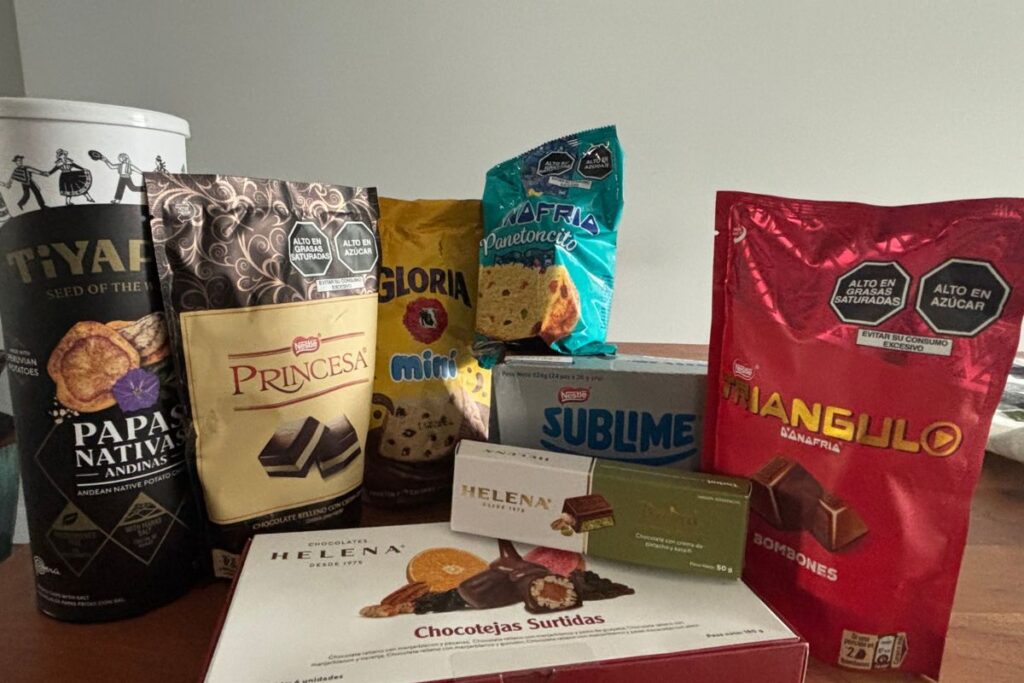
My Peruvian supermarket haul: chocolates, native potato chips, and a few things I couldn’t resist bringing home.
The Peruvian Candy and Snack Haul I Brought Home
Traditional sweets weren’t the only things taking up space in my luggage by the end of the trip. Sometimes you just need to go to the supermarket snack aisle and start throwing things into the cart.
Wong, Tottus, and other supermarkets are packed with inexpensive chocolates, cookies, candies, and chips that are easy to pack and great for small gifts. As you can see, I may have gone slightly overboard. In the name of research, obviously.
My haul included Sublime, a classic milk chocolate with peanuts; Princesa, with chocolate, wafer, and a creamy peanut filling; Triángulo chocolates; a box from Chocolates Samana; and Tiyapuy Papas Nativas, because after spending an entire trip talking about Peru’s thousands of potato varieties, obviously some Peruvian potato chips needed to come home too.
I also brought home King Kong—no, not the gorilla. It’s a traditional sweet from northern Peru, particularly associated with Lambayeque, made with large biscuit-like layers and fillings that can include manjar blanco and fruit sweets. I’d never tried it before, which was reason enough to make room for it.
That’s part of the fun of bringing food home: even after several weeks eating my way through Peru, I could still throw something unfamiliar into my cart and have one more thing to discover after the trip.
And you really don’t need a specialty souvenir shop. Go to a supermarket. Wong and Tottus are easy places to browse, especially for small or individually wrapped sweets when you suddenly remember just how many people you told you’d bring something back for.
What to Drink in Peru
Peruvian food gets most of the attention, but there are a few drinks you’ll encounter again and again while traveling through the country.
Pisco sour is probably Peru’s most recognizable cocktail, combining pisco—a Peruvian grape brandy—with lime juice, simple syrup, egg white, and bitters. You’ll find them everywhere from casual restaurants to hotel bars.
For something nonalcoholic, chicha morada is made from Peru’s distinctive purple corn, typically simmered with fruit and spices and served cold. I find it refreshing rather than overwhelmingly sweet and could easily order it with meal after meal.
Then there’s Inca Kola, the bright-yellow soda you’ll see everywhere, with an almost bubblegum or candy-like sweetness. You may love it. You may take three sips and decide you’ve completed your cultural research. Either way, you should probably try it once.
Don’t overlook fresh fruit juice either. Maracuyá, or passion fruit, is an easy place to start, but pay attention to regional fruits too. One of my favorite discoveries was Arequipeña papaya juice, made from a smaller variety of papaya.
By the end of our stay, my dad would head to Mercado San Camilo early in the morning and come back with fresh bread, Arequipeño cheese, and papaya juice for breakfast at our Airbnb. Nothing elaborate, but it’s one of the food memories I associate most strongly with Arequipa.
Finally, beer drinkers will see Cusqueña throughout Peru, while Arequipeña is worth looking for in Arequipa. Sitting down after a day of walking around the White City and ordering one with dinner? That just makes sense.
Come to Peru Hungry
Some of my favorite food experiences in Peru were also some of the simplest: eating a block away from a Plaza de Armas, sitting down at a Chifa restaurant filled with local families, having fresh bread, cheese, and papaya juice for breakfast in Arequipa, or somehow finding room in my suitcase for an unreasonable amount of Peruvian chocolate.
That’s the fun of eating your way through Peru. Try the classics, order the regional specialties, wander through the markets and supermarkets, and leave room for something you’ve never heard of.
The important part?
Come hungry.
Continue Exploring Peru
- What to Eat and Buy in Arequipa — Take a closer look at the markets and regional flavors of the White City.
- Lima’s Classic Highlights for First-Time Visitors — Pair your food plans with historic streets and a walk along the Pacific.
- Cusco Is Not Just a Base for Machu Picchu — Give yourself time to experience the city between bigger adventures.
- Peru Is More Than Machu Picchu — Discover the variety of places behind Peru’s equally varied food traditions.
More Travel Ideas
- How I Decide What’s Worth Paying More for When I Travel — From market breakfasts to a memorable restaurant meal, here’s how I decide which experiences deserve more of the budget.
- 100,000 Points: Weekend Edition – Panama City — Ready to plan another city break around exploring and eating well? See how I’d approach Panama City with points.