What to Eat and Buy in Arequipa: Markets, Local Food and Souvenirs
Arequipa may initially capture your attention with its white architecture and volcano views, but its food and markets quickly become another reason to slow down.
The city has a strong regional identity, from a glass of sweet Arequipeña papaya juice at Mercado San Camilo to an elaborate bowl of chupe de camarones. Traditional picanterías preserve dishes associated specifically with Arequipa, while its markets bring together fresh produce, local cheese, bread, textiles, hats, and familiar Peruvian souvenirs.
Shopping became part of our experience almost by accident. We initially visited Mercado San Camilo to explore one of Arequipa’s most important traditional markets, but its fresh juice, everyday food, and well-priced souvenir finds brought us back more than once. We also visited Fundo El Fierro, a quieter artisan market near the historic center. The two offered very different experiences, and when they carried some of the same smaller items, we often found better prices at San Camilo.
Food followed a similar pattern. Some of our favorite tastes were wonderfully simple, including fresh fruit juice, local cheese, and bread, while our most intentional meal came at Chicha by Gastón Acurio, where we tried traditional Arequipeño dishes with a more contemporary touch.
This guide covers both sides of the experience: where to shop, what the markets are actually like, which souvenirs stood out, and the local dishes worth seeking out in Arequipa
Arequipa Food & Shopping at a Glance
- Best market for everyday food: Mercado San Camilo for fresh juice, bread, local cheese, and prepared meals.
- Best for focused souvenir browsing: Fundo El Fierro, with artisan stalls arranged around a quiet courtyard.
- Traditional dishes to look for: Rocoto relleno, chupe de camarones, ocopa arequipeña, and adobo.
- Something sweet: Queso helado or picarones with miel de papaya Arequipeña.
- An approachable restaurant splurge: Chicha by Gastón Acurio for regional cuisine ordered à la carte.
- Souvenirs to consider: Hats, textiles, paintings, and decorative pieces made from or inspired by sillar.
- Shopping tip: Compare prices between markets and ask about an item’s origin and materials if those matter to you.
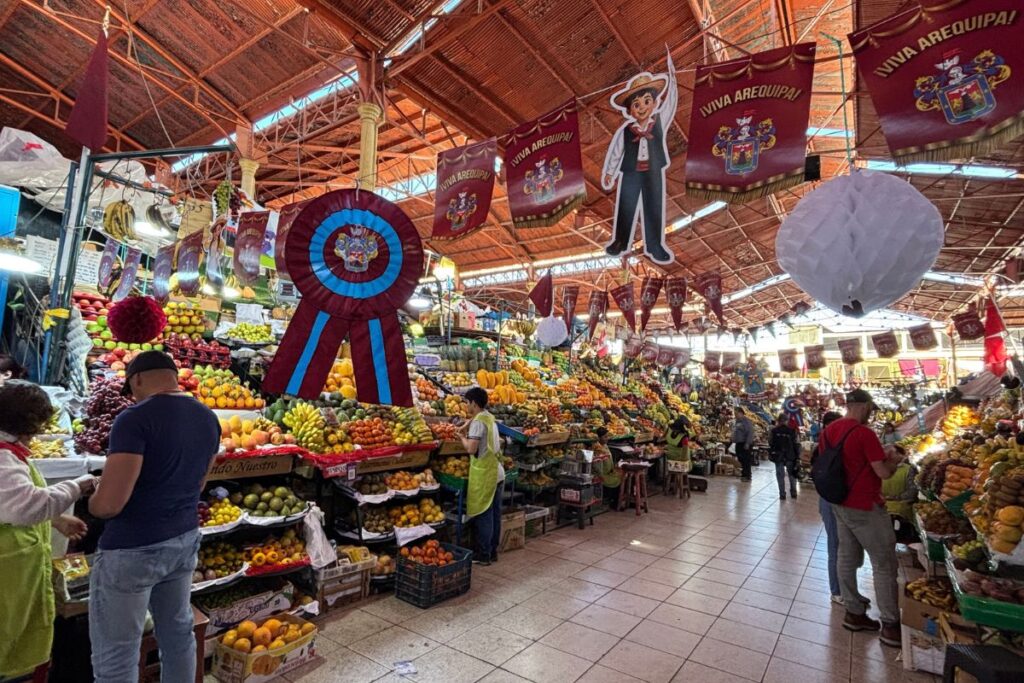
Inside Mercado San Camilo, a working local market filled with produce, food stalls, everyday goods, and a scattering of souvenirs.
Mercado San Camilo: Food, Breakfast and Everyday Shopping
Mercado San Camilo is not a market created primarily for tourists. Visitors certainly come through, but this is first and foremost a working market where residents shop for groceries, eat breakfast or lunch, and pick up everyday necessities.
The enormous interior is organized into sections, with similar vendors clustered together. You might walk through rows of brightly colored fruit before reaching vegetables and herbs, meat and cheese, bread, textiles, hats, or prepared food. Juice stalls blend fresh combinations to order, while food counters fill with customers sitting directly in front of the vendors for a meal.
You can find almost everything here, from fresh produce and traditional remedies to clothing, household products, and typical Peruvian souvenirs. Unlike a dedicated artisan market, the souvenir stalls are scattered throughout the larger space, tucked between vendors serving primarily local needs.
One of our favorite discoveries was the hat section. Rather than simply choosing one from a fixed selection, my mom had a hat sized for her and selected a decorative ribbon to finish it. It was not fully custom-made, but those small adjustments made the purchase feel much more personal.
San Camilo also became our unofficial breakfast stop. My dad, our group’s early riser, would walk over in the mornings and return with fresh bread, Arequipeña papaya juice, and traditional Arequipa cheese.
The cheese was one of my favorites: fresh and mild with a lightly salty flavor and a soft but sliceable texture that was perfect with warm bread. It was a simple breakfast, but it became one of those small routines I remember particularly well from our time in Arequipa.
We ended up visiting San Camilo several times. Our first visit showed us just how much the market contained; later visits were for another juice, breakfast supplies, or something we had continued thinking about after leaving.
Even if you do not intend to buy much, San Camilo is worth visiting to experience a side of Arequipa beyond its polished historic center. Give yourself time to wander rather than arriving with a single stall or purchase in mind.
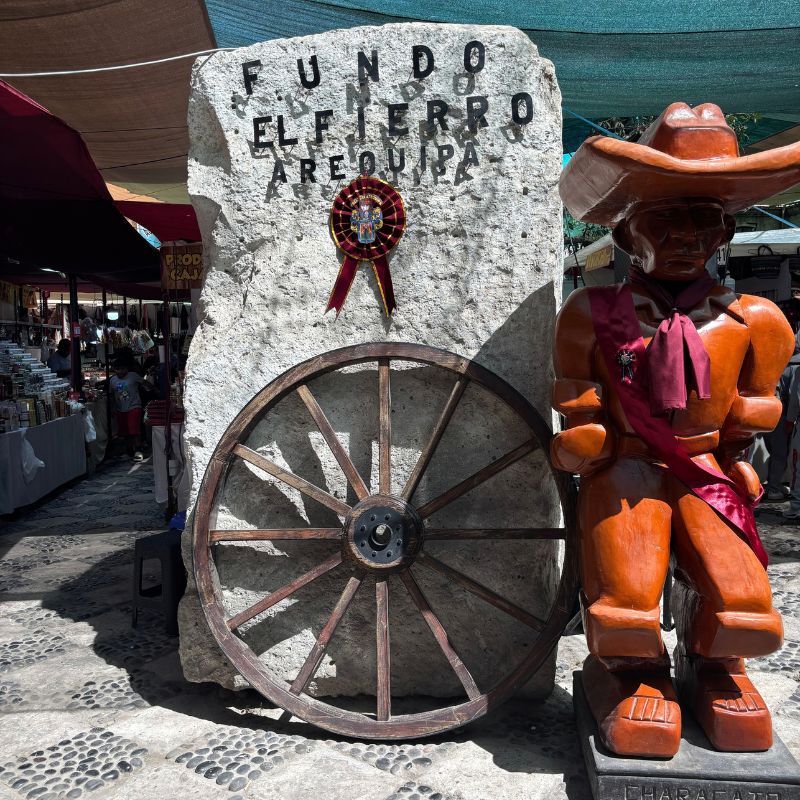
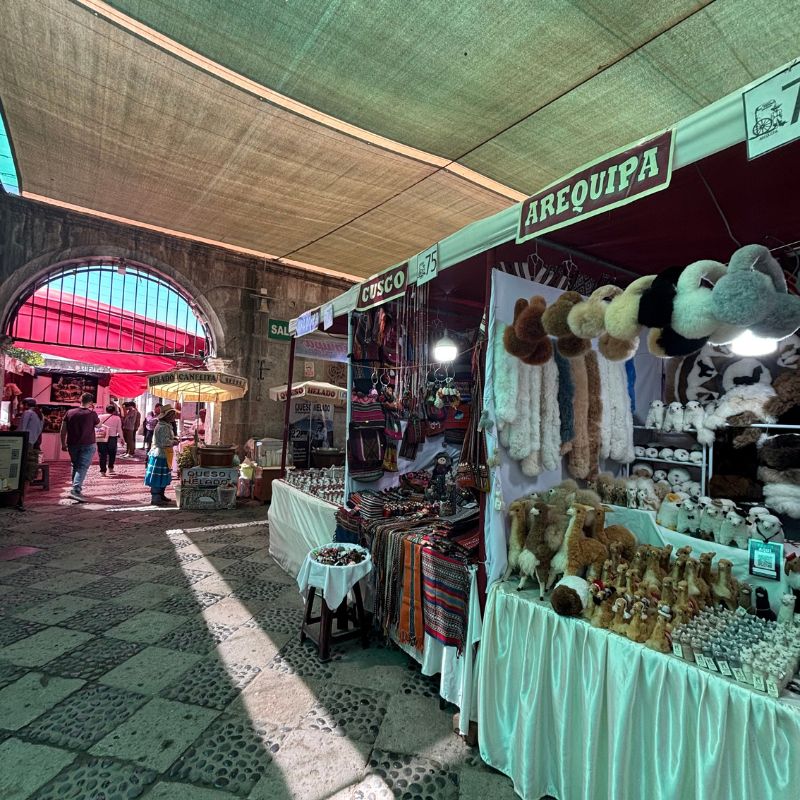
Fundo El Fierro brings together artisan and souvenir stalls representing Arequipa and other regions of Peru.
Fundo El Fierro: Arequipa’s Artisan Market
Fundo El Fierro offers a very different shopping experience from Mercado San Camilo.
This considerably smaller market is focused on artisan products and souvenirs, with stalls arranged around an attractive courtyard. It is calmer and more polished than the busy aisles of San Camilo, making it an easy place to browse without navigating an enormous working market.
Despite being promoted as an Arequipa artisan market, the merchandise is not limited to the surrounding region. We found textiles, woven bags, hats, clothing, jewelry, and decorative items representing styles from Cusco, Cajamarca, and other parts of Peru alongside products marketed as Arequipeño.
That variety can actually be useful if Arequipa is one of your final stops and you still want something from a region you visited earlier. Just don’t assume everything here was produced locally. If the origin or materials matter to you, I would ask the vendor directly.
We also noticed that some of the smaller items available at both markets, including magnets, bags, and hats, appeared more expensive at Fundo El Fierro. We ultimately returned to San Camilo for those purchases.
The two markets serve different purposes. San Camilo is a working local market where souvenirs are scattered among food and everyday goods; Fundo El Fierro gives you a concentrated collection of artisan and souvenir stalls in a quiet courtyard.
We enjoyed browsing both, and Fundo El Fierro is especially easy to add while walking through the historic center. But if you see something here that you also spotted at San Camilo, it may be worth comparing the price before buying.
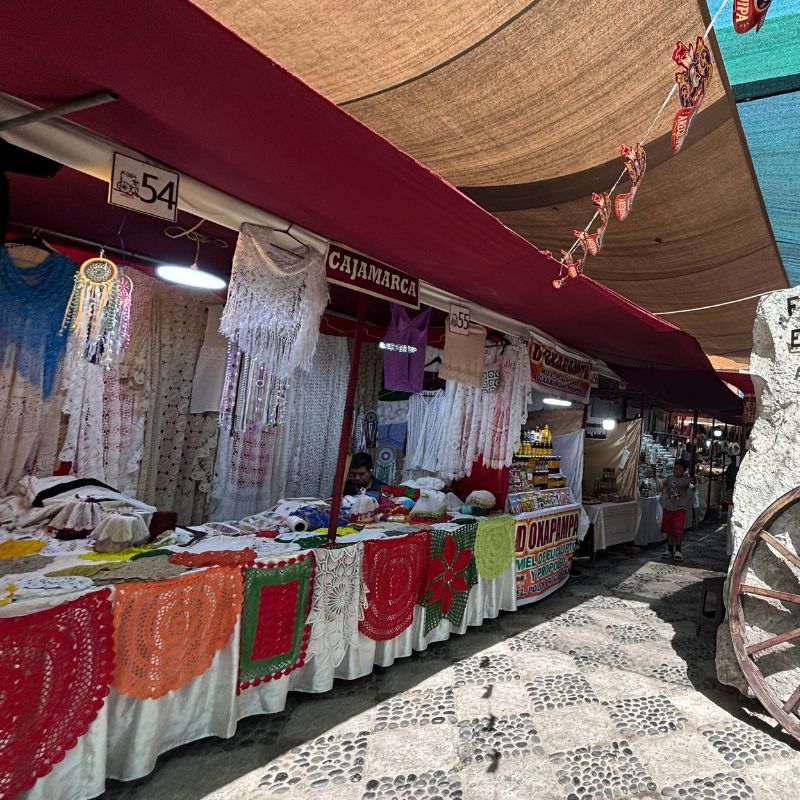
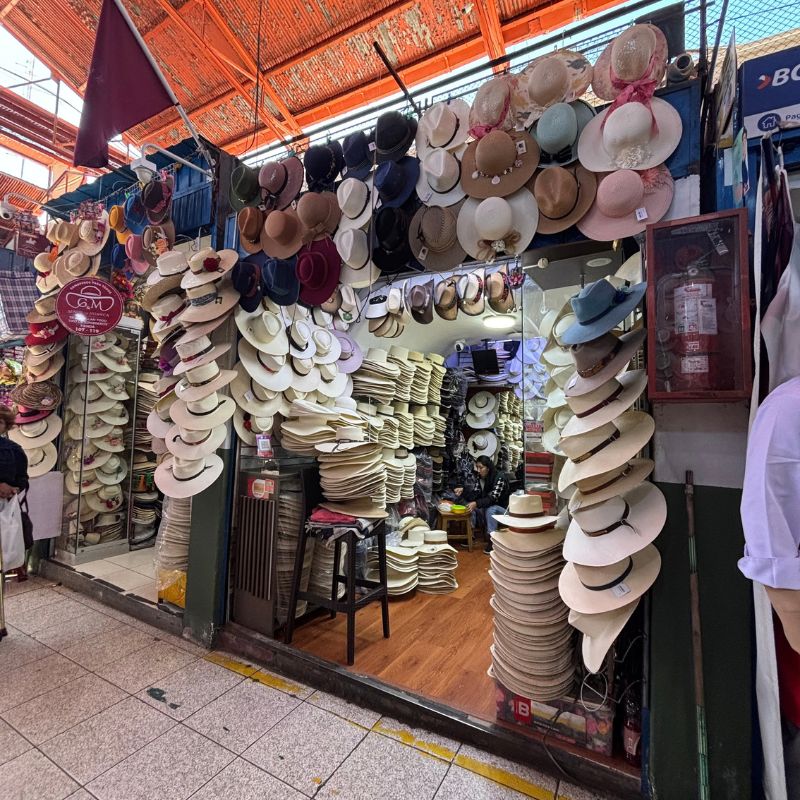
From artisan textiles to traditional hats, Arequipa’s markets offer souvenirs ranging from familiar Peruvian crafts to more personal finds.
What Souvenirs Should You Buy in Arequipa?
Many souvenirs sold in Arequipa will look familiar if you have already traveled through Cusco or other parts of Peru. Woven bags, alpaca-themed gifts, patterned textiles, magnets, hats, and colorful clothing appear throughout the country, so not everything you encounter is uniquely Arequipeño.
That does not make them bad purchases. But if you specifically want something connected to Arequipa, look beyond the most familiar designs or ask the vendor where an item was produced.
Our favorite market purchase was the hat my mom found at Mercado San Camilo. After having it sized and choosing the decorative ribbon herself, she paid approximately S/80 for something that felt considerably more personal than a standard souvenir.
You may also find decorative objects made from or inspired by sillar, the pale volcanic stone that gives Arequipa its White City nickname. Packaged regional foods, sweets, jams, and spices can also make easy souvenirs if you want something edible that travels better than the fresh cheese we loved at the market.
If you are shopping for alpaca clothing or textiles, ask about the actual fiber content rather than relying on an “alpaca” or “baby alpaca” label alone, especially if knowing exactly what you are buying matters to you.
Personally, I am generally content to bring home a magnet. Paintings are my other weakness, although please do not ask how many paintings I have purchased while traveling that are actually hanging on my walls.
My final and largest Arequipa souvenir found me during our last lunch overlooking the Plaza de Armas. More on that shortly.
Ultimately, I would buy something because you genuinely like it, not simply because a vendor describes it as uniquely local. The memory attached to a souvenir can matter more than whether it is the most authentically Arequipeño object you could have found.
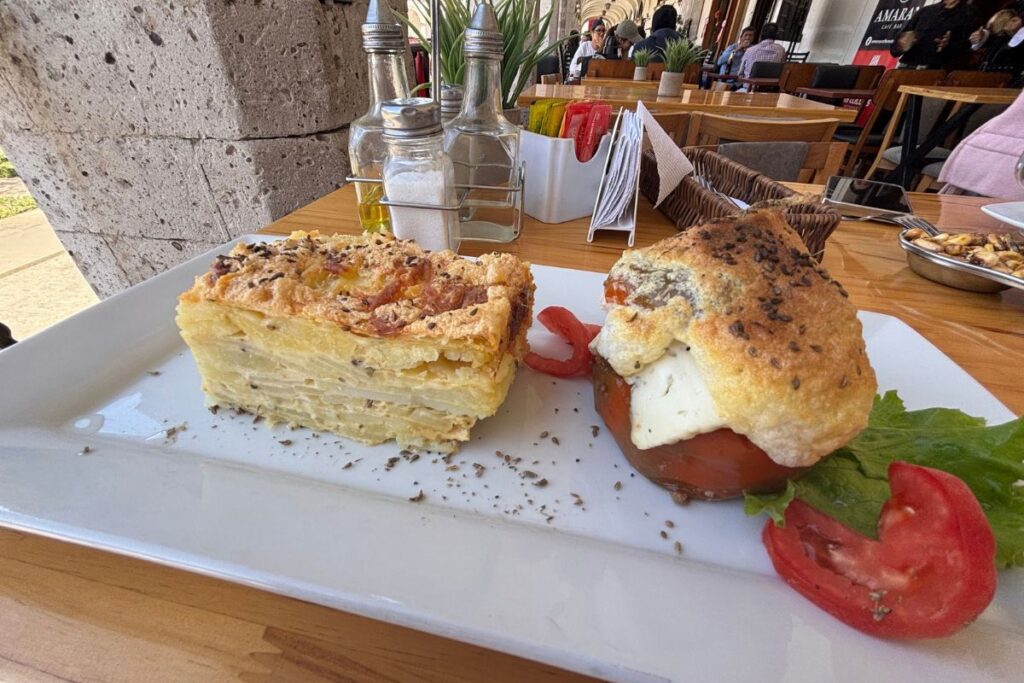
Rocoto relleno served with pastel de papa, one of Arequipa’s best-known traditional food combinations.
What Traditional Food Should You Try in Arequipa?
Arequipa has one of Peru’s strongest regional food identities. Its traditional picanterías are more than restaurants serving spicy food; they are social spaces where recipes and dining traditions have been preserved across generations. Arequipa joined the UNESCO Creative Cities Network as a City of Gastronomy in 2019, with its picanterías forming an important part of that culinary identity.
One of the city’s best-known dishes is rocoto relleno. A rocoto may resemble a red bell pepper, but it carries considerably more heat. It is traditionally stuffed with a seasoned meat mixture, topped with cheese, and commonly served alongside pastel de papa.
Chupe de camarones is another Arequipa classic, and calling it shrimp soup does not quite capture it. Made with river shrimp, potatoes, corn, cheese, milk, eggs, chilies, and other ingredients, it arrives as a rich, substantial meal rather than a light starter.
For something lighter, solterito de queso combines fresh cheese with vegetables, corn, fava beans, and rocoto, while ocopa arequipeña pairs sliced potatoes with a creamy sauce traditionally flavored with ingredients including cheese, peanuts, chilies, and huacatay.
Adobo arequipeño is a slowly cooked pork dish associated particularly with Sunday breakfast, traditionally prepared with chilies, spices, and chicha de guiñapo, a fermented corn drink.
For dessert, look for queso helado. Despite the name, it is not frozen cheese. This traditional milk-based frozen dessert is commonly flavored with cinnamon, cloves, vanilla, and coconut.
And if you encounter Arequipeña papaya, try it. The juice was noticeably sweeter and more fragrant than the papaya I was accustomed to, and it quickly became one of my favorite simple discoveries in the city.
You probably won’t have the time or appetite to try everything during a short visit. I would prioritize at least one meal focused on Arequipeño cuisine, then use Mercado San Camilo for the smaller everyday tastes: fresh juice, bread, cheese, and whatever looks good as you walk past.
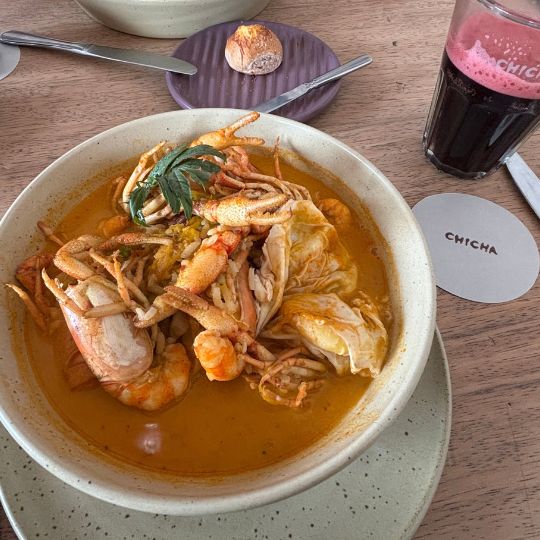
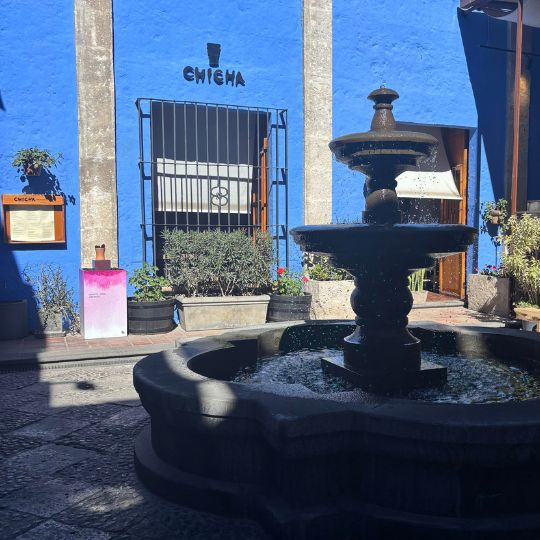
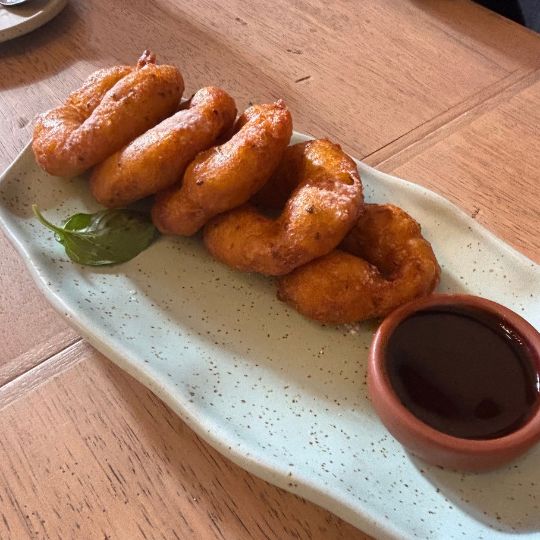
Picarones, Chicha’s colorful courtyard, and chupe de camarones during our lunch at Chicha by Gastón Acurio.
Trying Arequipeño Food at Chicha by Gastón Acurio
I had yet to try any of Peru’s celebrated chef-led restaurants.
Places such as Astrid y Gastón, Central, Kjolle, and Maido are internationally recognized dining destinations in Lima. For me, those would be intentional experiences—reservations made in advance, tasting menus considered, and an evening planned around the meal, rather than somewhere we would casually wander into asking, “Where should we have lunch?”
Then I came across Chicha by Gastón Acurio in Arequipa.
Chicha focuses on the cuisine and ingredients of the surrounding region, but we could order à la carte without committing to a lengthy tasting menu. Prices were higher than at many other restaurants in Arequipa, but still closer to what we might ordinarily spend on a nice meal at home than what I associated with Peru’s celebrated fine-dining restaurants.
That made it a comfortable middle ground for us: an opportunity to try Gastón Acurio’s interpretation of Arequipeño food without building the entire day around the meal.
We came to lunch knowing chupe de camarones was the dish we most wanted to try. Rich and substantial, it easily became the focus of lunch rather than simply a soup ordered before the main course.
We finished with picarones, the ring-shaped Peruvian fritters traditionally made with squash and sweet potato. Chicha served them with miel de papaya Arequipeña, bringing back the local papaya I had already fallen in love with at Mercado San Camilo.
Chicha was not the least expensive place to try traditional food in Arequipa, nor would I present it as a replacement for eating in a local picantería. It offered something different: a polished introduction to regional cuisine that still felt approachable for a casual lunch.
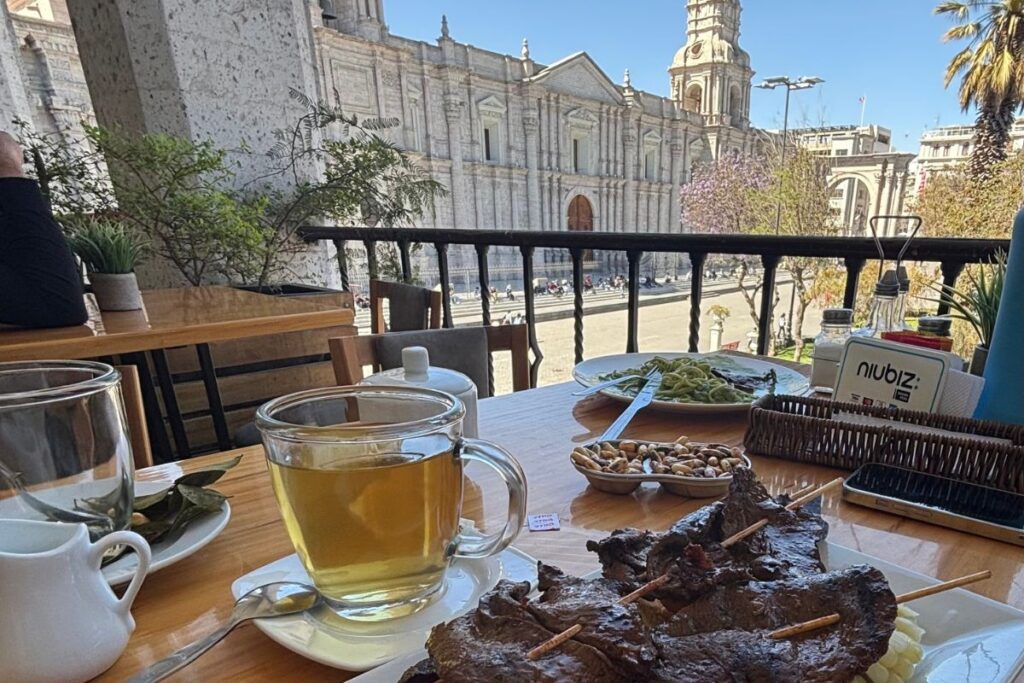
Our final lunch overlooking Arequipa’s Plaza de Armas, where we returned to the same balcony restaurant we visited on our first day.
One Last Meal Overlooking the Plaza de Armas
For our final meal in Arequipa, we returned to the very first restaurant we had tried after arriving.
We had initially chosen it for its balcony overlooking the Plaza de Armas, but we enjoyed the atmosphere, view, and food enough to come back on our last day. There was something satisfying about finishing the trip in the same place where we had begun exploring the city.
Both times we visited, musicians stopped to perform a few songs before continuing to the next restaurant. During our final lunch, an entire tuna universitaria arrived and introduced themselves as being from Trujillo.
A tuna, yes, that is really what the group is called, is a university musical tradition that originated centuries ago in Spain and later spread throughout Latin America. Groups traditionally travel and perform together, with vocals accompanied by instruments such as guitars, mandolins, and tambourines.
Their capes, ribbons, fitted clothing, and knee-length trousers explain why my immediate reaction was that they were giving Shakespearean-theater vibes. They performed a few songs above the Plaza, collected tips, and continued on to the next restaurant.
This time, we ordered rocoto relleno, one of Arequipa’s most recognizable dishes, and anticuchos, the popular Peruvian skewers traditionally prepared with marinated beef heart. It gave us one last opportunity to try local and Peruvian classics before leaving.
A few vendors also passed through the restaurant carrying paintings and small souvenirs. I appreciated how little they disrupted the meal; they mostly displayed what they were carrying and continued moving unless someone showed interest.
Naturally, I showed interest.
One vendor carried a fairly large painting of the arches at Mirador de Yanahuara framing Misti. After spending so much of the trip photographing the volcano, it felt like exactly the right image to bring home.
I paid close to S/150, which was probably more than necessary. But when we buy souvenirs, we’re often thinking more about the memory we’re bringing home than the objective value of the item itself.
That final lunch brought so much of our Arequipa experience together: regional food, the Plaza, live music, local vendors, volcano views, and one more purchase I had not planned to make.
Food, Markets and Souvenirs in Arequipa
Some of my favorite memories from Arequipa ended up involving food or something we brought home.
Mercado San Camilo gave us fresh juice, bread, cheese, and my mom’s hat. Chicha gave us the chance to try a more polished interpretation of Arequipeño cuisine. And somewhere between browsing markets and eating our final lunch above the Plaza de Armas, I ended up with a painting of Misti that I absolutely had not planned to buy.
You do not need to seek out every traditional dish or find the perfect locally made souvenir. Try what looks good, wander through the markets, ask questions when something catches your attention, and leave a little room for the things you weren’t planning to find.
Those are often the things you remember.
Continue Exploring Peru
- 2 Days in Arequipa: A Relaxed Itinerary for Peru’s White City — Fit your food and market stops into a relaxed sightseeing plan.
- Best Viewpoints in Arequipa for Volcano Views — Pair your market browsing with a few scenic stops.
- What to Eat in Peru — Expand your food wish list with dishes and treats from across the country.
- Barranco: The Lima Neighborhood I Want to Stay in Next Time — Continue your exploring in a different corner of Peru’s capital.