Exploring Lima’s Historic Center: A Self-Guided Walking Route
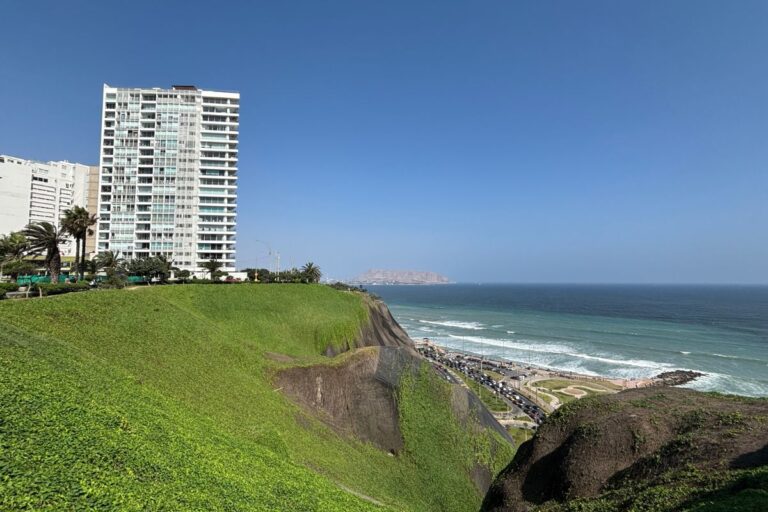
Most first-time visitors to Lima stay along the coast in Miraflores or Barranco, and I understand why. They’re walkable, full of restaurants and cafés, close to the Pacific, and manageable bases in a city as enormous as Lima.
But if that’s the only Lima you see, you’re missing an entirely different version of the city.
Head inland to Lima’s Historic Center and the cliffs and high-rise apartments give way to grand plazas, colonial churches, wooden balconies, pedestrian shopping streets, crowded markets, and small museums.
I’ve walked around the Historic Center on almost every trip I’ve taken to Lima. But after my most recent visit, I realized there’s one thing I really wish I’d done:
Take a walking tour.
I can tell you Plaza San Martín is named for José de San Martín, the Argentine general who proclaimed Peru’s independence in Lima in 1821. But ask me about the beautiful buildings surrounding the plaza? Not so much.
And that kept happening. We’d pass another church or historic building and wonder what it was, often while a walking-tour group nearby was getting exactly the context we were missing.
You can absolutely explore the Historic Center independently, and that’s what this guide is for. But if you’re particularly interested in Lima’s history, I’d consider taking a guided walking tour first, then returning to the places you want to explore more.
Lima Historic Center Walk at a Glance
- Start here: Plaza San Martín, then follow pedestrian Jirón de la Unión toward Plaza Mayor.
- Main stops: Plaza Mayor → San Francisco and the catacombs → Parque de la Muralla → Barrio Chino and Mercado Central.
- Time to allow: At least half a day, including lunch. Allow longer for museum visits, attraction entrances, and exploring side streets.
- My paid-attraction pick: San Francisco and its catacombs.
- Optional museum stops: MUCEN for archaeology and Peruvian art; Bodega y Quadra for a small archaeological site.
- Where I’d eat: Barrio Chino for chifa. Save a few restaurant options in case your first choice has a long queue.
Short on time? Focus on Plaza Mayor and one major historic attraction, then head toward the coast. You don’t need to complete the whole route to enjoy this part of Lima.
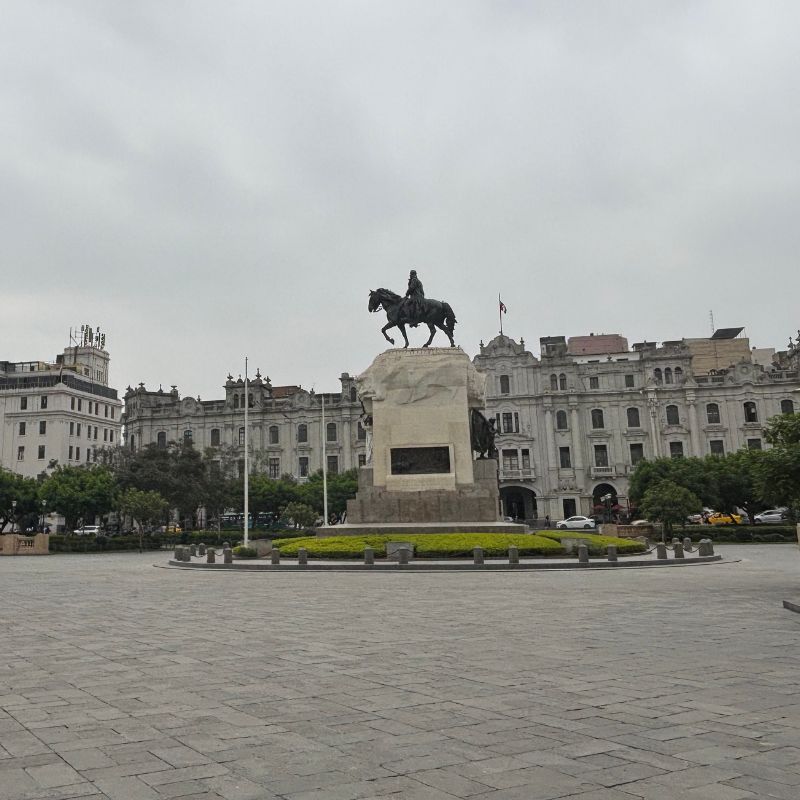
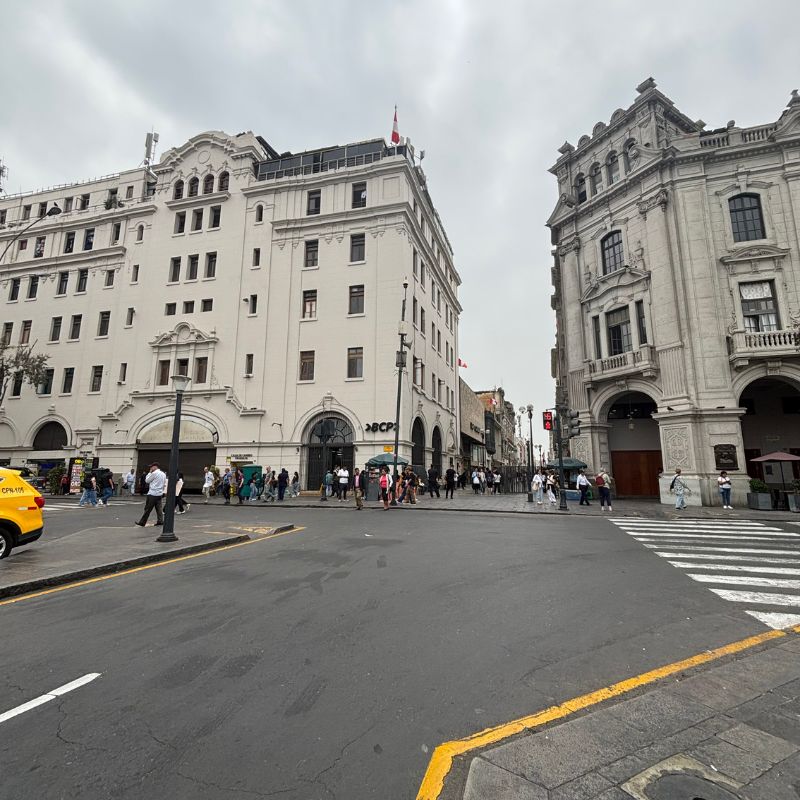
Plaza San Martín is where I’d begin a self-guided walk through Lima’s Historic Center.
Start at Plaza San Martín
I’d begin this walk at Plaza San Martín rather than Plaza Mayor.
The plaza is named for José de San Martín, the Argentine general who played a central role in the independence of Argentina, Chile, and Peru. He proclaimed Peru’s independence in Lima on July 28, 1821, and the plaza was inaugurated a century later in 1921 to commemorate it.
His enormous equestrian monument stands at the center, surrounded by some of the grandest architecture along this route. Before heading toward Plaza Mayor, walk around the square and take it in.
Then continue down Jirón de la Unión toward the older colonial heart of Lima.
There’s something fitting about beginning at a plaza commemorating Peru’s independence before walking into the part of the city most closely associated with its Spanish colonial past.
Walk Jirón de la Unión
From Plaza San Martín, continue toward Plaza Mayor along Jirón de la Unión. You really can’t miss it, just look for the pedestrian street packed with people, shops, and constant foot traffic.
Today, Jirón de la Unión is one of central Lima’s busiest commercial streets, lined with clothing stores, restaurants, pharmacies, and familiar chains. But its history stretches much further back, and you’ll still see traces of it above the modern storefronts.
Make a point of looking up as you walk. Old façades, balconies, churches, and architectural details are easy to miss when you’re moving with the crowd. Peek down the side streets too. This was where we kept finding smaller churches and historic buildings that hadn’t made it onto my list.
One you won’t want to walk straight past is Iglesia de La Merced, with its elaborate stone façade standing out against the surrounding shops.
Don’t treat Jirón de la Unión simply as the street that gets you from Plaza San Martín to Plaza Mayor. It’s part of the sightseeing. Take your time, look down the side streets, duck into something that looks interesting, and give yourself permission to get distracted.
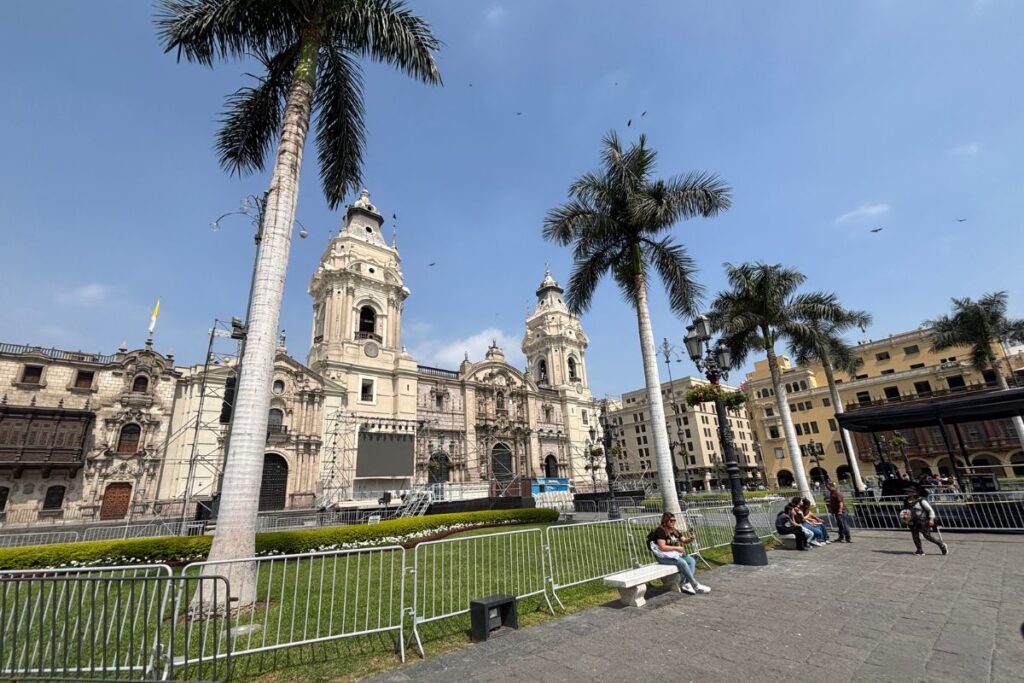
Plaza Mayor is one of the main landmarks on this Historic Center walking route, with Lima Cathedral overlooking the square.
Plaza Mayor: The Heart of Historic Lima
Jirón de la Unión eventually brings you to Plaza Mayor, the historic heart of Lima and probably its most recognizable square.
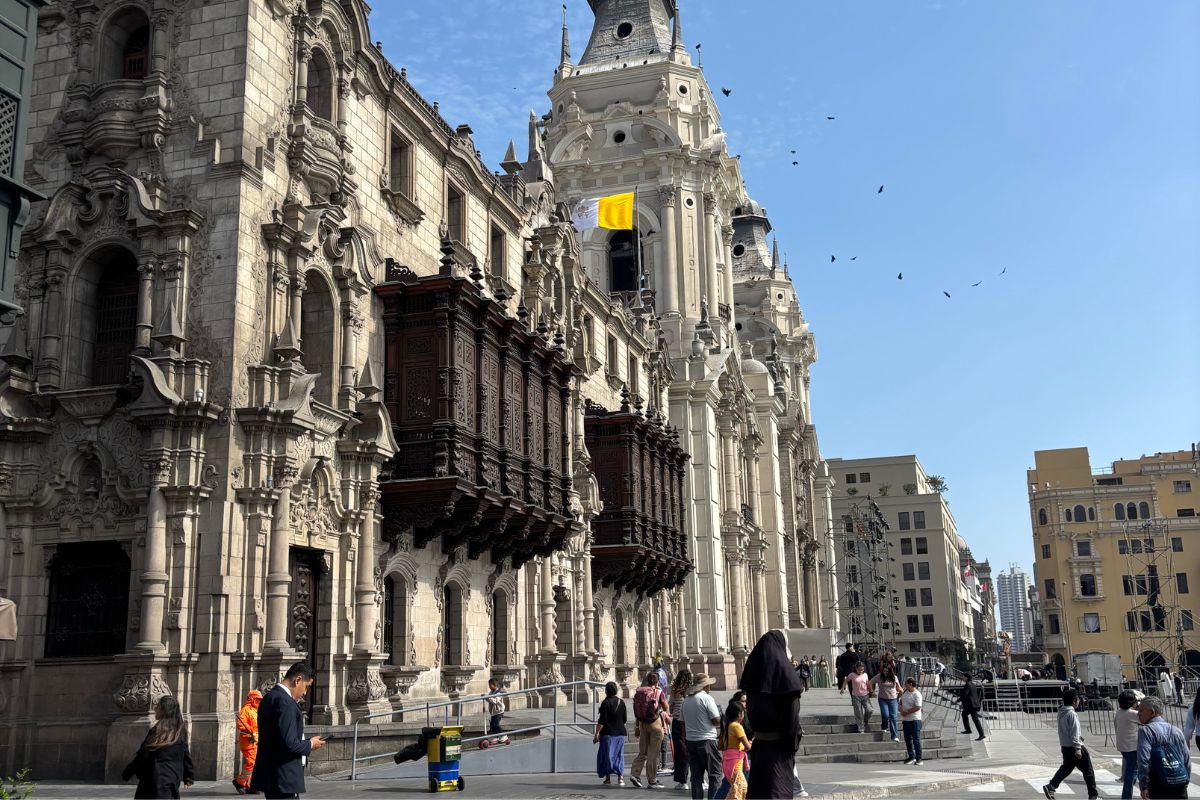
It’s surrounded by some of the city’s most important buildings, including Lima Cathedral, the Government Palace, the Archbishop’s Palace, and the Municipal Palace. Bright yellow façades, wooden balconies, the central fountain, and the Cathedral make this a place worth slowing down for.
I’ve been to Plaza Mayor on several trips, and I still think walking around the square is more important than trying to enter every building surrounding it.
Start with the Cathedral and the Archbishop’s Palace next door, particularly its carved wooden balconies. Then walk the perimeter, taking in the Government Palace and the rest of the architecture.
The plaza isn’t always the same experience either. There may be an event underway, temporary displays, groups gathering, or simply the everyday activity of central Lima.
If you’re following my one-day Lima itinerary, I’d keep it relatively simple: see the plaza, choose one major historic attraction nearby, and continue with your day.
But on this longer walk, don’t rush through it.
You’ve just walked from a plaza commemorating Peru’s independence into the center of colonial Lima. Take some time to notice the difference.
San Francisco and the Catacombs
From Plaza Mayor, it’s a short walk to the Monastery of San Francisco, and if you’re paying admission for one historic attraction along this route, this is the one I’d prioritize.
The Franciscan presence here dates almost to the beginning of Spanish Lima. The order received land shortly after the conquest, while the church that largely defines the complex today dates to the 17th century. After an earlier structure was badly damaged by an earthquake, the new temple was inaugurated in 1672.
The San Francisco complex is one of the most significant surviving colonial-era convent complexes in Latin America and forms part of Lima’s UNESCO-listed Historic Center.
On my most recent visit, however, there was construction directly in front of it.
The work is part of a restoration of Plazuela San Francisco, the historic public space surrounding the monastery. After being stalled for nearly three years, the project restarted in January 2026, which explains the construction during my visit later that year.
Plans include restoring the paving and fountain, improving lighting and public spaces, and incorporating archaeological discoveries from the site.
So for now, you’ll have to look past some construction fencing.
Inside, you’ll find cloisters, religious artwork, a historic library, and the reason San Francisco appears on so many first-time visitor lists:
The catacombs.
The underground galleries were used for burials during Lima’s colonial period and remained in use until the early 19th century. Today, you’ll walk through chambers containing human bones from thousands of former residents of colonial Lima.
It’s undeniably a little macabre.
But having visited before, I don’t think the catacombs are memorable just because they’re unusual.
You go from the grand plazas, churches, balconies, and monuments above ground to walking underneath one of Lima’s most important religious complexes and seeing how people once buried their dead.
If you only choose one paid historic attraction in the Historic Center, this would still be my pick.
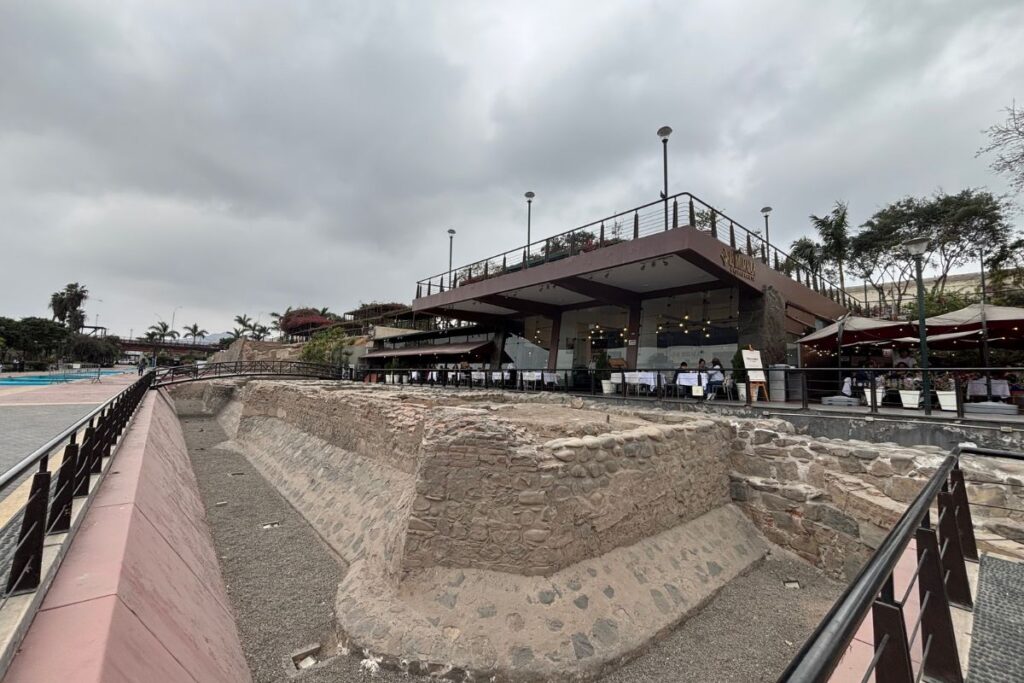
Remnants of Lima’s old city wall at Parque de la Muralla
Parque de la Muralla: A Piece of Lima I Hadn’t Seen Before
From San Francisco, continue around the back of the monastery toward Parque de la Muralla.
This was a new stop for us. My dad has spent plenty of time in Lima over the years, and even he looked around and said, “I don’t think I’ve ever seen this before.”
There’s a good reason for that. The park may preserve a piece of Lima’s colonial history, but it only opened in 2004. Calling something more than 20 years old “new” may be a stretch, but after a morning surrounded by centuries-old buildings, 2004 practically counts as new construction.
The history here goes much further back. With nearby Callao serving as Lima’s port, the colonial capital faced threats from pirates and corsairs. Between 1684 and 1687, a defensive wall stretching roughly 11 kilometers was built around Lima.
The wall remained for nearly two centuries before demolition began in 1867 as the city expanded. Most disappeared, but surviving sections were eventually incorporated into Parque de la Muralla.
You can see remnants of the old wall, get a different view of the Historic Center, and take a break along the Rímac River before continuing toward Barrio Chino.
If you’re traveling with children—or animal lovers—there’s an unexpected bonus. The park has a small mini-farm and aviary, with llamas, goats, guinea pigs, peacocks, and other animals. Vendors outside sell carrots and other food you can feed to some of them.
After a morning of colonial churches and monuments, feeding a llama makes for a pretty good change of pace.
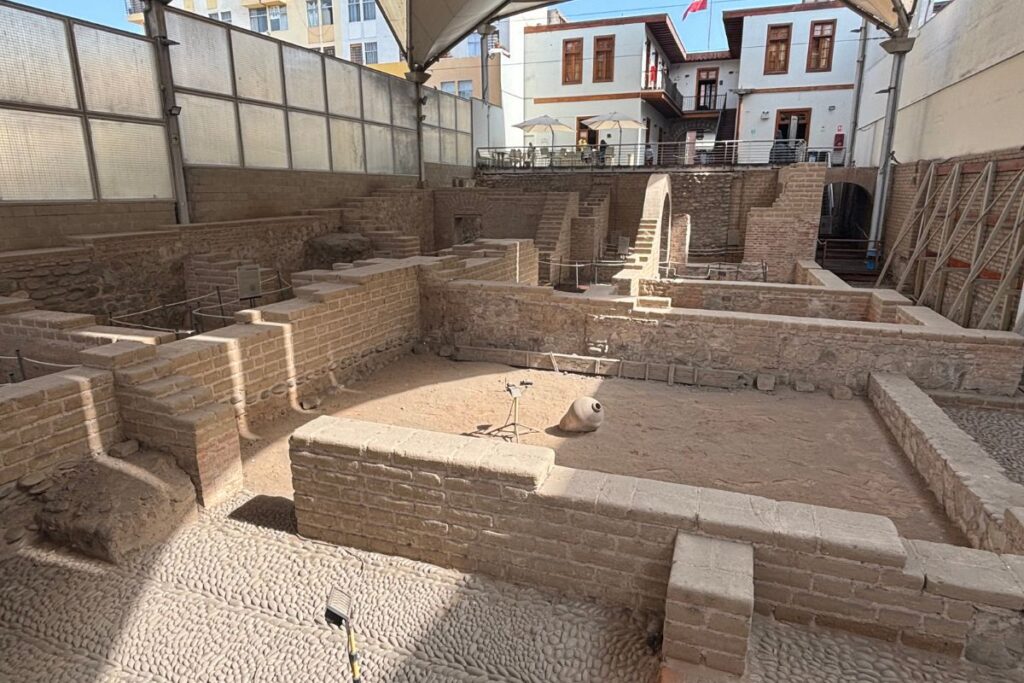
The small archaeological site inside Museo de Sitio Bodega y Quadra offers a glimpse beneath the streets of Lima’s Historic Center.
Museums Worth Popping Into Along the Way
One thing I hadn’t fully appreciated about Lima’s Historic Center is how many small museums are tucked between the major landmarks.
You don’t need to turn this walk into a museum marathon. Several are free or cost only a few soles, making them easy to pop into for 20 or 30 minutes.
After trying a few on this trip, two stood out: MUCEN and Bodega y Quadra.
MUCEN – Museo Central
If you only have time for one small museum along this route, MUCEN would be my pick.
Run by Peru’s Central Reserve Bank, the museum brings together pre-Columbian archaeology, traditional and popular art, and Peruvian painting. It’s free and only a few blocks from Plaza Mayor, so it doesn’t require a major detour.
I liked that it felt substantial enough to be worthwhile without requiring the time commitment of a larger museum. You can see something completely different from the churches and colonial architecture outside, then get right back to the walk.
Museo de Sitio Bodega y Quadra
Bodega y Quadra is an even quicker stop, but I liked this one too.
The museum incorporates a small excavated archaeological site beneath a historic property.
And I do mean small.
But if you enjoy seeing ruins and archaeological remains where they were actually uncovered, it’s worth popping in while you’re nearby. You’re essentially getting a glimpse beneath the streets you’ve spent the day walking.
Neither museum needs to become a major event, and that’s exactly why they work so well on this route.
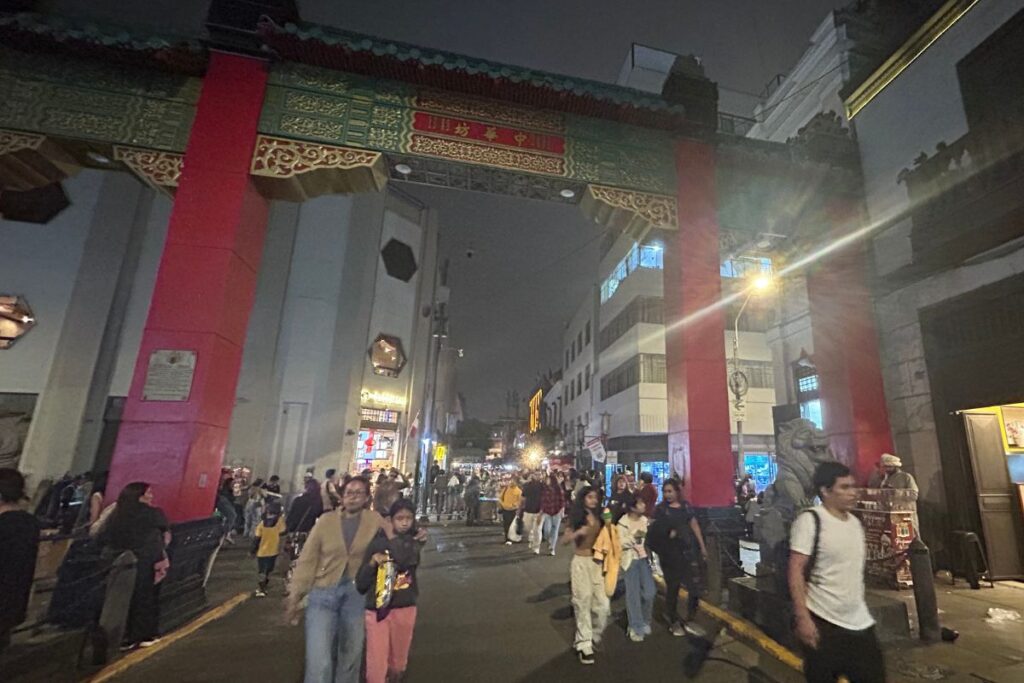
Barrio Chino stays lively throughout the day and into the early evening, though many shops and vendors begin closing shortly after dinner.
Barrio Chino and Mercado Central
From Parque de la Muralla, continue toward Barrio Chino and Mercado Central, where things get louder, busier, and considerably more crowded.
Start with Barrio Chino, Lima’s historic Chinatown, and walk beneath its distinctive entrance onto Calle Capón. Chinese immigration has had an enormous influence on Peruvian food culture, giving rise to chifa, the Chinese-Peruvian cuisine you’ll find throughout Lima today.
And arrive hungry.
We ate at Master Kong Paruro, where we waited close to an hour for a table, and loved the meal enough that I’d happily go back. When we returned on a Saturday, seemingly every restaurant had a line out the door, so I’d save a few options rather than committing to one.
After lunch, wander through Barrio Chino before continuing into Mercado Central, right beside it.
This is probably the most consistently crowded stretch of streets I’ve experienced anywhere in Lima. I don’t think I’ve ever walked through Barrio Chino and the surrounding streets when they weren’t busy—morning, afternoon, weekday, or weekend.
Later in the evening may be the exception, but this area doesn’t stay active particularly late. After the dinner rush, restaurants and businesses start winding down.
During the day, expect packed sidewalks, shoppers, vendors, restaurant lines, and people moving in every direction. Inside Mercado Central, you’ll find produce, food stalls, household goods, and seemingly everything else being bought and sold.
You don’t need to explore every aisle. Walking through is enough to experience it.
This is also where I’d be most conscious of my belongings. Not because I felt unsafe, but because the crowds can be extremely dense. Keep your phone and valuables secure as you move through them.
By this point, think about how much the scenery has changed since Plaza San Martín: an independence-era plaza, commercial streets, colonial churches, archaeological remains, Chinatown, and one of central Lima’s busiest markets.
That’s exactly why I like doing the Historic Center on foot. You aren’t just moving between attractions. You’re watching Lima change around you as you walk.
How Much Time Should You Spend in Lima’s Historic Center?
You can see Plaza Mayor and a few surrounding landmarks relatively quickly.
But that’s not the route I’ve laid out here.
Once you add Plaza San Martín, Jirón de la Unión, San Francisco, Parque de la Muralla, a museum or two, Barrio Chino, Mercado Central, and lunch, I’d give yourself at least half a day—and longer if you plan to enter several attractions or, as I apparently recommend throughout this guide, get distracted.
If you only have one day in Lima, I wouldn’t try to do all of this. Follow the condensed version from my one-day itinerary: prioritize Plaza Mayor and one major historic attraction before heading toward the coast.
With two or three days, I’d absolutely give the Historic Center a half day and walk it properly.
As for safety, I felt comfortable following this route, including with my parents. I’d be most conscious of my belongings around Barrio Chino and Mercado Central, where the crowds can be extremely dense. Otherwise, use normal big-city awareness: keep valuables secure, pay attention to your surroundings, and don’t linger with your phone out.
When you’re finished, there’s no prize for continuing to walk just because you started that way. Call a rideshare and head to your next neighborhood.
Because Plaza Mayor isn’t the Historic Center. It’s just one part of it.
You could photograph the square and leave.
But you’d miss most of what makes this part of Lima interesting.
Continue Exploring Peru
- Lima’s Classic Highlights for First-Time Visitors: A One-Day Itinerary — Short on time? This is how I’d combine the Historic Center with Miraflores and Barranco in one day.
- Miraflores: The Best Home Base for Your First Trip to Lima — Explore the neighborhood where many first-time visitors stay, from the Malecón and Pacific views to restaurants and easy connections around the city.
- Cusco Is Not Just a Base for Machu Picchu — Give another of Peru’s historic cities time beyond its most famous excursion.
- What to Eat in Peru — Build a food wish list for the stops between your sightseeing.
More Travel Ideas
- The Travel Gear I Would Replace Tomorrow If I Lost It — Planning more days exploring on foot? These are the travel essentials I’d buy again.
- 100,000 Points: Weekend Edition – Cartagena — If Lima’s historic streets appeal to you, consider another colorful city escape with this points-based Cartagena weekend.