I Added Uruguay Because It Was So Easy From Buenos Aires
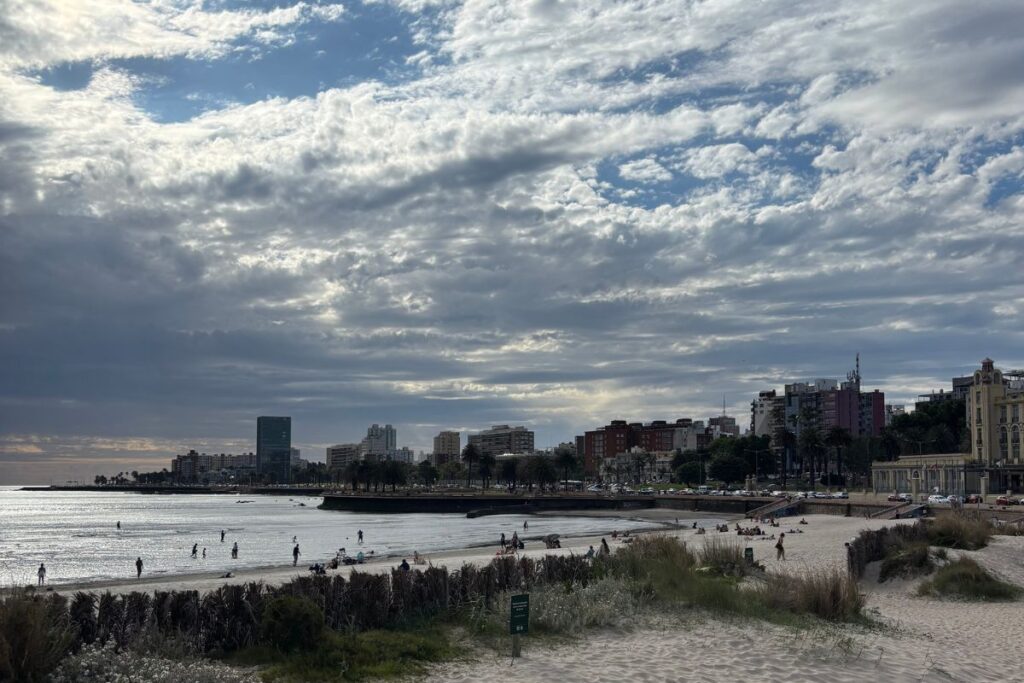
In El Calafate Was My Introduction to Patagonia—Now I Want More, I realized one visit to Patagonia would never be enough. From there, it was time for a change of pace. A quick ferry from Buenos Aires brought me to Montevideo, where a convenient side trip became one of the biggest surprises of my South America itinerary.
When I planned my South America trip, Uruguay was the country I knew the least about.
Argentina meant Buenos Aires.
Chile meant dramatic landscapes.
Colombia hardly needed an introduction.
Ecuador brought to mind Quito and its historic center high in the Andes.
But Uruguay? I honestly couldn’t have told you much beyond the fact that Montevideo was the capital. The only reason it ended up on my itinerary was because getting there from Buenos Aires was so easy. Once I realized I could take a ferry across the Río de la Plata instead of flying, adding another country felt almost too simple not to consider.
Looking back, that ease is exactly why I think more travelers should consider adding Uruguay to an Argentina itinerary.
Why I Took the Ferry From Buenos Aires
Whenever I can replace a flight with a train or ferry, I usually do.
Flying between Buenos Aires and Montevideo is certainly possible, but the ferry felt easier and more interesting. Instead of dealing with another airport, I could travel directly between the two cities and make the journey part of the trip.
There are two main ways to do it. The first is taking the ferry to Colonia del Sacramento, spending a few hours exploring the historic town before continuing to Montevideo by bus.
I seriously considered that option because Colonia looked like exactly the kind of place I would enjoy wandering for an afternoon. Ultimately, I decided against it because I was traveling with a rolling suitcase and fairly heavy backpack, and I didn’t want to spend the day searching for luggage storage or worrying about making the next bus.
Instead, I booked the direct ferry.
Because you’re crossing an international border, the terminal operates more like an airport than a traditional ferry dock. You clear immigration before boarding, so it’s worth arriving early.
I booked Business Class for about $120, only about $40–50 more than the regular ticket. The biggest benefit was the dedicated immigration and security line, although the regular line didn’t look particularly long when I arrived. Business Class passengers also boarded first and had access to a quieter seating area.
The ferry itself was comfortable, although a little different from what I expected. There wasn’t an outdoor observation deck, so the entire journey was spent inside. Even so, it was a pleasant, low-stress way to travel between two countries, and it reminded me why I enjoy ferries so much. The trip itself became part of the experience rather than simply getting from Buenos Aires to Montevideo.
Why Splitting My Hotels Gave Me a Better Perspective
Splitting my stay between two hotels wasn’t intentional.
I originally booked the Aloft Montevideo using Marriott points, but the hotel only had award availability for my first night. Rather than pay cash to stay there longer, I used points to book the NH Montevideo Columbia near Ciudad Vieja for the rest of my visit.
It ended up working out better than I expected because the two hotels placed me in completely different parts of Montevideo. The Aloft gave me access to the more modern neighborhoods around Punta Carretas and Pocitos, while the NH placed me within walking distance of the historic center, museums, plazas, and my walking tour.
I wouldn’t necessarily recommend changing hotels during such a short visit, but in my case it gave me two very different perspectives on the city.
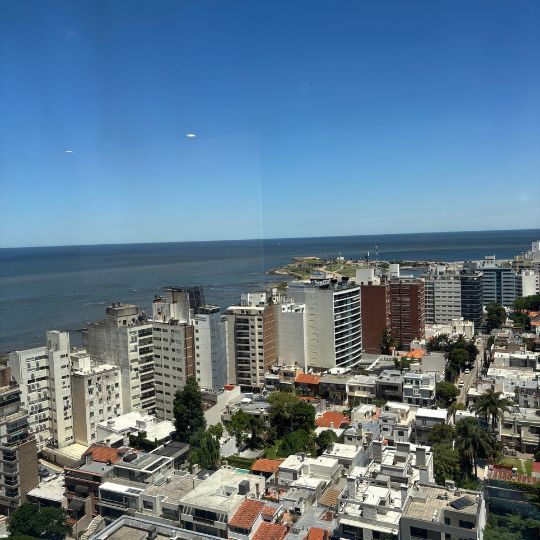
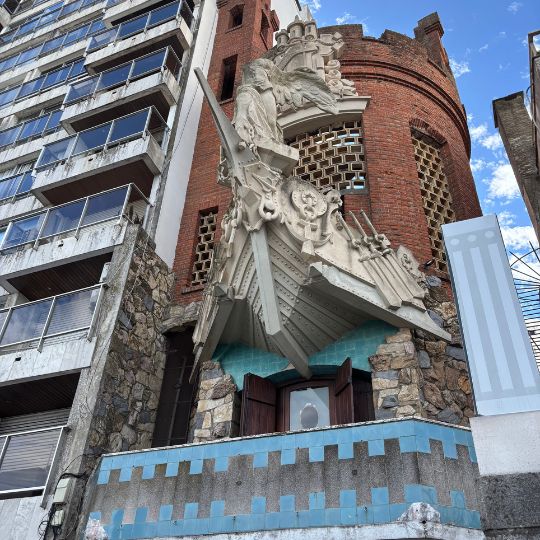
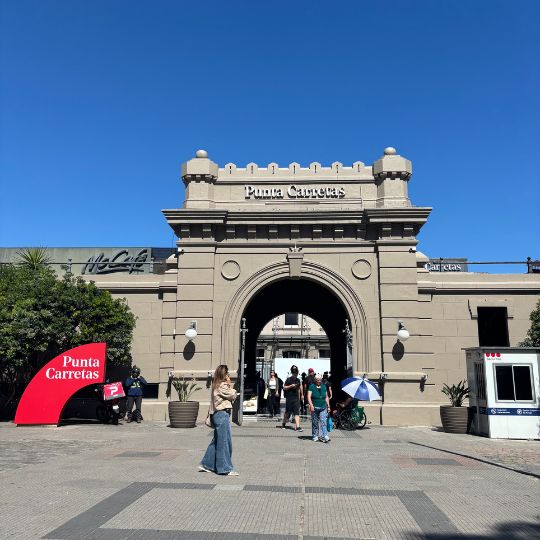
From coastal viewpoints to neighborhood landmarks, exploring Montevideo’s modern side offered a completely different perspective from the historic center.
The Modern Side of Montevideo
Even after my first afternoon, I still wasn’t entirely sure what to make of Montevideo.
Having just spent the previous week in Buenos Aires, the contrast was immediate. The elegant European architecture I’d been surrounded by gave way to apartment buildings, neighborhood parks, shopping centers, and long stretches of waterfront. It wasn’t that Montevideo felt less interesting; it simply felt like a city built more for the people who live there than for the tourists visiting it.
I had a list of places I wanted to see but wasn’t yet sure how they fit together or what they would tell me about the city. As I checked off each stop, I gained a little more understanding of what Montevideo had to offer.
Punta Carretas Shopping
Punta Carretas Shopping is built inside a former prison, which immediately makes it more interesting than an ordinary mall. Today it feels like a modern shopping center, but parts of the original structure remain visible, making it a fascinating example of how Montevideo has repurposed older buildings instead of replacing them entirely.
Castillo Pittamiglio
Castillo Pittamiglio is one of Montevideo’s strangest hidden gems.
It’s tucked between modern apartment buildings, and if you didn’t already know it was there, you could easily walk right past it.
Then you look up.
A dragon is staring back at you.
That single detail immediately pulls your attention upward, revealing towers, arches, narrow windows, and a design that feels completely out of place among the buildings surrounding it. It isn’t large or especially grand; its charm comes from how unexpectedly it appears in the middle of an ordinary residential street.
Parque Rodó & Pocitos
Parque Rodó felt less like a tourist attraction and more like a place Montevideo residents genuinely use. People were walking, exercising, relaxing, and spending time outside without any real sense of urgency. That relaxed atmosphere continued into Pocitos, where apartment buildings, cafés, the beach, and the Rambla all blended into everyday life.
Rather than revolving around a single landmark, the neighborhood felt enjoyable because of how naturally life unfolded around it.
National Museum of Visual Arts
The National Museum of Visual Arts added another layer to the neighborhood. Seeing work by Uruguayan artists helped me understand a little more about the country’s cultural identity and reinforced that there was more to this side of Montevideo than simply being residential.
The Rambla
If there was one place that completely won me over, it was the Rambla.
I love cities that embrace the water, and Montevideo does exactly that. The waterfront stretches for miles, connecting neighborhoods, parks, beaches, and viewpoints into one continuous promenade. People were jogging, cycling, fishing, sitting along the water, and meeting friends. The Rambla felt less like an attraction and more like the city’s backyard.
Looking back, the explorer in me wishes I had rented a bike or scooter instead of walking so much. Riding the Rambla from one end to the other would have been one of the best ways to experience the city and connect its different neighborhoods.
It was also where Montevideo’s slower pace finally began to click. Rather than rushing between famous landmarks, the city encouraged me to slow down and simply enjoy where I was.
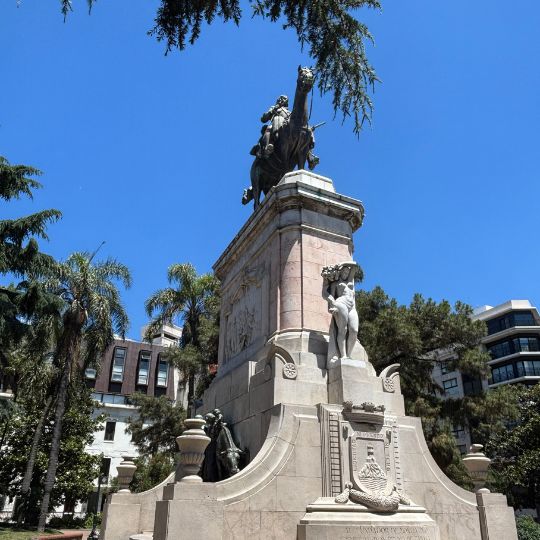
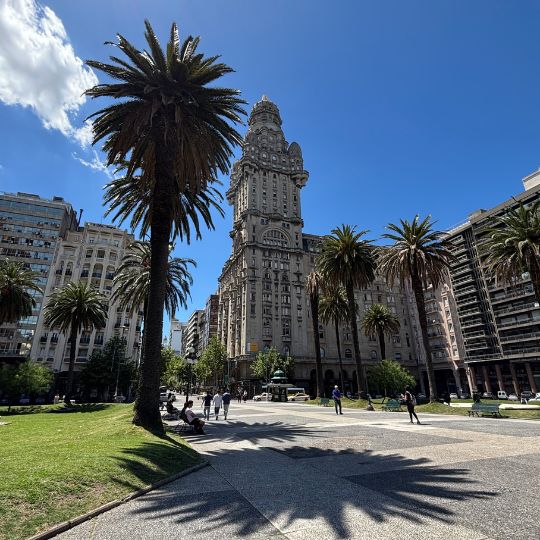
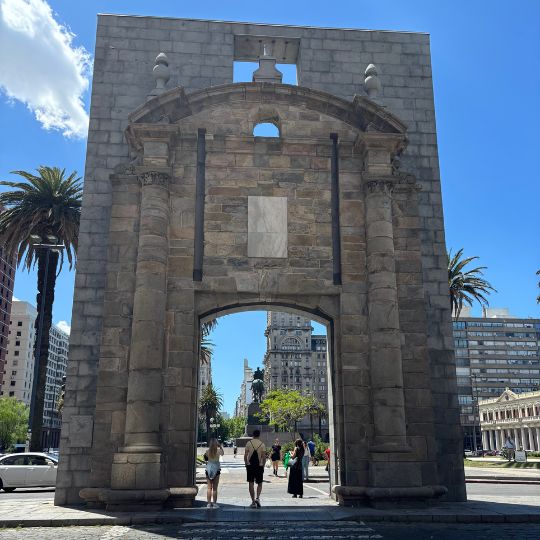
Exploring Ciudad Vieja on a walking tour brought Montevideo’s history to life and helped me see how the city’s past shaped everything I’d experienced the day before.
The Historic Heart of Montevideo
The following morning I checked out of the Aloft, left my bags at the NH Montevideo Columbia, and joined a walking tour through Ciudad Vieja.
That tour completely changed how I saw Montevideo. Up until then, I had enjoyed the city, but I wasn’t sure I fully understood it. Learning about Uruguay’s history, political identity, and vision for the future helped everything I’d experienced the previous day make much more sense.
The modern neighborhoods, expansive waterfront, and slower pace no longer felt disconnected. They felt like different expressions of the same city.
Walking through Plaza Independencia, Palacio Salvo, the Puerta de la Ciudadela, Calle Sarandí, Solís Theatre, and the Mirador Panorámico gave structure to the historic center rather than simply checking off individual landmarks.
The Museo Andes 1972 became one of the most memorable museums from my entire South America trip. Even if you’re familiar with the story of the Uruguayan rugby team’s crash in the Andes, the museum provides a much deeper understanding of the people involved, the decisions they faced, and the resilience that ultimately defined their survival.
Mercado del Puerto is best known for traditional Uruguayan barbecue, but the appeal goes well beyond the food. The historic iron structure, lively atmosphere, and its role as one of Ciudad Vieja’s gathering places make it worth stopping even if you’re simply exploring the neighborhood before continuing toward the waterfront.
What the Walking Tour Taught Me About Uruguay
One of the biggest surprises of the walking tour was how much time we spent discussing Uruguay’s present and future, not just its past.
Before arriving, I knew almost nothing about the country. By the end of the tour, I understood much more about Uruguay’s political stability, environmental priorities, and long-term investments in sustainability.
Learning that Uruguay produces the vast majority of its electricity from renewable sources and continues investing in public spaces, cycling infrastructure, and walkable neighborhoods helped me see Montevideo differently. The Rambla, the parks, and the slower pace didn’t feel accidental anymore; they felt like the result of deliberate choices about how people experience the city.
That realization was probably the biggest surprise of my visit.
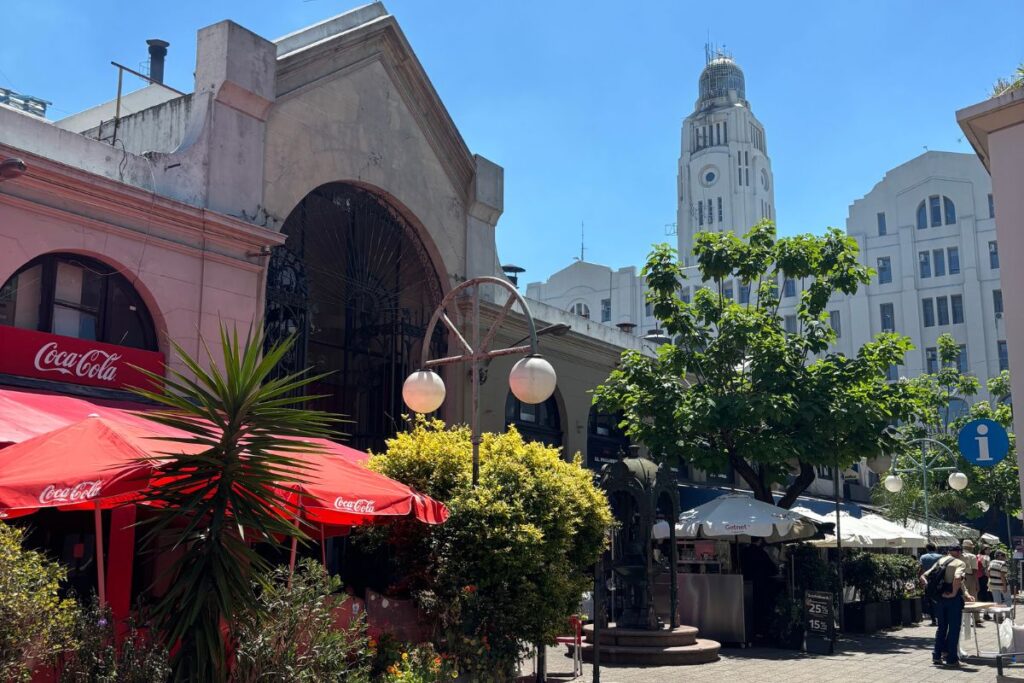
Montevideo isn’t a city that reveals itself all at once, it becomes more rewarding the longer you spend exploring its neighborhoods.
How Many Days Do You Need?
I think two to three days is a good amount of time for Montevideo, depending on how slowly you want to explore and whether you want to add a day trip.
Of all the cities I visited during this South America trip, Montevideo felt the most low-key. It wasn’t trying to overwhelm me with famous landmarks or a packed sightseeing schedule. Instead, it slowly revealed itself over the course of a few days.
With two days, you can experience both the modern neighborhoods and Ciudad Vieja and spend some time along the Rambla without rushing. A third day gives you more room to slow down or consider a day trip beyond the city.
Final Thoughts
I added Uruguay because it was convenient.
I left wanting to see much more of it.
Before this trip, Uruguay was simply the blank spot on my South America itinerary. By the time I boarded my flight to Santiago, I realized the individual stops hadn’t just filled two days of sightseeing, they had slowly changed how I saw the country.
Montevideo may not have the nonstop energy of Buenos Aires or the dramatic landscapes that first come to mind when people think about South America. What it offers instead is a city that rewards slowing down. Between the waterfront, the walkable neighborhoods, and a deeper understanding of Uruguay itself, I left appreciating far more than I expected.
Sometimes the destinations you know the least about end up leaving the biggest impression.
Next Up: 5 Day Trips to Add to Your Montevideo Itinerary
Highlights some of Uruguay’s best destinations beyond the capital. Montevideo is a great base for exploring the country, and these five easy day trips make it even more rewarding.